
Kirjailija
Andrew May
Kirjat ja teokset yhdessä paikassa: 30 kirjaa, julkaisuja vuosilta 2000-2026, suosituimpien joukossa Destination Mars. Vertaile teosten hintoja ja tarkista saatavuus suomalaisista kirjakaupoista.
30 kirjaa
Kirjojen julkaisuhaarukka 2000-2026.
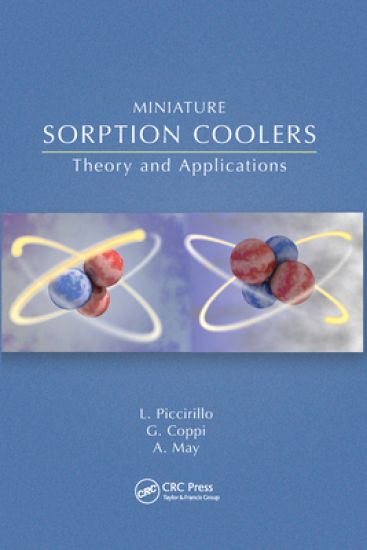
In recent years, there have been significant developments in detector technologies in the field of astrophysics, requiring lower temperatures with simple self-contained refrigerators. Temperatures in the range of 1K to 50mK are now achieved by using dedicated closed-cycle miniature sorption coolers.This book presents the theoretical and experimental knowledge necessary to design and build your own miniature refrigerators, including both single shot and continuous 1 K, 300 mK and 100 mK coolers, and details how to write the needed design software. This text will be of interest to students and researchers, already familiar with basic physics and thermodynamics, who want to understand how sorption coolers and miniature dilution refrigerators work. Features:The first book dedicated to miniature sorption coolersCovers the basic thermodynamic concepts needed to understand the behavior of liquid helium-3 and liquid helium-4Includes an appendix of Python example codes
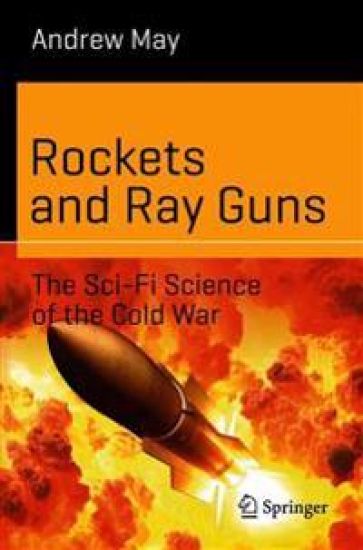
Rockets and Ray Guns: The Sci-Fi Science of the Cold War
Andrew May
Springer International Publishing AG
2018
nidottu
The Cold War saw scientists in East and West racing to create amazing new technologies, the like of which the world had never seen. Yet not everyone was taken by surprise. From super-powerful atomic weapons to rockets and space travel, readers of science fiction (SF) had seen it all before. Sometimes reality lived up to the SF vision, at other times it didn’t. The hydrogen bomb was as terrifyingly destructive as anything in fiction, while real-world lasers didn't come close to the promise of the classic SF ray gun. Nevertheless, when the scientific Cold War culminated in the Strategic Defence Initiative of the 1980s, it was so science-fictional in its aspirations that the media dubbed it “Star Wars”. This entertaining account, offering a plethora of little known facts and insights from previously classified military projects, shows how the real-world science of the Cold War followed in the footsteps of SF – and how the two together changed our perception of both science and scientists, and paved the way to the world we live in today.
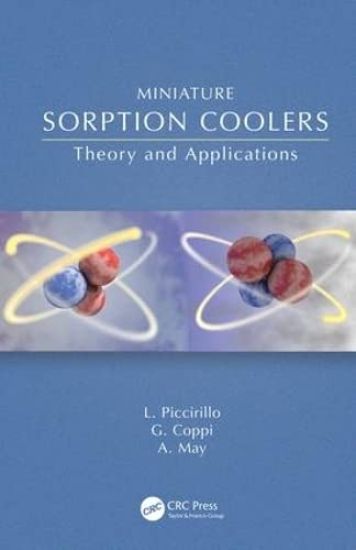
Miniature Sorption Coolers
Lucio Piccirillo; Gabriele Coppi; Andrew May
Apple Academic Press Inc.
2018
sidottu
In recent years, there have been significant developments in detector technologies in the field of astrophysics, requiring lower temperatures with simple self-contained refrigerators. Temperatures in the range of 1K to 50mK are now achieved by using dedicated closed-cycle miniature sorption coolers.This book presents the theoretical and experimental knowledge necessary to design and build your own miniature refrigerators, including both single shot and continuous 1 K, 300 mK and 100 mK coolers, and details how to write the needed design software. This text will be of interest to students and researchers, already familiar with basic physics and thermodynamics, who want to understand how sorption coolers and miniature dilution refrigerators work. Features:The first book dedicated to miniature sorption coolersCovers the basic thermodynamic concepts needed to understand the behavior of liquid helium-3 and liquid helium-4Includes an appendix of Python example codes

The Telescopic Tourist's Guide to the Moon
Andrew May
Springer International Publishing AG
2017
nidottu
Whether you’re interested in visiting Apollo landing sites or the locations of classic sci-fi movies, this is the tourist guide for you! This tourist guide has a twist – it is a guide to a whole different world, which you can visit from the comfort of your backyard with the aid of nothing more sophisticated than an inexpensive telescope. It tells you the best times to view the Moon, the most exciting sights to look out for, and the best equipment to use, allowing you to snap stunning photographs as well as view the sights with your own eyes. Have you ever been inspired by stunning images from the Hubble telescope, or the magic of sci-fi special effects, only to look through a small backyard telescope at the disappointing white dot of a planet or faint blur of a galaxy? Yet the Moon is different. Seen through even a relatively cheap 'scope, it springs into life like a real place, with mountains and valleys and rugged craters. With a bit of imagination, you can even picture yourself as a sightseeing visitor there – which in a sense you are.

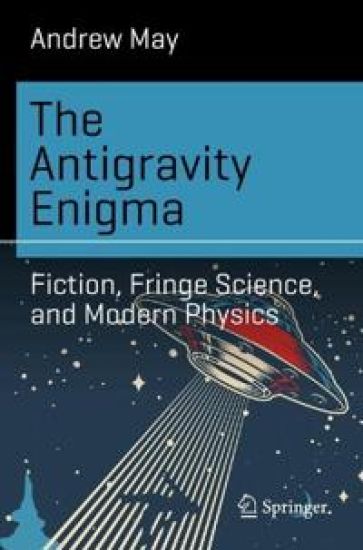
Aliens, flying saucers, ESP, the Bermuda Triangle, antigravity … are we talking about science fiction or pseudoscience? Sometimes it is difficult to tell the difference. Both pseudoscience and science fiction (SF) are creative endeavours that have little in common with academic science, beyond the superficial trappings of jargon and subject matter. The most obvious difference between the two is that pseudoscience is presented as fact, not fiction. Yet like SF, and unlike real science, pseudoscience is driven by a desire to please an audience – in this case, people who “want to believe”. This has led to significant cross-fertilization between the two disciplines. SF authors often draw on “real” pseudoscientific theories to add verisimilitude to their stories, while on other occasions pseudoscience takes its cue from SF – the symbiotic relationship between ufology and Hollywood being a prime example of this. This engagingly written, well researched and richly illustrated text explores a wide range of intriguing similarities and differences between pseudoscience and the fictional science found in SF. Andrew May has a degree in Natural Sciences from Cambridge University and a PhD in astrophysics from Manchester University. After many years in academia and the private sector, he now works as a freelance writer and scientific consultant. He has written pocket biographies of Newton and Einstein, as well as contributing to a number of popular science books. He has a lifelong interest in science fiction, and has had several articles published in Fortean Times magazine
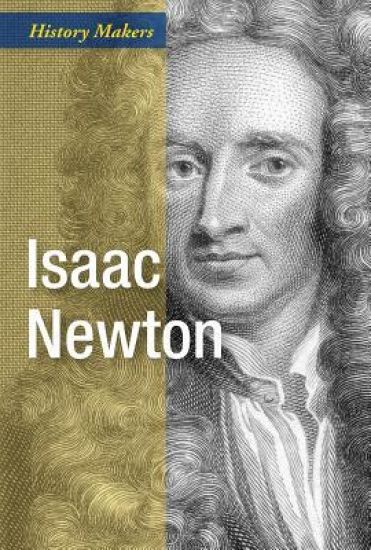
The History Makers biography of Isaac Newton narrates events from this mathematician's personal life while providing key details about the scientists and theories he studied and the trials of his world. Analysis of his personal and intellectual journey is evidenced by Newton's own words and the words of his contemporaries and predecessors. By pairing the story of his life to explanations of mathematical and scientific theory, readers make connections between the legendary man and his work

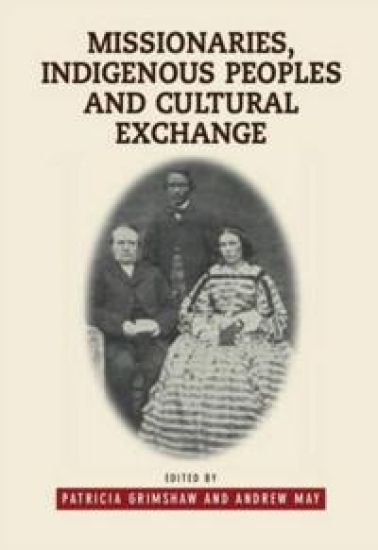
Missionaries, Indigenous Peoples and Cultural Exchange
Patricia Grimshaw; Andrew May
LIVERPOOL UNIVERSITY PRESS
2009
sidottu
This book brings together fresh insights into the relationships between missions and indigenous peoples, and the outcomes of mission activities in the processes of imperial conquest and colonisation. Bringing together the work of leading international scholars of mission and empire, the focus is on missions across the British Empire (including India, Africa, Asia, the Pacific), within transnational and comparative perspectives. Themes throughout the contributions include collusion or opposition to colonial authorities, intercultural exchanges, the work of indigenous and local Christians in new churches, native evangelism and education, clashes between variant views of domesticity and parenting roles, and the place of gender in these transformations. Missionaries could be both implicated in the plot of colonial control, in ways seemingly contrary to Christian norms, or else play active roles as proponents of the social, economic and political rights of their native brethren. Indigenous Christians themselves often had a liminal status, negotiating as they did the needs and desires of the colonial state as well as those of their own peoples. In some mission zones where white missionaries were seen to be constrained by their particular views of race and respectability, black evangelical preachers had far greater success as agents of Christianity. This book contains contributions by historians from Australasia and North America who observe the fine grain of everyday life on mission stations, and present broader insights on questions of race, culture and religion. The volume makes a timely intervention into continuing debates about the relationship between mission and empire.

A Guide to the Identification of Deciduous Broad - Leaved Trees and Shrubs in Winter
Andrew May; Jonathan Panter
Field Studies Council
2000
nidottu