Kirjojen hintavertailu. Mukana 12 595 353 kirjaa ja 12 kauppaa.

Kirjailija

Andrew Menard

Kirjat ja teokset yhdessä paikassa: 4 kirjaa, julkaisuja vuosilta 2012-2019, suosituimpien joukossa Hinterland. Vertaile teosten hintoja ja tarkista saatavuus suomalaisista kirjakaupoista.

4 kirjaa

Kirjojen julkaisuhaarukka 2012-2019.

Hinterland

Hinterland

George Szirtes; Helen Szirtes; Anna Lachkaya; Dani Redd; Megan Holland; Steve Cushman; Andrew Menard

UEA Publishing Project
2019
pokkari
In Hinterland Issue 3 we publish, with huge pleasure, the pieces that won the Hinterland Prize 2019: Anna Lachkaya’s beautifully evoked account of immigrant girlhood, Megan Holland’s story of grief and becoming, and Dani Redd’s other-worldly roam across a remote Scandinavian island. Inside a stunning cover, created exclusively for Hinterland by artist Rebecca Pymar, is an outstanding line-up of new creative non-fiction plus all our great regular features, including the award-winning poet George Szirtes in conversation with his daughter Helen Szirtes.
Sight Unseen

Sight Unseen

Andrew Menard

University of Nebraska Press
2018
pokkari
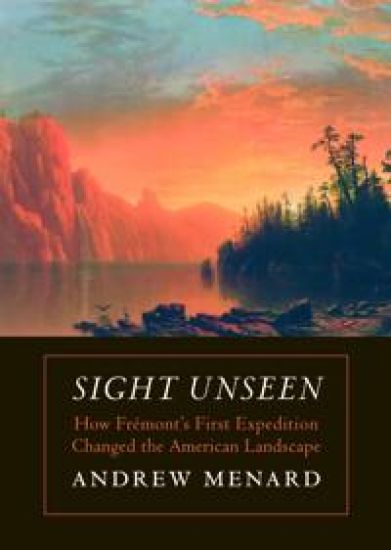
John C. Frémont was the most celebrated explorer of his era. In 1842, on the first of five expeditions he would lead to the Far West, Frémont and a small party of men journeyed up the Kansas and Platte Rivers to the Wind River Range in Wyoming. At the time, virtually this entire region was known as the Great Desert, and many Americans viewed it and the Rocky Mountains beyond as natural barriers to the United States. After Congress published Frémont’s official report of the expedition, however, few doubted the nation should expand to the Pacific. The first in-depth study of this remarkable report, Sight Unseen argues that Frémont used both a radical form of art and an imaginary map to create an aesthetic desire for expansion. He not only redefined the Great Desert as a novel and complex environment, but on a summit of the Wind River Range, he envisioned the Continental Divide as a feature that would unify rather than impede a larger nation. In addition to provoking the great migration to Oregon and providing an aesthetic justification for the National Park system, Frémont’s report profoundly altered American views of geography, progress, and the need for a transcontinental railroad. By helping to shape the very notion of Manifest Destiny, the report became one of the most important documents in the history of American landscape.
Learning from Thoreau

Learning from Thoreau

Andrew Menard

University of Georgia Press
2018
pokkari
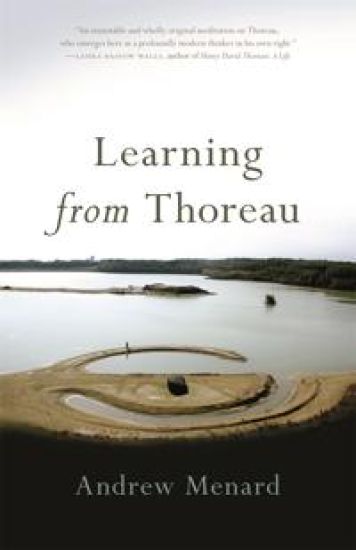
Learning from Thoreau is an intimate intellectual walk with America’s most edgy and original environmentalist. The thrust of the book consists not in learning “about” Thoreau from an intermediary but, as the title suggests, in learning “from” Thoreau along with the author—whose lifelong engagement with this “genius of the natural world” leads him to examine the process of learning from an admired model.Using both images and text, Andrew Menard offers a personal meditation on Thoreau’s thought, its originality, and its influence on the modern environmental movement. He places Thoreau in dialogue with contemporary artists and thinkers and associates him with a rich variety of places: Walden Pond, the Museum of Modern Art, the Rockefeller State Park Preserve in upstate New York, Mormon Mesa northeast of Las Vegas, and the old town of Königsberg, Prussia. Each place, each experience, each writer, and each work of art provides a different line of approach. The author also leads us through an expanding and deepening series of keywords that trigger fresh occasions to learn from Thoreau: Concord, Walden, walking, seeing, nature, wildness, beauty. The result is a deeply nuanced and informed portrait of Thoreau’s inner and outer landscape.
Sight Unseen

Sight Unseen

Andrew Menard

Bison Books
2012
sidottu
John C. Frémont was the most celebrated explorer of his era. In 1842, on the first of five expeditions he would lead to the Far West, Frémont and a small party of men journeyed up the Kansas and Platte Rivers to the Wind River Range in Wyoming. At the time, virtually this entire region was known as the Great Desert, and many Americans viewed it and the Rocky Mountains beyond as natural barriers to the United States. After Congress published Frémont’s official report of the expedition, however, few doubted the nation should expand to the Pacific. The first in-depth study of this remarkable report, Sight Unseen argues that Frémont used both a radical form of art and an imaginary map to create an aesthetic desire for expansion. He not only redefined the Great Desert as a novel and complex environment, but on a summit of the Wind River Range, he envisioned the Continental Divide as a feature that would unify rather than impede a larger nation. In addition to provoking the great migration to Oregon and providing an aesthetic justification for the National Park system, Frémont’s report profoundly altered American views of geography, progress, and the need for a transcontinental railroad. By helping to shape the very notion of Manifest Destiny, the report became one of the most important documents in the history of American landscape.