

Kirjailija
Andrew Milner
Kirjat ja teokset yhdessä paikassa: 22 kirjaa, julkaisuja vuosilta 1989-2026, suosituimpien joukossa Milner, A: Chords Mastery Visual Guide - Guitar Edition. Vertaile teosten hintoja ja tarkista saatavuus suomalaisista kirjakaupoista.
22 kirjaa
Kirjojen julkaisuhaarukka 1989-2026.






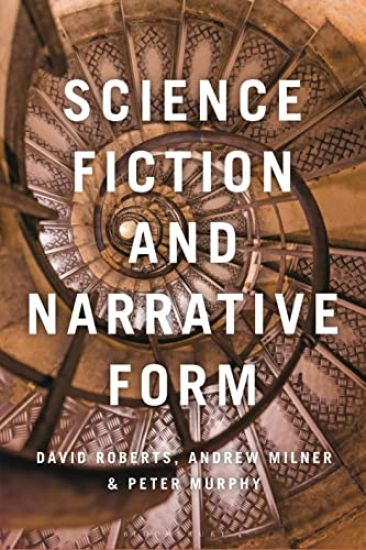
Science Fiction and Narrative Form
David Roberts; Andrew Milner; Peter Murphy
BLOOMSBURY PUBLISHING PLC
2024
nidottu
Establishing science fiction as its own distinct and increasingly important narrative form, this book explores how the genre challenges pervasive perceptions of society as they appear in the conventional modern novel. Inspired by, and building upon, Georg Lukács’s criticism of the orthodox novel for its depiction of life as alienating and disjointed, Milner, Murphy and Roberts demonstrate that science fiction steps beyond this contemporary form to be a more constructive form of literature, one able to conceive of society as complete, integrated and well-rounded. Taking stock of three kinds of science fiction which lie outside the scope of the modern novel – theological/ ontological science fiction, the science fiction of future history and epic science fiction – this book demonstrates the genre’s unique capacity to encapsulate the whole world, persons and events, things and objects in a glance, and address the motive behind the longing for meaningful totality. With reference to a vast array of works by authors such as Michel Houellebecq, Elias Canetti, Isaac Asimov, Jules Verne, H. G. Wells, Aldous Huxley, Marge Piercy, Iain M. Banks, Margaret Atwood, Ursula K. Le Guin, William Gibson, Dirk C. Fleck, Philip K. Dick, George Orwell and Kazuo Ishiguro, this book offers a compelling argument for rethinking the position and potential of the science fiction novel and to challenge the way we perceive our culture.
Science Fiction and Narrative Form
David Roberts; Andrew Milner; Peter Murphy
BLOOMSBURY PUBLISHING PLC
2023
sidottu
Establishing science fiction as its own distinct and increasingly important narrative form, this book explores how the genre challenges pervasive perceptions of society as they appear in the conventional modern novel. Inspired by, and building upon, Georg Lukács’s criticism of the orthodox novel for its depiction of life as alienating and disjointed, Milner, Murphy and Roberts demonstrate that science fiction steps beyond this contemporary form to be a more constructive form of literature, one able to conceive of society as complete, integrated and well-rounded. Taking stock of three kinds of science fiction which lie outside the scope of the modern novel – theological/ ontological science fiction, the science fiction of future history and epic science fiction – this book demonstrates the genre’s unique capacity to encapsulate the whole world, persons and events, things and objects in a glance, and address the motive behind the longing for meaningful totality. With reference to a vast array of works by authors such as Michel Houellebecq, Elias Canetti, Isaac Asimov, Jules Verne, H. G. Wells, Aldous Huxley, Marge Piercy, Iain M. Banks, Margaret Atwood, Ursula K. Le Guin, William Gibson, Dirk C. Fleck, Philip K. Dick, George Orwell and Kazuo Ishiguro, this book offers a compelling argument for rethinking the position and potential of the science fiction novel and to challenge the way we perceive our culture.
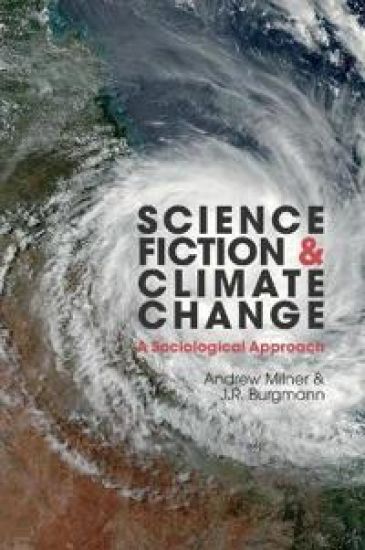
Science Fiction and Climate Change
Andrew Milner; J.R. Burgmann
LIVERPOOL UNIVERSITY PRESS
2022
nidottu
An Open Access edition of this book is available on the Liverpool University Press website and through Knowledge Unlatched. Shortlisted for the British Science Fiction Association Best Non-Fiction Award 2020 Shortlisted for the Locus Science Fiction Foundation Non-Fiction Award 2021 Despite the occasional upsurge of climate change scepticism amongst Anglophone conservative politicians and journalists, there is still a near-consensus amongst climate scientists that current levels of atmospheric greenhouse gas are sufficient to alter global weather patterns to disastrous effect. The resultant climate crisis is simultaneously both a natural and a socio-cultural phenomenon and in this book Milner and Burgmann argue that science fiction occupies a critical location within this nature/culture nexus. Science Fiction and Climate Change takes as its subject matter what Daniel Bloom famously dubbed ‘cli-fi’. It does not, however, attempt to impose a prescriptively environmentalist aesthetic on this sub-genre. Rather, it seeks to explain how a genre defined in relation to science finds itself obliged to produce fictional responses to the problems actually thrown up by contemporary scientific research. Milner and Burgmann adopt a historically and geographically comparatist framework, analysing print and audio-visual texts drawn from a number of different contexts, especially Australia, Britain, Canada, China, Finland, France, Germany, Japan and the United States. Inspired by Williams's cultural materialism, Bourdieu's sociology of culture and Moretti's version of world systems theory, the book builds on Milner’s own Locating Science Fiction to produce a powerfully persuasive study in the sociology of literature.
Science Fiction and Climate Change
Andrew Milner; J.R. Burgmann
Liverpool University Press
2020
sidottu
An Open Access edition of this book is available on the Liverpool University Press website and through Knowledge Unlatched. Shortlisted for the British Science Fiction Association Best Non-Fiction Award 2020 Shortlisted for the Locus Science Fiction Foundation Non-Fiction Award 2021 Despite the occasional upsurge of climate change scepticism amongst Anglophone conservative politicians and journalists, there is still a near-consensus amongst climate scientists that current levels of atmospheric greenhouse gas are sufficient to alter global weather patterns to disastrous effect. The resultant climate crisis is simultaneously both a natural and a socio-cultural phenomenon and in this book Milner and Burgmann argue that science fiction occupies a critical location within this nature/culture nexus. Science Fiction and Climate Change takes as its subject matter what Daniel Bloom famously dubbed ‘cli-fi’. It does not, however, attempt to impose a prescriptively environmentalist aesthetic on this sub-genre. Rather, it seeks to explain how a genre defined in relation to science finds itself obliged to produce fictional responses to the problems actually thrown up by contemporary scientific research. Milner and Burgmann adopt a historically and geographically comparatist framework, analysing print and audio-visual texts drawn from a number of different contexts, especially Australia, Britain, Canada, China, Finland, France, Germany, Japan and the United States. Inspired by Williams's cultural materialism, Bourdieu's sociology of culture and Moretti's version of world systems theory, the book builds on Milner’s own Locating Science Fiction to produce a powerfully persuasive study in the sociology of literature.
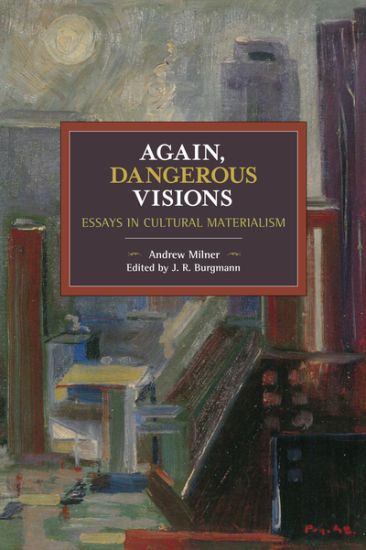
Again, Dangerous Visions: Essays in Cultural Materialism brings together twenty-six essays charting the development of Andrew Milner's distinctively Orwellian version of cultural materialism between 1981 and 2015. The essays address three substantive areas: the sociology of literature, cultural materialism and the cultural politics of the New Left, and utopian and science fiction studies. They are bookended by two conversations between Milner and his editor J.R. Burgmann, the first looking back retrospectively on the development of Milner's thought, the second looking forward prospectively towards the future of academia, the political left and science fiction.
Emily is rapidly approaching fifty and thinks her life is just plain sailing. When her husband leaves her for a twenty five year old and her dad dies, it leaves her facing an uncertain and lonely future.She has two friends, Sally who is a gold digger yet hopeless in love and the pretty but dippy Dawn a police officer, who each have their own issues for Emily to deal with. On top of that her mum who is easily confused, and refers to cappuccino as Al Pacino, needs her full attention. Just when things start to hit rock bottom she meets an Italian stallion who turns her head so far she cricks her neck. In actual fact he's called Kevin and has probably never been to Italy, but with lessons learnt she decides that maybe the devil that she already knows isn't so bad after all.
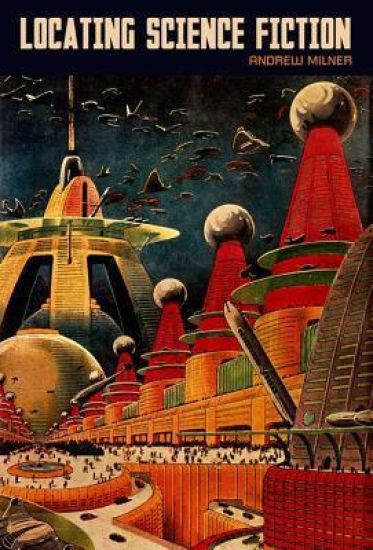
Locating Science Fiction is a ground breaking and potentially paradigm-shifting book, a major intervention into contemporary theoretical debates about SF. Academic literary criticism has tended to locate SF primarily in relation to the older genre of utopia; fan criticism primarily in relation to fantasy and SF in other media, especially film and television; popular fiction studies primarily in relation to other contemporary genres such as the romance and the thriller. This bold new synthesis relocates SF in relation to each of these other genres and media and also to the historical and geographic contexts of its emergence and development. Locating Science Fiction effects a series of vital shifts in the way SF theory and criticism has conceptualised its subject, away from prescriptively abstract dialectics of cognition and estrangement and towards the empirically grounded understanding of what is actually a messy amalgam of texts, practices and artefacts. Inspired by Raymond Williams's cultural materialism, Pierre Bourdieu's sociology of culture and Franco Moretti's application of world systems theory to literary studies, Locating Science Fiction draws on the disciplinary competences of Comparative Literature, Cultural Studies, Critical Theory and Sociology to produce a powerfully persuasive mode of analysis, engagement and argument.
Locating Science Fiction is a ground breaking and potentially paradigm-shifting book, a major intervention into contemporary theoretical debates about SF. Academic literary criticism has tended to locate SF primarily in relation to the older genre of utopia; fan criticism primarily in relation to fantasy and SF in other media, especially film and television; popular fiction studies primarily in relation to other contemporary genres such as the romance and the thriller. This bold new synthesis relocates SF in relation to each of these other genres and media and also to the historical and geographic contexts of its emergence and development. Locating Science Fiction effects a series of vital shifts in the way SF theory and criticism has conceptualised its subject, away from prescriptively abstract dialectics of cognition and estrangement and towards the empirically grounded understanding of what is actually a messy amalgam of texts, practices and artefacts. Inspired by Raymond Williams's cultural materialism, Pierre Bourdieu's sociology of culture and Franco Moretti's application of world systems theory to literary studies, Locating Science Fiction draws on the disciplinary competences of Comparative Literature, Cultural Studies, Critical Theory and Sociology to produce a powerfully persuasive mode of analysis, engagement and argument.

As cultural studies has grown from its origins on the margins of literary studies, it has tended to discard both literature and sociology in favour of the semiotics of popular culture. Literature, Culture and Society makes a determined attempt to re-establish the connections between literary studies, cultural studies and sociology. Arguing against both literary humanism and sociological relativism, it provides a critical overview of theoretical approaches to textual analysis, from hermeneutics to postmodernism, and presents a substantive account of the capitalist literary mode of production.This second edition has been fully revised and rewritten, with new sections including the impact of psychoanalysis and post-structuralism, and the recent work of academics such as Franco Moretti.New case studies have been added in order to examine the intertextual connections between Genesis, Milton's Paradise Lost, Frankenstein (in Mary Shelley's original and also in several film versions), Karel Capek's R.U.R., Fritz Lang's Metropolis, Ridley Scott's Blade Runner, The X-Files and Buffy the Vampire Slayer.

As cultural studies has grown from its origins on the margins of literary studies, it has tended to discard both literature and sociology in favour of the semiotics of popular culture. Literature, Culture and Society makes a determined attempt to re-establish the connections between literary studies, cultural studies and sociology. Arguing against both literary humanism and sociological relativism, it provides a critical overview of theoretical approaches to textual analysis, from hermeneutics to postmodernism, and presents a substantive account of the capitalist literary mode of production.This second edition has been fully revised and rewritten, with new sections including the impact of psychoanalysis and post-structuralism, and the recent work of academics such as Franco Moretti.New case studies have been added in order to examine the intertextual connections between Genesis, Milton's Paradise Lost, Frankenstein (in Mary Shelley's original and also in several film versions), Karel Capek's R.U.R., Fritz Lang's Metropolis, Ridley Scott's Blade Runner, The X-Files and Buffy the Vampire Slayer.
First Published in 2002. This lucid and concise overview brings a much needed sense and history and theoretical scale to the growth of cultural studies. The authors identify six major paradigms in cultural theory: utilitarianism, cultural materialism, critical theory and postmodernism. They outline social and discursive contexts within each of these has developed and provide the essential grounding to understand current debates in the field. This third edition has been extensively revised to include new material on the new historicism, queer theory, black and Latino cultural studies, cultural policy and posthumanism, and on the work of thinkers such as Zizek, Bourdieu, Deleuze and Guattari.
First Published in 2002. This lucid and concise overview brings a much needed sense and history and theoretical scale to the growth of cultural studies. The authors identify six major paradigms in cultural theory: utilitarianism, cultural materialism, critical theory and postmodernism. They outline social and discursive contexts within each of these has developed and provide the essential grounding to understand current debates in the field. This third edition has been extensively revised to include new material on the new historicism, queer theory, black and Latino cultural studies, cultural policy and posthumanism, and on the work of thinkers such as Zizek, Bourdieu, Deleuze and Guattari.

Amidst continuing debates about the literary canon, Literature, Culture and Society poses a revealing question--if academics find it valuable and stimulating to discuss texts ranging from Genesis to Bladerunner in their leisure time, why do they act as if this is sacrosanct in their formal work? In this well- argued and refreshing discussion of the history and importance of literary criticism, Milner embraces a reality that many in the academy still fear, that cultural studies is alive, and it's here to stay. Andrew Milner begins with an introduction to the field of cultural studies and its parent disciplines of English literature and sociology. He reviews the defining terms and the theoretical traditions in a manner that is sophisticated but accessible. He discusses just how and why cultural studies evolved, and what it has to offer our appraisal of all texts, be they old or new, print or film. Milner eschews both cultural populism and literary elitism in favor of a criticism that is more concerned with value than with exclusion.The author concludes this significant and insightful book with a demonstration of his theories, tying together a group of narratives ranging from Paradise Lost to the latest Frankenstein films. Literature, Culture and Society cogently examines the question of scholarship and forcefully demonstrates that rigorous academic inquiry need not be reserved for dust-covered texts alone.