Kirjojen hintavertailu. Mukana 12 390 323 kirjaa ja 12 kauppaa.
Kirjailija
Andrew Nathan
Kirjat ja teokset yhdessä paikassa: 4 kirjaa, julkaisuja vuosilta 1998-2021, suosituimpien joukossa The Tiananmen Papers. Vertaile teosten hintoja ja tarkista saatavuus suomalaisista kirjakaupoista.
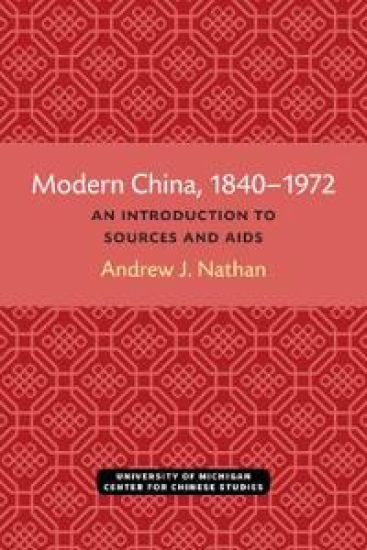
Graduate students have traditionally learned a good part of what they know about sources and research aids on modern China through hearsay and serendipity, in unsystematic and unreliable bits and pieces. The field has now developed to the point where this need not and ought not to be so. It is now possible for beginning researchers to start with some shared basic knowledge of research aids and documentary resources. This research guide is meant to provide that knowledge. The user of this guide is envisaged as an American graduate student in history or the social sciences who is already familiar with the major English-language secondary literature on modern China and is about to begin original research, either for a seminar paper or for a dissertation.
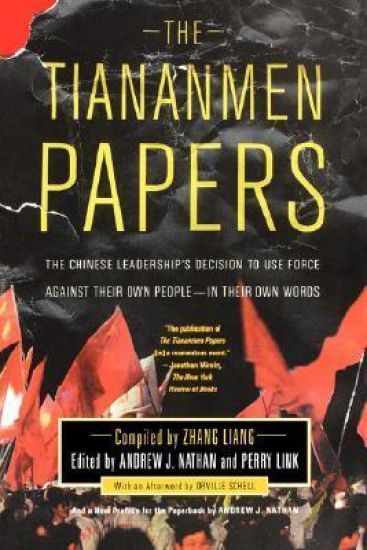
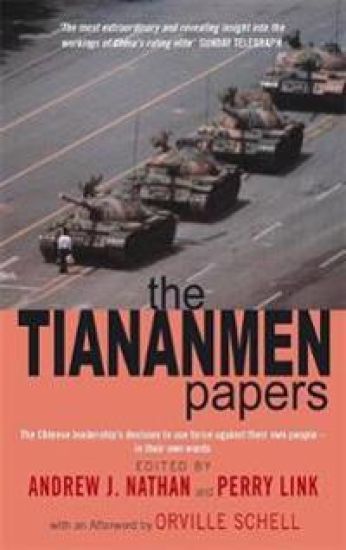
On the night of June 3-4, 1989, Chinese troops violently crushed the largest pro-democracy demonstrations in the history of the communist regime. In this extraordinary collection of hundreds of internal government and Communist Party documents, secretly smuggled out of China, we learn how these events came to pass from behind the scenes. The material reveals how the most important decisions were made and how the turmoil split the ruling elite into radically opposed factions. The book includes the minutes of the crucial meetings at which the Elders decided to cashier the pro-reform Party secretary Zhao Ziyang and to replace him with Jiang Zemin, to declare martial law, and finally to send the troops to drive the students from the Square. Just as the Pentagon Papers laid bare the secret American decision making behind the Vietnam War and changed forever our view of the nation's political leaders, so too has The Tiananmen Papers altered our perception of how and why the events of June 4 took the shape they did. Its publication has proven to be a landmark event in Chinese and world history.
THE TIANANMEN PAPERS, which contains documents unearthed from the guarded core of the Chinese Politburo, is the most important book on China published in decades. It reveals the highest-level processes of decision-making during the tumultuous events surrounding the terrible massacre in Tiananmen Square on 4 June 1989.Drawn from about 2,000 documents, THE TIANANMEN PAPERS have been compiled and edited as part of an extraordinary collaboration between America's most prominent China scholars and a handful of Chinese people who have risked their lives to obtain them.The Chinese pro-democracy demonstrations in 1989 were the longest lasting and most influential in the world. THE TIANANMEN PAPERS exposes the desperate conflict during the period among a few strong leaders, whose personalities emerge with unprecedented vividness. Its revelations of the most important event in modern Chinese history will have a profound impact not only in China, but in every country in the world that deals with China.
On January 1, 1912, the world’s oldest, most populous empire bowed to the tide of history and became a republic. Since the American Revolution, one nation after another had adopted a constitution, often with remarkable regenerative results—Japan was the most impressive recent example. “The future of China is like building a railroad,” Sun Yat-sen pointed out. “Should we use the first locomotive ever invented or today’s improved and most efficient one?” Many Chinese expected a new China, with its up-to-date governmental machinery, to drive straight for national wealth and power. Sixteen years later the dream was rubble. The republic had shrunk to a fig-leaf marshal’s government run by Chang Tso-lin. Years of warlord devastation had ruined the agriculture and disrupted the trade of North China, and a major famine was imminent. The Kuomintang was poised to complete national reunification under its own auspices, bringing a merciful end to an experiment that had dragged on too long. What went wrong? Peking Politics attempts to contribute to an understanding of that question by examining the workings of the Peking political system, showing how the informal political rules of factionalism undermined the formal political system of constitutionalism. This is not an attempt to explain why, in terms of larger economic, social, or cultural variables, a stable republic could not survive in China. It is an investigation rather of how constitutionalism failed, of the political processes that occurred under the early republic, and of how they undermined the new institutions in which such great hopes were placed.