Kirjojen hintavertailu. Mukana 12 595 353 kirjaa ja 12 kauppaa.

Kirjailija

Andrew Phillips

Kirjat ja teokset yhdessä paikassa: 19 kirjaa, julkaisuja vuosilta 2010-2023, suosituimpien joukossa Dental Wealth Nation. Vertaile teosten hintoja ja tarkista saatavuus suomalaisista kirjakaupoista.

19 kirjaa

Kirjojen julkaisuhaarukka 2010-2023.

Sharing the Prophets

Sharing the Prophets

Andrew Phillips; Philip Jenkins

21st Century Christian, Inc.
2023
pokkari
Perhaps more than any generation that has preceded them, today's teens are messengers. With innumerable ways to communicate to their friends as well as to followers they've never even met, teens have access along the communication superhighway to larger audiences than ever before. God had His own messengers. We know them as prophets. They, too, spoke with audiences of their day, pointing toward the One who would one day arrive, fulfilling Scripture. In this study from Andrew Phillips and Philip Jenkins, teens will learn how they are like those messengers of God: bold, determined, stubborn, hopeful, willing, unwilling, obedient, and disobedient as they study the character of these men and women of Scripture. Teens will learn to think critically about their own faith development as well as what it takes to serve God as they share the prophets.
The Dancing Diplomats

The Dancing Diplomats

Andrew Phillips

IngramSpark
2023
sidottu
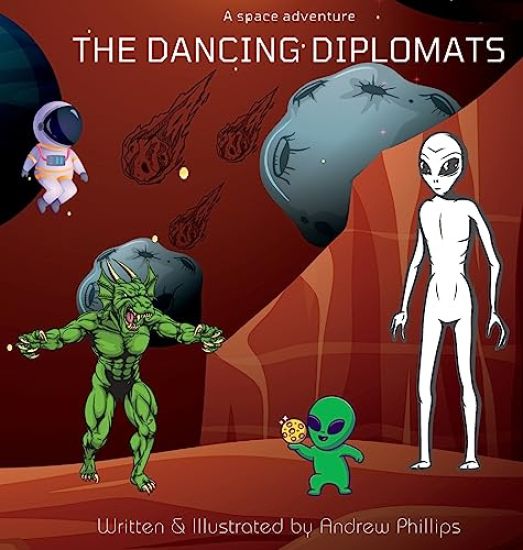
Embark on an interstellar journey like no other with The Dancing Diplomats This enchanting and action-packed children's book is a perfect fit for young readers aged 4 to 12 who crave adventure, imagination, and a touch of futuristic wonder.In a galaxy teeming with danger and wonder, our young readers will be swept away by the thrilling escapades of our diverse cast of characters. As the story unfolds, they will discover the power of dance, music, and unity as formidable tools against the forces of darkness.Within these pages, children will meet the captivating Zorians, whose harmonious melodies and mesmerizing moves have the ability to sway even the most fearsome adversaries. Alongside them, they will encounter the brave Krynn, whose strength and determination complement the Zorians' peaceful ways.But there's more to this story than meets the eye As the plot thickens, young readers will be drawn into a suspenseful revelation that will leave them breathless. The Guardians, shrouded in mystery, hold the key to maintaining harmony across the cosmos. As the fate of the universe hangs in the balance, our young heroes must band together and face formidable challenges, braving the unknown to protect the peace they hold dear."The Dancing Diplomats" is not just an exhilarating space adventure; it's a tale that embeds important moral lessons. Through its pages, children will learn about friendship, discovery, and the resounding power of unity. It will ignite their imagination, sparking their curiosity about the future and the endless possibilities that lie beyond.Written with a blend of suspense, wonder, and heartwarming moments, this book is the perfect choice for parents who want to introduce their children to futuristic ideas and foster a love for sci-fi storytelling. It's a gateway to a world where dreams and imagination take flight, all while instilling valuable lessons about teamwork, acceptance, and the universal quest for harmony.Are you ready to join The Dancing Diplomats? Turn the page, and let the adventure begin
Where Faith Meets Real Life

Where Faith Meets Real Life

Andrew Phillips

21st Century Christian, Inc.
2023
pokkari
Faith without actions, worship without obedience, and sympathy without solutions are hollow, phony expressions. It's time to take up the challenge of the Epistle of James and get busy making a difference in the real world. No more sterile, antiseptic Christianity allowed. It's time to get your hands dirty and follow Jesus with an authentic faith. It's time to get real in your relationship with God and saturate the world with His real solutions.
Dental Wealth Nation

Dental Wealth Nation

Timothy McNeely; Andrew Phillips

Expert Authority Effect(tm) Publishing
2023
sidottu
You Deserve To Thrive Amidst An Uncertain World In Dental Wealth Nation you will learn: The truth about investment consulting - Page 23How to improve your cash flow and leverage tax mitigation strategies - Page 31How to protect your wealth from unjust means - Page 68How charitable gifting will actually make you money, and feel good too - Page 85The Relationship Management Formula - Page 105The Importance of Stress Testing - Page 147
Dental Wealth Nation

Dental Wealth Nation

Timothy McNeely; Andrew Phillips

Expert Authority Effect(tm) Publishing
2023
pokkari
You Deserve To Thrive Amidst An Uncertain World In Dental Wealth Nation you will learn: The truth about investment consulting - Page 23How to improve your cash flow and leverage tax mitigation strategies - Page 31How to protect your wealth from unjust means - Page 68How charitable gifting will actually make you money, and feel good too - Page 85The Relationship Management Formula - Page 105The Importance of Stress Testing - Page 147
Outsourcing Empire

Outsourcing Empire

Andrew Phillips; J. C. Sharman

PRINCETON UNIVERSITY PRESS
2022
pokkari
How chartered company-states spearheaded European expansion and helped create the world’s first genuinely global orderFrom Spanish conquistadors to British colonialists, the prevailing story of European empire-building has focused on the rival ambitions of competing states. But as Outsourcing Empire shows, from the seventeenth to the twentieth centuries, company-states—not sovereign states—drove European expansion, building the world’s first genuinely international system. Company-states were hybrid ventures: pioneering multinational trading firms run for profit, with founding charters that granted them sovereign powers of war, peace, and rule. Those like the English and Dutch East India Companies carved out corporate empires in Asia, while other company-states pushed forward European expansion through North America, Africa, and the South Pacific. In this comparative exploration, Andrew Phillips and J. C. Sharman explain the rise and fall of company-states, why some succeeded while others failed, and their role as vanguards of capitalism and imperialism.In dealing with alien civilizations to the East and West, Europeans relied primarily on company-states to mediate geographic and cultural distances in trade and diplomacy. Emerging as improvised solutions to bridge the gap between European rulers’ expansive geopolitical ambitions and their scarce means, company-states succeeded best where they could balance the twin imperatives of power and profit. Yet as European states strengthened from the late eighteenth century onward, and a sense of separate public and private spheres grew, the company-states lost their usefulness and legitimacy.Bringing a fresh understanding to the ways cross-cultural relations were handled across the oceans, Outsourcing Empire examines the significance of company-states as key progenitors of the globalized world.
How the East Was Won

How the East Was Won

Andrew Phillips

Cambridge University Press
2021
pokkari
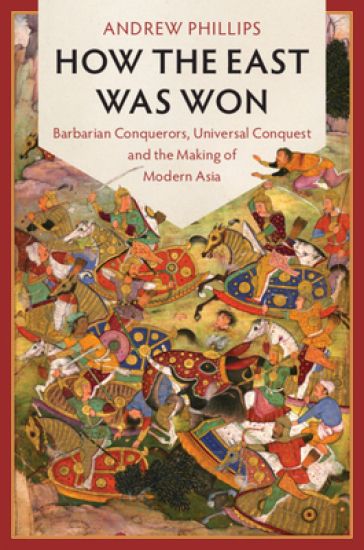
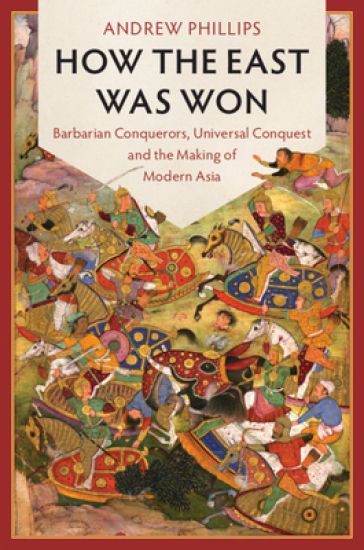
How did upstart outsiders forge vast new empires in early modern Asia, laying the foundations for today's modern mega-states of India and China? In How the East Was Won, Andrew Phillips reveals the crucial parallels uniting the Mughal Empire, the Qing Dynasty and the British Raj. Vastly outnumbered and stigmatised as parvenus, the Mughals and Manchus pioneered similar strategies of cultural statecraft, first to build the multicultural coalitions necessary for conquest, and then to bind the indigenous collaborators needed to subsequently uphold imperial rule. The English East India Company later adapted the same 'define and conquer' and 'define and rule' strategies to carve out the West's biggest colonial empire in Asia. Refuting existing accounts of the 'rise of the West', this book foregrounds the profoundly imitative rather than innovative character of Western colonialism to advance a new explanation of how universal empires arise and endure.
How the East Was Won

How the East Was Won

Andrew Phillips

Cambridge University Press
2021
sidottu
How did upstart outsiders forge vast new empires in early modern Asia, laying the foundations for today's modern mega-states of India and China? In How the East Was Won, Andrew Phillips reveals the crucial parallels uniting the Mughal Empire, the Qing Dynasty and the British Raj. Vastly outnumbered and stigmatised as parvenus, the Mughals and Manchus pioneered similar strategies of cultural statecraft, first to build the multicultural coalitions necessary for conquest, and then to bind the indigenous collaborators needed to subsequently uphold imperial rule. The English East India Company later adapted the same 'define and conquer' and 'define and rule' strategies to carve out the West's biggest colonial empire in Asia. Refuting existing accounts of the 'rise of the West', this book foregrounds the profoundly imitative rather than innovative character of Western colonialism to advance a new explanation of how universal empires arise and endure.
Ceo-Led Sales

Ceo-Led Sales

Andrew Phillips

Social Star
2021
sidottu
CEO-Led Sales outlines The Right Model to revolutionise your sales process and dramatically improve your confidence in the predictability of your sales numbers. This has to start from the top with you, the CEO.
Ceo-Led Sales

Ceo-Led Sales

Andrew Phillips

Social Star
2021
pokkari
CEO-Led Sales outlines The Right Model to revolutionise your sales process and dramatically improve your confidence in the predictability of your sales numbers. This has to start from the top with you, the CEO.
Outsourcing Empire

Outsourcing Empire

Andrew Phillips; J. C. Sharman

PRINCETON UNIVERSITY PRESS
2020
sidottu
How chartered company-states spearheaded European expansion and helped create the world’s first genuinely global orderFrom Spanish conquistadors to British colonialists, the prevailing story of European empire-building has focused on the rival ambitions of competing states. But as Outsourcing Empire shows, from the seventeenth to the twentieth centuries, company-states—not sovereign states—drove European expansion, building the world’s first genuinely international system. Company-states were hybrid ventures: pioneering multinational trading firms run for profit, with founding charters that granted them sovereign powers of war, peace, and rule. Those like the English and Dutch East India Companies carved out corporate empires in Asia, while other company-states pushed forward European expansion through North America, Africa, and the South Pacific. In this comparative exploration, Andrew Phillips and J. C. Sharman explain the rise and fall of company-states, why some succeeded while others failed, and their role as vanguards of capitalism and imperialism.In dealing with alien civilizations to the East and West, Europeans relied primarily on company-states to mediate geographic and cultural distances in trade and diplomacy. Emerging as improvised solutions to bridge the gap between European rulers’ expansive geopolitical ambitions and their scarce means, company-states succeeded best where they could balance the twin imperatives of power and profit. Yet as European states strengthened from the late eighteenth century onward, and a sense of separate public and private spheres grew, the company-states lost their usefulness and legitimacy.Bringing a fresh understanding to the ways cross-cultural relations were handled across the oceans, Outsourcing Empire examines the significance of company-states as key progenitors of the globalized world.
Colchester

Colchester

Andrew Phillips

The History Press Ltd
2017
nidottu
Colchester boasts 2,000 years of history. Few towns in Britain can equal that. Yet this new book, by a local author, is the first full and concise history of Colchester to be published for over half a century, during which time our knowledge of the town’s past has grown immeasurably. The Iron-Age capital of King Cunobelin (Shakespeare’s Cymbeline), Colchester was the target of the Roman invasion in AD 43. Where the Emperor Claudius received its submission, the Romans built a legionary fortress, the framework of which still forms the centre of Colchester. As capital of Roman Britain, Colchester was overrun and burnt by the warrior queen Boudica (aka Boadicea), then rebuilt and ringed by its famous walls. After Rome fell and the Saxon incursions began, the Saxon King Edward the Elder made it the leading town in Essex. The Normans raised its profile higher, when an Abbey, a Priory and a great castle gave it the strategic defence of Eastern England. It was besieged only once, when King John was in conflict with his barons over Magna Carta. For 400 years Colchester’s cloth industry placed it among the top fifteen towns in the kingdom. It saw Protestants burnt at the stake, withstood a Civil War siege, was ravaged by plague and stood in the front line against invasion, first by Napoleon, then by the Kaiser, then by Hitler. An important engineering town since Victorian times, it is today a regional shopping centre, a major garrison town and a popular tourist attraction. This authoritative, readable and well illustrated work, from a professional historian, will doubtless become the standard work on this ancient town for at least the next half-century.
International Order in Diversity

International Order in Diversity

Andrew Phillips; J. C. Sharman

Cambridge University Press
2015
sidottu
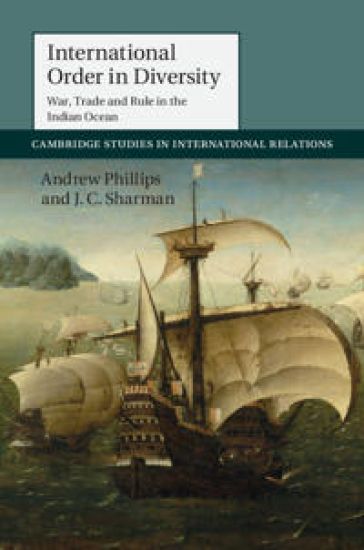
International relations scholars typically expect political communities to resemble one another the more they are exposed to pressures of war, economic competition and the spread of hegemonic legitimacy standards. However, historically it is heterogeneity, not homogeneity, that has most often defined international systems. Examining the Indian Ocean region - the centre of early modern globalization - Andrew Phillips and J. C. Sharman explain how diverse international systems can emerge and endure. Divergent preferences for terrestrial versus maritime conquest, congruent traditions of heteronomy and shared strategies of localization were factors which enabled diverse actors including the Portuguese Estado da India, Dutch and English company sovereigns and mighty Asian empires to co-exist for centuries without converging on a common institutional form. Debunking the presumed relationship between interaction and homogenization, this book radically revises conventional thinking on the evolution of international systems, while deepening our understanding of a historically crucial but critically understudied world region.
International Order in Diversity

International Order in Diversity

Andrew Phillips; J. C. Sharman

Cambridge University Press
2015
pokkari
International relations scholars typically expect political communities to resemble one another the more they are exposed to pressures of war, economic competition and the spread of hegemonic legitimacy standards. However, historically it is heterogeneity, not homogeneity, that has most often defined international systems. Examining the Indian Ocean region - the centre of early modern globalization - Andrew Phillips and J. C. Sharman explain how diverse international systems can emerge and endure. Divergent preferences for terrestrial versus maritime conquest, congruent traditions of heteronomy and shared strategies of localization were factors which enabled diverse actors including the Portuguese Estado da India, Dutch and English company sovereigns and mighty Asian empires to co-exist for centuries without converging on a common institutional form. Debunking the presumed relationship between interaction and homogenization, this book radically revises conventional thinking on the evolution of international systems, while deepening our understanding of a historically crucial but critically understudied world region.
War, Religion and Empire

War, Religion and Empire

Andrew Phillips

Cambridge University Press
2010
sidottu
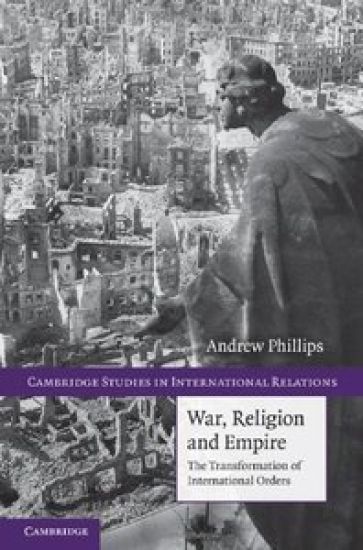
What are international orders, how are they destroyed, and how can they be defended in the face of violent challenges? Advancing an innovative realist-constructivist account of international order, Andrew Phillips addresses each of these questions in War, Religion and Empire. Phillips argues that international orders rely equally on shared visions of the good and accepted practices of organized violence to cultivate cooperation and manage conflict between political communities. Considering medieval Christendom's collapse and the East Asian Sinosphere's destruction as primary cases, he further argues that international orders are destroyed as a result of legitimation crises punctuated by the disintegration of prevailing social imaginaries, the break-up of empires, and the rise of disruptive military innovations. He concludes by considering contemporary threats to world order, and the responses that must be taken in the coming decades if a broadly liberal international order is to survive.
War, Religion and Empire

War, Religion and Empire

Andrew Phillips

Cambridge University Press
2010
pokkari
What are international orders, how are they destroyed, and how can they be defended in the face of violent challenges? Advancing an innovative realist-constructivist account of international order, Andrew Phillips addresses each of these questions in War, Religion and Empire. Phillips argues that international orders rely equally on shared visions of the good and accepted practices of organized violence to cultivate cooperation and manage conflict between political communities. Considering medieval Christendom's collapse and the East Asian Sinosphere's destruction as primary cases, he further argues that international orders are destroyed as a result of legitimation crises punctuated by the disintegration of prevailing social imaginaries, the break-up of empires, and the rise of disruptive military innovations. He concludes by considering contemporary threats to world order, and the responses that must be taken in the coming decades if a broadly liberal international order is to survive.