
Kirjailija
Andrew Pickering
Kirjat ja teokset yhdessä paikassa: 21 kirjaa, julkaisuja vuosilta 1995-2025, suosituimpien joukossa In & Around Bruton Through Time. Vertaile teosten hintoja ja tarkista saatavuus suomalaisista kirjakaupoista.
21 kirjaa
Kirjojen julkaisuhaarukka 1995-2025.

In the Anthropocene our actions are coming home to roost. Global warming, species extinctions, and environmental disasters are the dark side of our mastery of nature. In Acting with the World, Andrew Pickering identifies a different pattern of being and doing that can evade this dark side, a pattern that he calls acting-with the world. In contrast to our usual practice of acting on the world, acting-with foregrounds nonhuman or more-than-human agency and aims to attune our practices to the propensities of nature. Pickering explores examples of acting-with from around the globe, including flood control on the Mississippi River, ecosystem restoration on the Colorado River, the Room for the River project and rewilding in the Netherlands, natural farming in Japan, Aboriginal fire techniques in Australia, and Amazonian shamanism. Pickering argues that acting-with intimately and gracefully plugs us into nature, undercuts the Anthropocene from below, and offers a constructive approach to addressing otherwise intractable wicked problems.

In the Anthropocene our actions are coming home to roost. Global warming, species extinctions, and environmental disasters are the dark side of our mastery of nature. In Acting with the World, Andrew Pickering identifies a different pattern of being and doing that can evade this dark side, a pattern that he calls acting-with the world. In contrast to our usual practice of acting on the world, acting-with foregrounds nonhuman or more-than-human agency and aims to attune our practices to the propensities of nature. Pickering explores examples of acting-with from around the globe, including flood control on the Mississippi River, ecosystem restoration on the Colorado River, the Room for the River project and rewilding in the Netherlands, natural farming in Japan, Aboriginal fire techniques in Australia, and Amazonian shamanism. Pickering argues that acting-with intimately and gracefully plugs us into nature, undercuts the Anthropocene from below, and offers a constructive approach to addressing otherwise intractable wicked problems.

Cybernetics for the 21st Century Vol. 1
Andrew Pickering; Katherine Hayles
Hanart Press
2024
pokkari

An investigation into what happens in creative practice when the materials of art and research behave and perform in ways beyond the creators' intentions. In Alien Agency, Chris Salter tells three stories of art in the making. Salter examines three works in which the materials of art--the "stuff of the world"--behave and perform in ways beyond the creator's intent, becoming unknown, surprising, alien. Studying these works--all three deeply embroiled in and enabled by science and technology--allows him to focus on practice through the experiential and affective elements of creation. Drawing on extensive ethnographic observation and on his own experience as an artist, Salter investigates how researcher-creators organize the conditions for these experimental, performative assemblages--assemblages that sidestep dichotomies between subjects and objects, human and nonhuman, mind and body, knowing and experiencing. Salter reports on the sound artists Bruce Odland and Sam Auinger (O+A) and their efforts to capture and then project unnoticed urban sounds; tracks the multi-year project TEMA (Tissue Engineered Muscle Actuators) at the art research lab SymbioticA and its construction of a hybrid "semi-living" machine from specially grown mouse muscle cells; and describes a research-creation project (which he himself initiated) that uses light, vibration, sound, smell, and other sensory stimuli to enable audiences to experience other cultures' "ways of sensing." Combining theory, diary, history, and ethnography, Salter also explores a broader question: How do new things emerge into the world and what do they do?

The ancient forest of Selwood straddles the borders of Somerset and Wiltshire and terminates in the south where these counties meet Dorset. This book explores the connections between important theological texts written in the region, notably Richard Bernard's Guide to the Grand-Jury Men (1627) and Joseph Glanvill's Saducismus Triumphatus (1681), influential local families, and the extraordinary witchcraft accounts in the area. In particular it focuses on a little known case in the village of Beckington in 1689 and shows how this was not a late, isolated episode but an integral part of the wider Selwood Forest witchcraft story. By presenting a micro-history of a specific area, which was rife in witchcraft practices in the seventeenth century, the author makes a valuable contribution to early modern social history. First published in hardback in 2021, now reprinted with minor changes in paperback.
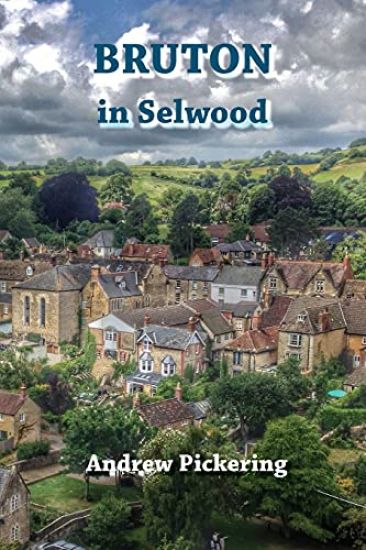
This book, fully colour illustrated, tells the fascinating story of Bruton, a small town in Somerset, England, and its environs from the earliest times to the present day. An important ecclesiastical centre since the seventh century, notable individuals in Bruton's history include Sir John Fitzjames, standard bearer serving three monarchs and a co-founder of Bruton's free grammar school, Stephan Batman, an eminent Tudor author and cleric, Sir Hugh Sexey, the town's great benefactor, and Gabriel Felling and Ernst Blensdorf, two of its most admired artist-craftsmen. R. D. Blackmore, author of Lorna Doone was schooled in Bruton and, for most of 1959, it was home to the great American novelist, John Steinbeck. The lives of ordinary folk raising families, working on the land and in the town's mills, are revealed in a host of parochial records and in the fabric of the buildings in which they lived and worked, prayed and played.
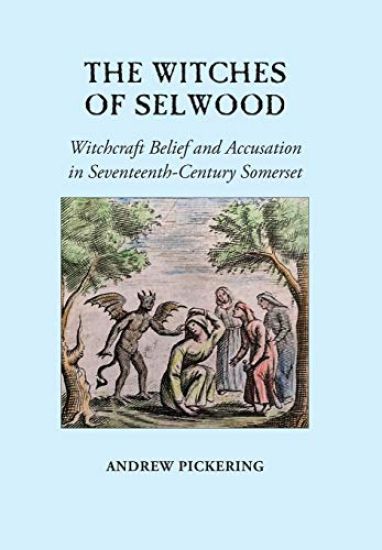
The ancient forest of Selwood straddles the borders of Somerset and Wiltshire and terminates in the south where these counties meet Dorset. This book explores the connections between important theological texts written in the region, notably Richard Bernard's Guide to the Grand-Jury Men (1627) and Joseph Glanvill's Saducismus Triumphatus (1681), influential local families, and the extraordinary witchcraft accounts in the area. In particular it focuses on a little known case in the village of Beckington in 1689 and shows how this was not a late, isolated episode but an integral part of the wider Selwood Forest witchcraft story. By presenting a micro-history of a specific area, which was rife in witchcraft practices in the seventeenth century, the author makes a valuable contribution to early modern social history.
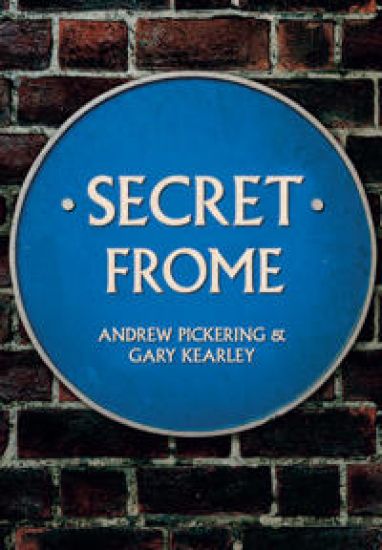
The town of Frome, in the ancient royal forest of Selwood that straddles the borders of Wiltshire and Somerset, was once renowned for its prosperous woollen cloth industry and is now noted as an emerging provincial centre for the arts and crafts. The town and its environs has a fascinating and little-known history. Here we will discover stories of medieval kings and bishops, political intrigue and judicial murder, religious dissent and rebellion, battles and sieges, criminals and crime-fighters. Here too are stories of eminent philosophers and authors, entrepreneurs and artists. Stories of ghosts and witchcraft share space with histories of personal triumphs and disasters in the lives of the residents of Frome. The hidden histories of its archaeological remains, extant surface structures and those deep underground combine to further reveal the tale of the town and its Selwood hundred. Fully illustrated throughout, Secret Frome investigates many of the town’s secrets and invites readers to discover the lesser-known events and stories from its past.

Rebellions and Reformations
Andrew Pickering
Createspace Independent Publishing Platform
2015
nidottu

It was not so long ago that the belief in witchcraft was shared by members of all levels of society. In the sixteenth and seventeenth centuries, diseases were feared by all, the infant mortality rate was high, and around one in six harvests was likely to fail. In the small rural communities in which most people lived, affection and enmity could build over long periods. When misfortune befell a family, they looked to their neighbours for support - and for the cause. During the sixteenth century, Europe was subject to a fevered and pious wave of witch hunts and trials. As the bodies of accused women burnt right across the Continent, the flames of a nationwide witch hunt were kindled in England. In 1612 nine women were hanged in the Pendle witch trials, the prosecution of the Chelmsford witches in 1645 resulted in the biggest mass execution in England, and in the mid-1640s the Witch finder General instigated a reign of terror in the Puritan counties of East Anglia. Hundreds of women were accused and hanged. It wasn't until the latter half of the seventeenth century that witch-hunting went into decline.In this book, Andrew and David Pickering present a comprehensive catalogue of witch hunts, arranged chronologically within geographical regions. The tales of persecution within these pages are testimony to the horror of witch-hunting that occurred throughout England in the hundred years after the passing of the Elizabethan Witchcraft Act of 1563.

In & Around Bruton Through Time
Andrew Pickering; Mandy Eldred-Tyler
Amberley Publishing
2012
nidottu
The small town of Bruton is one of Somerset's hidden gems. With a history of settlement that stretches back to pre-Conquest times, its charming highways and alleyways ('bartons') have retained much of their ancient character. Although Bruton's industry is now very much a thing of the past, its even older association with education still, in part, defines the town today. This book focuses on the town's rich architectural heritage of schools, churches, businesses, and homes, and the tale of change and continuity they tell. Packed with archive and contemporary photographs, most previously unpublished, In & Around Bruton Though Time serves as both a useful guide to the visitor and as a valuable resource for those interested in finding out more about the town in which they live.
Cybernetics is often thought of as a grim military or industrial science of control. But as Andrew Pickering reveals in this surprising book, a much more lively and experimental strain of cybernetics can be traced from the 1940s to the present. "The Cybernetic Brain" explores a largely forgotten group of British thinkers, including Grey Walter, Ross Ashby, Gregory Bateson, R.D. Laing, Stafford Beer, and Gordon Pask, and their singular work in a dazzling array of fields. Psychiatry, engineering, management, politics, music, architecture, education, tantric yoga, the Beats, and the sixties counterculture all come into play as Pickering follows the history of cybernetics' impact on the world, from contemporary robotics and complexity theory to the Chilean economy under Salvador Allende. What underpins this fascinating history, Pickering argues, is a shared but unconventional vision of the world as ultimately unknowable, a place where genuine novelty is always emerging. And thus, Pickering suggests, the history of cybernetics provides us with an imaginative model of open-ended experimentation in stark opposition to the modern urge to achieve domination over nature and each other.
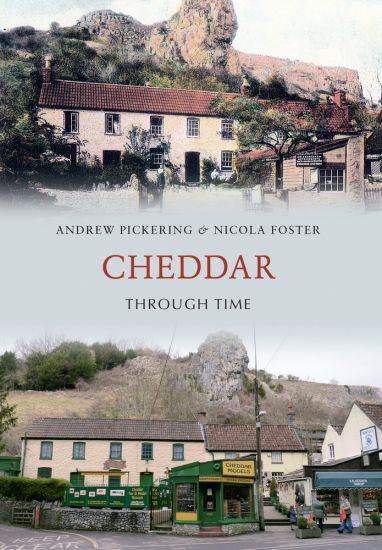
Now that the railway has gone and most visitors disembark from the car and coach bays above the world-famous caves, this book explores Cheddar past and present from the top of its dramatic gorge to the substantial reservoir beyond the bustling village below. While its caves have long served as the village's main attraction, there is a great deal more to discover here regarding a singular tale of mills and trains, churches and schools, strawberries and cheese.Packed with archive and contemporary photographs, many previously unpublished, Cheddar Through Time serves as both a practical guidebook for the visitor exploring this fascinating place for the first time, and a useful resource for those interested in finding out more about its rich history.
Cybernetics is often thought of as a grim military or industrial science of control. But as Andrew Pickering reveals in this surprising book, a much more lively and experimental strain of cybernetics can be traced from the 1940s to the present. "The Cybernetic Brain" explores a largely forgotten group of British thinkers, including Grey Walter, Ross Ashby, Gregory Bateson, R.D. Laing, Stafford Beer, and Gordon Pask, and their singular work in a dazzling array of fields. Psychiatry, engineering, management, politics, music, architecture, education, tantric yoga, the Beats, and the sixties counterculture all come into play as Pickering follows the history of cybernetics' impact on the world, from contemporary robotics and complexity theory to the Chilean economy under Salvador Allende. What underpins this fascinating history, Pickering argues, is a shared but unconventional vision of the world as ultimately unknowable, a place where genuine novelty is always emerging. And thus, Pickering suggests, the history of cybernetics provides us with an imaginative model of open-ended experimentation in stark opposition to the modern urge to achieve domination over nature and each other.
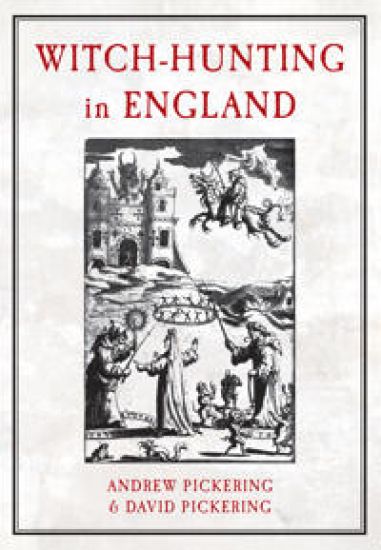
During the sixteenth century, Europe was subject to a fevered and pious wave of witch-hunts and trials. English anti-witch paranoia led to the persecution and execution of a great many individuals, and brought about a large-scale shift in the legal and social culture of the time. However, surprisingly little has been written about this fascinating period of English history, beyond the individual cases of the Pendle witches of Lancashire and the activities of Matthew Hopkins (the 'Witchfinder General') in East Anglia. In this engaging new volume, brothers Andrew and David Pickering address the origins of witch-hunting in England, the methods by which it was conducted, its distribution, its causes and consequences, and its eventual decline. Many differing approaches to the subject are explored, including feminist perspectives, functional explanations and post-modern interpretations, with a strong emphasis on the primary source material, including trial records and contemporary literature such as demonological texts and Royal Society papers. The book is also lavishly illustrated with engravings, maps and location photographs.

The Wars of the Roses and the struggle for the throne between the Houses of York and Lancaster dominate the turbulent history of the latter half of the fifteenth century. Andrew Pickering addresses the issues critical to the study of this period, and analyses the historical debates surounding the characters and events. The text also includes a document study section which offers readers the opportunity to examine a diverse set of written and visual sources. The result is a stimulating foundation text for all Advanced Subsidiary (AS) students, as well as for undergraduates needing an introduction to the period. Lancastrians to Tudors is part of the Cambridge Perspectives in History series. It meets the requirements of the new OCR AS level specifications and is endorsed by OCR.
Recounts the history of the post-war conceptual development of elementary-particle physics. Inviting a reappraisal of the status of scientific knowledge, the text suggests that scientists are not mere passive observers and reporters of nature. Rather they are social beings as well as active constructors of natural phenomena who engage in both experimental and theoretical practice.
This text offers an understanding of the nature of scientific, mathematical and engineering practice, and the production of scientific knowledge. The author presents an approach to the unpredictable nature of change in science, taking into account the number of factors - social, technological, conceptual and natural - that interact to affect the creation of scientific knowledge. In his view, machines, instruments, facts, theories, conceptual and mathematical structures, disciplined practices and human beings are in constantly shifting relationships with one another - "mangled" together in ways that are shaped by the contingencies of culture, time and place. Situating material as well as human agency in their larger cultural context, Pickering uses case studies to show how this picture of the open, changeable nature of science advances a greater understanding of scientific work both past and present. He examines the building of the bubble chamber in particle physics, the search for the quark, the construction of the quarternion system in mathematics and the introduction of computer-controlled machine tools in industry. He uses these examples to address the most basic elements of scientific practice - the development of experimental apparatus, the production of facts, the development of theory and the interrelation of machines and social organization.