Kirjojen hintavertailu. Mukana 12 473 716 kirjaa ja 12 kauppaa.

Kirjailija

Andrew R. Thomas

Kirjat ja teokset yhdessä paikassa: 13 kirjaa, julkaisuja vuosilta 2000-2023, suosituimpien joukossa Air Rage. Vertaile teosten hintoja ja tarkista saatavuus suomalaisista kirjakaupoista.

13 kirjaa

Kirjojen julkaisuhaarukka 2000-2023.

The Canal of Panama and Globalization

The Canal of Panama and Globalization

Andrew R. Thomas

Springer International Publishing AG
2023
nidottu
This book explores the relationship between the Panama Canal and the evolution of the global economy. It details the role the Canal played in America’s ascendancy and the development of modern globalization. Then, it explores how the Panamanian people have brought the Panama Canal into the 21st Century, making the nation an ever-bigger player in multi-modal transport and international trade. It concludes with a deep dive into the future of globalization and what it ultimately means for the Canal.
The Canal of Panama and Globalization

The Canal of Panama and Globalization

Andrew R. Thomas

Springer International Publishing AG
2022
sidottu
This book explores the relationship between the Panama Canal and the evolution of the global economy. It details the role the Canal played in America’s ascendancy and the development of modern globalization. Then, it explores how the Panamanian people have brought the Panama Canal into the 21st Century, making the nation an ever-bigger player in multi-modal transport and international trade. It concludes with a deep dive into the future of globalization and what it ultimately means for the Canal.
American Shale Energy and the Global Economy

American Shale Energy and the Global Economy

Andrew R. Thomas

Springer International Publishing AG
2018
nidottu
This brief explores the business and global implications of the American shale energy, or natural gas, revolution. Specifically, it provides a rational, comprehensive look at the major business themes and management implications that surround the new abundance of natural gas in the United States and identifies some of the most significant geopolitical considerations globally. While acknowledging some of the controversies and hazards surrounding the extraction techniques, commonly known as “fracking”, the author also looks at the hopes this technique poses and details how shale energy will impact supply chains for firms. The discovery of new sources of domestic natural gas in recent years - coupled with innovations that facilitated their extraction - has altered the global landscape. However, the vast majority of the information out there for business students, faculty, and practitioners about the natural gas revolution is focused on the impact of “longer and lower” energy prices; and, secondarily, opportunities within the domestic energy sector. Each of these is crucial for business people to understand, however, the natural gas revolution is about much more. Companies of all sizes, whether they see it or not, are having new opportunities open up for their products and services. Further, the globalization of shale energy will have far reaching influence beyond simply economic factors. Geopolitical considerations and the re-structuring of international relations around shale energy will impact supply chains in a myriad of ways. This book aims to examine these opportunities.Featuring case studies from contemporary companies, this book will be of interest to students, academics, researchers, professionals and policy makers who are seeking to understand the business and global implications of the shale energy revolution.
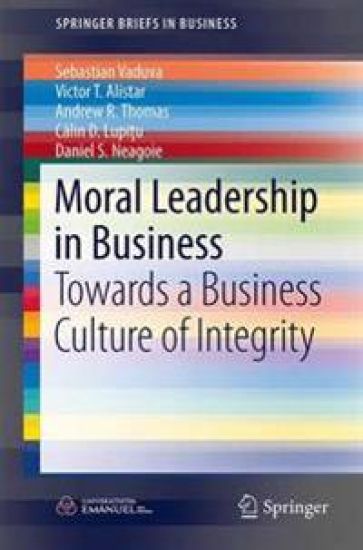
Moral Leadership in Business

Moral Leadership in Business

Sebastian Vaduva; Victor T. Alistar; Andrew R. Thomas; Calin D. Lupitu; Daniel S. Neagoie

Springer International Publishing AG
2016
nidottu
This brief explores the concept of moral leadership in organizations. Specifically, it examines ways in which companies can strengthen their reputation in the market and increase performance by taking leading positions in the realm of business ethics. It presents research from top scholars of Eastern Europe contemplating the future of our global information and knowledge society. How will the economic power nexuses of the world shift in the foreseeable future? Are we becoming so interconnected and at the same time divided that social capital (together with business integrity and customer feedback) may matter more than money and resources? How will education and creativity bridge the shrinking gap between producers and consumers? Such questions and many more are tackled by this brief.In the current global economy, we have never before been more tightly-knit and never before has it been easier to distribute goods as well as ideologies. However, in the global marketplace we areonly as good as our word, or our reputation, proves to be. Integrity studies by Transparency International show a correlation between corruption and national threat and lists corruption among the most harmful factors to impact local and regional economies. Therefore, successful businesses cannot afford to simply remain materially successful; they have to consider their community impact and become moral leaders before they can be world leaders in their respective field.Featuring innovative tools, recommendations, case studies and checklists, this brief will be of interest to students, academics, scholars, practitioners and policymakers alike in the fields of leadership, corporate governance, business ethics and corporate social responsibility.
Integrity in the Business Panorama

Integrity in the Business Panorama

Sebastian Vaduva; Victor T. Alistar; Andrew R. Thomas; Ioan S. Fotea; Calin D. Lupitu; Daniel S. Neagoie; Adrian F. Cioara

Springer International Publishing AG
2016
nidottu
This volume explores the value of business integrity and ethics as a "best practice" model in business strategy. The authors define business integrity, explore areas in which integrity is often absent or discredited, and provide a framework and tools to help build better business ethics and corporate social responsibility. The volume aims to reveal that beyond the immediate economic effect, corruption can ruin entire countries by destabilizing key economic and political players, warping their vision for state development.Against the backdrop of global financial and ethical crises, the authors argue that integrity in business is a key component for long-term success. Integrity includes the ability to be consistent with one’s moral values and principles and places society’s wishes at the center of business decision-making. The cornerstone upon which a culture of integrity is built within a certain business is the ethics code. It explicitly states the values and principles to which a company adheres. The continuous promotion, support and communication of the ethics code stipulations provide the basis upon which integrity in business is built.Featuring case studies from countries such as Sweden, Great Britain and France and companies such Starbucks, Nike, PSEG, and Anglo-American PLC, this volume provides a comprehensive study of business integrity and social responsibility that will be of interest to students, scholars, professionals and policy-makers from around the world.
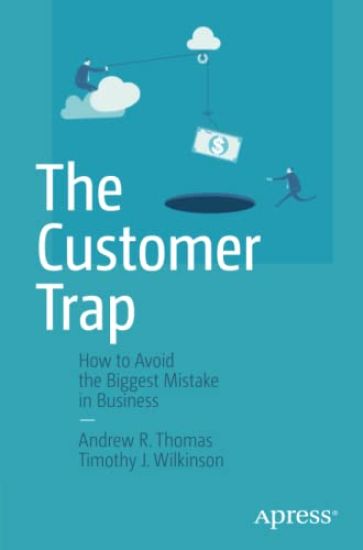
The Customer Trap

The Customer Trap

Andrew R. Thomas; Timothy J. Wilkinson

APress
2015
nidottu
American business is dysfunctional. Companies of all sizes follow the mistaken belief that their products and services are best sold through mega-customers with pervasive market reach, such as Amazon and Walmart. Far too many business leaders fail to realize—until it is too late—that the relentless pursuit of volume at all cost is not the key to long-term profits and success. The Customer Trap: How to Avoid the Biggest Mistake in Business is Thomas and Wilkinson’s sequel to The Distribution Trap: Keeping Your Innovations from Becoming Commodities, which won the Berry-American Marketing Association Prize for the best marketing book of 2010. The Distribution Trap contended that cracking the big-box channel is not necessarily the Holy Grail that many marketers assume it is. The Customer Trap takes this thesis to the next level by arguing that all companies, regardless of the industry there are in, should maintain control over their sales and distribution channels. Volume forgone by avoiding the mass market is more than offset by higher margins and stronger brand equity. The Customer Trap shows that giving power to a customer who violates "the ten percent rule" sets a company up for ruin. Yet, when presented with the opportunity to push more sales through large customers, most decision-makers jump at the chance. As a result, marketing has come to resemble a relentless quest for efficiency and scale. Demands from mega-customers in the form of discounts, deals, and incentives erode the integrity of the brand and what it originally stood for. Lower margins become the norm and cost-saving compromises on quality take over. In time, the brand suffers and, in some cases, fails outright. Stark examples from Oreck Vacuum Cleaners, Rubbermaid, Goodyear, Levi’s, and others illustrate the perils of falling into the "customer trap."This book demonstrates in vivid detail how to thrive bycontrolling your sales and distribution. The authors show how many firms, such as STIHL Inc., etailz, Apple, Red Ant Pants, and Columbia Paints & Coatings, have prospered by avoiding the "customer trap"—and how your company can have similar success.
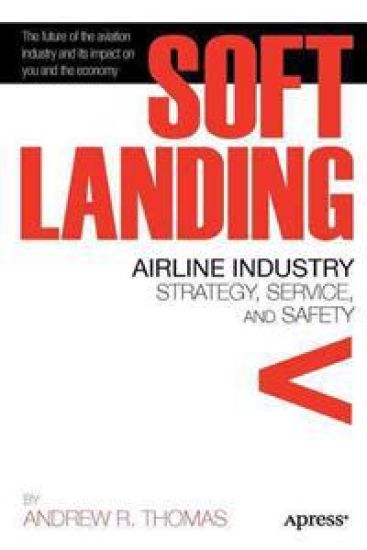
Soft Landing

Soft Landing

Andrew R. Thomas

APress
2011
nidottu
Soft Landing: Airline Industry Strategy, Service, and Safety covers the immediate past, present, and future of the airline industry and its effects on consumers and the economy. Aviation receives a disproportionate amount of news coverage in the popular press—not to mention chatter at cocktail parties and workplaces around the world. And why not? Aviation represents a sector of the U.S economy, for example, exceeded in size only by the real estate, healthcare, and automotive industries. Furthermore, hundreds of millions of people fly each year, including 80 million Americans. So we all have airline stories—experiencing a delay and losing a business deal, spending a night or three in the airport, dealing with ornery airline personnel, losing money on airline stocks, or being involved in a near miss. (Or, as George Carlin more accurately put it, a “near hit.”) But things might be on the upswing. Knocked to its knees by 9/11 and a decade of falling revenue and rising losses, the industry’s “flying cheap” strategy and organizational efficiencies based partly on outsourcing have appear to have helped passengers and profitability return. As this book explains, we can look forward to better technology and infrastructure, speedier—and easier—travel, more effective and less invasive security measures, and more jobs in the air and on the ground. Turbulence is always a possibility. Rising fuel costs, economic uncertainty, and future terror attacks could cause tumult once again. Plus, airline companies intend to charge us extra for everything from the weight of our own bodies to use of the bathroom. But as the industry has discovered, we’ll put up with that—and more—if we can make it to our destinations with bags intact and a smaller dent in our wallets. Soft Landing will: Sort out the promise and perils facing the airlines Analyze and articulatethe potential impact of changes in the aviation industry on passengers, airports, governments, the global economy, and the airlines themselves Give airline passengers worldwide an idea of what’s ahead when it comes to airline service, security, and technology
Managing by Accountability

Managing by Accountability

Milton D. Dealy; Andrew R. Thomas

Praeger Publishers Inc
2006
sidottu
At its core, accountability is the responsibility to act. It is the commitment to do the right thing and stand by your decisions. Perhaps most importantly, it is a quality that must come from within; dishearteningly, even as legislators, shareholders, customers, and community activists are demanding greater accountability from corporate leaders, too many are waiting for some third party to take action. Whatever the endeavor, it is ultimately the individual who must hold himself to the highest standard first. Those who manage by accountability viscerally know that external rules cannot substitute for character. And they know that accountability is a quality that can be developed, honed through practice, and encouraged in others. Using stories drawn from David Dealy's experiences on the front lines, as well as examples from other successful leaders, Managing by Accountability demonstrates how leaders who embark on a management philosophy of personal accountability imbue their organizations with the qualities of integrity and responsibility. In their down-to-earth style, the authors identify the five great accountability mistakes and offer a wealth of practical suggestions for overcoming them to achieve outstanding results throughout the organization. In some cases it may be Congress (e.g., Sarbanes-Oxley legislation), the media, the company's legal or communications department, Wall Street, disgruntled customers, or angry community activists. This is not to say that formal accountability programs are useless; they do play an important role. Nevertheless, it is ultimately the individual who must hold himself to the highest standard first—without waiting to be told, pushed, or prodded. Those who manage by accountability viscerally know that external rules cannot substitute for character. And they also know that accountability can be developed, honed through practice, and encouraged in others. Managing by Accountability demonstrates how leaders who embark on a management philosophy of personal accountability imbue their organizations with the qualities of integrity and responsibility. Using stories drawn from David Dealy's experiences on the front lines, as well as examples from other successful leaders, the book provides concrete examples of accountability in action. In their down-to-earth style, Dealy and Thomas identify the five great accountability mistakes and offer a wealth of practical suggestions for overcoming them to achieve outstanding results throughout the organization.
Change or Die

Change or Die

Milton D. Dealy; Andrew R. Thomas

Praeger Publishers Inc
2005
nidottu
For every business, the choice is stark: Change—or die. At any moment, fully two-thirds of America's companies claim to be in the midst of some type of organizational revamping, though most of these initiatives will fail. What many companies neglect to recognize is that organizational change needs to come from within, no matter how profound the external forces. Positive change requires change agents throughout the organization—those individuals who can translate the strategic vision of leaders into pragmatic behavior. This book identifies the qualities of great change agents and how these skills can be mastered to serve as a catalyst for change throughout the organization. Illustrating these principles through examples from world-class organizations, Dealy and Thomas highlight the five key qualities of great change agents; they: * challenge the status quo; * stoke the fire of creativity; * embrace the necessity of conflict; * manage risk rather than avoid it; and * develop new change agents. Bringing the process of change out of the realm of the analysts and consultants and to the front lines, the authors show you how to thrive in a world that demands nothing less than continuous change. For every business, the choice is stark: Change—or die. At any moment, fully two-thirds of America's companies claim to be in the midst of some type of organizational revamping. We don't need research from the Harvard Business School (even though it has been conducted) to tell us that most of these initiatives will fail. The business landscape is littered with the carcasses of giants who were unable to adapt to change—Digital, Prime, Wang, and Polaroid, to name a few. What many companies fail to recognize is that organizational change needs to come from within, no matter how profound the external forces. Positive change requires change agents throughout the organization—those individuals who can translate the strategic vision of leaders into pragmatic behavior. They will be the early adopters of the new values, actions, and skills required by the company. This book identifies the qualities of great change agents and how these skills can be mastered to serve as a catalyst for change throughout the organization. Illustrating these principles through examples from world-class organizations, Dealy and Thomas demonstrate the techniques for acquiring and executing those skills-and how corporate leaders can encourage and reward this behavior, creating a culture of risk-taking, innovation, and a focus on the future. From seasoned executives to entry-level employees, readers will learn that great change agents: * challenge the status quo; * stoke the fire of creativity; * embrace the necessity of conflict; * manage risk rather than avoid it; and * develop new change agents. Bringing the process of change out of the realm of the analysts and consultants and to the front lines, the authors show you how to thrive in a world that demands nothing less than continuous change.
Change or Die

Change or Die

Milton D. Dealy; Andrew R. Thomas

Praeger Publishers Inc
2005
sidottu
For every business, the choice is stark: Change—or die. At any moment, fully two-thirds of America's companies claim to be in the midst of some type of organizational revamping, though most of these initiatives will fail. What many companies neglect to recognize is that organizational change needs to come from within, no matter how profound the external forces. Positive change requires change agents throughout the organization—those individuals who can translate the strategic vision of leaders into pragmatic behavior. This book identifies the qualities of great change agents and how these skills can be mastered to serve as a catalyst for change throughout the organization. Illustrating these principles through examples from world-class organizations, Dealy and Thomas highlight the five key qualities of great change agents; they: * challenge the status quo; * stoke the fire of creativity; * embrace the necessity of conflict; * manage risk rather than avoid it; and * develop new change agents. Bringing the process of change out of the realm of the analysts and consultants and to the front lines, the authors show you how to thrive in a world that demands nothing less than continuous change.For every business, the choice is stark: Change—or die. At any moment, fully two-thirds of America's companies claim to be in the midst of some type of organizational revamping. We don't need research from the Harvard Business School (even though it has been conducted) to tell us that most of these initiatives will fail. The business landscape is littered with the carcasses of giants who were unable to adapt to change—Digital, Prime, Wang, and Polaroid, to name a few. What many companies fail to recognize is that organizational change needs to come from within, no matter how profound the external forces. Positive change requires change agents throughout the organization—those individuals who can translate the strategic vision of leaders into pragmatic behavior. They will be the early adopters of the new values, actions, and skills required by the company.This book identifies the qualities of great change agents and how these skills can be mastered to serve as a catalyst for change throughout the organization. Illustrating these principles through examples from world-class organizations, Dealy and Thomas demonstrate the techniques for acquiring and executing those skills-and how corporate leaders can encourage and reward this behavior, creating a culture of risk-taking, innovation, and a focus on the future. From seasoned executives to entry-level employees, readers will learn that great change agents: * challenge the status quo; * stoke the fire of creativity; * embrace the necessity of conflict; * manage risk rather than avoid it; and * develop new change agents. Bringing the process of change out of the realm of the analysts and consultants and to the front lines, the authors show you how to thrive in a world that demands nothing less than continuous change.
Defining the Really Great Boss

Defining the Really Great Boss

Milton D. Dealy; Andrew R. Thomas

Praeger Publishers Inc
2004
sidottu
What makes a great boss? Bosses don't become great because of their title, rank, degree of authority, office size, or benefits package. Great bosses aren't even necessarily great managers. Instead, they possess a set of core competencies that set them apart from mere managers. The skill set of great bosses entails five qualities: they do the right thing for the right reason; they never make the same mistake twice; they set their personal expectations higher than those of their bosses; they go to their bosses with action plans, not problems; and they follow up.If a boss has only one of these characteristics, he or she is probably very successful. But application of all five defines what it means to be a great boss, to be successful in good times and bad, through change and adversity, and to be recognized as such by the people you work for—as well as by the people who work for you.
Air Rage

Air Rage

Andrew R. Thomas

Prometheus Books
2001
pokkari
In the last few years, several planes have almost gone down because of the aberrant or abusive behavior of one or more individuals. Unfortunately, such outbursts are becoming increasingly common. These dangerous actions -known as air rage - are by far the greatest threat to the safety and security of the 1.5 billion passengers who travel annually by air. Although the number of air-rage cases continues to rise, airlines, airports, and even governmental agencies consistently underreport the scope of the problem, thus exacerbating an already volatile situation. This intensively researched book by an anonymous veteran insider of the airline industry and an experienced investigative journalist provides reliable, detailed research never before reported. The book fully explores the fundamental causes of air rage: alcohol and illegal drug abuse, mental illness, overcrowded airplanes, the economic realities of the airline business, the failure to report air-rage incidents, and the lack of consequences for perpetrators. Each point is illustrated through recounting actual air-rage incidents that the authors have collected from interviews with flight crews and passengers and/or through their Web site at www.AirRage.org. Without being alarmist in tone, this important book will make readers aware of the scope and magnitude of the air-rage problem and what might be done to solve this emerging crisis in the skies. See also Andrew Thomas's Aviation Insecurity: The New Challenges of Air Travel.
Growing Your Business in Emerging Markets

Growing Your Business in Emerging Markets

John Caslione; Andrew R. Thomas

Praeger Publishers Inc
2000
sidottu
The future success of many companies in the United States and Europe is becoming more dependent on effectively developing and expanding markets in new emerging and partially developed countries. Few companies, however, know how to do it well, if at all. Their success rate is low, while the cost of failure remains high. Caslione and Thomas provide insights, knowledge, special tools, and the experience that will show executives how to take hold of these challenges. Through case studies of companies in a wide cross-section of industries, the authors highlight the processes necessary to develop successful market entry, sales, and distribution strategies for their companies in emerging markets around the world.Global business strategy can no longer be focused on only one country or region; the risks are too great. Only when a truly global company develops a holistic and global perspective and implements proven strategies can the success in the new global economy be achieved.