Kirjojen hintavertailu. Mukana 12 156 215 kirjaa ja 12 kauppaa.

Kirjailija

Andrew Rawson

Kirjat ja teokset yhdessä paikassa: 21 kirjaa, julkaisuja vuosilta 2002-2026, suosituimpien joukossa Britain's Munitions Industry in the Second World War. Vertaile teosten hintoja ja tarkista saatavuus suomalaisista kirjakaupoista.

21 kirjaa

Kirjojen julkaisuhaarukka 2002-2026.

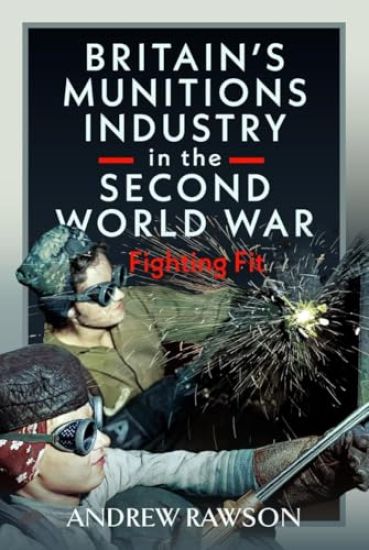
Britain's Munitions Industry in the Second World War
This is the history of Britain’s armaments industry during the Second World War. It begins with the rearmament before the war and shows how a shadow industry was prepared, in response to German aggression. See how industry was organised and programmed, before learning how armaments were researched, designed and developed. The narrative then looks at how enlistment was controlled, how skilled workers were deployed and how manufacturing was diluted, to allow tens of thousands of unemployed men and women to play their part. The story continues with an explanation of the importance of the coal and oil industries, followed by the development of the metal industries. It then looks at the huge amounts of imports and merchant shipping required, as well as the American Lend Lease programme. See how factories equipped the Royal Air Force, so it could fight the Battle of Britain, and reequipped the British Army following the disaster at Dunkirk. Also learn how the shipyards worked around the clock on warships and merchant ships, so the Royal Navy could defend the nation and protect the supply convoys. See how the lessons learnt on the battlefield helped modify early factory designs into practical ones. Learn how the war changed relations between the government, the employers, the unions, and the workforce. See how issues could cause widespread industrial unrest, as the cost of living rose and the rules became stricter. Also learn how the desire to improve production improved health and safety at work, welfare arrangements and developed management and human resources. We also see how the Luftwaffe attempt to cripple British industry with its aerial Blitz. The story ends with a nation being pushed to its limits for a second time in thirty years, before suddenly demobilising, again leaving the British people wondering what the future would hold for them.
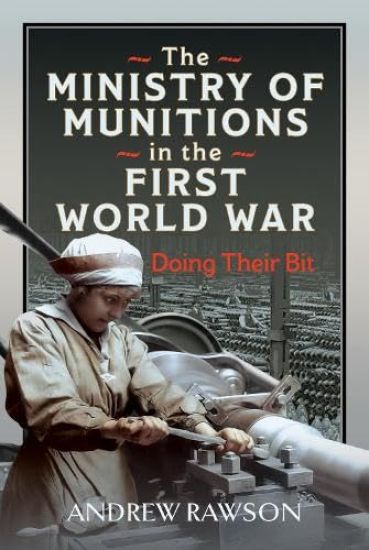
The Ministry of Munitions in the First World War

The Ministry of Munitions in the First World War

Andrew Rawson

PEN SWORD BOOKS LTD
2025
sidottu
This is the history of Britain’s munitions industry in the First World War. It begins with the shortages caused by an expanding army required to fight in trenches, then shows how the country was organised, with the expansion of private companies and the introduction of state owned factories. It also explains how new laws regulated industry. The narrative describes how production was initially estimated, until experience illustrated how the armed services’ demands could be met. It also looks at the problems caused by unchecked enlistment, which took no account of men’s skills, and the attempts to recall key workers from the armed services. The story continues with the raw materials, such as coal, which was dug by one million miners, and the huge amounts of iron ore imported from Spain. Learn how Britain’s steel industry struggled to make enough forgings for shells, while many more were imported from North America. See how manufacturing issues were resolved, while battlefield experience led to modifications being made. Also see how the nation’s chemical industry expanded to produce enough explosives before working out how to make large amounts of lethal gases. Learn how the war required the relations between the government, the employers, the unions, and the workforce to change; in some cases, forever. See how diluting production allowed the workforce to increase and how tens of thousands of women entered the factories. Also hear how various issues caused widespread industrial unrest at times, as the cost of living rose and the rules became stricter. On a positive note, a desire to improve production increased awareness of health and safety, as well as the benefits of positive welfare. The story ends with a nation being pushed to its limits suddenly demobilising, leaving everyone wondering what the future would hold for them.
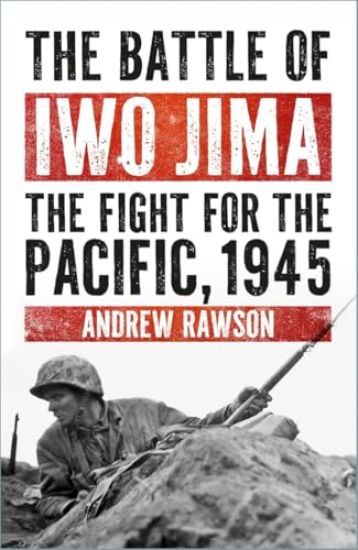
The Battle of Iwo Jima

The Battle of Iwo Jima

Andrew Rawson

THE HISTORY PRESS LTD
2025
pokkari
On 19 February 1945, Operation Detachment began with US marine forces storming Iwo Jima, aiming to capture the island and its airfields. This was the first campaign on Japanese soil and would result in some of the fiercest fighting in the Pacific. A brutal example of war at all costs, the defending garrison fought to almost the last man; it was a fight they couldn’t hope to win against the superior US numbers, but they exacted horrific casualties on the invading forces before their ultimate defeat.In this concise account, Andrew Rawson uses timelines, diary extracts and detailed profiles to explain the lead-up to the campaign, the battle itself and its legacy, while maps and rarely published photographs place you in the centre of the unfolding action. With painful lessons learned, this vital battle of the Pacific theatre would inform US strategies and actions through the rest of the war, and here Rawson shows exactly how and why.
Battle of the Bulge 1944-45

Battle of the Bulge 1944-45

Andrew Rawson

THE HISTORY PRESS LTD
2022
nidottu
In December 1944 the German military made its final attempt to end the Second World War by throwing in all its reserves in a desperate attempt to shatter the Allied lines. After breaking through the American-held sector in the Ardennes, two Panzer armies headed for the bridges over the River Meuse. However, a combination of poor planning, bad weather, tortuous terrain and, above all, the determined defence of keys towns and villages delayed the advance. The Allies were able to hold the northern and southern shoulders of the attack, hemming the Germans in. The Bulge had been created, and as the fortunes of battle were reversed, the Allies struck back.In Battle of the Bulge 1944–45, historian Andrew Rawson gives a clear, concise account of those dramatic days at the end of 1944, supported by a timeline of events and orders of battle. If you want to understand what happened and why – read on.
The Learning Process

The Learning Process

Andrew Rawson

Helion Company
2019
nidottu
The men who went to war in August 1914 fought completely differently to those who survived until the Armistice on 11 November 1918. This is a study of the bloody learning process the British Expeditionary Force had to go through on the Western Front. The development of the tactics is explained as is the impact new weapons and ammunition had on the battles. The challenges presented when the Germans changed their defensive tactics or upgraded their fortifications is also looked at. Each battle and campaign is studied in turn, starting with the first lessons learnt by the Old Contemptibles who served 1914 and the rigid attack plans of 1915. Next comes the rapid evolution of infantry and artillery plans during the Somme campaign in the summer of 1916 and the changes made to accommodate the tank in the autumn. The important developments in combined arms warfare, and the German reactions to it, are followed through as the 1917 campaigns of Arras and Ypres are discussed. The year ends with a look at the Tank Corps’ successes and problems which were highlighted at Cambrai. The year 1918 starts with the huge German offensives across the Somme, the Lys and on the Aisne. The strategic mistakes made before the battles, and the tactical decisions made during them, are looked at in turn. Finally, we see how the art of combined arms warfare matured during the offensives of July and August 1918, culminating with the breaking of the Drocourt-Quéant Line and the Hindenburg Line in September.
Poland's Struggle

Poland's Struggle

Andrew Rawson

Pen Sword Military
2019
sidottu
Poland was re-created as an independent nation at the end of the First World War, but it soon faced problems as Nazi Germany set about expanding its control on Europe. The Wehrmacht's attack on 1 September 1939 was followed by a Red Army invasion two weeks later. The people of Poland were then subjected to a terrifying campaign of murder, imprisonment and enslavement which only increased as the war dragged on. Polish Catholics faced violence and deportation as they adapted to the draconian laws implemented by the German authorities. Meanwhile, the Polish Jews were forced into ghettos while the plans for the Final Solution were implemented. They then faced annihilation in the Holocaust, code named Operation Reinhard. Despite the dangers, many Poles joined the underground war against their oppressors, while those who escaped sought to fight for their nation's freedom from abroad. They sent intelligence to the west, attacked German installations, carried out assassinations and rose up to confront their enemy, all against impossible odds. The advance of the Red Army brought new problems, as the Soviet's dreaded NKVD introduced its own form of terror, hunting down anyone who fought for an independent nation. The story concludes with Poland's experience behind the Iron Curtain, ending with the return of democracy by 1991.
Iwo Jima 1945

Iwo Jima 1945

Andrew Rawson

Dundurn Press
2016
nidottu
One of the bloodiest battles of the war in the Pacific. Operation Detachment, the invasion of Iwo Jima, on February 19, 1945, was the first campaign on Japanese soil, and it resulted in some of the fiercest fighting of the Pacific campaign. United States Marines supported by the U.S. Navy and Air Force fought the Japanese both over and underground on the island of volcanic ash, in a battle which was immortalized by the raising of the Stars and Stripes above Mount Suribachi. It was a battle that the Japanese could not win, but they were determined to die trying; of the 18,000-strong garrison, only 200 were taken prisoner. The Americans lost more in the 35-day battle, but at the end they had possession of three airfields in range of the Japanese mainland. This book gives a clear, concise account of those dramatic days in 1945, supported by a timeline of events and orders of battle. Over fifty photographs illustrate the events during this momentous battle.
A Clash of Thrones

A Clash of Thrones

Andrew Rawson

The History Press Ltd
2015
nidottu
Medieval Europe is a dark and dangerous place. In 1054 the Church tears itself in two, setting the scene for nearly 500 years of turmoil. Empires will collide and dynasties will rise and fall; marriages will be made and alliances broken. It is a place where love clashes with ambition and violence rules – enemies are blinded, rivals are murdered and heretics are burnt at the stake. As the Black Death sweeps the continent and the Mongol hordes threaten its borders, can the kings of the old world survive the dawn of a new era?
The British Army 1914-1918

The British Army 1914-1918

Andrew Rawson

The History Press Ltd
2014
nidottu
An indispensable guide to the British Army during the First World War covers the men who fought for Britain: from the ‘Old Contemptibles’ – the professionals who stemmed the German advance at the beginning of the war – to the Territorials, the ‘Derby Men’, Kitchener’s ‘New Army’ and the conscripts who eventually defeated the Kaiser’s armies four years later. Andrew Rawson examines the impressive contributions made by the Dominions and the Empire and explores aspects of doctrine, training, communications, strategy and tactics, together with divisional organisations, histories and the roles of the different Arms and Services. He reviews all aspects of the soldier’s everyday life – uniforms, equipment, rations, trench life, leave and military discipline – and profiles the commanders and the legacy of the war in art, as well as providing information on cemeteries and places of interest. It is all here, in one book.
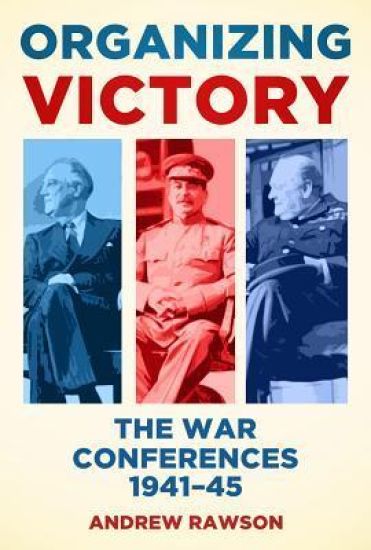
Organizing Victory

Organizing Victory

Andrew Rawson

The History Press Ltd
2013
nidottu
Between December 1941 and July 1945 the Allied Heads of State met nine times to decide the ongoing strategy of World War II with their chiefs of staff. President Franklin Roosevelt and Prime Minister Winston Churchill decided the strategies for the Mediterranean and the Far East at the Arcadia conference in December 1941, reconvening in Casablanca for the symbol conference in 1943. They then considered the European campaign at the Trident Conference in May and the Quadrant conference in August. Generalissimo Chiang Kai-Shek joined them in Egypt for the Sextant Conference in November 1943, while Premier Joseph Stalin welcomed them to Tehran for the Eureka conference. The Octagon conference in September 1944 reaffirmed the Allied partnership's commitment to the European campaign. They then travelled to Yalta in the Crimea the following February to agree with Stalin how to end the war in Europe at the Argonaut conference. At the final conference in Potsdam, Berlin, in July 1945 President Harry S. Truman took the place of the recently deceased Roosevelt and the new PM Clement Atlee replaced Churchill part-way through the conference. They discussed the chaos of Europe and an end to the campaign against Japan; Truman also took Stalin aside to tell him about the atomic bomb. He affected indifference 0- but his spies had forwarned him of its existence. Discover what they discussed though the edited minutes of the meetings. Read the reasons and the compromises behind the decisions. follow the heated discussions as the war turned in favour of the Allies - and learn how the foundations for the post war world were laid. This is a history in the raw, unmediated: how would you, as President of the United States, reply to Stalin's formal suggestion that between 50,000 and 100,000 of the German High Command be liquidated at war's end? All the minutes are supported by footnotes containing extensive supplementary information?
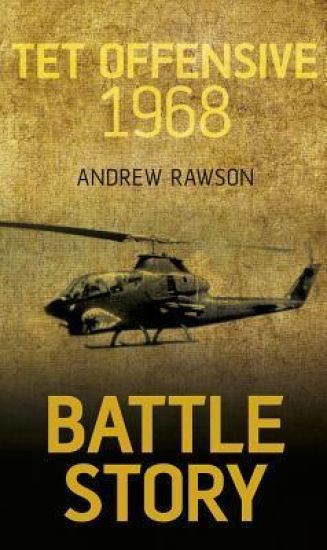
Battle Story: Tet Offensive 1968

Battle Story: Tet Offensive 1968

Andrew Rawson

The History Press Ltd
2013
nidottu
By the end of January 1968 the American people thought their armed forces were winning in South Vietnam after three years of escalating conflict. Then the North Vietnamese Army and Viet Cong struck back, hitting military and political targets across the country. While the NVA and Viet Cong suffered a military defeat, they dealt a huge blow to US support for the war. If you want to understand what happened and why - read Battle Story. Detailed profiles examine the background of the opposing commanders, as well as the contrasting tactics and equipment of their fighting forces. Contemporary accounts reveal the true story of this pivotal battle and its consequences for the Vietnam War. Specially commissioned maps analyse the key developments during the battle. Excellent photographs place the reader at the centre of the fighting. Orders of battle show the composition of the opposing forces’ armies.
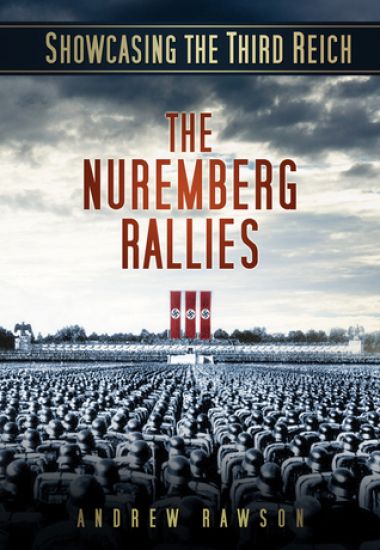
Showcasing the Third Reich: The Nuremberg Rallies

Showcasing the Third Reich: The Nuremberg Rallies

Andrew Rawson

The History Press Ltd
2012
nidottu
A fully illustrated study of the notorious Nuremberg rallies and the part they played in the Nazis’ quest to establish the 1000 Year Third Reich. Between 1923 and 1938 the Nazis held ten ‘Reich National Party Conventions’ in the city of Nuremberg. Each rally was bigger than the last, with the number of visitors growing to over half a million, this growth reflecting the spread of National Socialism across Germany. This book reveals how the rallies were organised, what the daily schedules were, who spoke at them and who attended. It also explores the development of the Rally Grounds under Albert Speer, the importance of the rallies in Joseph Goebbels’ propaganda campaign and the story of Leni Riefenstahl’s filming of the rallies, in particular the Triumph of the Will in 1934. Using over 140 dramatic and informative images, both of the rallies and Nuremberg today, author Andrew Rawson provides new insight into the most spectacular propaganda exercises since the games of Ancient Rome.
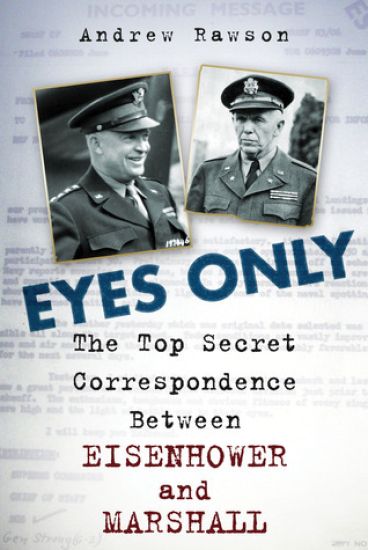
Eyes Only

Eyes Only

Andrew Rawson

The History Press Ltd
2012
sidottu
When you arrived at work today, what was on your to-do list? On 6 February 1944, this landed on the desk of General George C. Marshall, Chief of Staff of the United States Army, a request from General Dwight D Eisenhower, Supreme Commander of the Allied Expeditionary Force in Europe: 'Count up all the divisions that will be in the Mediterranean, including two newly arrived U.S. divisions, consider the requirements in Italy in view of the mountain masses north of Rome, and then consider what influence on your problem a sizable number of divisions, heavily engaged or advancing rapidly in southern France, will have on OVERLORD.' It puts that late delivery or forgotten invoice into perspective. Eyes Only is not a history of the campaigns that swept across Europe between June 1944 and May 1945 – it is military command at its rawest, in real time and with no benefit of hindsight. It follows the planning, execution and aftermath of the campaigns through the highest security level day-to-day correspondence between the two Generals; the ‘Eyes Only’ cables. These candid words passed over their desks between December 1943 and December 1945, here fully annotated with background information. The cables start with the fraught six-month planning period for D-Day, followed by the establishment of the beachhead and the exhilarating advance across France. A difficult winter followed, culminating in attack and counterattack in the Ardennes. As Germany’s collapse became imminent, attention focused on how to conclude the war without coming into conflict with the Soviet Army. After V-E Day, the problems of occupying Germany, de-Nazification, redeployment and humanitarian efforts are all on the agenda. Messages from the key politicians – Roosevelt, Churchill and Stalin – are included. The two Generals have to deal with differences between the Joint Chiefs of Staff and the British Chiefs of Staff, the effect of the Mediterranean battles on the Western Front campaign — and of course ‘man management’ of figures such as Patton, Montgomery and de Gaulle. Judge for yourself how two of the United States’ greatest military leaders dealt with the burden of command in the eye of the storm of history.
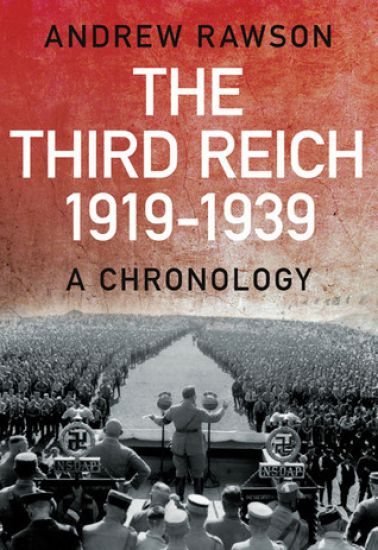
The Third Reich 1919-1939

The Third Reich 1919-1939

Andrew Rawson

The History Press Ltd
2010
nidottu
The rise of Hitler's Nazi Party is one of the defining phenomena of the twentieth century. The manner in which National Socialist ideologies took over life in Germany is difficult to comprehend over 75 years later. This fully illustrated book is a single volume encyclopedia on all aspects of this period in modern history. It starts with a shattered post-war Germany and charts the violent political tactics used by the Nazis to seize political control in 1933. The subsequent consolidation of power and brutal suppression of opponents followed as they took over all areas of society, introducing a new festival calendar to celebrate their takeover. The various military, political and youth organisations are considered, the Nazis' warped methods for maintaining law and order and their use of the press and propaganda to control the people and introduce their racial ideals. Chapters also cover art, culture, education, the economy, resistance, the leaders themselves, and more.
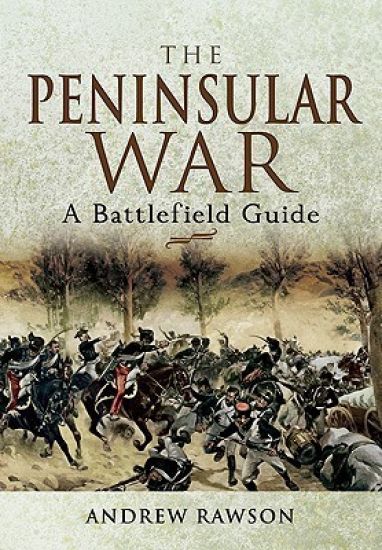
Peninsular War: A Battlefield Guide

Peninsular War: A Battlefield Guide

Andrew Rawson

Pen Sword Military
2009
sidottu
A new battlefield guide to the Peninsular War is long overdue. Modern development in Spain and Portugal has encroached on many of the battlefields, new research has questioned established interpretations of events, and there is a broader appreciation of the parts played by all the armies involved - the French on one side and the Spanish, Portuguese and British on the other. Andrew Rawson, in this highly illustrated and practical guide, offers a wide-ranging, up-to-date and balanced account of this prolonged conflict, and he guides the reader and the visitor across the terrain over which the armies marched and fought. He reconstructs the major battles in graphic detail, and provides practical tours of the major battlefields and campaigns. Also included are sections examining the armies, the military organization and tactics of the time and the role of the Spanish guerrillas. This guide to the Peninsular War will be essential reading for anyone who wants a concise and accessible introduction to the conflict, and it will serve as an invaluable reference guide for visitors who want to explore the sites of the fighting two centuries ago.
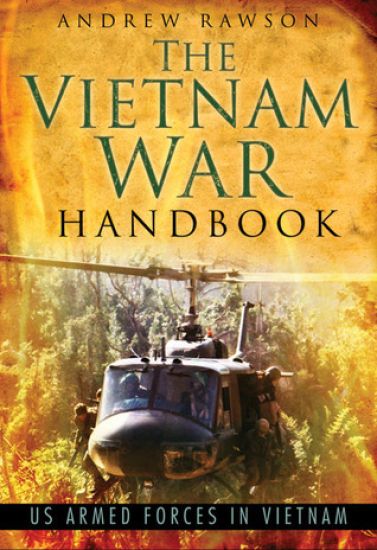
The Vietnam War Handbook

The Vietnam War Handbook

Andrew Rawson

The History Press Ltd
2008
sidottu
The book covers everything from infantry, artillery, armour, special forces, riverine craft, intelligence, combat support and service units, to weapons and equipment, organisation, command and control, daily life and tours of duty, awards and medals. Films and books, memorials and the legacy of the Vietnam War in the USA and South East Asia are also covered.
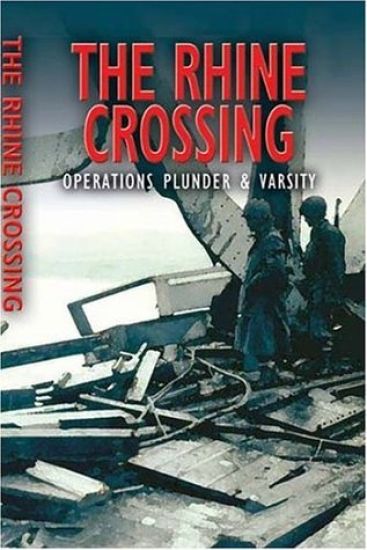
Rhine Crossing: Operations Plunder and Varsity

Rhine Crossing: Operations Plunder and Varsity

Andrew Rawson

Pen Sword Books Ltd
2004
pokkari
In spring 1945, the outcome of the war was beyond doubt. Yet with the Russians closing fast on Berlin, the speed of the USBritish advance was of the essence. One major hurdle remained - the mighty Rhine. This text follows the river crossings by 30th79th US Divisionsthe parachute assault by 17th US Airborne Division.
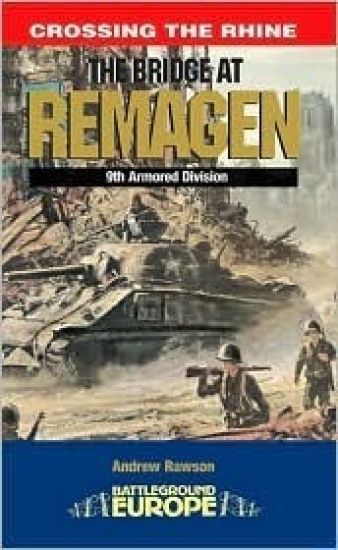
Remagen Bridge: 9th Armoured Infantry Division
In Spring 1945 one final hurdle faced the American and British Armies under Ike's supreme command - the Rhine. This mighty river was literally the last ditch for the defence of Hitler's Germany. Crossing it would be a major military undertaking. The race was on to find intact crossings. Famously the American forces in a daring coup-de-main operation seized the Bridge at Remagen which, due to German blunder and oversight, remained intact. This is the thrilling story of that success.