Kirjojen hintavertailu. Mukana 12 152 606 kirjaa ja 12 kauppaa.

Kirjailija

Andrew Reynolds

Kirjat ja teokset yhdessä paikassa: 15 kirjaa, julkaisuja vuosilta 1999-2026, suosituimpien joukossa Los Llaneros. Vertaile teosten hintoja ja tarkista saatavuus suomalaisista kirjakaupoista.

15 kirjaa

Kirjojen julkaisuhaarukka 1999-2026.

Los Llaneros

Los Llaneros

Joel Zapata; Andrew Reynolds; Alex Hunt; John Beusterien

UNIVERSITY OF OKLAHOMA PRESS
2026
sidottu
For centuries Mexican people of the plains—or los Llaneros—have inhabited and embodied the borderland region known today as the Southern Great Plains. Yet their central presence in the area is often forgotten. This diverse collection of essays brings much-needed attention to the ethnic culture and history of the Llano, the vast grassland plains encompassing the Texas Panhandle, eastern New Mexico, and corners of Colorado, Kansas, and Oklahoma. Los Llaneros covers a broad period, beginning with the Coronado entrada of 1540 and ending in the big ranch era around 1900. It is a unique colonial history, involving Nuevomexicanos, Comanches and other Indigenous peoples, the Spanish, and Anglo-Texans. The volume is interdisciplinary in its approach, embracing archeological, folkloric, literary, and cultural knowledge. Through these multiple perspectives, Los Llaneros achieves a singular goal: counteracting a long silence—and at times silencing—of Mexican people. Collectively the contributors to this volume make a compelling argument that this region's ethnic history must be recovered and reinterpreted to understand fully the cultural, environmental, and racial dynamics of the Southern Plains. A timely reconsideration of an important borderland region, Los Llaneros opens new pathways for future examination of the Llano and its diverse peoples.
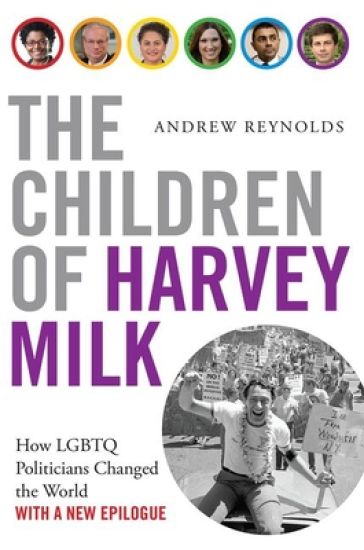
The Children of Harvey Milk

The Children of Harvey Milk

Andrew Reynolds

Oxford University Press Inc
2020
nidottu
Part political thriller, part meditation on social change, part love story, The Children of Harvey Milk tells the epic stories of courageous men and women around the world who came forward to make their voices heard during the struggle for equal rights. Featuring LGBTQ icons from America to Ireland, Britain to New Zealand; Reynolds documents their successes and failures, heartwarming stories of acceptance and heartbreaking stories of ostracism, demonstrating the ways in which an individual can change the views and voting behaviors of those around them. The book also includes rare vignettes of LGBTQ leaders in Africa, Asia, Latin America and the Caribbean who continue to fight for equality in spite of threats, violence, and homophobia. A touchstone narrative of the tumultuous journey towards LGBTQ rights, The Children of Harvey Milk is a must-read for anyone with an interest in social change. Updated in paperback, this new edition accounts for developments such as the US presidential candidacy of Pete Buttigieg.
The Children of Harvey Milk

The Children of Harvey Milk

Andrew Reynolds

Oxford University Press Inc
2018
sidottu
Part political thriller, part meditation on social change, part love story, The Children of Harvey Milk tells the epic stories of courageous men and women around the world who came forward to make their voices heard during the struggle for equal rights. Featuring LGBTQ icons from America to Ireland, Britain to New Zealand; Reynolds documents their successes and failures, heartwarming stories of acceptance and heartbreaking stories of ostracism, demonstrating the ways in which an individual can change the views and voting behaviors of those around them. The book also includes rare vignettes of LGBTQ leaders in Africa, Asia, Latin America and the Caribbean who continue to fight for equality in spite of threats, violence, and homophobia. A touchstone narrative of the tumultuous journey towards LGBTQ rights, The Children of Harvey Milk is a must-read for anyone with an interest in social change.
The Arab Spring

The Arab Spring

Jason Brownlee; Tarek Masoud; Andrew Reynolds

Oxford University Press
2015
sidottu
Several years after the Arab Spring began, democracy remains elusive in the Middle East. The Arab Spring that resides in the popular imagination is one in which a wave of mass mobilization swept the broader Middle East, toppled dictators, and cleared the way for democracy. The reality is that few Arab countries have experienced anything of the sort. While Tunisia made progress towards some type of constitutionally entrenched participatory rule, the other countries that overthrew their rulersEgypt, Yemen, and Libyaremain mired in authoritarianism and instability. Elsewhere in the Arab world uprisings were suppressed, subsided or never materialized. The Arab Springs modest harvest cries out for explanation. Why did regime change take place in only four Arab countries and why has democratic change proved so elusive in the countries that made attempts? This book attempts to answer those questions. First, by accounting for the full range of variance: from the absence or failure of uprisings in such places as Algeria and Saudi Arabia at one end to Tunisias rocky but hopeful transition at the other. Second, by examining the deep historical and structure variables that determined the balance of power between incumbents and opposition. Brownlee, Masoud, and Reynolds find that the success of domestic uprisings depended on the absence of a hereditary executive and a dearth of oil rents. Structural factors also cast a shadow over the transition process. Even when opposition forces toppled dictators, prior levels of socioeconomic development and state strength shaped whether nascent democracy, resurgent authoritarianism, or unbridled civil war would follow.
The Arab Spring

The Arab Spring

Jason Brownlee; Tarek Masoud; Andrew Reynolds

Oxford University Press
2015
nidottu
Several years after the Arab Spring began, democracy remains elusive in the Middle East. The Arab Spring that resides in the popular imagination is one in which a wave of mass mobilization swept the broader Middle East, toppled dictators, and cleared the way for democracy. The reality is that few Arab countries have experienced anything of the sort. While Tunisia made progress towards some type of constitutionally entrenched participatory rule, the other countries that overthrew their rulersEgypt, Yemen, and Libyaremain mired in authoritarianism and instability. Elsewhere in the Arab world uprisings were suppressed, subsided or never materialized. The Arab Springs modest harvest cries out for explanation. Why did regime change take place in only four Arab countries and why has democratic change proved so elusive in the countries that made attempts? This book attempts to answer those questions. First, by accounting for the full range of variance: from the absence or failure of uprisings in such places as Algeria and Saudi Arabia at one end to Tunisias rocky but hopeful transition at the other. Second, by examining the deep historical and structure variables that determined the balance of power between incumbents and opposition. Brownlee, Masoud, and Reynolds find that the success of domestic uprisings depended on the absence of a hereditary executive and a dearth of oil rents. Structural factors also cast a shadow over the transition process. Even when opposition forces toppled dictators, prior levels of socioeconomic development and state strength shaped whether nascent democracy, resurgent authoritarianism, or unbridled civil war would follow.
Anglo-Saxon Deviant Burial Customs

Anglo-Saxon Deviant Burial Customs

Andrew Reynolds

Oxford University Press
2014
nidottu
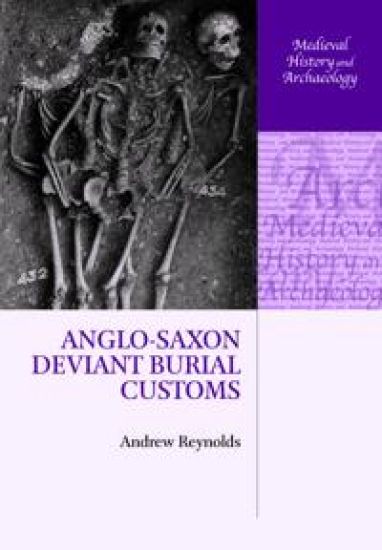
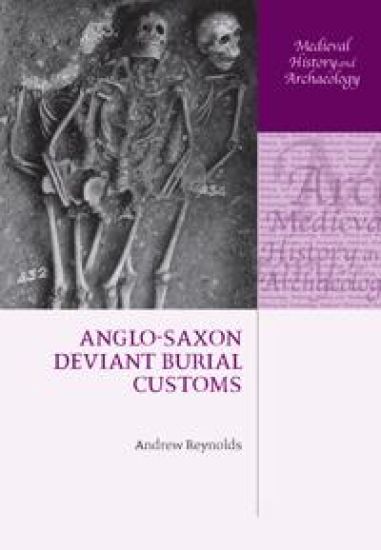
Anglo-Saxon Deviant Burial Customs is the first detailed consideration of the ways in which Anglo-Saxon society dealt with social outcasts. Beginning with the period following Roman rule and ending in the century following the Norman Conquest, it surveys a period of fundamental social change, which included the conversion to Christianity, the emergence of the late Saxon state, and the development of the landscape of the Domesday Book. While an impressive body of written evidence for the period survives in the form of charters and law-codes, archaeology is uniquely placed to investigate the earliest period of post-Roman society - the fifth to seventh centuries - for which documents are lacking. For later centuries, archaeological evidence can provide us with an independent assessment of the realities of capital punishment and the status of outcasts. Andrew Reynolds argues that outcast burials show a clear pattern of development in this period. In the pre-Christian centuries, 'deviant' burial remains are found only in community cemeteries, but the growth of kingship and the consolidation of territories during the seventh century witnessed the emergence of capital punishment and places of execution in the English landscape. Locally determined rites, such as crossroads burial, now existed alongside more formal execution cemeteries. Gallows were located on major boundaries, often next to highways, always in highly visible places. The findings of this pioneering national study thus have important consequences on our understanding of Anglo-Saxon society. Overall, Reynolds concludes, organized judicial behaviour was a feature of the earliest Anglo-Saxon kingdoms, rather than just the two centuries prior to the Norman Conquest.
The Spanish American Crónica Modernista, Temporality and Material Culture
This study explores how Spanish American modernista writers incorporated journalistic formalities and industry models through the crónica genre to advance their literary preoccupations. Through a variety of modernista writers, including José Martí, Amado Nervo, Manuel Gutiérrez Nájera and Rubén Darío, Reynolds argues that extra-textual elements—such as temporality, the material formats of the newspaper and book, and editorial influence—animate the modernista movement’s literary ambitions and aesthetic ideology. Thus, instead of being stripped of an esteemed place in the literary sphere due to participation in the market-based newspaper industry, journalism actually brought modernismo closer to the writers’ desired artistic autonomy. Reynolds uncovers an original philosophical and sociological dimension of the literary forms that govern modernista studies, situating literary journalism of the movement within historical, economic and temporal contexts. Furthermore, he demonstrates that journalism of the movement was eventually consecrated in book form, revealing modernista intentionality for their mass-produced, seemingly utilitarian journalistic articles. The Spanish American Crónica Modernista, Temporality, and Material Culture thereby enables a better understanding of how the material textuality of the crónica impacts its interpretation and readership.
Designing Democracy in a Dangerous World

Designing Democracy in a Dangerous World

Andrew Reynolds

Oxford University Press
2010
nidottu
Designing Democracy in a Dangerous World addresses a question at the heart of contemporary global politics: how does one craft democracy in fragile and divided states? In Iraq and Afghanistan, spiraling conflict was driven in large part by the mistakes of institutional design in the immediate post-conflict period. The future hopes for peace and stability in those, and other cases, rest on a well designed political system which can bring legitimacy to elected leaders and offer reassurances to minorities. Designing Democracy fills gaps in knowledge in three ways. First, it develops a theoretical framework for assessing what type of democracy will best serve a nation. Second, it offers a behind the scenes look at the intricacies of democratic design in a number of focus cases. Third, the book pulls together lessons for policymakers by surveying patterns of success and failure over the last forty years. Reynolds tests his framework by drawing on extensive quantitative and qualitative evidence, gathering data from 66 cases to analyze the relationship between democracy and stability and a nation's demographic, socio-political, historical, and economic features, and previous levels of instability. To this mix are added institutional variables: electoral systems, decentralization, levels of executive inclusion, and executive type. For a qualitative focus the book draws on the author's experience as a constitutional adviser during the last fifteen years in democratizing nations such as South Africa, Afghanistan, Sierra Leone, Burma, Lebanon, Sudan, and Iraq. There are very few places in the world today where the majority of people do not desire some degree of choice, accountability over their leaders, and the rule of law. The key is to craft a democracy that is home grown and appropriate to a given society. By bringing new evidence and arguments to bear on the topic of promoting democracy, Designing Democracy contributes to both foreign policy and academic debates. Comparative Politics is a series for students, teachers, and researchers of political science that deals with contemporary government and politics. Global in scope, books in the series are characterised by a stress on comparative analysis and strong methodological rigour. The series is published in association with the European Consortium for Political Research. For more information visit: www.essex.ac.uk/ecpr The Comparative Politics Series is edited by Professor David M. Farrell, School of Politics and International Relations, University College Dublin, Kenneth Carty, Professor of Political Science, University of British Columbia, and Professor Dirk Berg-Schlosser, Institute of Political Science, Philipps University, Marburg.
Anglo-Saxon Deviant Burial Customs

Anglo-Saxon Deviant Burial Customs

Andrew Reynolds

Oxford University Press
2009
sidottu
Anglo-Saxon Deviant Burial Customs is the first detailed consideration of the ways in which Anglo-Saxon society dealt with social outcasts. Beginning with the period following Roman rule and ending in the century following the Norman Conquest, it surveys a period of fundamental social change, which included the conversion to Christianity, the emergence of the late Saxon state, and the development of the landscape of the Domesday Book. While an impressive body of written evidence for the period survives in the form of charters and law-codes, archaeology is uniquely placed to investigate the earliest period of post-Roman society, the fifth to seventh centuries, for which documents are lacking. For later centuries, archaeological evidence can provide us with an independent assessment of the realities of capital punishment and the status of outcasts. Andrew Reynolds argues that outcast burials show a clear pattern of development in this period. In the pre-Christian centuries, 'deviant' burial remains are found only in community cemeteries, but the growth of kingship and the consolidation of territories during the seventh century witnessed the emergence of capital punishment and places of execution in the English landscape. Locally determined rites, such as crossroads burial, now existed alongside more formal execution cemeteries. Gallows were located on major boundaries, often next to highways, always in highly visible places. The findings of this pioneering national study thus have important consequences on our understanding of Anglo-Saxon society. Overall, Reynolds concludes, organized judicial behaviour was a feature of the earliest Anglo-Saxon kingdoms, rather than just the two centuries prior to the Norman Conquest.
Later Anglo-Saxon England

Later Anglo-Saxon England

Andrew Reynolds

The History Press Ltd
2002
nidottu
Over the period AD 700-1100 England emerged as a highly organised nation state from a world of fragmented warrior kingdoms. Drawing largely upon archaeological sources, this account of everyday life in early England explores the social and economic developments in town and country over these four centuries. Against the backdrop of the seventh century -- a land of newly emerging kingdoms, embryonic social systems and a new religion, Christianity - individual chapters address such themes as the archaeology of social scales; the organisation and administration of the landscape (including public assembly, civil defence and capital punishment); rural settlement and agricultural estates; the development of towns (including marketing, manufacture and trade). Finally the author looks at the impact of the Norman Conquest.
Peirce's Scientific Metaphysics

Peirce's Scientific Metaphysics

Andrew Reynolds

Vanderbilt University Press
2002
sidottu
Peirce's Scientific Metaphysics is the first book devoted to understanding Charles Sanders Peirce's (1839-1914) metaphysics from the perspective of the scientific questions that motivated his thinking. Deftly situating Peirce's often original and pathbreaking ideas within their appropriate historical and scientific contexts, Reynolds traces his reliance upon the law of large numbers, which illustrated for Peirce the emergence of a stable order and regularity from a multitude of chance events, throughout his writings on late nineteenth-century physics, chemistry, biology, psychology, and cosmology. Along the way, Peirce's vision of an indeterministic and evolutionary cosmology is contrasted with the thought of other important late nineteenth-century scientists and philosophers, such as James Clerk Maxwell, Ludwig Boltzmann, William Thomson (Lord Kelvin), Herbert Spencer, Charles Darwin, and Ernst Haeckel. While offering a detailed account of the scientific ideas and theories essential for understanding Peirce's metaphysical system (e.g., the irreversibility of time and the reversibility of physical laws, the statistical law of large numbers), this book is written in a manner accessible to the non-specialist. This will make it especially attractive to students of Peirce's philosophy who lack familiarity with the scientific and mathematical ideas that are so central to his thought. Those with an interest in the history and philosophy of science, especially concerning the application of statistical and probabilistic thinking to physics, chemistry, biology, psychology, and cosmology, will find this discussion of Peirce's philosophy invaluable.
Avebury

Avebury

Joshua Pollard; Andrew Reynolds

The History Press Ltd
2002
nidottu
Designated a World Heritage Site, the landscape around Avebury in north Wiltshire contains a remarkable wealth of archaeological remains, including some of the most spectacular prehistoric monuments in Europe. Incorporating extensive research and fieldwork from the last ten years, this is the only book to explore the landscape context of Avebury over six millennia. There is of course a full description and interpretation of the impressive Neolithic monuments within the immediate area (including the Avebury henge itself), but the authors range far wider in both space and time. Extending from early prehistory, through the Roman occupation, to the Anglo-Saxon and later medieval periods, their comprehensive study works through a series of interrelated themes such as histories of occupation, the modification of the landscape and the changing perceptions of past populations. Both authors have worked for ten years on large-scale field projects in the Avebury region.
Electoral Systems and Democratization in Southern Africa

Electoral Systems and Democratization in Southern Africa

Andrew Reynolds

Oxford University Press
1999
sidottu
The design of electoral systems and executive types is increasingly being recognized the key lever of constitutional engineering to be applied in the interests of political accommodation and stability in ethnically divided societies. In this groundbreaking comparative study of democratic design in Southern Africa, Andrew Reynolds finds that the decisions about how to constitute representative parliaments have wide ranging effects on the type of parties and party system that develops, the nature of executive-legislative relations, and the inclusiveness of both majority and minority interests in the process of governance. While electoral system design is the primary focus of the book, the related constitutional issues of whether to choose a presidential or parliamentary system, and whether to entrench consensual, consociational or majoritarian government are also discussed. Analysing the experiences of Malawi, Namibia, South Africa, Zambia, and Zimbabwe, the author presents a host of revealing conclusions that help shed light on the success or failure of democratic design in other fledgling democracies, in both Africa and beyond.