Kirjojen hintavertailu. Mukana 12 595 353 kirjaa ja 12 kauppaa.

Kirjailija

Andrew Saint

Kirjat ja teokset yhdessä paikassa: 5 kirjaa, julkaisuja vuosilta 2003-2025, suosituimpien joukossa Building Conservation Philosophy. Vertaile teosten hintoja ja tarkista saatavuus suomalaisista kirjakaupoista.

5 kirjaa

Kirjojen julkaisuhaarukka 2003-2025.

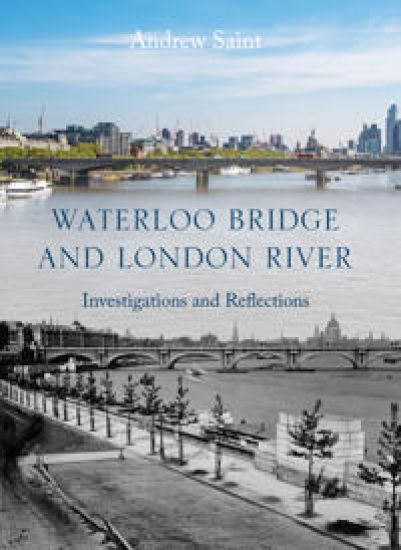
Waterloo Bridge and London River

Waterloo Bridge and London River

Andrew Saint

LUND HUMPHRIES PUBLISHERS LTD
2025
sidottu
As a subject, Waterloo Bridge fascinated writers and artists such as Dickens, Constable, Monet and Derain. This book tells the story of a bridge’s place in the city – its history in use, its inextricable connection with the great river which it crosses, and the character and activities of the two shores which it joins together. While focusing on Waterloo Bridge, the book also explores the evolution of the surrounding districts and the character of the Thames as it flows through Central London: tidal, wide, difficult to navigate and bridge, and intensely busy during its heyday. It sets Waterloo Bridge alongside the other London river bridges, revealing the complex politics and economics of bridge building. Full of fabulous characters and stories, the book takes us from the geology and ancient history to the history of the docks and on to the great bridge built in the 18th and 19th centuries. It reveals the complex politics and economics behind these bridges, who designed them and how they were constructed. The book explores how the surrounding districts evolved, the creation of the Thames embankments, and Waterloo bridge’s notoriety as a site for suicides – a subject that fascinated Dickens, Watts and Millais. It also reveals why it became a focus for artists such as Constable, Monet and Derain. It concludes with a poetic and honest description of the contemporary city.
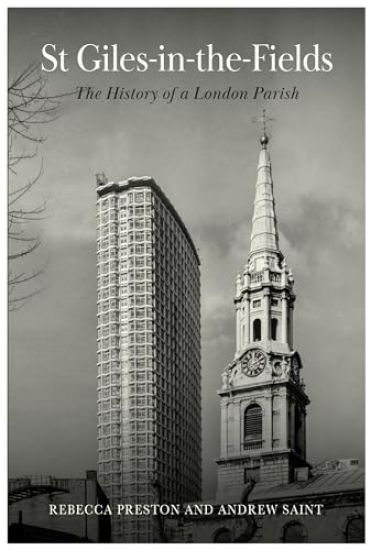
St Giles-in-the-Fields

St Giles-in-the-Fields

Rebecca Preston; Andrew Saint

The Self-Publishing Partnership Ltd
2024
nidottu
St Giles-in-the-Fields: History of a London Parish resurrects a neglected area of Central London, rich in history and incident. St Giles is at the centre of one of the greatest cities in the world – but you’ve probably never heard of it. But it is an area with a dense and tangled history that tells us a great deal about the experience of living in London across the span of time from the twelfth century to today. This history has rarely been glamorous, but it is packed with the stories of lives touched by many of the most momentous events in British history. St Giles began as a mediaeval leper hospital. After the Reformation it grew into one of London’s largest parishes, stretching east to Lincoln’s Inn Fields and north to Bedford Square and Bloomsbury. Aristocrats, poets, musicians, artists and lawyers lived here. St Giles was notorious too for its slums – notably the Rookery where Centre Point now stands. Its streets also boasted a hive of industry, printing, brewing and crafts. Later came music shops in Charing Cross Road and Denmark Street. As its population dwindled, St Giles lost heart. But vitality returned from the 1970s, with the renaissance of nearby Covent Garden and the boom of office employment. Far more than a fringe part of Covent Garden, Soho or Bloomsbury, this book re-establishes the individuality of St Giles, centred on its noble and enduring Georgian parish church.
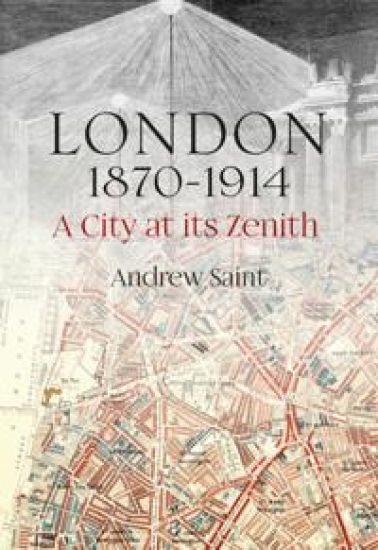
London 1870-1914

London 1870-1914

Andrew Saint

LUND HUMPHRIES PUBLISHERS LTD
2021
sidottu
This book conveys the excitement, diversity and richness of London at a time when the city was arguably at the height of its power, uniqueness and attraction. Balancing the social, the topographical and the visible aspects of the great city, author Andrew Saint uses buildings, architecture, literature and art as a way into understanding social and historical phenomena. While many volumes on Victorian London focus on poverty (an issue which is included in this book), the author here provides a broader picture of life in the city. It is enlivened with a rich line-up of colourful characters, including Baron Albert Grant; Henry Mayers Hyndman and his connections with Karl Marx, William Morris and George Bernard Shaw; John Burns; Octavia Hill; Aubrey Beardsley and the artistic bohemians; Alfred Harmsworth and the Garrett sisters, and includes insightful quotes on London by esteemed authors such as Trollope, Henry James and Rudyard Kipling. Divided into four long chapters, each dealing with a decade, London’s evolution between 1870 and 1914 comes across clearly. Although not intended to be a complete history, it does cover all the most important historical developments in London and London life. Particular issues are allotted to the decade in which they seem to have been most critical. Topics covered include: the creation of new neighbourhoods and roads; how the Victorians dealt with their housing crisis; why certain architectural styles were preferred; and the fashion for focusing on certain types of building, such as ice rinks, schools, houses, hospitals, fire stations, exhibition halls, water works, music halls, recital rooms and pubs. This is an up-to-date, readable and well-illustrated book which embraces the whole in a positive spirit. Saint’s interpretation of London’s history in the period covered is unashamedly one of progress in the face of great odds. He shows that, in almost every aspect, it was a much better city in1914 than in 1870. At a time when local autonomy in Britain has been ruthlessly downgraded and London’s face is every year coarsened further by money-led developments, this story of gradual and earnest improvement may have lessons to teach.
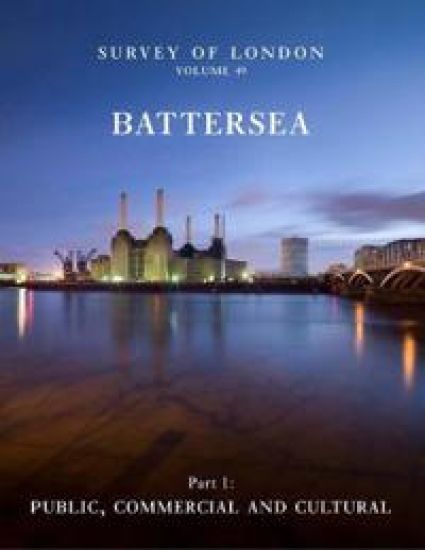
Survey of London: Battersea

Survey of London: Battersea

Andrew Saint

Yale University Press
2013
sidottu
The south London parish of Battersea has roots as a working village, growing produce for London markets, and as a high-class suburb, with merchants’ villas on the elevated ground around Clapham and Wadsworth Commons. Battersea enjoyed spectacular growth during Queen Victoria’s reign, and railroads brought industry and a robust building boom, transforming the parish into another of London’s dense, smoky neighborhoods, though not without its unique and distinguishing features. Among these are Battersea Park, which was created by the Crown in the 1850s; the monumental Battersea Power Station, completed in 1939; and Clapham Junction railway station, which is, by measure of passenger interchanges, the busiest station in the United Kingdom. The two latest volumes of the Survey of London, 49 and 50, trace Battersea’s development from medieval times to the present day. Offering detailed analysis of its streets and buildings both thematically and topographically, and including copious original in-depth research and investigation, the books are a trove of architectural history and British history. Profusely illustrated with new and archival images, architectural drawings and maps, these volumes are welcome additions to the acclaimed Survey of London series.Published for English Heritage by Yale University Press on behalf of the Paul Mellon Centre for Studies in British Art
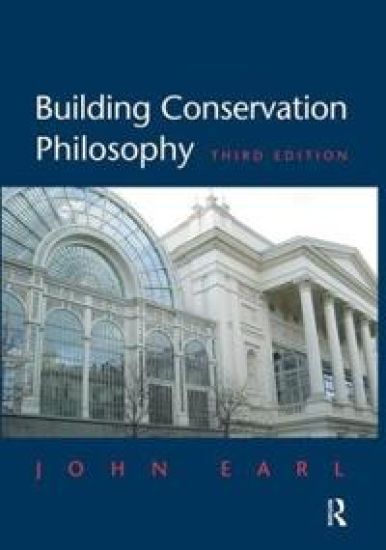
Building Conservation Philosophy

Building Conservation Philosophy

John Earl; Andrew Saint

Donhead Publishing
2003
sidottu
This is a book about ideas rather than techniques. Public thirst for visible evidence of the past is not, as it is often represented, a recent phenomenon. It was already well developed when an overseer of ancient monuments was appointed in sixth-century Rome. But if the desire to preserve aspects of the past is to do more than respond to popular whims and fashions or represent the personal views of ivory-towered scholars and specialists, it needs to have some kind of solid logical basis. Philosophical questions are raised at every turn. On what basis can buildings be singled out as "historic buildings", demanding special protection? On what authority can we justify interfering with private property rights in pursuing such protective processes? And how should we judge what is acceptable and unacceptable in the treatment of the buildings we value? In this third, substantially revised edition, the author examines the nature of monuments and the varied motives for preserving them. He traces the history of movements to preserve old buildings and the furious conflicts that have frequently surrounded restoration campaigns. Philosophical problems arising in modern conservation practice, including such controversial issues as "skin-deep preservation" and the use of substitute materials, are considered in detail. More space is devoted in this edition to contextual issues. New sections deal with issues of sustainability and the relationship of buildings to the townscape and landscape. The number of illustrations has also been greatly increased. The book is designed especially for students approaching the subject for the first time but may well be found stimulating by practitioners. No easy formulae are offered. What conservators, have to nurture, the author insists, is an inquiring and self-critical frame of mind enabling them to proceed from comprehensive knowledge of the buildings for the time being in their care, via logical argument, to defensible, if not inevitable, solutions.