Kirjailija
Andrew Sansom
Kirjat ja teokset yhdessä paikassa: 31 kirjaa, julkaisuja vuosilta 2003-2026, suosituimpien joukossa Seasons at Selah. Vertaile teosten hintoja ja tarkista saatavuus suomalaisista kirjakaupoista.
31 kirjaa
Kirjojen julkaisuhaarukka 2003-2026.
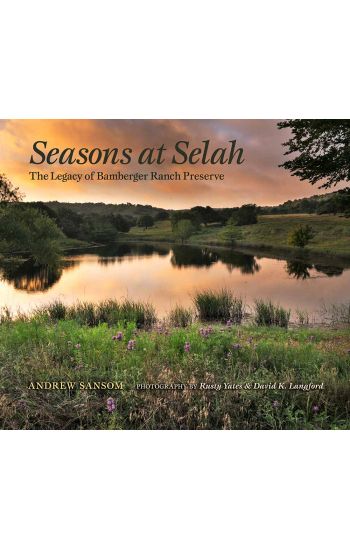
In 1969, J. David Bamberger bought what he described as “the sorriest piece of land” in the Texas Hill Country for the specific purpose of restoring the degraded landscape. Today, Selah, Bamberger Ranch Preserve is one of the largest habitat restoration projects in the state—5,500 acres—and serves as a model for land conservation and environmental education. The ranch has earned numerous awards, including the coveted Leopold Conservation Award, the Texas Environmental Excellence Award in Education, the National Private Lands Fish and Wildlife Stewardship Award, and most recently, the Botanical Research Institute of Texas International Award of Excellence in Conservation, just to name a few.Seasons at Selah: The Legacy of Bamberger Ranch Preserve chronicles Bamberger’s dedication to ethical land stewardship and conservation education through stunning photographs of the land, plants, and wildlife he has devoted his time and resources to protect. Photographers Rusty Yates and David K. Langford capture each season at Selah and offer an intimate glimpse into the day-to-day management and operations of the ranch as well as some of the challenges it faces. In the accompanying text, Andrew Sansom shares his own stories from his decades-long friendship with Bamberger.Readers will gain a deeper appreciation for what conservation means for Texas: clean and abundant water, wildlife, healthy land, and an inspiring place to learn about and enjoy nature. Above all, Selah has given Texans a special opportunity to stop, pause, and reflect on the importance of good stewardship of the earth.
In a stunning tribute to one of Texas' most enigmatic waterways, a veteran East Texas historian and a professional photographer have together created an homage to a lake like no other - half Texas, half Louisiana, a swampy labyrinth of bald cypress and water plants filled with mystery, legend, and a staggering amount of biological complexity.Classified as a Category 1 Habitat for wildlife by the US Fish and Wildlife Service and encompassing a state wildlife management area as well as a state park, Caddo Lake and adjacent areas have also been designated as a Ramsar Site under the international convention to preserve world-class wetlands and their waterfowl. In both words and pictures, writer Thad Sitton and photographer Carolyn Brown have captured the human, animal, and plant life of Caddo, as well as the history of the lake itself, better likened to an ever-changing network of cypress woodlands, bayou-like channels, water-plant meadows, and hardwood bottoms covered more or less by water.
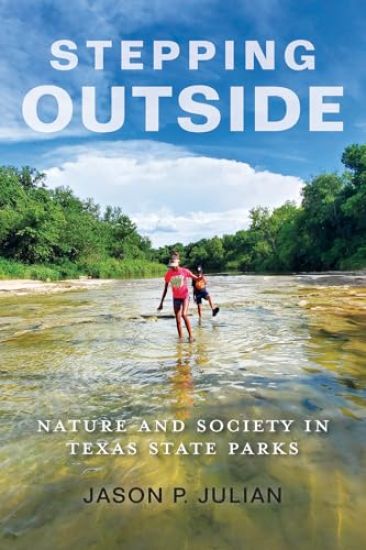
The story of state parks in Texas is a compelling one, rich with environmental and cultural history. Environmental geographer and scientist Jason P. Julian's visits to each state park, initially for outdoor recreation and then for research, sparked a keen interest in the interwoven natural and cultural history of the parks. Stepping Outside: Nature and Society in Texas State Parks tackles the environmental and sociocultural history of the Lone Star State's parks as they have evolved and offers new perspectives on the multidimensional benefits of the parks. Julian's recounting of his and his family's experiences over a decade provides a deeper insight into how the parks connect people and nature. Incorporating interviews with current and former park superintendents, rangers, and resource managers, this wide-ranging survey gives readers a fuller appreciation of the parks' environmental and social impacts. Texas state parks have evolved to meet the needs of a rapidly growing population and changing environment, from preserving historic and cultural sites to embracing recreational needs to prioritizing environmental stewardship. Over the last 100 years, the parks have expanded throughout the state, increased in size, and connected a broader society to nature's benefits. Generously illustrated, Stepping Outside provides a deeper understanding of Texas's natural heritage and offers insight on the many ways state parks add to the quality of life. Environmentalists, geographers, natural resource managers, and anyone wishing to visit a Texas state park will find a wealth of knowledge on conservation, history, and the success story of state parks.
The Other Side of Nowhere
Roy Morey; Andrew Sansom; David H. Riskind
TEXAS A M UNIVERSITY PRESS
2024
sidottu
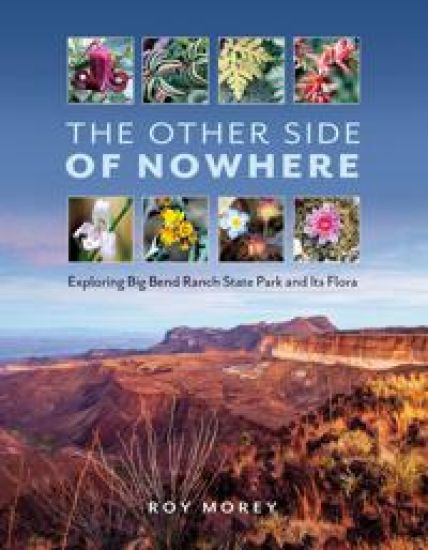
Acquired by the State of Texas in 1988 and first opened to the public as Big Bend State Natural Area in 1991, Big Bend Ranch State Park (BBR) lies within the southern Big Bend of the Trans-Pecos, encompassing some 492 square miles of the Chihuahuan Desert and representing nearly half the total acreage of the Texas state park system.Unlike nearby Big Bend National Park—BBR is relatively undiscovered, wild, challenging, and slightly intimidating. BBR is the “Other” Big Bend, christened the “Other Side of Nowhere,” a rugged wilderness outback for the adventuresome with 238 miles of trails for hiking, biking, and horseback riding and 70 miles of challenging four-wheel drive roads where visitors can explore stunning geological features, remnants of the area’s 11,000-year human history, and a diversity of flora and fauna that rivals any area in the state.In this guidebook, photographer and naturalist Roy Morey walks visitors through the wild landscape, sharing what he has learned during eleven years of studying and photographing Big Bend Ranch State Park. Organized around the six physiographic regions of the park as outlined by the Texas Parks and Wildlife Department, The Other Side of Nowhere guides readers through the features and locations of the park and includes a field guide section with informative profiles and vivid imagery of 281 plant species. This definitive guide to Big Bend Ranch State Park is a must-have for visitors and an important botanical resource for the greater Big Bend and Trans-Pecos areas.
The Art of Texas State Parks
Andrew Sansom; Linda J. Reaves; William E. Reaves; Kevin Good
TEXAS A M UNIVERSITY PRESS
2022
sidottu
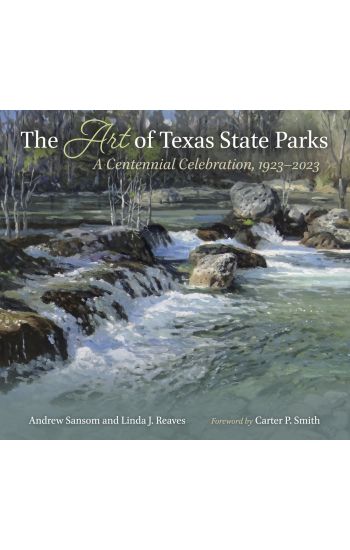
In 2023, the Texas Department of Parks and Wildlife marks the 100th anniversary of the state park system. From its inception in 1923, the Texas park system has grown to 95 sites, covering more than 627,000 acres and comprising 74 state parks, 13 historic sites, and 8 natural areas. This vast collection of natural lands and public places now accommodates almost 9 million visitors each year. The Art of Texas State Parks celebrates this rich tradition, offering an engaging visual arts survey of Texas state parks as seen through the eyes of leading artists from across the state. Editors Andrew Sansom and Linda J. Reaves have collected original works from thirty of the state’s most influential artists. These stunning visual works are accompanied by a thoughtful essay by William E. Reaves on the time-honored legacy of landscape painting in Texas and by Sansom’s reflections on the vital place of landscape art in Texas conservation. Rounding out the collection, assistant state park director Kevin Good offers an informative profile of Texas state parks, and the work concludes with profiles of the artists whose pieces appear in this special centennial collection. The centennial of the state parks system offers the perfect occasion to create a lasting visual record of Texas parks in art while memorializing the past and ongoing development of the distinctive collection of Lone Star parks and natural areas. The Art of Texas State Parks offers readers increased awareness of Texas parklands and heightens their popular appeal through the elegant and inspired works of some of Texas’ finest contemporary artists. Includes the work of these artists: Randy Bacon, Abilene Mary Baxter, Marfa David Caton, Utopia Charles Criner, Houston Margie Crisp, Elgin Ric Dentinger, San Antonio Fidencio Duran, Austin Janet Eager Krueger, Encinal Joel R. Edwards, Waco Malou Flato, Austin Gordon Fowler, Austin Pat Gabriel, Fort Worth David R. Griffin, Dallas Brian Grimm, Fredericksburg Clemente F. Guzman III, San Antonio Karl E. Hall, Houston John Austin Hanna, Fredericksburg Billy Hassell, Fort Worth Hailey E. Herrera, Bryan Lee Jamison, Huntsville Denise LaRue Mahlke, Whitehouse Talmage Minter, Waco William B. Montgomery, Elgin Kermit Oliver, Waco Noe Perez, Corpus Christi Jeri Salter, Hutto Jim Stoker, San Antonio Bob Stuth-Wade, Dublin Terri M. Wells, Austin
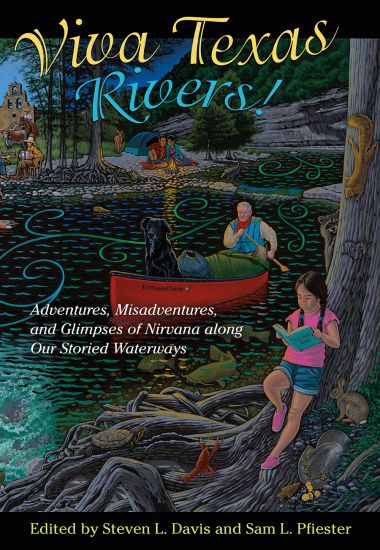
More than the lifeblood of our natural world, Texas rivers have nourished the human spirit for as long as people have gathered on their banks. A living bond has flowed between Texas writers and rivers ever since the 1960 publication of John Graves’s classic journey along the Brazos, Goodbye to a River.Many of Texas’ leading writers have had their hearts captured by a river, and they have created sparkling accounts of the waterways they love. Now, editors Steven L. Davis and Sam L. Pfiester have assembled the best of those works into a revelatory collection of diverse literary voices.Ranging from the desert canyonlands of the Rio Grande to the swampy Big Thicket, from crystal clear Hill Country streams to the Red River’s treacherous quicksand, Viva Texas Rivers! showcases many classic writings along with brand new essays written for this volume. The literary nonfiction is complemented by flashes of poetry that brilliantly reflect these curving ribbons of light.Authoritative and expertly edited, Viva Texas Rivers! offers shimmering accounts of hidden paradises, as well as searing exposÉs of abuse and despoliation. Yet even in the bleakest times, as these writers have found, Texas rivers can bestow a sacred grace —and unexpected redemption.Viva Texas Rivers! brings you as close to the living nirvana of a Texas River as you can get without launching yourself into a canoe and following a great blue heron as it glides just above the breaking rapids, leading you around the bend as the river flows onward toward the best places in our hearts.
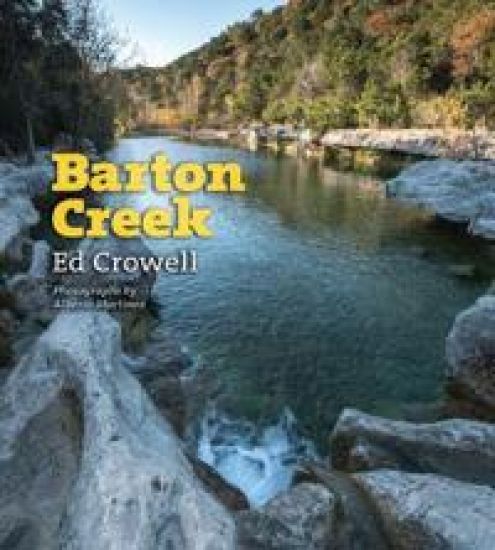
While Barton Springs Pool is an iconic landmark of Austin and many people are familiar with the end of Barton Creek and its seven miles of public greenbelt, less is known about the forty-odd miles beyond that tumble and twist across private lands, eventually feeding the Colorado River. Legendary fights saved Barton Springs in the 1980s and 1990s, when the pool repeatedly was closed because of pollutant runoff from streets, nearby construction, and leaking sewer lines. In 1992, a highly publicized campaign resulted in land protections and stricter water standards. But will the creek and its springs become fouled again? That possibility arises upstream where tributaries and other creeks flow across mostly rural acreage, attracting new housing and business developments. Not only would city bathers lose access to the pool, but endangered species of salamanders and birds that depend on the Edwards Aquifer and its unique habitats face an uncertain future. Following the creek from downtown Austin's Barton Springs Pool to its source as a cow-pasture trickle, longtime resident and journalist Ed Crowell explores the creek's contentious political history, its historic and current residents, and the mounting environmental pressures threatening it. Barton Creek highlights the passionate individuals involved in the stream's preservation, from city scientists to local landowners, who want to see the creek running clear and clean for future generations. Striking photography and vivid descriptions will entice readers to fall in love with Barton Creek all over again.
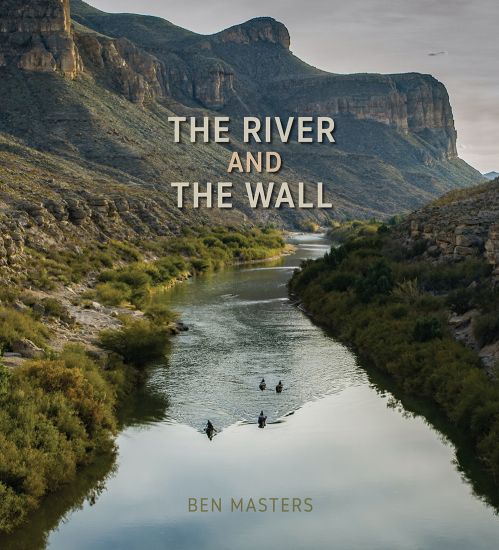
When a team of five explorers embarked on a 1,200-mile journey down the Rio Grande, the river that marks the southern boundary of Texas and the US-Mexico border, their goal was to experience and capture on film the rugged landscapes of this vast frontier before the controversial construction of a border wall changed this part of the river forever. The crew—Texas filmmaker Ben Masters, Brazilian immigrant Filipe DeAndrade, Texas conservationist Jay Kleberg, wildlife biologist Heather Mackey, and Guatemalan-American river guide Austin Alvarado—began the trip in El Paso, pedaling mountain bikes through the city's dry river bed. Their path took them on horseback through the Big Bend, down the Wild and Scenic stretch of the river in canoes, and back to bikes from Laredo to Brownsville. They paddled the last ten miles through a forest of river cane to the Gulf of Mexico. As they made their way to the Gulf, they met and talked with the people who know and live on the river—border patrol, wildlife biologists, ranchers, politicians, farmers, social workers, locals, and travelers. They climbed the wall (in twenty seconds). They encountered rare black bears, bighorn sheep, and birds of all kinds. And they sought to understand the complexities of immigration, the efficacy of a wall, and the impact of its construction on water access, wildlife, and the culture of the borderlands.The River and the Wall is both a wild adventure on a spectacular river and a sobering commentary on the realities of walling it off.
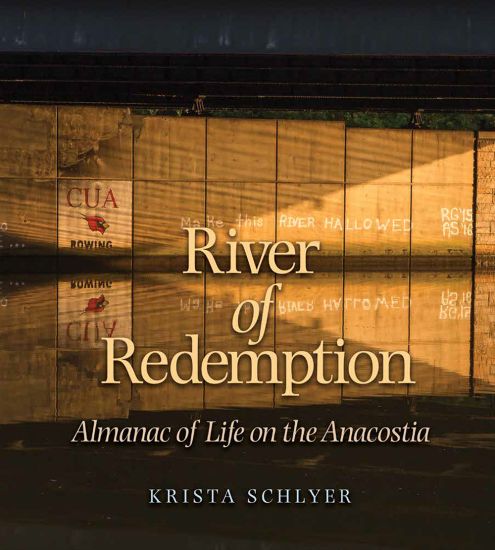
Incorporating seven years of photography and research, Krista Schlyer portrays life along the Anacostia River, a Washington, DC, waterway rich in history and biodiversity that has nonetheless lingered for years in obscurity and neglect in our nation's capital. River of Redemption offers an experience of the river that reveals its eons of natural history, centuries of destruction, and decades of restoration efforts. The story of the Anacostia echoes the story of rivers across America.Inspired by Aldo Leopold's classic book, A Sand County Almanac, Krista Schlyer evokes a consciousness of time and place, taking readers through the seasons in the watershed as well as through the river's complex history and ecology. As with rivers nationwide, the ways we've changed the Anacostia affect the people and wildlife that inhabit its shores, from the headwaters in Maryland, past its confluence with the Potomac River, and ultimately to the Chesapeake Bay. Centuries of abuse at the hands of people who have altered the landscape and mistreated the waterway have transformed it into a polluted, toxic soup unfit for swimming or fishing. The forgotten river is both a reminder of the worst humanity can do to the natural landscape and a wellspring of memory that offers a roadmap back to health and well-being for watershed residents, human and non-human alike.Blending stunning photography with informative and poignant text, River of Redemption offers the opportunity to reinvent our role in urban ecology and to redeem our relationship with this national river and watersheds nationwide.
In this stunning photographic tribute to one of Texas' most intriguing and perhaps least understood rivers, Riverwoods: Exploring the Wild Neches takes readers on a unique adventure along, and sometimes into, the wild and murky waters of the Neches River.The Neches flows through the heart of East Texas, past primordial bottomland forests, timber and oil industries, and elusive denizens—humans, alligators, bobcats, and herons. Although the river and its watershed have inspired authors, artists, and photographers, it can also seem impenetrable, intimidating, or just plain unsightly to outsiders.Spending many days canoeing the river and nights camping on the banks, Charles Kruvand was drawn to the complicated allure of the Neches river and woods. Once common across the southeastern United States, the Neches bottomland forests exemplify an ecosystem that has almost passed out of existence.Thad Sitton, an East Texas native and noted historian, opens the book with an introduction to the historical, cultural, and ecological significance of the Neches River. He takes readers through time from early Native American inhabitants to Spanish and Anglo settlers to present-day East Texans. He also describes the environmental battles fought over preserving parts of the river woodlands surrounding the waterway and wildlife that have depended on the river for sustenance.Through beautiful photographs and stirring recollections of his trip along the river, Charles Kruvand weaves a rare portrait of one of the last wild rivers in Texas.
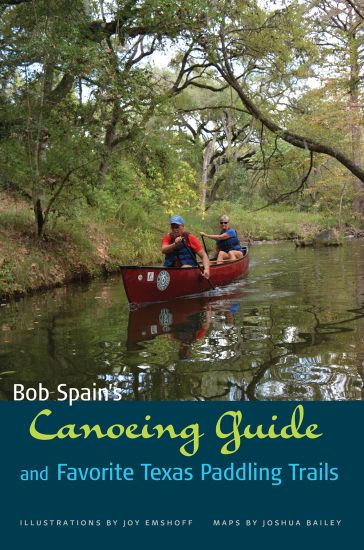
Bob Spain's Canoeing Guide and Favorite Texas Paddling Trails
Bob Spain; Andrew Sansom
Texas A M University Press
2018
nidottu
Premiere paddler and Texas Canoe Racing Hall of Famer Bob Spain presents a thorough and personal guide to all aspects of canoeing. He opens with a brief history of canoes and canoe making in North America followed by an illustrated how-to section on proper paddling technique and posture. Instructional photos and drawings by Spain’s paddling partner and wife, Joy Emshoff, help make your first-time paddling adventure less intimidating and more enjoyable. Readers will learn how to hold a paddle, perform basic strokes, and improve their technique as well as gain important information on the various types of canoes available. A handy checklist in the back of the book outlines important safety gear and essential equipment to pack in your canoe for day trips and overnight expeditions.Both newcomers to the sport and seasoned paddlers will find Spain’s detailed descriptions of his ten favorite inland and coastal Texas paddling trails entertaining and helpful. He provides useful logistical information—such as launch and take-out locations—GPS coordinates, available camping sites, and suggestions for nearby paddling trails. These trails offer paddlers a unique opportunity to explore the state and its varied wildlife while promoting the importance of preserving waterways. Spain concludes with a discussion on pressing conservation issues—water pollution, urban growth, habitat destruction, invasive species, and natural disasters—and the role ordinary people can have in protecting these natural resources for future generations.
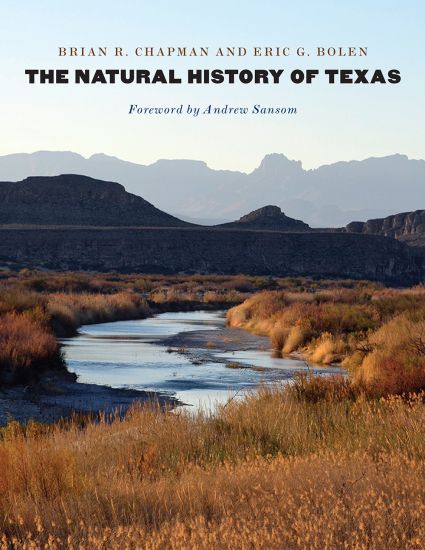
The Natural History of Texas
Brian R. Chapman; Eric G. Bolen; Andrew Sansom
Texas A M University Press
2018
sidottu
From two veteran ecologists comes a new and sweeping exploration of the natural history of Texas in all its biological diversity and geological variation. Few states, if any, can match Texas for its myriad species, past and present, and its many distinctive landscapes, from prairie grasslands and hardwood forests to coastal lagoons and desert mountains.Beginning with the stories of how biologists and naturalists have over time defined the ecological areas of this very big state, the authors visit each of the eleven regions, including the Texas coast. They describe the dominant flora and fauna of each, explain the defining geologic features, and highlight each region’s unique characteristics, such as carnivorous plants in the Piney Woods and returning black bears in the Trans-Pecos.Throughout, the authors remain especially conscious of the conservation and management issues affecting the natural resources of each region, revealing their deep affection for and knowledge about the state. Bolstered by a glossary, further reading suggestions, a description of state symbols, and an appendix of scientific names, this is an educational and essential volume for all Texans.
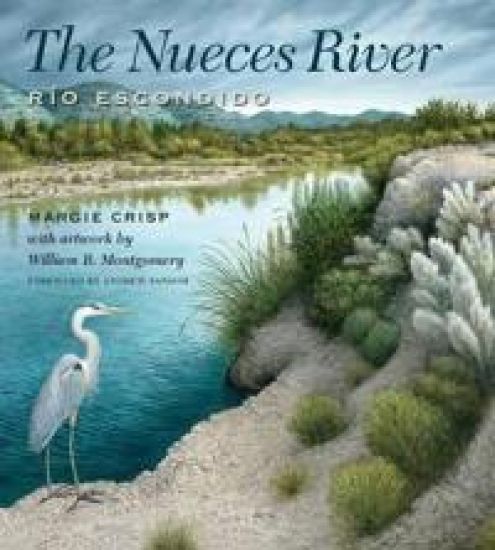
First appearing on early Spanish maps as the Río Escondido, or hidden river, and later named Río de las Nueces after the abundant pecan trees along its banks, the Nueces today is a stream of seeming contradictions: a river that runs above and below ground; a geographic reminder of a history both noble and egregious; and a spring-fed stream transformed into a salty, steep-sided channel. From its fresh, clear headwaters on the Edwards Plateau, Margie Crisp and William B. Montgomery follow the river through the mesquite and prickly pear of the South Texas Plains, to the river’s end in Nueces and Corpus Christi Bays on the Gulf of Mexico. With vivid prose and paintings, they record their travels as they explore the length of the river on foot, kayak, and fishing boat, ultimately weaving a vivid portrait of today’s Nueces. Capturing the river’s subtle beauty, abundant wildlife, diverse culture, and unique history of exploration, conflict, and settlement, they reveal the untold story of this enigmatic river with passion, humor, and reverence.
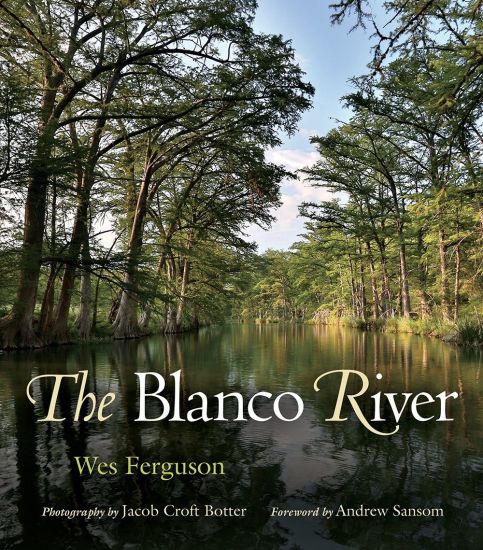
The Blanco River
Wes Ferguson; Jacob Croft Botter; Andrew Sansom
Texas A M University Press
2017
nidottu
For eighty-seven miles, the swift and shallow Blanco River winds through the Texas Hill Country. Its water is clear and green, darkened by frequent pools. But Spanish explorers named it the White River for the pale limestone they encountered along its banks and dramatic bluffs. Over the last two years, Wes Ferguson and Jacob Botter have paddled, walked, and waded the Blanco. They have explored its history, people, wildlife, and the natural beauty that surprises everyone who experiences this river. Described as “the defining element in some of the Hill Country’s most beautiful scenery,” the Blanco flows both above and below ground, part of a network of rivers and aquifers that sustains the region’s wildlife and millions of humans alike. However, overpumping and prolonged drought have combined to weaken the Blanco’s flow and sustenance, and in 2000—for the first time in recorded history—the river’s most significant feeder spring, Jacob’s Well, briefly ceased to flow. It stopped again in 2008. Then, in the spring of 2015, a devastating flood killed twelve people and toppled the huge cypress trees along its banks, altering not just the look of the river, but the communities that had come to depend on its serene presence. River travelers Ferguson and Botter tell the remarkable story of this changeable river, confronting challenges and dangers as well as rare opportunities to see parts of the river few have seen. The authors also photographed and recorded the human response to the destruction of a beloved natural resource that has become yet another episode in the story of water in Texas.
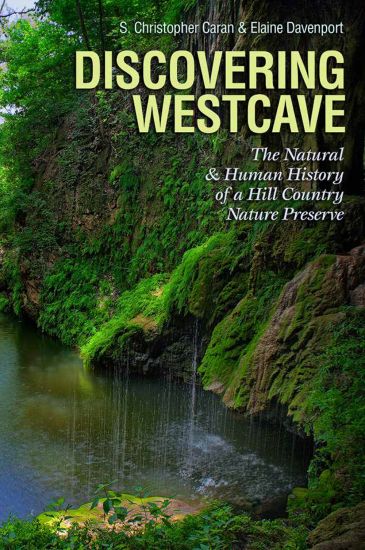
Discovering Westcave
S. Christopher Caran; Elaine Davenport; Andrew Sansom
Texas A M University Press
2016
nidottu
In the heart of the Texas Hill Country lies an astonishing place called the Westcave Outdoor Discovery Center, a 76-acre nature preserve and environmental education facility in western Travis County, near Austin, that provides a sanctuary for the fl ora and fauna of surprisingly diverse ecosystems.Westcave has been connecting children and families to nature since 1976, when the nonprofit Westcave Preserve Corporation was established to restore and protect a popular but rapidly deteriorating picnic spot that encompassed a fern-covered grotto, an ancient rock shelter, and a spectacular forty-foot waterfall.In Discovering Westcave, Chris Caran and Elaine Davenport take readers on a walk through the beautiful preserve, which includes a 3,000-square-foot learning center, unveiling the evolutionary past of its stunning natural features and acknowledging the many people who have been a part of Westcave’s long history. The aim of this guidebook is not only to share the natural and human history of this refuge, soon to be surrounded by one of the fastest growing urban areas in the country, but also to inspire through environmental learning a continued respect and appreciation for the natural world.
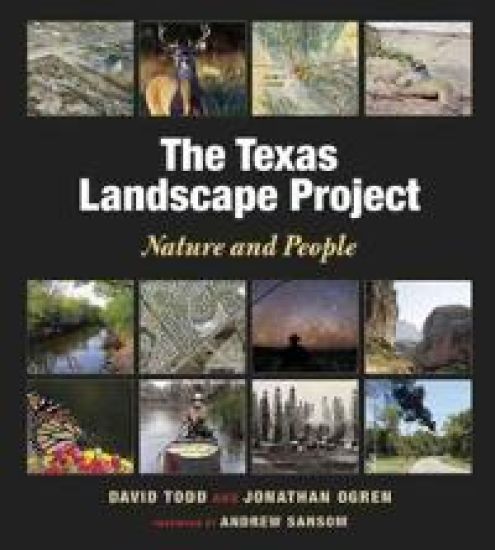
The Texas Landscape Project Nature and People
David Todd; Jonathan Ogren; Andrew Sansom
Texas A M University Press
2016
nidottu
The Texas Landscape Project explores conservation and ecologyin Texas through an extensively researched atlas of the vastlandscape.In five major parts—Land, Water, Air, Energy, and the BuiltWorld—readers encounter the changes made by growingpopulations and industrial and agricultural development in thestate. Special wildlife sections highlight the histories of iconicfauna like the American bison and the monarch butterfly.As a follow-up to the Texas Legacy Project, this volume provideshistorical context and contemporary data for the environmentalissues that have affected Texas places: the impact of grazing ondwindling prairie grasses, the increasing reach of light pollution,and the health concerns raised by lead smelting in El Paso. Butthese are also stories of hope, as author David Todd recountsrecent successful efforts to preserve Texas’ landscape and naturalresources.Navigate the Neches River valley, the Gulf of Mexico reefs, andthe colonias of the US–Mexico border with Todd’s detailed yetreadable text. The more than 280 color maps, specially created bycartographer Jonathan Ogren, and over 100 photographs, supportthe clear, accessible narrative and the book’s educational merit.An engaging read for any environmentalist or conscientiouscitizen, The Texas Landscape Project provides a true sense ofthe grand scope of the Lone Star State and its broad array ofenvironments.
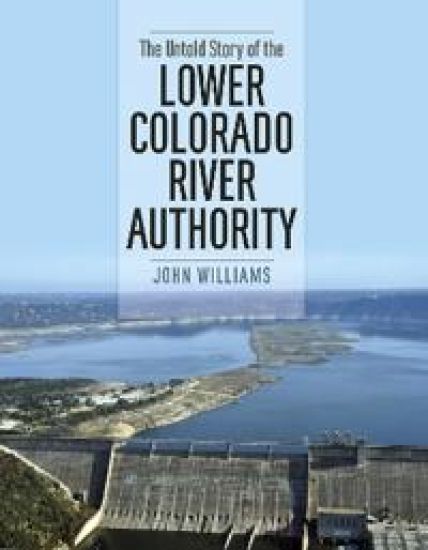
The Untold Story of the Lower Colorado River Authority
John Williams; Andrew Sansom
Texas A M University Press
2016
sidottu
Arguably, no other institution has transformed the heart of Texas like the Lower Colorado River Authority. Born in the Great Depression of the 1930s, LCRA built a chain of dams and brought predictability to the cycles of extreme droughts and floods that had long plagued Austin and other communities. It also brought hydroelectric power—and with that, modern-day civilization—to the hard-scrabble regions of Central and South Texas.With those achievements, and the support of powerful political leaders like Lyndon Johnson, LCRA for years was touted as one of the state’s major success stories. But LCRA has never been a stranger to controversy, and while it continues to provide much of the energy and water that fuels the economic engine of Austin and beyond, most people know very little about LCRA.In this book, readers will learn about the forces of nature and politics that combined to create LCRA; the colorful personalities who operated, supported, or fought with the agency; its spectacular successes, periodic blunders, and occasional failures; and its evolution into one of the largest public power organizations in Texas.
The Santa Ana National Wildlife Refuge lies on the northern bank of the Rio Grande in South Texas, about seventy miles upriver from the Gulf of Mexico. In Border Sanctuary, M.J. Morgan uncovers how 2,000 acres of rare subtropical riparian forest came to be preserved in a region otherwise dramatically altered by human habitation.The story she tells begins and ends with the efforts of the Rio Grande Nature Club to protect one of the last remaining stopovers for birds migrating north from Central and South America. In between, she reconstructs a hundred-year human and environmental history of the original “two square leagues” of the Santa Ana land grant and of the Mexican and Tejano families who lived, worked, transformed, and ultimately helped save this forest on the river’s edge.As border issues continue to present serious challenges for Texas and the nation, it is especially important to be reminded of the deep connection between the region’s human and natural history from the long perspective Morgan provides here.
Since the 1950s, competing interests for use of Edwards Aquifer resources—the primary source of water for more than two million people in south central Texas—were at war. They had tried many times to resolve their differences about how to conserve, allocate, and use the water, but had always failed.Finally, under the patient leadership of Robert Gulley, thirty-nine diverse stakeholders reached a consensus on the use of the Edwards Aquifer that balanced the needs of south central Texas for water with the needs of eight species protected by the Endangered Species Act, culminating a half century of rancor and legal wrangling.In this book, Gulley tells the inside story of the Edwards Aquifer Recovery Implementation Program (EARIP), a federally sponsored process put in place by the Texas legislature.How such a large and fractious group came together to resolve one of the nation’s most intractable and longstanding water problems serves as a case study in consensus building. That consensus brought certainty to the region regarding the use of the aquifer while creating an unlikely but lasting partnership for conservation.
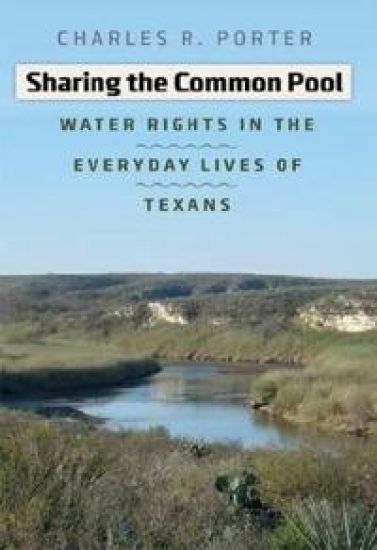
If all the people, municipalities, agencies, businesses, power plants, and other entities that think they have a right to the water in Texas actually tried to exercise those rights, there would not be enough water to satisfy all claims, no matter how legitimate. In Sharing the Common Pool: Water Rights in the Everyday Lives of Texans , water rights expert Charles Porter explains in the simplest possible terms who has rights to the water in Texas, who determines who has those rights, and who benefits or suffers because of it. The origins of Texas water law, which contains elements of the state’s Spanish, English, and Republic heritages, contributed to the development of a system that defines water by where it sits, flows, or falls and assigns its ownership accordingly. Over time, this seemingly logical, even workable, set of expectations has evolved into a tortuous collection of laws, permits, and governing authorities under the onslaught of population growth and competing interests—agriculture, industry, cities—all with insatiable thirsts. In sections that cover ownership, use, regulation, real estate, and policy, Porter lays out in as straightforward a fashion as possible just how we manage (and mismanage) water in this state, what legal cases have guided the debate, and where the future might take us as old rivalries, new demands, and innovative technologies—such as hydraulic fracturing of oil shale formations (“fracking”)—help redefine water policy.