Kirjojen hintavertailu. Mukana 12 657 676 kirjaa ja 12 kauppaa.
Kirjailija
Andrew Scott
Kirjat ja teokset yhdessä paikassa: 67 kirjaa, julkaisuja vuosilta 1990-2024, suosituimpien joukossa Introducing Guitar - Supplementary Songbook A. Vertaile teosten hintoja ja tarkista saatavuus suomalaisista kirjakaupoista.
Designed to be used in conjunction with Introducing Guitar Book 1, Introducing Guitar - Supplementary Songbook A contains more than 30 additional songs, including 14 duets, which are cross referenced to the lessons in book 1.Songs include: Lightly Row, Orange Blossom, Roses From The South, The Mexican Hat Dance, Looby Loo, Down In The Valley, Pease Porridge, Hush Little Baby, Michael Row The Boat Ashore, Guitar Boogie and She Wore A Yellow Ribbon.
Before they were wiped out, 66 million years ago, dinosaurs ruled the earth. This gripping fantasy story follows Billy Gondwanna's epic fight for survival against these deadly beasts.
Andrew Scott was diagnosed with MS in 1994 but had all the early signs well before that. Upon diagnosis, apart from a three-day course of steroids, he was offered nothing that would treat his condition. The advice was to go home and wait for the next attack. Twenty years later he walked into an emergency ward and said, "I think I need some help". This time, he was offered disease modifying therapies but no explanation of how they worked. In the 17 years between consultations with neurologists, the basic message was unchanged: We don't know what causes this.This book is a summary of what Scott has learned over nearly three decades of dealing with MS. It is designed for medical advisors, for people who want to learn about MS, and most importantly, for those who have the condition. In this book, Scott addresses issues associated with MS such as fatigue, spasticity, bowel and bladder issues, pain, posture and speech problems. The book offers suggestions on dealing with MS and provides an in-depth detailed explanation of how important the energy molecule ATP is to maintaining health. Scott explains how muscles contract and what needs to be done to help them relax.Andrew Scott continues to lead a normal life without resorting to immunosuppressive drugs. In this book, he shares his story in the hope that it will help you with your own MS journey.
Under the Bright Sky: A Memoir of Travels through Asia brings together ten personal travelogues set in ten Asian countries over a period of several decades. Each story is a snapshot of a distinct time and place, covering a vast and complex landscape, both physical and emotional. A father revisits Sri Lanka, where he had been posted fifty years earlier during WWII; a spouse searches for long-lost relatives in the small villages of southern China. A widowed husband mourns; the stages of a new romance are celebrated in India and Indonesia. Cultural conflict is encountered in Turkey; cultural cooperation in Vietnam. Together, these intimate recollections are a meditation on the relationships between cultures. Interlaced with each new experience is a sense of familiarity and appreciation as Scott places his own travels into the context of those before him, exploring our interconnectedness--a Thai Buddhist abbot in search of the perfect piece of BC jade, and the first Japanese visitors to the Pacific Northwest, a group of seamen who arrive the hard way, drifting in their disabled vessel for more than a year. In Under the Bright Sky, award-winning author Andrew Scott ventures through time and space in search of connection and meaning. His devotion and insight will inspire travellers and historians alike.
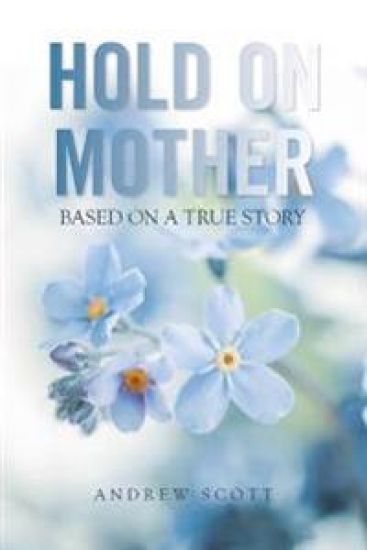
To this day I've tried to be like my Mother. Living right, helping others, giving to others. And most of all, trusting in the Lord. Living for Him like Mother did everyday. You see, ever since Mother died and I grew up to be a young man and my mother has been on my mind and heart ever since that day and year, I've always prayed for a good woman like my mother. I'm hoping that one day the Lord will bless me with a good, loving wife like my mother. One who would love the Lord with her whole heart, as Mother did. Our mother and father were the greatest love from God that my brothers and sisters and I knew of. Even though it was only for a short time that we had them both, it still was a blessing from God to us all. And we thanked God for them both. You see, their days and nights became short. Even the short years of our loving mother and father, of their time. Their days and nights and years became the greatest days and nights and years of our lives, forever. Mother and Father, wherever you both are now, rest in peace of all of our God.
Climate and energy. Work/life balance. Mining taxes. Progress on policy issues like these is essential, and yet they have become subject to the most rancorous partisanship, the precipitation of culture wars, and have brought down governments. It is impossible to make any progress without major political upheaval. Or so it seems in Australia. Yet Nordic countries have taken a 'ja, we can' approach to these and other issues such as independent foreign policy, prison reform, gender equality, retraining for workforce participation and media diversity. Their experience shows that progress in these areas is not only possible, but can be achieved while increasing prosperity and community wellbeing. The Nordic Edge explores policies adopted by Sweden, Finland, Denmark, Norway and Iceland and the exciting possibilities they provide to overcome Australia's seemingly intractable problems. Leading Australian and Nordic thinkers and policy practitioners, including Sweden's recent Foreign Minister, outline proven approaches to help Australia become a fairer, happier, wealthier and more environmentally responsible country. Re-enter Australia's policy debates with optimism, new ideas and a Nordic edge.Contributors: Professor Andrew Scott; Rod Campbell; Dr Richard Denniss; Matt Grudnoff; Tom Swann; former Swedish Foreign Minister Margot Wallström; Dr Lenita Freidenvall; Professor Marian Sawer; James Fleming; Richie Merzian; Dan Cass; Audrey Quicke; Ebony Bennett; Dr Maria Rae; and Associate Professor Anna Eriksson, with a foreword by Ben Oquist.
A wakeup call that shows us how to live our best and longest lives through the power of AIKey FeaturesDiscover how the latest cutting-edge developments in health and AI are helping us live longer, healthier, and better livesPersonalize your health, wealth and well-being using technology best suited to help you plan and build up your assets for a multi-stage lifeUnderstand how we can live our best lives in a post-COVID-19 world and equip ourselves for the next pandemic using technologyBook DescriptionLive Longer with AI examines how the latest cutting-edge developments are helping us to live longer, healthier and better too. It compels us to stop thinking that health is about treating disease and start regarding it as our greatest personal and societal asset to protect.The book discusses the impact that AI has on understanding the cellular basis of aging and how our genes are influenced by our environment – with the pandemic highlighting the interconnectedness of human and planetary health.Author Tina Woods, founder and CEO of Collider Health and Collider Science, and the co-founder of Longevity International, has curated a panel of deeply insightful interviews with some of today’s brightest and most innovative thought leaders at the crossroads of health, technology and society.Read what leading experts in health and technology are saying about the book:"This is a handbook for the revolution!"—Sir Muir Gray, Director, Optimal Ageing"You can live longer and be happier if you make some changes – that is the theme of this book. Well-written and compelling."—Ben Page, CEO, Ipsos Mori"Tina's book is a must-read for those who want to discover the future of health."—José Luis Cordeiro, Fellow, World Academy of Art & Science; Director, The Millennium Project; Vice Chair, Humanity Plus; Co-Author of The Death of DeathAbout the consultant editorMelissa Ream is a leading health and care strategist in the UK, leveraging user-driven design and artificial intelligence to design systems and support people to live healthier, longer lives.What you will learnDiscover how AI is changing the way we understand the wider determinants of health, how the environment influences our genes and why the solutions for living longer are linked to living greenerInform your perspective on how technology can deal with the health emergency in front of us – by minimizing health and wealth inequalitiesLearn why our “life data” is so important and how sharing it will help us develop aging “bio-markers”, enabling us to predict and manage dementia and other chronic diseases of agingFind out how scientists and doctors are using AI to find a vaccine for Covid-19, make us more resilient to future pandemic threats and pre-empt the next outbreakWho this book is forProfessionals and general readers with an interest in learning how technology can and is being used to change our approach to aging and help us live longer and healthier lives. No prior knowledge of or experience with artificial intelligence is required.
*Includes pictures *Includes medieval accounts *Includes online resources and a bibliography for further reading "Yet remains that one of the sir who is called T r: he is most daring, and best in stoutness of heart, and he has much authority over victory in battle; it is good for men of valour to invoke him. It is a proverb, that he is T r-valiant, who surpasses other men and does not waver. He is wise, so that it is also said, that he that is wisest is T r-prudent. This is one token of his daring: when the sir enticed Fenris-Wolf to take upon him the fetter Gleipnir, the wolf did not believe them, that they would loose him, until they laid T r's hand into his mouth as a pledge. But when the sir would not loose him, then he bit off the hand at the place now called 'the wolf's joint;' and T r is one-handed, and is not called a reconciler of men." Much of what is known of the Norse myths comes from the 10th century onwards. Until this time and, indeed, for centuries afterwards, Norse culture (particularly that of Iceland, where the myths were eventually transcribed) was an oral culture. In fact, in all Scandinavian countries well into the thirteenth century laws were memorized by officials known as "Lawspeakers" who recited them at the "Thing." The Thing was the legislative assembly in Scandinavia "held for judicial purposes." One of the most famous of these Lawspeakers was the Icelander Snorri Sturluson, a masterful writer who wrote the Prose Edda in the thirteenth century. There are other sources for the Norse myths, namely the later "Poetic Edda," a collection of poems and prose work, and other sagas but the Snorri's Prose Edda is the most complete work whose attribution is known to modern scholars. The Prose Edda is a collection of Norse Myths split into three sections, the Gylfaginning (the Deluding of Gylfi), the Sk ldskaparm l (the Language of Poetry) and the H ttatal (the Enumeration of Meters). The first has a frame story that entails a Swedish King, Gylfi, disguising himself as an old man, Gangleri, when he journeys to Asgard to meet the gods. When he arrives, he meets three men - "High One, Just-As-High, and Third" - who reveal to him stories of the world and the gods. The second section contains a warning for Christians not to believe in the Norse gods, specifically the two families, the sir and the Vanir, but also refutes the notion that they were demons, which was a common supposition among some Christians at the time. The Prose Edda begins in this line of thought with a euhemeristic prologue, which traces the history of the Norse Gods as human heroes of Troy, making Thor one of King Priam's sons. Timeless characters like Thor, Loki, and the All-Father Odin never fail to inspire new treatments of their stories, while many of the great characters from Norse myths wither, their secrets kept silent. Such secrets are inherent to the character of T r. More closely aligned with the Greek Athena than Mars or Ares, T r was once so highly regarded and devoutly worshiped that his name was synonymous with "godlike". "T r-valiant" and "T r-prudent" are but two of many such examples. Moreover, unlike most gods of war, T r has much to offer modern historians in terms of religious practices, cultural unity, and the question of justice in northern Europe. T r: The Origins and History of the Norse God of Law, War, and Justice looks at the stories about the legendary Norse deity. Along with pictures depicting important people, places, and events, you will learn about T r like never before.
*Includes pictures *Includes medieval accounts *Includes online resources and a bibliography for further reading "Yet remains that one of the sir who is called T r: he is most daring, and best in stoutness of heart, and he has much authority over victory in battle; it is good for men of valour to invoke him. It is a proverb, that he is T r-valiant, who surpasses other men and does not waver. He is wise, so that it is also said, that he that is wisest is T r-prudent. This is one token of his daring: when the sir enticed Fenris-Wolf to take upon him the fetter Gleipnir, the wolf did not believe them, that they would loose him, until they laid T r's hand into his mouth as a pledge. But when the sir would not loose him, then he bit off the hand at the place now called 'the wolf's joint;' and T r is one-handed, and is not called a reconciler of men." Much of what is known of the Norse myths comes from the 10th century onwards. Until this time and, indeed, for centuries afterwards, Norse culture (particularly that of Iceland, where the myths were eventually transcribed) was an oral culture. In fact, in all Scandinavian countries well into the thirteenth century laws were memorized by officials known as "Lawspeakers" who recited them at the "Thing." The Thing was the legislative assembly in Scandinavia "held for judicial purposes." One of the most famous of these Lawspeakers was the Icelander Snorri Sturluson, a masterful writer who wrote the Prose Edda in the thirteenth century. There are other sources for the Norse myths, namely the later "Poetic Edda," a collection of poems and prose work, and other sagas but the Snorri's Prose Edda is the most complete work whose attribution is known to modern scholars. The Prose Edda is a collection of Norse Myths split into three sections, the Gylfaginning (the Deluding of Gylfi), the Sk ldskaparm l (the Language of Poetry) and the H ttatal (the Enumeration of Meters). The first has a frame story that entails a Swedish King, Gylfi, disguising himself as an old man, Gangleri, when he journeys to Asgard to meet the gods. When he arrives, he meets three men - "High One, Just-As-High, and Third" - who reveal to him stories of the world and the gods. The second section contains a warning for Christians not to believe in the Norse gods, specifically the two families, the sir and the Vanir, but also refutes the notion that they were demons, which was a common supposition among some Christians at the time. The Prose Edda begins in this line of thought with a euhemeristic prologue, which traces the history of the Norse Gods as human heroes of Troy, making Thor one of King Priam's sons. Timeless characters like Thor, Loki, and the All-Father Odin never fail to inspire new treatments of their stories, while many of the great characters from Norse myths wither, their secrets kept silent. Such secrets are inherent to the character of T r. More closely aligned with the Greek Athena than Mars or Ares, T r was once so highly regarded and devoutly worshiped that his name was synonymous with "godlike". "T r-valiant" and "T r-prudent" are but two of many such examples. Moreover, unlike most gods of war, T r has much to offer modern historians in terms of religious practices, cultural unity, and the question of justice in northern Europe. T r: The Origins and History of the Norse God of Law, War, and Justice looks at the stories about the legendary Norse deity. Along with pictures depicting important people, places, and events, you will learn about T r like never before.
*Includes pictures*Includes Norse accounts*Includes online resources and a bibliography for further reading"Nj rdr in N at n begot afterward two children: the son was called Freyr, and the daughter Freyja; they were fair of face and mighty. Freyr is the most renowned of the sir; he rules over the rain and the shining of the sun, and therewithal the fruit of the earth; and it is good to call on him for fruitful seasons and peace." Much of what is known of the Norse myths comes from the 10th century onwards. Until this time and, indeed, for centuries afterwards, Norse culture (particularly that of Iceland, where the myths were eventually transcribed) was an oral culture. In fact, in all Scandinavian countries well into the thirteenth century laws were memorized by officials known as "Lawspeakers" who recited them at the "Thing." The Thing was the legislative assembly in Scandinavia "held for judicial purposes." The Prose Edda is a collection of Norse Myths split into three sections, the Gylfaginning (the Deluding of Gylfi), the Sk ldskaparm l (the Language of Poetry) and the H ttatal (the Enumeration of Meters). The first has a frame story that entails a Swedish King, Gylfi, disguising himself as an old man, Gangleri, when he journeys to Asgard to meet the gods. When he arrives, he meets three men - "High One, Just-As-High, and Third" - who reveal to him stories of the world and the gods. The second section contains a warning for Christians not to believe in the Norse gods, specifically the two families, the sir and the Vanir, but also refutes the notion that they were demons, which was a common supposition among some Christians at the time. The Prose Edda begins in this line of thought with a euhemeristic prologue, which traces the history of the Norse Gods as human heroes of Troy, making Thor one of King Priam's sons. The Norse Myths also appear to follow a chronological narrative, which the historian John Lindow describes as having a "Mythical Past, Present and Future." Loki features in each of these literary "epochs" and it helps to understand the complexity of his character, as well as the belief system, to view the myths in this way.Freyr was son to sea-god Nj rdr and twin brother to love goddess Freyja, all of whom were part of the Vanir, a less warlike, divine family. As part of a hostage exchange between warring families, Nj rdr and Freyr were sent to live with the sir. As a member of the Vanir, his integration into the warlike family gave Freyr relatively little to do in surviving mythology. Many of the surviving stories involve Thor exercising his physical strength while Loki and Odin exercise their cunning. Freyr was not noted for either of these attributes, nor did he have a love of besting the Giants, the gods' eternal enemies. Freyr's role as a fertility god-a recurring theme in the Vanir-meant that his relatively rare appearences in the myths weighed heavily on the dominant, cult role he performed across Scandinavia from a surprisingly early time. That being said, there are few superfluous characters in Norse myth, and Freyr is present at two major moments of the gods' history: the union of the two families (although there are very few surviving texts describing this exact moment) and Ragnar k, the apocalyptic end.Freyr: The Origins and History of the Norse God of Love and Fertility looks at the stories about the legendary Norse deity. Along with pictures depicting important people, places, and events, you will learn about Freyr like never before.
*Includes pictures*Includes Norse accounts*Includes online resources and a bibliography for further reading"Nj rdr in N at n begot afterward two children: the son was called Freyr, and the daughter Freyja; they were fair of face and mighty. Freyr is the most renowned of the sir; he rules over the rain and the shining of the sun, and therewithal the fruit of the earth; and it is good to call on him for fruitful seasons and peace." Much of what is known of the Norse myths comes from the 10th century onwards. Until this time and, indeed, for centuries afterwards, Norse culture (particularly that of Iceland, where the myths were eventually transcribed) was an oral culture. In fact, in all Scandinavian countries well into the thirteenth century laws were memorized by officials known as "Lawspeakers" who recited them at the "Thing." The Thing was the legislative assembly in Scandinavia "held for judicial purposes." The Prose Edda is a collection of Norse Myths split into three sections, the Gylfaginning (the Deluding of Gylfi), the Sk ldskaparm l (the Language of Poetry) and the H ttatal (the Enumeration of Meters). The first has a frame story that entails a Swedish King, Gylfi, disguising himself as an old man, Gangleri, when he journeys to Asgard to meet the gods. When he arrives, he meets three men - "High One, Just-As-High, and Third" - who reveal to him stories of the world and the gods. The second section contains a warning for Christians not to believe in the Norse gods, specifically the two families, the sir and the Vanir, but also refutes the notion that they were demons, which was a common supposition among some Christians at the time. The Prose Edda begins in this line of thought with a euhemeristic prologue, which traces the history of the Norse Gods as human heroes of Troy, making Thor one of King Priam's sons. The Norse Myths also appear to follow a chronological narrative, which the historian John Lindow describes as having a "Mythical Past, Present and Future." Loki features in each of these literary "epochs" and it helps to understand the complexity of his character, as well as the belief system, to view the myths in this way.Freyr was son to sea-god Nj rdr and twin brother to love goddess Freyja, all of whom were part of the Vanir, a less warlike, divine family. As part of a hostage exchange between warring families, Nj rdr and Freyr were sent to live with the sir. As a member of the Vanir, his integration into the warlike family gave Freyr relatively little to do in surviving mythology. Many of the surviving stories involve Thor exercising his physical strength while Loki and Odin exercise their cunning. Freyr was not noted for either of these attributes, nor did he have a love of besting the Giants, the gods' eternal enemies. Freyr's role as a fertility god-a recurring theme in the Vanir-meant that his relatively rare appearences in the myths weighed heavily on the dominant, cult role he performed across Scandinavia from a surprisingly early time. That being said, there are few superfluous characters in Norse myth, and Freyr is present at two major moments of the gods' history: the union of the two families (although there are very few surviving texts describing this exact moment) and Ragnar k, the apocalyptic end.Freyr: The Origins and History of the Norse God of Love and Fertility looks at the stories about the legendary Norse deity. Along with pictures depicting important people, places, and events, you will learn about Freyr like never before.
*Includes pictures *Includes medieval accounts *Includes online resources and a bibliography for further reading Much of what is known of the Norse myths comes from the 10th century onwards. Until this time and, indeed, for centuries afterwards, Norse culture (particularly that of Iceland, where the myths were eventually transcribed) was an oral culture. In fact, in all Scandinavian countries well into the thirteenth century laws were memorized by officials known as "Lawspeakers" who recited them at the "Thing." The Thing was the legislative assembly in Scandinavia "held for judicial purposes." One of the most famous of these Lawspeakers was the Icelander Snorri Sturluson, a masterful writer who wrote the Prose Edda in the thirteenth century. There are other sources for the Norse myths, namely the later "Poetic Edda," a collection of poems and prose work, and other sagas but the Snorri's Prose Edda is the most complete work whose attribution is known to modern scholars. It is believed that Snorri, a Christian, recorded these pagan beliefs so as to preserve and explain the stylistic poetry of Iceland, particularly the popular descriptive devices known as kennings. A kenning is made up of a base word and a modifying word that is used to describe a separate object. For example, "Gold" had a great many kennings, one of which was "Sif's Hair." If, however, the memory of Loki cutting off Sif's hair and replacing it with gold were lost, then this kenning would make no sense to later readers. There are many of these allusions to the myths and it is thanks to them that the myths have survived. The Norse Myths also appear to follow a chronological narrative, which the historian John Lindow describes as having a "Mythical Past, Present and Future." Loki features in each of these literary "epochs" and it helps to understand the complexity of his character, as well as the belief system, to view the myths in this way. Baldr: The Origins and History of the Famous Norse God Whose Death Leads to Ragnarok looks at the story and the legendary Norse deity. Along with pictures depicting important people, places, and events, you will learn about Baldr like never before.
*Includes pictures *Includes ancient accounts and Scripture passages *Includes online resources and a bibliography for further reading "And Jesus suffered no man to follow Him, save Peter and James and John." - Mark 5:37 Apart from Jesus, there is no character more vividly presented in the gospels than Peter. To talk of Saint Peter is to talk about a man of action. There is a good reason why he is the apostle with the most mentions in the Gospels, and the most referred to in the New Testament (a total of 195 times). In comparison, John, the next most popular disciple, barely reaches 29 references. It is at decisive moments which require a categorical reaction where the leader of the Twelve shines; it is then that Peter -born as Simon Bar-Jonah- has no rival in the inner circle of disciples that followed Jesus of Nazareth. At the same time, during periods of uncertainty and inaction he hesitates, collapses, and shows his all-too human side. With all his virtues and shortcomings, he became Jesus's man of confidence, and over time, the leader of the nascent Church. Reconstructing the biography of Simon the Galilean requires throwing the nets over the waters of the many traditions of the leader of the Twelve, the man who is always present at the turning points of the story of Jesus. It has rightly been said that the Gospel of Mark (and thus the gospels of Matthew and Luke) is written from his point of view. It is he whom Jesus calls first when he is working on the seashore; it is Peter who proclaims with blind enthusiasm that his teacher is the Messiah, who confronts him about the consequences and meaning of that title, who cries bitterly for his cowardice, who enters the house of the high priest where the rabbi is held prisoner, and who, after the crucifixion, throws himself into the dark waters, before the sunrise, when he sees him again standing on the shore of the lake. Peter was already a married man with a permanent job in Capernaum when Jesus passed by and said, "Follow me and I will make you a fisher of men." Although the four canonical gospels tend to have disagreements, they all agree on one crucial aspect: Peter's preeminence. Peter was the spokesman and the chief apostle, the trustworthy disciple of the Lord and, ironically, the one who failed him again and again through his incomprehension, his hesitation, and impulsiveness. For example, he drew the sword to kill at a time of danger, when his teacher was clearly against violence. However, according to several independent sources, the risen Jesus went to appear to Peter first, as if to comfort him and confirm him on his commission to "feed the sheep." Considering all this, it is strange that few details about his later life are known. That Simon Bar-Jonah "Cephas," the man from Galilee, was a historical figure is a fact that no one - not even those who doubt the existence of Jesus - would put in doubt. The textual evidence is traced back to the years he lived in Jerusalem, and at least one contemporary person mentions an encounter with him. But the details are scarce. Ironically, most of the reliable information is in the writings of another Christian leader with whom he had disputes: Paul. Traditions and legends about the life of Saint Peter are many, not to mention several writings attributed to him. Some may contain historical memories, and others are parables, but it is not a legend that while he was alive, and even 2,000 years later, Peter has been the center of heated controversies. If indeed he was the leader of the apostles, then do his successors (the bishops of Rome) have preeminence over all of Christendom? To say that this question defined the history and the map of the Christian world for many centuries is an understatement. Saint Peter is, therefore, one of the most important people in history.
*Includes pictures *Includes medieval accounts *Includes online resources and a bibliography for further reading Much of what is known of the Norse myths comes from the 10th century onwards. Until this time and, indeed, for centuries afterwards, Norse culture (particularly that of Iceland, where the myths were eventually transcribed) was an oral culture. In fact, in all Scandinavian countries well into the thirteenth century laws were memorized by officials known as "Lawspeakers" who recited them at the "Thing." The Thing was the legislative assembly in Scandinavia "held for judicial purposes." One of the most famous of these Lawspeakers was the Icelander Snorri Sturluson, a masterful writer who wrote the Prose Edda in the thirteenth century. There are other sources for the Norse myths, namely the later "Poetic Edda," a collection of poems and prose work, and other sagas but the Snorri's Prose Edda is the most complete work whose attribution is known to modern scholars. It is believed that Snorri, a Christian, recorded these pagan beliefs so as to preserve and explain the stylistic poetry of Iceland, particularly the popular descriptive devices known as kennings. A kenning is made up of a base word and a modifying word that is used to describe a separate object. For example, "Gold" had a great many kennings, one of which was "Sif's Hair." If, however, the memory of Loki cutting off Sif's hair and replacing it with gold were lost, then this kenning would make no sense to later readers. There are many of these allusions to the myths and it is thanks to them that the myths have survived. The Norse Myths also appear to follow a chronological narrative, which the historian John Lindow describes as having a "Mythical Past, Present and Future." Loki features in each of these literary "epochs" and it helps to understand the complexity of his character, as well as the belief system, to view the myths in this way. Baldr: The Origins and History of the Famous Norse God Whose Death Leads to Ragnarok looks at the story and the legendary Norse deity. Along with pictures depicting important people, places, and events, you will learn about Baldr like never before.
*Includes pictures *Includes ancient accounts and Scripture passages *Includes online resources and a bibliography for further reading "And Jesus suffered no man to follow Him, save Peter and James and John." - Mark 5:37 Apart from Jesus, there is no character more vividly presented in the gospels than Peter. To talk of Saint Peter is to talk about a man of action. There is a good reason why he is the apostle with the most mentions in the Gospels, and the most referred to in the New Testament (a total of 195 times). In comparison, John, the next most popular disciple, barely reaches 29 references. It is at decisive moments which require a categorical reaction where the leader of the Twelve shines; it is then that Peter -born as Simon Bar-Jonah- has no rival in the inner circle of disciples that followed Jesus of Nazareth. At the same time, during periods of uncertainty and inaction he hesitates, collapses, and shows his all-too human side. With all his virtues and shortcomings, he became Jesus's man of confidence, and over time, the leader of the nascent Church. Reconstructing the biography of Simon the Galilean requires throwing the nets over the waters of the many traditions of the leader of the Twelve, the man who is always present at the turning points of the story of Jesus. It has rightly been said that the Gospel of Mark (and thus the gospels of Matthew and Luke) is written from his point of view. It is he whom Jesus calls first when he is working on the seashore; it is Peter who proclaims with blind enthusiasm that his teacher is the Messiah, who confronts him about the consequences and meaning of that title, who cries bitterly for his cowardice, who enters the house of the high priest where the rabbi is held prisoner, and who, after the crucifixion, throws himself into the dark waters, before the sunrise, when he sees him again standing on the shore of the lake. Peter was already a married man with a permanent job in Capernaum when Jesus passed by and said, "Follow me and I will make you a fisher of men." Although the four canonical gospels tend to have disagreements, they all agree on one crucial aspect: Peter's preeminence. Peter was the spokesman and the chief apostle, the trustworthy disciple of the Lord and, ironically, the one who failed him again and again through his incomprehension, his hesitation, and impulsiveness. For example, he drew the sword to kill at a time of danger, when his teacher was clearly against violence. However, according to several independent sources, the risen Jesus went to appear to Peter first, as if to comfort him and confirm him on his commission to "feed the sheep." Considering all this, it is strange that few details about his later life are known. That Simon Bar-Jonah "Cephas," the man from Galilee, was a historical figure is a fact that no one - not even those who doubt the existence of Jesus - would put in doubt. The textual evidence is traced back to the years he lived in Jerusalem, and at least one contemporary person mentions an encounter with him. But the details are scarce. Ironically, most of the reliable information is in the writings of another Christian leader with whom he had disputes: Paul. Traditions and legends about the life of Saint Peter are many, not to mention several writings attributed to him. Some may contain historical memories, and others are parables, but it is not a legend that while he was alive, and even 2,000 years later, Peter has been the center of heated controversies. If indeed he was the leader of the apostles, then do his successors (the bishops of Rome) have preeminence over all of Christendom? To say that this question defined the history and the map of the Christian world for many centuries is an understatement. Saint Peter is, therefore, one of the most important people in history.