Kirjojen hintavertailu. Mukana 12 564 836 kirjaa ja 12 kauppaa.

Kirjailija

Andrew Sharpe

Kirjat ja teokset yhdessä paikassa: 6 kirjaa, julkaisuja vuosilta 1997-2002, suosituimpien joukossa The State of Economics in Canada. Vertaile teosten hintoja ja tarkista saatavuus suomalaisista kirjakaupoista.

6 kirjaa

Kirjojen julkaisuhaarukka 1997-2002.

The Review of Economic Performance and Social Progress, 2002

The Review of Economic Performance and Social Progress, 2002

Andrew Sharpe; France St-Hilaire; Keith Banting

The Institute for Research on Public Policy
2002
nidottu
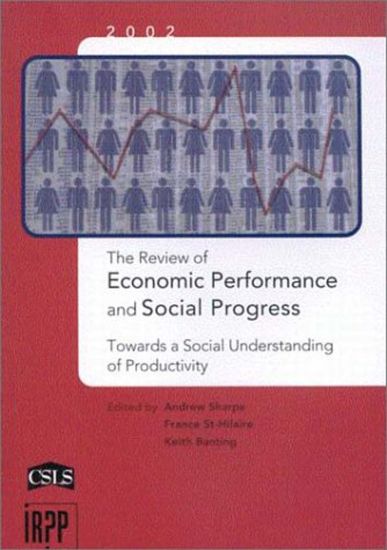
The issue of productivity and the related issue of innovation continue to be high on the public policy agenda. Policymakers are particularly interested in the social aspects of productivity. In The Review of Economic Performance and Social Progress, 2002, the second issue of a new annual, authors examine the two-way linkages between productivity and various measures of social progress in Canada. Papers in the volume fall into two main themes: the effects of productivity on social progress indicators and the social determinants of productivity.

The State of Economics in Canada

The State of Economics in Canada

Patrick Grady; Andrew Sharpe

Queen's University
2001
sidottu
Each article in this collection addresses a particular field or issue in the discipline of economics and surveys the state of knowledge in this area in Canada, pointing out gaps in the knowledge base and directions for future research. Contributors include Richard Bird (University of Toronto), Robin Boadway (Queen's University), Paul Davenport (University of Western Ontario), Pierre Fortin (University of Quebec at Montreal), Fred Gorbet (York University), Morley Gunderson (University of Toronto), John Helliwell (University of British Columbia), Peter Howitt (Brown University), Katie Macmillan (ITPC), Jack Mintz (C.D. Howe Institute), Ed Nuefeld, Charles Beach (Queen's University), Lars Osberg (Dalhousie University), Sylvia Ostry (University of Toronto), Jim Pesando (CPP-PG), Craig Riddell (University of British Columbia), John Sargent (Department of Finance), Tony Scott (University of Toronto), Michael Smart (University of Toronto), and Tom Wilson (University of Toronto).
The State of Economics in Canada

The State of Economics in Canada

Patrick Grady; Andrew Sharpe

Queen's University
2001
nidottu
Each article in this collection addresses a particular field or issue in the discipline of economics and surveys the state of knowledge in this area in Canada, pointing out gaps in the knowledge base and directions for future research. Contributors include Richard Bird (University of Toronto), Robin Boadway (Queens University), Paul Davenport (University of Western Ontario), Pierre Fortin (University of Quebec at Montreal), Fred Gorbet (York University), Morley Gunderson (University of Toronto), John Helliwell (University of British Columbia), Peter Howitt (Brown University), Katie Macmillan (ITPC), Jack Mintz (C.D. Howe Institute), Ed Nuefeld, Charles Beach (Queens University), Lars Osberg (Dalhousie University), Sylvia Ostry (University of Toronto), Jim Pesando (CPP-PG), Craig Riddell (University of British Columbia), John Sargent (Department of Finance), Tony Scott (University of Toronto), Michael Smart (University of Toronto), and Tom Wilson (University of Toronto).
Social Partnerships for Training

Social Partnerships for Training

Andrew Sharpe; Rodney S. Haddow

Queen's University
1997
sidottu
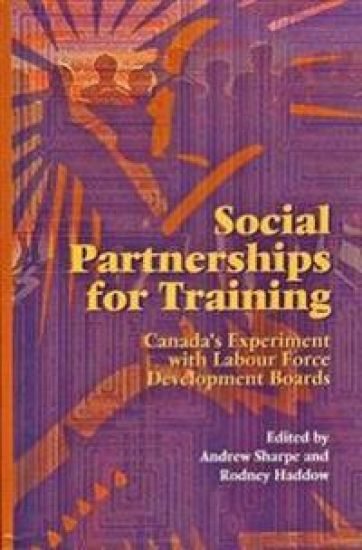
This study of social partnerships in the establishment of labour force development boards provides important food for thought for Canadians interested in the continuing problem of high unemployment in Canada. Drawing on recent theory in political science and comparative public policy, Social Partnerships for Training considers obstacles and opportunities associated with active labour market policies in Canada. It takes us through some important experiments in Ontario, Quebec, and other provinces and shows how the complexities of Canadian federalism, Quebec nationalism, and class relations befuddle efforts at new policy approaches. The book also highlights the importance of a lack of political will on the part of our politicians to pursue new policy directions. The curious fate of the development boards tells us a great deal about how labour market policy-making in Canada actually works. The challenge is whether we can build on what was learned about the social partnership approach to active labour market adjustment.
Social Partnerships for Training

Social Partnerships for Training

Andrew Sharpe; Rodney S. Haddow

Queen's University
1997
nidottu
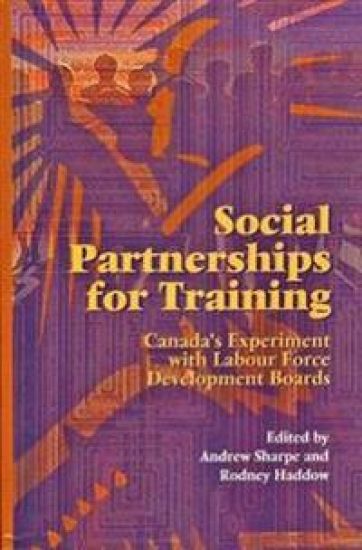
This study of social partnerships in the establishment of labour force development boards provides important food for thought for Canadians interested in the continuing problem of high unemployment in Canada. Drawing on recent theory in political science and comparative public policy, Social Partnerships for Training considers obstacles and opportunities associated with active labour market policies in Canada. It takes us through some important experiments in Ontario, Quebec, and other provinces and shows how the complexities of Canadian federalism, Quebec nationalism, and class relations befuddle efforts at new policy approaches. The book also highlights the importance of a lack of political will on the part of our politicians to pursue new policy directions. The curious fate of the development boards tells us a great deal about how labour market policy-making in Canada actually works. The challenge is whether we can build on what was learned about the social partnership approach to active labour market adjustment.