Kirjojen hintavertailu. Mukana 12 595 353 kirjaa ja 12 kauppaa.

Kirjailija

Andrew Simmonds

Kirjat ja teokset yhdessä paikassa: 3 kirjaa, julkaisuja vuosilta 2018-2022, suosituimpien joukossa Gill Mill. Vertaile teosten hintoja ja tarkista saatavuus suomalaisista kirjakaupoista.

3 kirjaa

Kirjojen julkaisuhaarukka 2018-2022.

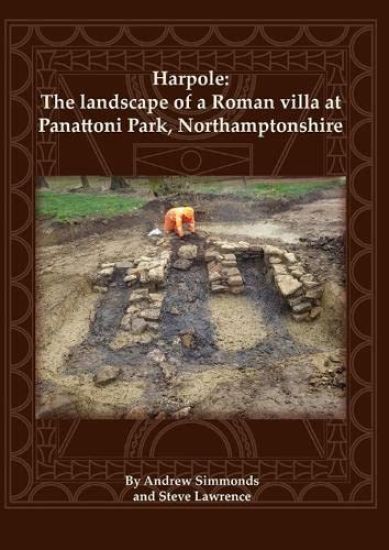
Harpole

Harpole

Andrew Simmonds

OXFORD ARCHAEOLOGY
2022
nidottu
Excavations at Panattoni Park, at Harpole within the Nene Valley west of Northampton, uncovered part of a Roman villa and evidence for preceding prehistoric and early Roman settlement. The earliest evidence was a Mesolithic flint-knapping site. During the early Iron Age or at the start of the middle Iron Age, a pit alignment was constructed running down the valley side. A middle Iron Age settlement of at least seven roundhouses lay 450m to the east of the pit alignment. It is likely that both the boundary and the settlement were associated with cattle grazing on the valley floor, and the settlement may have been seasonally occupied. An enclosure complex was constructed against the pit alignment during the late Iron Age and occupied until c AD 50/70, after which there was an apparent hiatus of about a century before the establishment of the villa during the mid-2nd century. The villa was first discovered in the 1840s when a mosaic was accidentally uncovered. It was believed to have been largely destroyed during widening of the adjacent A4500 road in 1966 when excavation of only a small area was possible. However, the new excavation has demonstrated the survival of part of the main villa complex, including a substantial aisled building that may have formed the southern range. An extensive part of the agricultural landscape surrounding the villa was investigated, including an area devoted to malting and an enclosure complex used as a stockyard for processing livestock. A further notable find was a small hoard of mower’s tools, perhaps the toolkit of an individual agricultural worker. A building interpreted as a temple-mausoleum of Romano-Celtic form situated beside a spring channel was also investigated. Pollen from the channel indicating the presence of a walnut grove may be the earliest definite evidence for the cultivation of walnut trees in Britain.
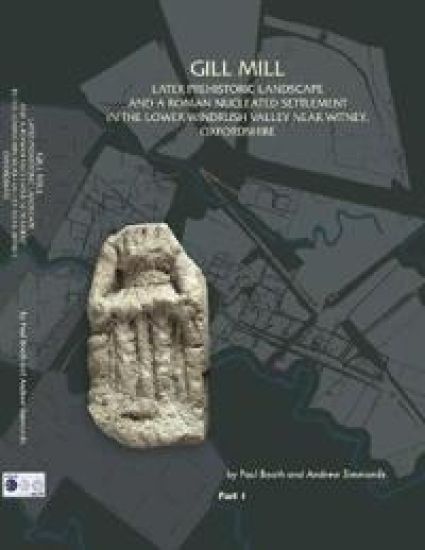
Gill Mill

Gill Mill

Paul Booth; Andrew Simmonds

Oxford University School of Archaeology
2018
sidottu
The valley floodplain landscape covered by the Gill Mill quarry, almost 130ha, was intensively exploited from about 300 BC at a variety of Iron Age settlements. The largest of these remained in occupation into the early 3rd century AD, but meanwhile a large nucleated settlement grew up around a road junction roughly 1km distant to the NW. This became the sole focus of occupation, covering an area of about 10ha. Featuring multiple ditched enclosures, some in very regular layouts associated with one of the roads, the settlement contained relatively few identified buildings and appears to have had a specialised economic role related to systematic cattle management, illuminated in part by large finds and environmental assemblages. It may have been an integral component of a wider estate holding and perhaps had an administrative focus (including a shrine) at its unexcavated centre. It is notable that occupation of the site had almost entirely ceased by about AD 370.
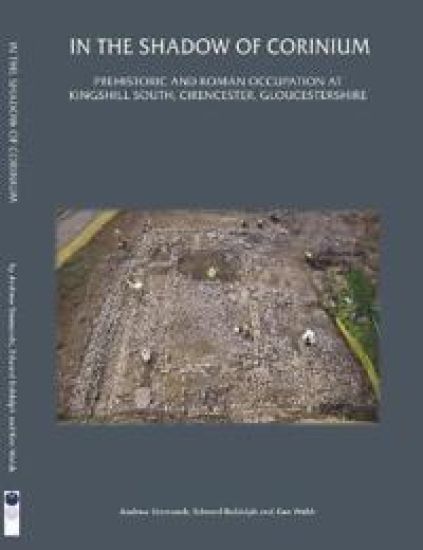
In the Shadow of Corinium

In the Shadow of Corinium

Andrew Simmonds; Edward Biddulph; Ken Welsh

Oxford University School of Archaeology
2018
nidottu
Excavations by Oxford Archaeology at Kingshill South on the eastern edge of Cirencester in Gloucestershire uncovered evidence for prehistoric and Roman activity. The earliest evidence comprised a pit dating to the late Neolithic period or early Bronze Age, and the site was also inhabited during the late Bronze Age or early Iron Age. There was a gap in activity until the late 1st century AD, when fields were laid out on the site's southern slope. Three buildings were recorded within the area of the excavation. Building 1 was a domestic, stone-footed building best described as a proto-villa. Building 2 was an aisled building with an apsidal end and is likely to have served an agricultural function. Both were constructed in the 2nd century AD. Building 3, dated to the late Roman period, is interpreted as a granary. The settlement was abandoned by the late 4th century AD. The site remained agricultural land until the establishment of Cirencester's eastern suburb in the 20th century. Grain, meat, and wool, among other goods, were produced at the Roman settlement, probably to supply the town of Corinium Dobunnorum. Evidence for craft activity, including pin-making, horn-working and smithing, was also recorded. Formal burials and disarticulated human bone were encountered across the settlement. Analysis of the bones revealed remarkable insights into the lives of the settlement's inhabitants. The habitual, possibly craft-related, activity performed by one young female adult required her to spend much of her time in a squatting position. One adult male had a facial disfigurement which had an impact not just on his daily life, but also the manner of his burial.