Kirjojen hintavertailu. Mukana 12 595 353 kirjaa ja 12 kauppaa.
Kirjailija
Andrew Stewart
Kirjat ja teokset yhdessä paikassa: 38 kirjaa, julkaisuja vuosilta 1994-2025, suosituimpien joukossa Native Fishes of Aotearoa. Vertaile teosten hintoja ja tarkista saatavuus suomalaisista kirjakaupoista.
Part of the wildly popular Te Papa Te Taiao Nature Series, Native Fishes of Aotearoa is an accessible, handsomely illustrated guide to sixty of our most commonly encountered and interesting native coastal and freshwater fish species of Aotearoa New Zealand. Written by Te Papa fishes expert Andrew Stewart, Native Fishes includes curator notes on each species and insights into the museum’s fieldwork and collections. Specialist illustrators working on specimens from Te Papa’s collections have provided detailed original drawings to accompany each entry. A beautiful little hardback designed by award-winning designer Tim Denee, it’s an ideal keepsake or gift that can be used at home or out in the natural world.
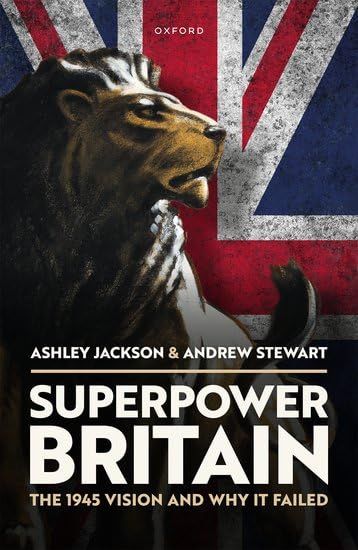
History tells us that the Second World War broke Britain as a great power, diminishing its military strength, ruining its economy, and precipitating a striking wave of decolonization. Nationalists and new superpowers dominated the post-war landscape, and the country was on the slide. But no one knew this in 1945 - the leading politicians, the top civil servants, and the most knowledgeable experts, all expected the British Empire to remain intact long into the future. There was no hint of imminent collapse, and the governing elite and key opinion-shapers weren't considering decline and decolonization, evincing instead a new zeal for imperial renovation and a belief that an empire which had just survived another global conflict was vital for the peace and security of all humankind. They were even looking to expansion, securing the spoils of victory as they had done at the end of the First World War. Fully expecting to continue leading a great empire as well as a bloc of European nations recovering from war, the British had their own vision of the new world order. Furthermore, and astonishingly given what actually happened, British leaders were convinced that parity could be gained with the Americans and the Soviets: Britain was to remain a superpower in its own right. What actually happened differed radically from these expectations. The question is, how do we account for the difference between what it was thought would happen and the actual course of events? Superpower Britain is the first book to focus in depth on this fascinating counterpoint and to fully integrate the history of Britain and the effects of the Second World War with the history of the British Empire. It explains what the British planned to do in the post-war world, why they thought their plans for regeneration and the future world order were viable, and what the war had actually done to British world power and its imperial foundations.
Reprint of the original, first published in 1872. The publishing house Anatiposi publishes historical books as reprints. Due to their age, these books may have missing pages or inferior quality. Our aim is to preserve these books and make them available to the public so that they do not get lost.
Reprint of the original, first published in 1872. The publishing house Anatiposi publishes historical books as reprints. Due to their age, these books may have missing pages or inferior quality. Our aim is to preserve these books and make them available to the public so that they do not get lost.
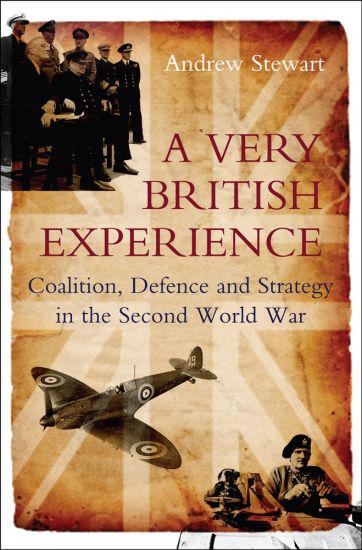
In terms of the Second World War and Britain's wartime strategy three elements deserve close scrutiny: the paramount importance of defending the British mainland and its population; the challenges of building and maintaining coalitions and alliances; and the central role the African continent assumed in all British strategic planning. A concluding essay reflects upon the degree to which in the face of an often uncertain and unconvincing approach these critical themes underpinned the British experience of the conflict. Topics addressed include 1940 and the Defence of Britain; relations with the United States; the British Empire Air Training Plan; General (Boy) Browning and Operation Market Garden; the recall of General Alan Cunningham from Libya in 1941; plans for defending the Royal Family; Exercise Genesis, which turned west London into a battleground for a day in May 1942; and the role of the Eastern Fleet off Africa. Andrew Stewart provides a compelling chapter on the loss of the Tobruk garrison in June 1942 -- one of the worst military disasters suffered by the British Empire during the Second World War. The essay on Tobruk demonstrates how all three defining elements of wartime experience converged: the loss of public confidence about how the war was being conducted; its impact on the relationship with the Union of South Africa, a key partner in the Dominion wartime coalition; and the absolute necessity that existed for deep strategic planning on the African continent -- subsequently to be realised at the final battle at El Alamein.
Contract Law: Principles and Context presents the development of contract law through a considered selection of cases that are both authoritative and used as factual examples to explain the law. The text introduces readers to the nature and range of contracts, the process for making a contract, rights and duties, adjustments to contracts, vitiating factors and unfair conduct, ending contracts, and remedies and restitution. The text considers the historical development of contracts through case law and legislation, then takes the reader to particular issues with contracts as they might arise in real life and navigates a legal pathway through them. Written in a clear and engaging style, Contract Law provides a fresh, topical and accessible account of the Australian law of contract, and is an invaluable resource for contract law students and practitioners.
Andrew Stewart (1791-1872) advocated protectionist policies for nearly two decades in the House of Representatives, gaining national renown as Chairman of the House Committees on the Tariff and Internal Improvements in the 1820s. Many of Stewart’s congressional speeches on economic doctrine were reproduced in full by newspapers, and he himself collected into one volume, reproduced here, all his speeches relating to tariffs. They demonstrate his belief in protectionism, in the necessity in his eyes of protective tariffs so as to enable American capitalists catch up with their British counterparts.
There are proven benefits to managers, employees and trade unions working together to achieve mutual gains. The tradition of adversarial workplace relations in Australia, so embedded in our culture, institutions and politics, is a powerful obstacle. But the potential for cooperative transformation is illustrated by the examples in this book. Drawing on research undertaken in partnership with the Fair Work Commission and the Newcastle Branch of the New South Wales Industrial Relations Society, two sets of case studies are presented. Each involves industrial tribunals working not so much to resolve disputes – their traditional role – but to help avoid disputes arising in the first place. Part of the book tells the fascinating story, spanning several decades, of the development of cooperative processes in the Hunter region. Deployed most notably on large scale construction projects, the model has delivered outstanding results for businesses and workers alike.
Andrew Stewart (1791-1872) advocated protectionist policies for nearly two decades in the House of Representatives, gaining national renown as Chairman of the House Committees on the Tariff and Internal Improvements in the 1820s. Many of Stewart’s congressional speeches on economic doctrine were reproduced in full by newspapers, and he himself collected into one volume, reproduced here, all his speeches relating to tariffs. They demonstrate his belief in protectionism, in the necessity in his eyes of protective tariffs so as to enable American capitalists catch up with their British counterparts.
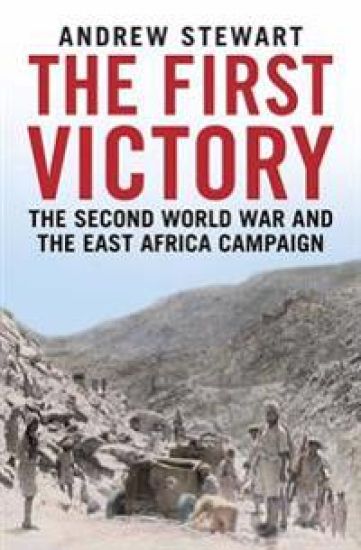
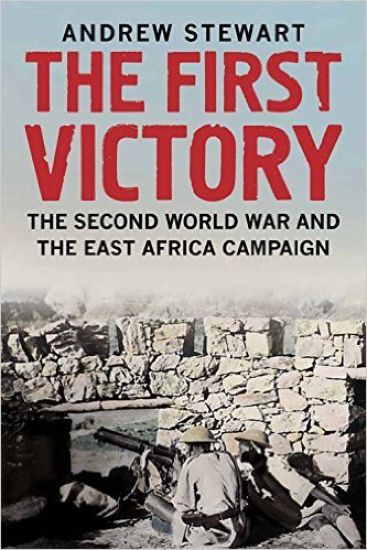
A riveting new account of the long-overlooked achievement of British-led forces who, against all odds, scored the first major Allied victory of the Second World War Surprisingly neglected in accounts of Allied wartime triumphs, in 1941 British and Commonwealth forces completed a stunning and important victory in East Africa against an overwhelmingly superior Italian opponent. A hastily formed British-led force, never larger than 70,000 strong, advanced along two fronts to defeat nearly 300,000 Italian and colonial troops. This compelling book draws on an array of previously unseen documents to provide both a detailed campaign history and a fresh appreciation of the first significant Allied success of the war. Andrew Stewart investigates such topics as Britain’s African wartime strategy; how the fighting forces were assembled (most from British colonies, none from the U.S.); General Archibald Wavell’s command abilities and his difficult relationship with Winston Churchill; the resolute Italian defense at Keren, one of the most bitterly fought battles of the entire war; the legacy of the campaign in East Africa; and much more.
A riveting new account of the long-overlooked achievement of British-led forces who, against all odds, scored the first major Allied victory of the Second World War Surprisingly neglected in accounts of Allied wartime triumphs, in 1941 British and Commonwealth forces completed a stunning and important victory in East Africa against an overwhelmingly superior Italian opponent. A hastily formed British-led force, never larger than 70,000 strong, advanced along two fronts to defeat nearly 300,000 Italian and colonial troops. This compelling book draws on an array of previously unseen documents to provide both a detailed campaign history and a fresh appreciation of the first significant Allied success of the war. Andrew Stewart investigates such topics as Britain’s African wartime strategy; how the fighting forces were assembled (most from British colonies, none from the U.S.); General Archibald Wavell’s command abilities and his difficult relationship with Winston Churchill; the resolute Italian defense at Keren, one of the most bitterly fought battles of the entire war; the legacy of the campaign in East Africa; and much more.
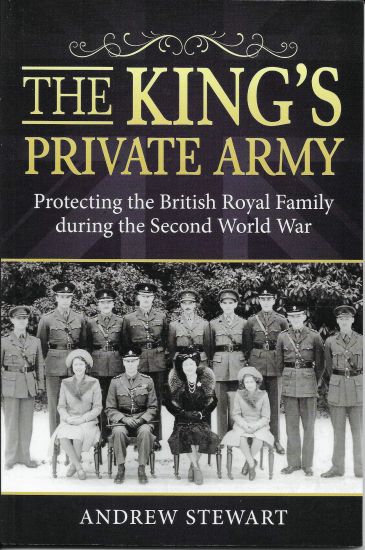
Following the surrender of France in June 1940 Britain prepared to defend itself against a potential German invasion. In great secrecy a decision was taken to establish an elite bodyguard to protect the British Royal Family. Led initially by Major Jimmy Coats, a Coldstream Guards officer and celebrated winter sportsman, it was given the innocuous title of `The Coats Mission’, but its proposed role was perhaps the most important assigned to any unit in the British armed forces. It was intended that this group would evacuate King George VI, Queen Elizabeth and the two princesses, Margaret and her sister Elizabeth, to a place of safety away from London. For the next two years it trained and prepared for the role in the face of what was believed to be a very real threat, and this study, drawing on previously unseen documents, interviews and archival material, provides its history and explains how the Royal Family’s protection was viewed. Beginning with the pre-war shelter preparations for the Royal Households and running through the increased anxiety of the 1940 invasion threat and Blitz, the renewed danger in 1941 and then the progressive reduction in the special measures in the years that followed,The King's Private Army offers the first dedicated account of a largely unknown but potentially critical element of the defence of the United Kingdom during the Second World War.
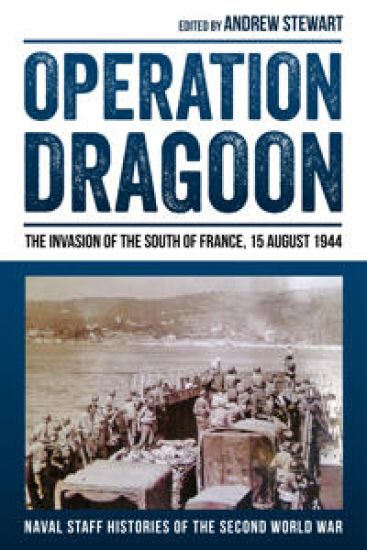
The Allied landings that took place in Southern France in August 1944 represented both one of the concluding elements of the wartime Mediterranean campaign and a decisive follow-on to the invasion of Normandy that had taken place two months before. It was viewed by many at the time as something of a sideshow and not a significant part of the wider war effort. Considerable controversy surrounded the planning of what was originally known as ANVIL with the senior Allied political and military leaders heatedly debating the strategic rationale for such an operation. The maritime force of escort carriers, a gun support force, minesweepers, cargo vessels and heavy landing craft was commanded by an American admiral but a third of it was supplied by the Royal Navy. On the day of the landings the British cruiser HMS Argonaut fired the most rounds of any ship in the fleet. An overwhelming superiority in airpower and a lack of a cohesive German response meant that the landings were an overwhelming success. By the third day the Allies held a 50-mile front as much as 30 miles deep, a total of some 500 square miles. At least nine important towns were in Allied hands and spearheads were ten miles from the naval base of Toulon, ten miles from Cannes. Seaborne and airborne troops had met ashore and reinforcements and supplies were being landed in large quantities. As this Naval Staff History highlights even so ""The Champagne Campaign"", as it was later termed by many of those who had been involved, required considerable planning and the contribution provided by the Royal Navy had a significant part to in the final Allied success. With this came the capture of intact French ports and the establishment of a vital logistic hub would help safeguard the Allied drive through North-Western Europe. This is the second volume in Helion’s new series, 'Naval Staff Histories of the Second World War’. The series aims to make available to a broad authorship these indispensable studies of the key operations of the war.
This genuinely pocket-sized guide to being on call is ideal for medical students and newly qualified junior doctors seeking a convenient and concise handbook to refer to in busy clinical settings. Clear, concise and systematic, Pocket on Call contains exactly what you need to make rapid and appropriate decisions without overwhelming or extraneous information.With this book in your pocket, you’ll be equipped to tackle being on call appropriately and with confidence. Answering the questions that are not always addressed in the lecture theatre, with this book as an indispensable companion the inexperienced doctor will be equipped to tackle being on call appropriately and with confidence.