Kirjojen hintavertailu. Mukana 12 533 525 kirjaa ja 12 kauppaa.

Kirjailija

Andrew Timofeevich

Kirjat ja teokset yhdessä paikassa: 11 kirjaa, julkaisuja vuosilta 2006-2025, suosituimpien joukossa Lian Gong Mi Jue. Vertaile teosten hintoja ja tarkista saatavuus suomalaisista kirjakaupoista.

11 kirjaa

Kirjojen julkaisuhaarukka 2006-2025.

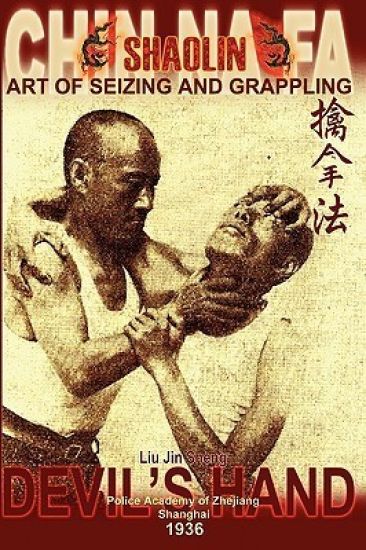
Shaolin Chin Na Fa

Shaolin Chin Na Fa

Andrew Timofeevich; Liu Jin Sheng

Createspace Independent Publishing Platform
2008
pokkari
The book "CHIN NA FA" was written by Liu Jin Sheng in collaboration with Zhao Jiang. The first edition of the book was issued in July of 1936 as a manual for the Police Academy of Zhejiang province. The book was printed by the publishing house Shan Wu in Shanghai. "...If you are in command of this technique, you can sway the destiny of the enemy. You can kill your enemy, cause unbearable pain, tear his muscles and sinews, break his bones or make him unconscious for some time and completely disable him to resist. Even a woman or a physically weak man who mastered this technique can curb a strong enemy. This technique demands deftness and skill, not brute force. It is necessary to train oneself daily to make the body flexible and nimble, but "hardness" must be hidden inside this "softness." /Author Liu Jin Sheng. The Police Academy of Zhejiang province. 1-st of May of the 24-th year of the Chinese Republic (1935)/
Lian Gong Mi Jue

Lian Gong Mi Jue

Guo Cui Ya; Andrew Timofeevich; Jin Yi Ming

Createspace Independent Publishing Platform
2008
pokkari
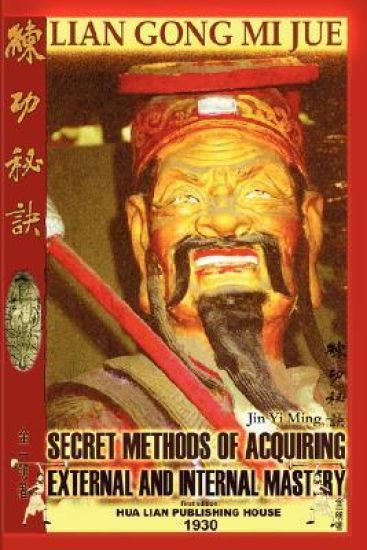
The book was written by Jin Yi Ming and Guo Cui Ya. The first edition of the book was issued in August of 1930. The book was printed by the Publishing House Hua Lian in Shanghai. The book covers "External" (WAI GONG) and "Internal" (NEI GONG) training methods practiced by traditional schools of the "Shaolin Family" (SHAOLIN PAI). Today as in the ancient time special exercises aimed at acquiring "Internal Mastery"(GONG FU) are one of the most important elements of Shaolin monks training. Those exercises is the core of the Shaolin martial training, they are the key to the true summit of mastery. An old proverb says: "If you exercise only the technique (style) but ignore special training you will be a nobody till your old days." "Special training" implies particular exercises for developing both WAI ZHUANG - "External Power" and NEI ZHUANG - "Internal Power". Those exercises (training procedures) are collected under a common title - LIAN GONG, literally "Exercising to Acquire Mastery".
Lian Gong Mi Jue

Lian Gong Mi Jue

Andrew Timofeevich; Jin Yi Ming; Guo Cui Ya

Lulu.com
2007
pokkari
Today as in the ancient time special exercises aimed at acquiring "Internal Mastery"(GONG FU) are one of the most important elements of Shaolin monks training. Those exercises is the core of the Shaolin martial training, they are the key to the true summit of mastery. An old proverb says: "If you exercise only the technique (style) but ignore special training you will be a nobody till your old days." "Special training" implies particular exercises for developing both WAI ZHUANG - "the External Power" and NEI ZHUANG - "the Internal Power". Those exercises (training procedures) are collected under a common title - LIAN GONG, literally "Exercising to Acquire Mastery".
Iron Thread. Southern Shaolin Hung Gar Kung Fu Classics Series

Iron Thread. Southern Shaolin Hung Gar Kung Fu Classics Series

Andrew Timofeevich; Lam Sai Wing

Createspace Independent Publishing Platform
2008
pokkari
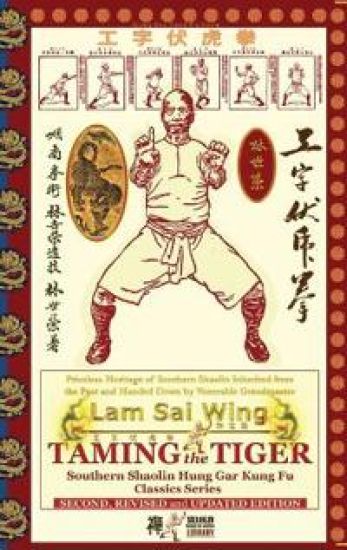
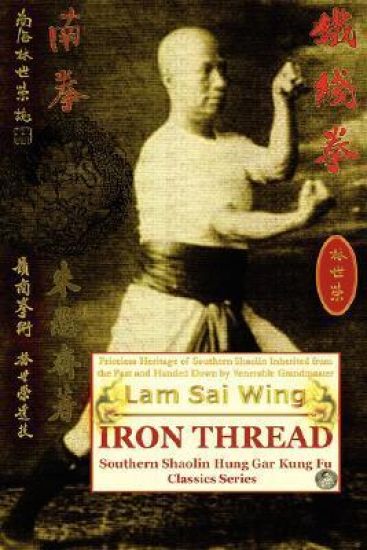
Priceless Heritage of Southern Shaolin Inherited from the Past and Handed Down by Venerable Grandmaster Lam Sai Wing. Original edition: Hong Kong, 1957; translated from Chinese in 2002 - 2007. The Iron Thread Form (Tid Sin Kuen) was created by Tid Kiu Sam (Iron Bridge III), one of the best martial artists in the history of China. His real name was Leung Kwan (1813-1886). He was one of the famous Ten Tigers of Guangdong. Tid Kiu Sam was born in the town of Nanghai, Guangdong province. He, the third child in the family, became a disciple of a monk from the Southern Shaolin Temple, Gwok Yan. Gwok Yan was one of the greatest masters of the Southern Shaolin Hung Gar Kuen school. He was known along the whole length of the Yangtse river. Through the years Tid Kiu Sam passed his knowledge down to one of his students, Lam Fook Sing. Some time later Lam Fook Sing taught Wong Fei Hung (1847-1924) and the latter Wong Fei Hung taught Lam Sai Wing (1860-1943). The Iron Thread is considered as the highest form taught in the traditional Southern Shaolin Hung Gar Kung Fu system. This method belongs to a branch of "Hard", or fighting Southern Shaolin Qi Gong (Chi Kung) and considered as "Internal Training". A master of the Iron Thread can withstand, with no consequences, the strongest of blows, including ones with heavy objects or cold steel, bend thick iron rods with his hands, and his "rooting power" is so strong that he cannot be displaced by a group of strong people. In addition, this wonderful method strengthens all internal organs, bones, muscles and sinews. The entire body thrives and rejuvenate. Benefits of this training are endless.
Authentic Shaolin Heritage

Authentic Shaolin Heritage

Andrew Timofeevich; Jin Jing Zhong

CREATESPACE
2008
pokkari
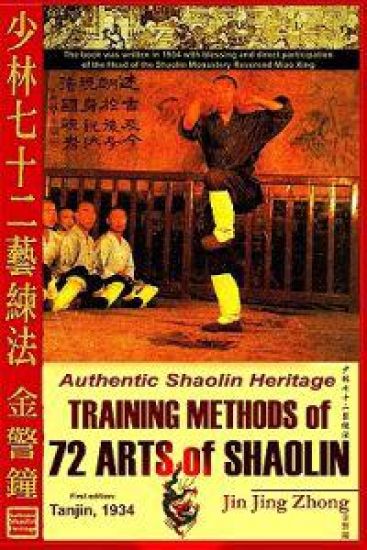
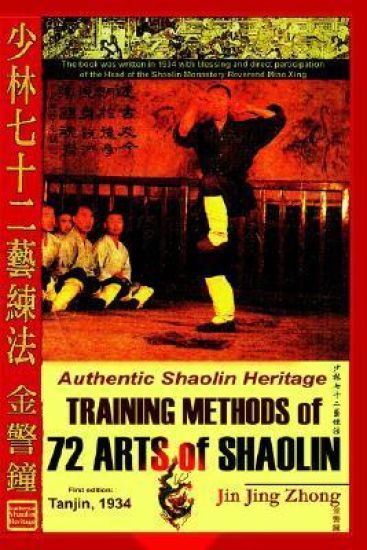
The book "Training Methods of 72 Arts of Shaolin" by Jin Jing Zhong is devoted to the most enigmatic and little-known aspect of training of Shaolin monks. The book was written in 1934 with blessing and direct participation of the abbot of the Shaolin Monastery Reverend Miao Xing nicknamed "Golden Arhat", one of the best Shaolin fighters of all times. For the first time the book describes full training methods in all 72 Shaolin Arts. Being until recently for outsiders the most secret part of training of Shaolin monks, which made them invulnerable in fight, 72 Shaolin Arts at the present time become available to all who are ready to practice them persistently and with an open heart. Training methods described in the book allow to develop supernatural abilities, far beyond abilities of an ordinary man. The book has been translated from the Chinese language for the first time.
Authentic Shaolin Heritage

Authentic Shaolin Heritage

Andrew Timofeevich

CREATESPACE
2008
pokkari
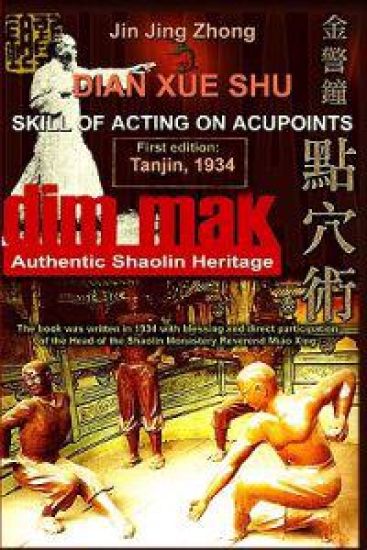
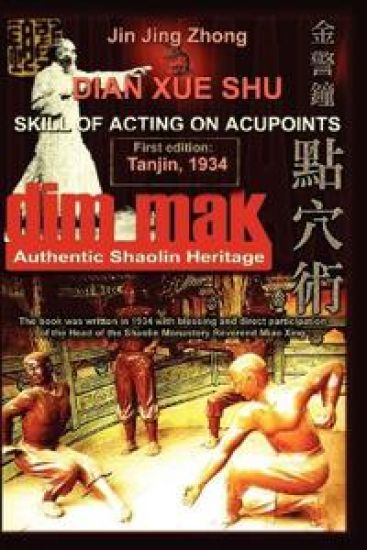
The book was written in 1934 with blessing and direct participation of the Abbot of the Shaolin Monastery Reverend Miao Xing nicknamed "Golden Arhat". Book are about methods of acting on acupoints and their practical application in Martial Arts. DIAN XUE SHU that is literally means "The Art of Touching Acupoints" is more known in the West as DIM MAK ("Blows at arteries" in Cantonese dialect) or "Death Touch". It should be noted that the last two names do not fully reflect the essence of this method. DIAN XUE SHU is a profound teaching which is closely connected to Chinese traditional medicine. Besides the martial aspect, it includes a wide range of methods of reanimation and medication. In addition to theoretical fundamentals, the books give detailed description of the localization of basic acupoints, methods of acting on them with the aims of combat, reanimation and medication, effects of acting on a particular point, methods of exercising fingers and palms, blow techniques etc.
Unknown China. Issue 1.

Unknown China. Issue 1.

Andrew Timofeevich

Lulu.com
2008
pokkari
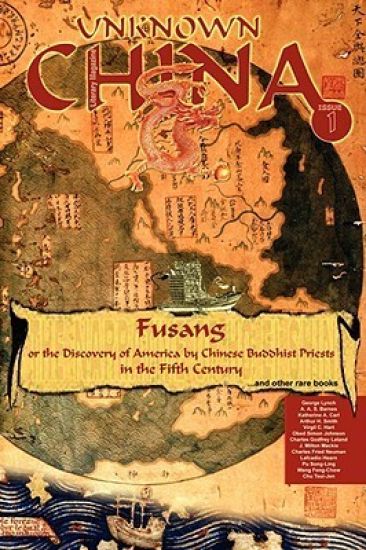
IN THIS ISSUE: The War Of The Civilizations: Being The Record Of A Foreign Devil's Experiences With The Allies In China by George Lynch / On Active Service With The Chinese Regiment: A Record Of The Operations Of The First Chinese Regiment In North China From March To October 1900 by A. A. S. Barnes / With the Empress Dowager of China by Katherine A. Carl / Village Life In China: A Study In Sociology by Arthur H. Smith / Western China: A Journey To The Great Buddhist Centre Of Mount Omei by Virgil C. Hart / The Study of Chinese Alchemy by Obed Simon Johnson / Fusang or the Discovery of America by Chinese Buddhist Priests in the Fifth Century by Charles Godfrey Leland / Life of Tai-Ping-Wang by J. Milton Mackie / History of the Pirates Who Infested the China Sea, From 1807 to 1810 by Charles Fried Neuman / Some Chinese Ghosts by Lafcadio Hearn / Strange Stories from a Chinese Studio by Pu Song-Ling / The Adventures Of Hsi Men Ching by Wang Feng-Chow and Chu Tsui-Jen.
Authentic Shaolin Heritage

Authentic Shaolin Heritage

Jin Zhong; Andrew Timofeevich

Lulu.com
2006
pokkari
The book "Training Methods of 72 Arts of Shaolin" by Jin Jing Zhong is devoted to the most enigmatic and little-known aspect of training of Shaolin monks. The book was written in 1934 with blessing and direct participation of the Head of the Shaolin Monastery Reverend Miao Xing nicknamed "The Golden Arhat", one of the best Shaolin fighters of all times. For the first time the book describes full training methods in all 72 Shaolin Arts. Being until recently for outsiders the most secret part of training of Shaolin monks, which made them invulnerable in fight, 72 Shaolin Arts at the present time become available to all who are ready to practice them persistently and with an open heart. Training methods described in the book allow to develop supernatural abilities, far beyond abilities of an ordinary man. The book has been translated from the Chinese language for the first time.
Authentic Shaolin Heritage

Authentic Shaolin Heritage

Andrew Timofeevich; Jin Jing Zhong

Lulu.com
2006
pokkari
The book was written in 1934 with blessing and direct participation of the Head of the Shaolin Monastery Reverend Miao Xing nicknamed "Golden Arhat". Book are about methods of acting on acupoints and their practical application in Martial Arts. DIAN XUE SHU that is literally means "The Art of Touching Acupoints" is more known in the West as DIM MAK ("Blows at arteries" in Cantonese dialect) or "Death Touch". It should be noted that the last two names do not fully reflect the essence of this method. DIAN XUE SHU is a profound teaching which is closely connected to Chinese traditional medicine. Besides the martial aspect, it includes a wide range of methods of reanimation and medication. In addition to theoretical fundamentals, the books give detailed description of the localization of basic acupoints, methods of acting on them with the aims of combat, reanimation and medication, effects of acting on a particular point, methods of exercising fingers and palms, blow techniques etc.