Kirjojen hintavertailu. Mukana 12 595 353 kirjaa ja 12 kauppaa.

Kirjailija

Andrew Whitaker

Kirjat ja teokset yhdessä paikassa: 21 kirjaa, julkaisuja vuosilta 2006-2026, suosituimpien joukossa The Scientists. Vertaile teosten hintoja ja tarkista saatavuus suomalaisista kirjakaupoista.

21 kirjaa

Kirjojen julkaisuhaarukka 2006-2026.

The Scientists

The Scientists

Naomi Pasachoff; Jay Pasachoff; Robert Iliffe; Frank A.J.L. James; Jordi Cat; Patrick Moore; Martin Rudwick; Laura Dassow Walls; Roger McCoy; Michael Hunter; Jean-Pierre Poirier; Alan Rocke; Nathan Brooks; Georgina Ferry; Virendra Singh; Frank Close; Andrew Whitaker; Robert Paradowski

Thames Hudson Ltd
2012
sidottu
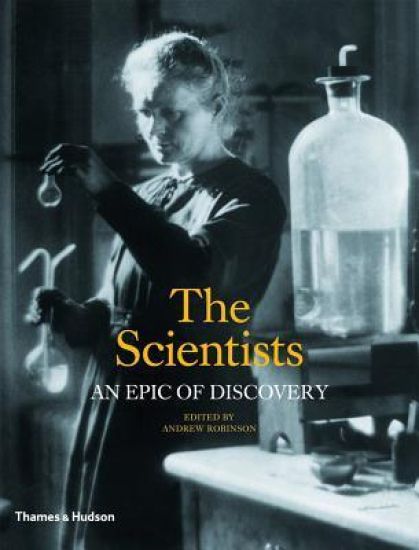
This book tells the remarkable lives of the pioneers of science – from Galileo and Newton, Faraday and Darwin, Pasteur and Marie Curie, to Einstein, Freud, Turing, and Crick and Watson. A series of seventy articles, written by an international team of distinguished scientists, historians of science and science writers, provides an unrivalled account of the lives and personalities behind the greatest scientific breakthroughs of all time. Organized thematically, starting at the ‘Universe’, and moving smaller through the ‘Earth’ and ‘Molecules and Matter’ to ‘Inside the Atom’, with the final two sections looking at ‘Life’ and ‘Body and Mind’, it covers all the major scientific disciplines, including astronomy, biology, biochemistry, chemistry, computing, ecology, geology, medicine, neurology, physics and psychology, as well as mathematics. The Scientists will intrigue budding scientists, those fascinated by the lives of great individuals, and anyone curious to know how over the centuries we came to understand the physical world around us and inside us.
John Stewart Bell and Twentieth Century Physics

John Stewart Bell and Twentieth Century Physics

Andrew Whitaker

Oxford University Press
2020
nidottu
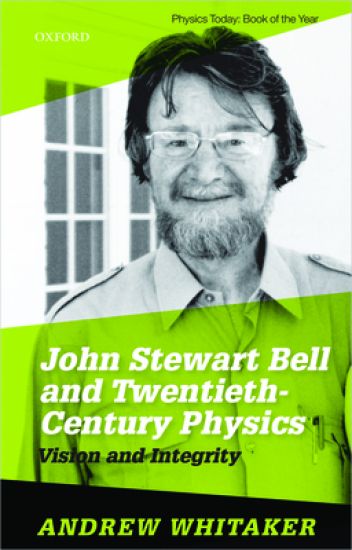
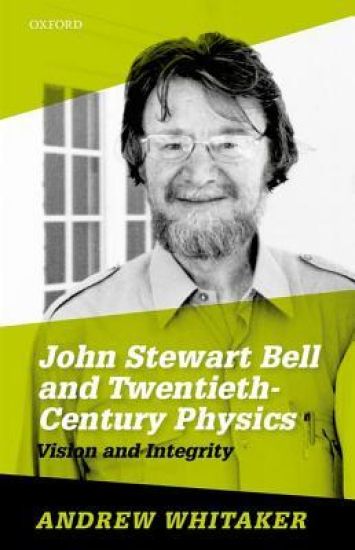
This book gives a readable non-mathematical account of the upbringing, education and academic achievement of John Stewart Bell, the celebrated physicist from Belfast, who was born in 1928. Bell has become famous for what he described as his 'hobby', analysing the fundamental aspects of quantum theory, where he clarified a long-standing debate between the two most important figures of twentieth century physics, Albert Einstein and Niels Bohr, and showed that, contrary to belief over the previous thirty years, quantum theory could be supplemented with extra 'hidden variables'. His crucial 'Bell's Theorem' or 'Bell's Inequalities' demonstrated a contradiction between quantum theory and local causality. This relation has been tested with increasing rigour over the next years, and quantum theory has triumphed. His ideas were also important in the development of quantum information theory, which covers quantum computation, quantum cryptography and quantum teleportation. The book covers his earlier work at Harwell, where he worked on the design of accelerators, making extremely important contributions to the physics of strong focussing. He later moved to CERN in Geneva where he carried out highly significant work in the fields of elementary particles and quantum field theory. It also covers some details of Bell's personal life, including his marriage while he was at Harwell to Mary Ross, who also worked in the physics of accelerators, and also describes his career decade by decade, and sums up his importance to twentieth-century physics.
John Stewart Bell and Twentieth-Century Physics

John Stewart Bell and Twentieth-Century Physics

Andrew Whitaker

Oxford University Press
2016
sidottu
John Stewart Bell (1928-1990) was one of the most important figures in twentieth-century physics, famous for his work on the fundamental aspects of the century's most important theory, quantum mechanics. While the debate over quantum theory between the supremely famous physicists, Albert Einstein and Niels Bohr, appeared to have become sterile in the 1930s, Bell was able to revive it and to make crucial advances - Bell's Theorem or Bell's Inequalities. He was able to demonstrate a contradiction between quantum theory and essential elements of pre-quantum theory - locality and causality. The book gives a non-mathematical account of Bell's relatively impoverished upbringing in Belfast and his education. It describes his major contributions to quantum theory, but also his important work in the physics of accelerators, and nuclear and elementary particle physics.
The New Quantum Age

The New Quantum Age

Andrew Whitaker

Oxford University Press
2015
nidottu
Ever since its discovery eighty-five years ago, quantum theory has been used to study the physical universe with great profit, both intellectual and financial. Over the last fifty years, however, we have found out more and more about the theory itself, and what it tells us about the universe. It seems we may have to accept non-locality - cause and effect may be light-years apart; loss of realism - nature may be fundamentally probabilistic; and non-determinism - it seems that God does play dice! This book, written by an expert in the field, explains the emergence of our new perspective on quantum theory, but also describes how the ideas involved in this re-evaluation led seamlessly to a totally new discipline -quantum information theory. This discipline includes quantum computation, which is able to perform tasks quite out of the range of other computers; the totally secure algorithms of quantum cryptography; and quantum teleportation - as part of science fact rather than science fiction. The book is the first to combine these elements, and will be of interest to anybody interested in fundamental aspects of science and their application to the real world.
The New Quantum Age

The New Quantum Age

Andrew Whitaker

Oxford University Press
2011
sidottu
While quantum theory has been used to study the physical universe with great profit, both intellectual and financial, ever since its discovery eighty-five years ago, over the last fifty years we have found out more and more about the theory itself, and what it tells us about the universe. It seems we may have to accept non-locality - cause and effect may be light-years apart; loss of realism - nature may be fundamentally probabilistic; and non-determinism - it seems that God does play dice! This book, totally up-to-date and written by an expert in the field, explains the emergence of our new perspective on quantum theory, but also describes how the ideas involved in this re-evaluation led seamlessly to a totally new discipline - quantum information theory. This discipline includes quantum computation, which is able to perform tasks quite out of the range of other computers; the totally secure algorithms of quantum cryptography; and quantum teleportation - as part of science fact rather than science fiction. The book is the first to combine these elements, and will be of interest to anybody interested in fundamental aspects of science and their application to the real world.
Einstein’s Struggles with Quantum Theory

Einstein’s Struggles with Quantum Theory

Dipankar Home; Andrew Whitaker

Springer-Verlag New York Inc.
2010
nidottu
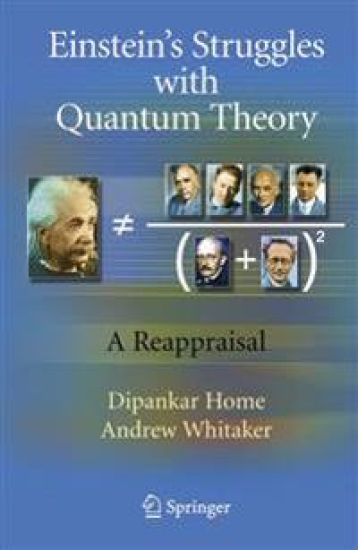
Einstein’s Struggles with Quantum Theory: A Re-Appraisal, presents an account of all aspects of Einstein’s encounter with quantum theory. Until recently it was accepted that, after important early work, Einstein was simply unable to follow Niels Bohr’s approach to quantum theory, and that Einstein’s own views, centered on realism, were of no interest. This book follows modern scholarship arguing that Einstein’s arguments were well constructed, in the Einstein-Bohr debate his position was legitimate, and his pragmatic approach to realism stimulated John Bell and encouraged the emergence of quantum information theory. The book provides a readable account of Einstein’s achievements in quantum theory, his own views, and the progress his work has stimulated since his death. While some chapters use mathematics at an undergraduate physics level, a path is provided for the reader more concerned with ideas than equations, and the book should be of interest to anybody interested in Einstein and his approach to the quantum.
Einstein’s Struggles with Quantum Theory

Einstein’s Struggles with Quantum Theory

Dipankar Home; Andrew Whitaker

Springer-Verlag New York Inc.
2007
sidottu
Einstein’s Struggles with Quantum Theory: A Re-Appraisal, presents an account of all aspects of Einstein’s encounter with quantum theory. Until recently it was accepted that, after important early work, Einstein was simply unable to follow Niels Bohr’s approach to quantum theory, and that Einstein’s own views, centered on realism, were of no interest. This book follows modern scholarship arguing that Einstein’s arguments were well constructed, in the Einstein-Bohr debate his position was legitimate, and his pragmatic approach to realism stimulated John Bell and encouraged the emergence of quantum information theory. The book provides a readable account of Einstein’s achievements in quantum theory, his own views, and the progress his work has stimulated since his death. While some chapters use mathematics at an undergraduate physics level, a path is provided for the reader more concerned with ideas than equations, and the book should be of interest to anybody interested in Einstein and his approach to the quantum.