Kirjojen hintavertailu. Mukana 12 595 353 kirjaa ja 12 kauppaa.

Kirjailija

Andrew Wright Hurley

Kirjat ja teokset yhdessä paikassa: 4 kirjaa, julkaisuja vuosilta 2009-2025, suosituimpien joukossa Ludwig Leichhardt's Ghosts. Vertaile teosten hintoja ja tarkista saatavuus suomalaisista kirjakaupoista.

4 kirjaa

Kirjojen julkaisuhaarukka 2009-2025.

Free Action

Free Action

Andrew Wright Hurley

TAYLOR FRANCIS LTD
2025
sidottu
Advancing the New Jazz Studies by focusing on questions of intermediality and cultural catalysis, this book demonstrates the role jazz played in the re-making of West German culture in the post-war era.The shadow of National Socialism, a history of German polarisation by jazz, and the influences of occupation and division, meant that jazz catalysed influential young creative artists. These included writers such as Nobel Laureate Günter Grass, Young German Cinema filmmakers like Hansjürgen Pohland, and abstract visual artists like KRH Sonderborg. Jazz provided an impulse to take into extra-musical artforms, and an impetus to reflect on what art and culture were. Through considering poetry, the novel, photography, film and television, graphic design and the fine arts, this volume reveals how German creatives were influenced not only by American jazz culture, but also by cultural innovations from elsewhere, and by German traditions they considered less compromised by the Nazi era. The book also explores the limits of this catalysis, examining for example how African-Americans received the German representation of jazz culture.Written in an accessible style, this important contribution to New Jazz Studies and German Studies scholarship will appeal to both graduate and undergraduate students or researchers in the fields of jazz history, twentieth-century musicology, and European or German cultural studies.
Ludwig Leichhardt's Ghosts

Ludwig Leichhardt's Ghosts

Andrew Wright Hurley

Camden House Inc
2018
sidottu
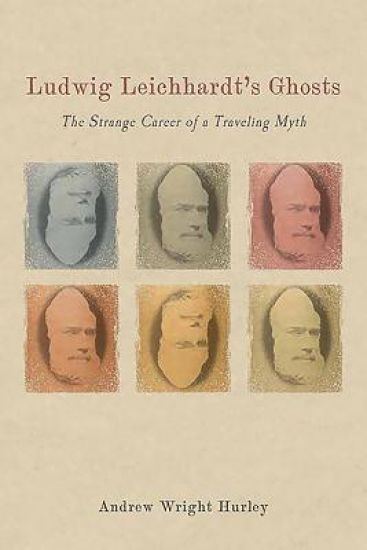
A fascinating cultural studies account of the "afterlife" of Leichhardt, revealing both German entanglement in British colonialism in Australia, and in a broader sense, what happens when we maintain an open stance to the ghosts ofthe past. After the renowned Prussian scientist and explorer Ludwig Leichhardt left the Australian frontier in 1848 on an expedition to cross the continent, he disappeared without a trace. Andrew Hurley's book complicates that view by undertaking an afterlife biography of "the Humboldt of Australia." Although Leichhardt's remains were never located, he has been sought and textually "found" many times over, particularly in Australia and Germany. He remains a significant presence, a highly productive ghost who continues to "haunt" culture. Leichhardt has been employed for all sorts of political purposes. In imperial Germany, he was a symbol of pure science, but also a bolster for colonialism. In the 20th century, he became a Nazi icon, a proto-socialist, the model for the protagonist of Nobel laureate Patrick White's famous novel Voss, as well as a harbinger of multiculturalism. He has also been put to useby Australian Indigenous cultures. Engaging Leichhardt's ghosts and those who have sought him yields a fascinating case study of German entanglement in British colonialism in Australia. It also shows how figures from the colonialpast feature in German and Australian social memory and serve present-day purposes. In an abstract sense, this book uses Leichhardt to explore what happens when we maintain an open stance to the ghosts of the past. Andrew Wright Hurley is Associate Professor in German Studies at the University of Technology Sydney. His book Into the Groove: Popular Music and Contemporary German Fiction was published by Camden House in 2015.
Into the Groove

Into the Groove

Andrew Wright Hurley

Camden House Inc
2015
sidottu
A new and wide-ranging view of the confluence, since the 1990s, of the fields of contemporary literature and popular music in Germany. In Germany the decade beginning in the mid-1990s brought an unprecedented "confusion of the spheres" of literature and popular music. Popular musicians "crossed over" into the literary field, editors and writers called for contemporary German literature to become more like popular music, writers attempted to borrow structural aspects from music or paid new attention to popular music at the thematic level. Others sought to raise their profiles by means of performance models taken from the popular music field. This book sets out to make sense of this situation. It argues for more inclusive and detailed attention to what it calls "musico-centric fiction," for which it discerns intellectual precursors going back to the 1960s and also identifies examples written since the turn of the millennium, after the would-be death of "pop literature." In doing so, it focuses on fiction and paratextual interventions by authors including Peter Handke, Rolf Dieter Brinkmann, Rainald Goetz, Andreas Neumeister, Thomas Meinecke, Matthias Politycki, Frank Goosen, Benjamin von Stuckrad-Barre, Thomas Brussig, Karen Duve, and Kerstin Grether. Andrew Wright Hurley is Senior Lecturer in German and Cultural Studies at the University of Technology, Sydney, Australia.
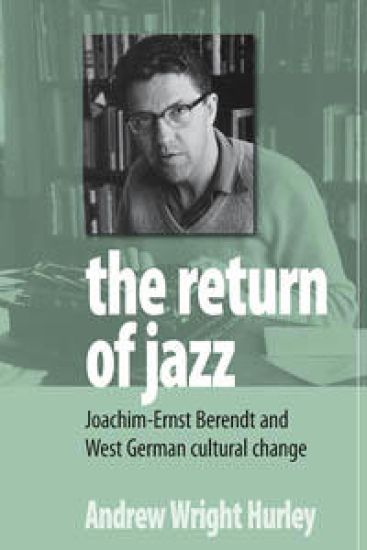
The Return of Jazz

The Return of Jazz

Andrew Wright Hurley

Berghahn Books
2009
sidottu
Jazz has had a peculiar and fascinating history in Germany. The influential but controversial German writer, broadcaster, and record producer, Joachim-Ernst Berendt (1922–2000), author of the world’s best-selling jazz book, labored to legitimize jazz in West Germany after its ideological renunciation during the Nazi era. German musicians began, in a highly productive way, to question their all-too-eager adoption of American culture and how they sought to make valid artistic statements reflecting their identity as Europeans. This book explores the significance of some of Berendt’s most important writings and record productions. Particular attention is given to the “Jazz Meets the World” encounters that he engineered with musicians from Japan, Tunisia, Brazil, Indonesia, and India. This proto-“world music” demonstrates how some West Germans went about creating a post-nationalist identity after the Third Reich. Berendt’s powerful role as the West German “Jazz Pope” is explored, as is the groundswell of criticism directed at him in the wake of 1968.