Kirjojen hintavertailu. Mukana 12 254 595 kirjaa ja 12 kauppaa.

Kirjailija

Andrew Zimmerman

Kirjat ja teokset yhdessä paikassa: 3 kirjaa, julkaisuja vuosilta 2001-2021, suosituimpien joukossa Anthropology and Antihumanism in Imperial Germany. Vertaile teosten hintoja ja tarkista saatavuus suomalaisista kirjakaupoista.

3 kirjaa

Kirjojen julkaisuhaarukka 2001-2021.

Kirchner og Nolde

Kirchner og Nolde

Dorthe Aagesen; Beatrice von Bormann; Silvia Dolz; Rebekka Habermas; Mette Houlberg Rung; Nancy Jouwe; Dicky Takndare; Natasha A. Kelly; Laetitia Lei; Patrice Nganang; Temi Odumosu; H. Glenn Penny; Amanda Pinatih; Aya Soika; Hilke Thode-Arora; Anna Vestergaard Jørgensen; Fanny Wonu Veys; Andrew Zimmerman

SMK Forlag
2021
nidottu
Ernst Ludwig Kirchner og Emil Nolde er hovedskikkelser i den tyske ekspressionistiske bevægelse. De vendte sig bort fra det europæiske samfund og de etablerede normer i tidens borgerlige kultur og søgte i stedet inspiration i mennesker, livsformer og genstande fra andre dele af verden, især Afrika og Oceanien. I denne bog undersøges Noldes og Kirchners kunst på baggrund af deres historiske og ideologiske kontekst. Her afdækkes forbindelser mellem værkerne og den racetænkning og undertrykkelse, som også er en del af europæisk historie. Dermed afsløres en række mindre kendte og mere voldelige sider af ekspressionismen. Denne publikation er udgivet i anledning af udstillingerne om Nolde og Kirchners virke i 1910'erne, organiseret af SMK - Statens Museum for Kunst, København og Stedelijk Museum Amsterdam i samarbejde med Brücke-Museum, Berlin
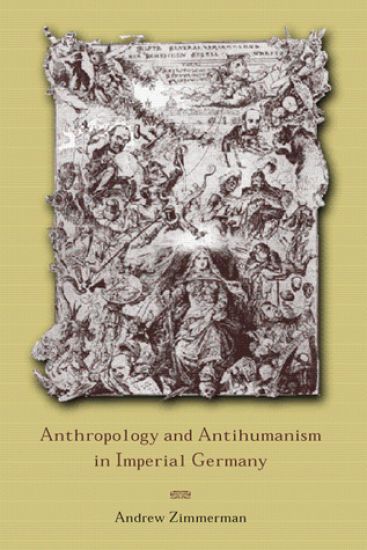
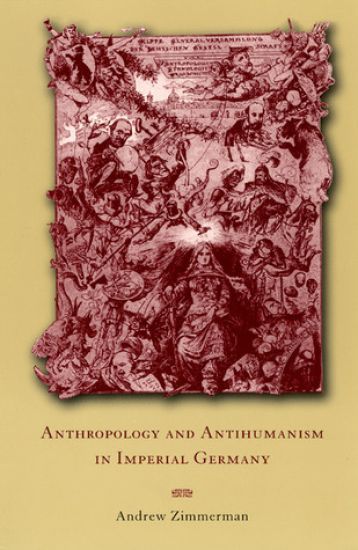
Anthropology and Antihumanism in Imperial Germany

Anthropology and Antihumanism in Imperial Germany

Andrew Zimmerman

University of Chicago Press
2001
sidottu
With the rise of imperialism, the centuries-old European tradition of humanist scholarship as the key to understanding the world was jeopardized. Nowhere was this more true than in nineteenth-century Germany. It was there, Andrew Zimmerman argues, that the battle lines of today's "culture wars" were first drawn when anthropology challenged humanism as a basis for human scientific knowledge.Drawing on sources ranging from scientific papers and government correspondence to photographs, pamphlets, and police reports of "freak shows," Zimmerman demonstrates how German imperialism opened the door to antihumanism. As Germans interacted more frequently with peoples and objects from far-flung cultures, they were forced to reevaluate not just those peoples, but also the construction of German identity itself. Anthropologists successfully argued that their discipline addressed these issues more productively—and more accessibly—than humanistic studies.Scholars of anthropology, European and intellectual history, museum studies, the history of science, popular culture, and colonial studies will welcome this book.
Anthropology and Antihumanism in Imperial Germany

Anthropology and Antihumanism in Imperial Germany

Andrew Zimmerman

University of Chicago Press
2001
nidottu
With the rise of imperialism, the centuries-old European tradition of humanist scholarship as the key to understanding the world was jeopardized. Nowhere was this more true than in nineteenth-century Germany. It was there, Andrew Zimmerman argues, that the battle lines of today's "culture wars" were first drawn when anthropology challenged humanism as a basis for human scientific knowledge.Drawing on sources ranging from scientific papers and government correspondence to photographs, pamphlets, and police reports of "freak shows," Zimmerman demonstrates how German imperialism opened the door to antihumanism. As Germans interacted more frequently with peoples and objects from far-flung cultures, they were forced to reevaluate not just those peoples, but also the construction of German identity itself. Anthropologists successfully argued that their discipline addressed these issues more productively—and more accessibly—than humanistic studies.Scholars of anthropology, European and intellectual history, museum studies, the history of science, popular culture, and colonial studies will welcome this book.