

Kirjailija
Angela Saini
Kirjat ja teokset yhdessä paikassa: 15 kirjaa, julkaisuja vuosilta 2012-2027, suosituimpien joukossa Other. Vertaile teosten hintoja ja tarkista saatavuus suomalaisista kirjakaupoista.
15 kirjaa
Kirjojen julkaisuhaarukka 2012-2027.

Stolittjami suspilstvo vvazhalo choloviche dominuvannja prirodnim dlja ljudskogo vidu. Ale jakim bulo b nashe rozuminnja gendernoji nerivnosti - ujavnogo minulogo i superechlivogo sogodennja - jakbi mi ne vvazhali, scho choloviki zavzhdi panuvali nad zhinkami? U tsij smilivij i radikalnij knizhtsi naukova zhurnalistka Anzhela Sajini doslidzhuje korinnja togo, scho mi nazivajemo patriarkhatom: jak vin upershe vkorinivsja v suspilstvakh i poshirivsja po vsomu svitu vid doistorichnikh chasiv do sogodennja. Sajini podorozhuje do najdavnishikh vidomikh ljudskikh poselen, analizuje najnovishi rezultati doslidzhen, a takozh prostezhuje kulturni ta politichni istoriji, dovodjachi, scho kolonializm ta imperiji kardinalno zminili sposib zhittja v Aziji, Afritsi ta Ameritsi, poshirjujuchi zhorstki patriarkhalni zvichaji i pidrivajuchi te, jak ljudi organizovuvali svoji sim'ji ta robotu.U nash chas, popri borotbu z seksizmom, nasilstvom i diskriminatsijeju, navit revoljutsijni zusillja, sprjamovani na dosjagnennja rivnosti, chasto zakinchujutsja nevdacheju. Ale "Patriarkhi" vseljajut nadiju - vidkrivajut mnozhinnist ljudskikh ustrojiv, pidvazhujut stari narativi j vikrivajut cholovichu zverkhnist jak postijno minlivij element sistemi kontrolju.

El Patriarcado / The Partriarchy: Los Orígenes de la Dominación Masculina / The Origins of Masculine Domination
Angela Saini
Editorial Kairos
2025
nidottu
Durante siglos, las sociedades han tratado la dominaci n masculina como lo «natural . Y si vi ramos, no obstante, la desigualdad de g nero como algo m s fr gil que ha tenido que ser constantemente reconstruido y reafirmado? En este libro audaz y radical, la reconocida periodista cient fica Angela Saini explora las ra ces de lo que llamamos «patriarcado , descubriendo una historia compleja de c mo se incrust por primera vez en las sociedades y se extendi por todo el mundo, desde la Prehistoria hasta el presente. Saini viaja a los asentamientos humanos m s antiguos, analiza los ltimos hallazgos de la ciencia y la arqueolog a y rastrea las historias culturales y pol ticas desde las Am ricas hasta Asia. Hace m s de un siglo que fil sofos, historiadores, antrop logos y feministas han cuestionado lo que significa el patriarcado. En nuestra poca, a pesar de la resistencia al sexismo, el abuso y la discriminaci n, incluso los esfuerzos revolucionarios por lograr la igualdad a menudo han terminado en fracaso. Pero El patriarcado es un libro profundamente esperanzador, que revela una multiplicidad de arreglos humanos que socavan las viejas narrativas grandiosas y exponen la supremac a. For centuries, societies have treated male domination as "natural." What if we nevertheless saw gender inequality as something more fragile that has had to be constantly reconstructed and reaffirmed? In this bold and radical book, renowned science journalist Angela Saini explores the roots of what we call "patriarchy," uncovering a complex story of how it was first embedded in societies and spread across the globe, from prehistory to the present. Saini travels to the oldest human settlements, analyzes the latest findings from science and archaeology, and traces cultural and political histories from the Americas to Asia. For more than a century, philosophers, historians, anthropologists and feminists have questioned what patriarchy means. In our time, despite resistance to sexism, abuse, and discrimination, even revolutionary efforts to achieve equality have often ended in failure. But Patriarchy is a profoundly hopeful book, revealing a multiplicity of human arrangements that undermine grandiose old narratives and expose supremacy.

SHORTLISTED FOR THE ORWELL PRIZE FOR POLITICAL WRITING 2023 A WATERSTONES BOOK OF YEAR FOR POLITICS 2023 ‘I learned something new on every page of this totally essential book’ Sathnam Sanghera ‘By thinking about gendered inequality as rooted in something unalterable within us, we fail to see it for what it is: something more fragile that has had to be constantly remade and reasserted.’ In this bold and radical book, award-winning science journalist Angela Saini goes in search of the true roots of gendered oppression, uncovering a complex history of how male domination became embedded in societies and spread across the globe from prehistory into the present. Travelling to the world’s earliest known human settlements, analysing the latest research findings in science and archaeology, and tracing cultural and political histories from the Americas to Asia, she overturns simplistic universal theories to show that what patriarchy is and how far it goes back really depends on where you are. Despite the push back against sexism and exploitation in our own time, even revolutionary efforts to bring about equality have often ended in failure and backlash. Saini ends by asking what part we all play – women included – in keeping patriarchal structures alive, and why we need to look beyond the old narratives to understand why it persists in the present.
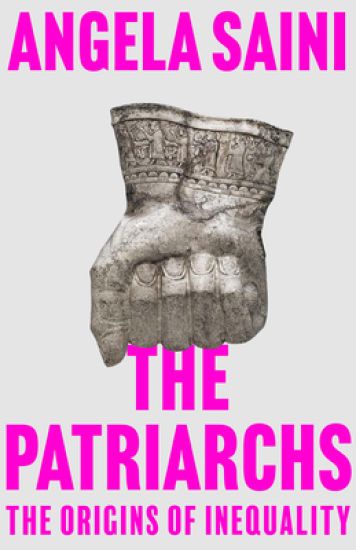

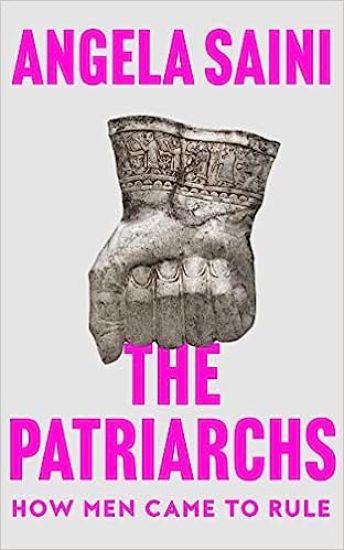
SHORTLISTED FOR THE ORWELL PRIZE FOR POLITICAL WRITING 2023A WATERSTONES BOOK OF YEAR FOR POLITICS 2023
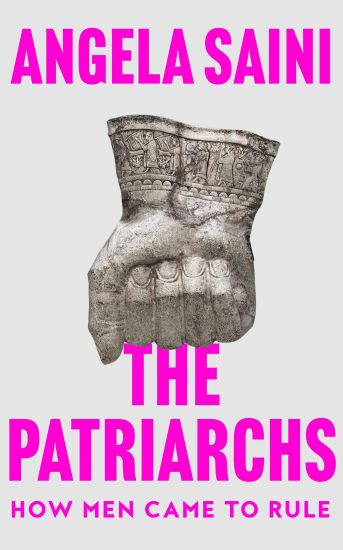
SHORTLISTED FOR THE ORWELL PRIZE FOR POLITICAL WRITING 2023 A WATERSTONES BOOK OF YEAR FOR POLITICS 2023
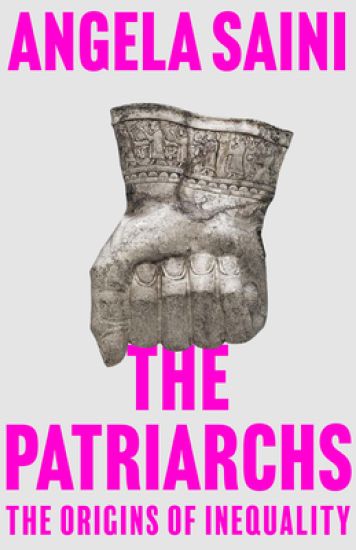
For fans of Sapiens and The Dawn of Everything, a groundbreaking exploration of gendered oppression--its origins, its histories, our attempts to understand it, and our efforts to combat it For centuries, prominent thinkers have treated male domination among humans as natural or inevitable. But how would our understanding of gender inequality--our imagined past and contested present--look if we didn't assume that men have always ruled over women? If we saw gendered oppression as something fragile, that, alongside other forms of inequality, has had to be constantly remade and reasserted? In this bold and radical book, award-winning science journalist Angela Saini explores the roots of what we call patriarchy, uncovering a complex history of how it first became embedded in societies and spread across the globe from prehistory into the present. She travels to the world's earliest known human settlements, analyzes the latest research findings in science and archaeology, and traces cultural and political histories from the Americas to Asia, finding that: Matrilineal societies are more common than we appreciate, existing under a variety of different social and environmental circumstances, and in some cases for thousands of years.From around seven thousand years ago, there are signs that a small number of powerful men were having more children than other men.In societies where women left their own families to live with their husbands, marriage customs came to be informed by the widespread practice of captive taking and slavery, later influencing laws that alienated women from systems of support and denied them equal rights.There was enormous variation in gender and power dynamics in many societies for thousands of years, but colonialism and empire dramatically changed ways of life across Asia, Africa, and the Americas, spreading rigidly patriarchal customs and undermining how people organized their families and work.In our own time, despite the pushback against sexism, abuse, and discrimination, even revolutionary efforts to bring about equality have often ended in failure and backlash. But The Patriarchs is a profoundly hopeful book--one that reveals a diversity to human arrangements that undercuts the old grand narratives and exposes male supremacy as no more than an ever-shifting element in systems of control.

For millennia, dominant societies have had the habit of believing their own people to be the best, deep down: the more powerful they become, the more power begins to be framed as natural, as well as cultural. When you see how power has shaped the idea of race, then you can start to understand its meaning. In the twenty-first century, we like to believe that we have moved beyond scientific racism, that most people accept race as a social construct, not a biological one. But race science is experiencing a revival, fuelled by the misuse of science by certain political groups. Even well-intentioned scientists, through their use of racial categories in genetics and medicine, betray their suspicion that race has some basis in biology. In truth, it is no more real than it was hundreds of years ago, when our racial hierarchies were devised by those in power. In Superior, award-winning author Angela Saini explores the concept of race, from its origins to the present day. Engaging with geneticists, anthropologists, historians and social scientists from across the globe, Superior is a rigorous, much needed examination of the insidious and destructive nature of race science.
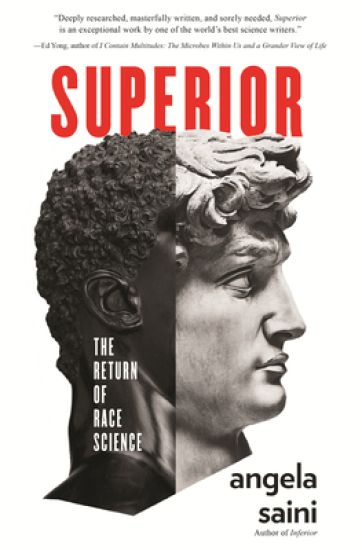
This fascinating critique of race science, from the Enlightenment to the 21st century, is an "easy-to-read blend of science reporting, cultural criticism, and personal reflection" (Slate). "An important and timely reminder that race is 'a social construct' with 'no basis in biology.'" --Kirkus Reviews After the horrors of the Nazi regime in World War II, the mainstream scientific world turned its back on eugenics and the study of racial difference. But a worldwide network of intellectual racists and segregationists quietly founded journals and funded research, providing the kind of shoddy studies that were ultimately cited in Richard Herrnstein and Charles Murray's 1994 title The Bell Curve, which purported to show differences in intelligence among races. If the vast majority of scientists and scholars disavowed these ideas and considered race a social construct, it was an idea that still managed to somehow survive in the way scientists thought about human variation and genetics. Dissecting the statements and work of contemporary scientists studying human biodiversity, most of whom claim to be just following the data, Angela Saini shows us how, again and again, even mainstream scientists cling to the idea that race is biologically real. As our understanding of complex traits like intelligence, and the effects of environmental and cultural influences on human beings, from the molecular level on up, grows, the hope of finding simple genetic differences between "races"--to explain differing rates of disease, to explain poverty or test scores, or to justify cultural assumptions--stubbornly persists. At a time when racialized nationalisms are a resurgent threat throughout the world, Superior is a rigorous, much-needed examination of the insidious and destructive nature of race science--and a powerful reminder that, biologically, we are all far more alike than different.

â??Inferior is more than just a book. Itâ??s a battle cry â?? and right now, itâ??s having a galvanising effect on its core fanbaseâ?? Observer

Inferior: How Science Got Women Wrong-And the New Research That's Rewriting the Story
Angela Saini
BEACON PRESS
2018
nidottu
What science has gotten so shamefully wrong about women, and the fight, by both female and male scientists, to rewrite what we thought we knew For hundreds of years it was common sense: women were the inferior sex. Their bodies were weaker, their minds feebler, their role subservient. No less a scientist than Charles Darwin asserted that women were at a lower stage of evolution, and for decades, scientists--most of them male, of course--claimed to find evidence to support this. Whether looking at intelligence or emotion, cognition or behavior, science has continued to tell us that men and women are fundamentally different. Biologists claim that women are better suited to raising families or are, more gently, uniquely empathetic. Men, on the other hand, continue to be described as excelling at tasks that require logic, spatial reasoning, and motor skills. But a huge wave of research is now revealing an alternative version of what we thought we knew. The new woman revealed by this scientific data is as strong, strategic, and smart as anyone else. In Inferior, acclaimed science writer Angela Saini weaves together a fascinating--and sorely necessary--new science of women. As Saini takes readers on a journey to uncover science's failure to understand women, she finds that we're still living with the legacy of an establishment that's just beginning to recover from centuries of entrenched exclusion and prejudice. Sexist assumptions are stubbornly persistent: even in recent years, researchers have insisted that women are choosy and monogamous while men are naturally promiscuous, or that the way men's and women's brains are wired confirms long-discredited gender stereotypes. As Saini reveals, however, groundbreaking research is finally rediscovering women's bodies and minds. Inferior investigates the gender wars in biology, psychology, and anthropology, and delves into cutting-edge scientific studies to uncover a fascinating new portrait of women's brains, bodies, and role in human evolution.

Inferior: How Science Got Women Wrong-And the New Research That's Rewriting the Story
Angela Saini
BEACON PRESS
2017
sidottu
What science has gotten so shamefully wrong about women, and the fight, by both female and male scientists, to rewrite what we thought we knew For hundreds of years it was common sense: women were the inferior sex. Their bodies were weaker, their minds feebler, their role subservient. No less a scientist than Charles Darwin asserted that women were at a lower stage of evolution, and for decades, scientists--most of them male, of course--claimed to find evidence to support this. Whether looking at intelligence or emotion, cognition or behavior, science has continued to tell us that men and women are fundamentally different. Biologists claim that women are better suited to raising families or are, more gently, uniquely empathetic. Men, on the other hand, continue to be described as excelling at tasks that require logic, spatial reasoning, and motor skills. But a huge wave of research is now revealing an alternative version of what we thought we knew. The new woman revealed by this scientific data is as strong, strategic, and smart as anyone else. In Inferior, acclaimed science writer Angela Saini weaves together a fascinating--and sorely necessary--new science of women. As Saini takes readers on a journey to uncover science's failure to understand women, she finds that we're still living with the legacy of an establishment that's just beginning to recover from centuries of entrenched exclusion and prejudice. Sexist assumptions are stubbornly persistent: even in recent years, researchers have insisted that women are choosy and monogamous while men are naturally promiscuous, or that the way men's and women's brains are wired confirms long-discredited gender stereotypes. As Saini reveals, however, groundbreaking research is finally rediscovering women's bodies and minds. Inferior investigates the gender wars in biology, psychology, and anthropology, and delves into cutting-edge scientific studies to uncover a fascinating new portrait of women's brains, bodies, and role in human evolution.
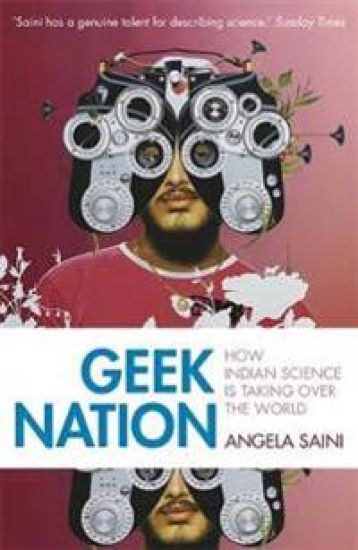
India: it's a nation of geeks, swots and nerds. Almost one in five of all medical and dental staff in the UK is of Indian origin, and one in six employed scientists with science or engineering doctorates in the US is Asian. By the turn of the millennium, there were even claims that a third of all engineers in Silicon Valley were of Indian origin, with Indians running 750 of its tech companies. At the dawn of this scientific revolution, Geek Nation is a journey to meet the inventors, engineers and young scientists helping to give birth to the world's next scientific superpower - a nation built not on conquest, oil or minerals, but on the scientific ingenuity of its people. Angela Saini explains how ancient science is giving way to new, and how the technology of the wealthy are passing on to the poor. Delving inside the psyche of India's science-hungry citizens, she explores the reason why the government of the most religious country on earth has put its faith in science and technology.Through witty first-hand reportage and penetrative analysis, Geek Nation explains what this means for the rest of the world, and how a spiritual nation squares its soul with hard rationality. Full of curious, colourful characters and gripping stories, it describes India through its people - a nation of geeks.