
Kirjojen hintavertailu. Mukana 12 390 323 kirjaa ja 12 kauppaa.

Kirjailija

Angie Abdilla

Kirjat ja teokset yhdessä paikassa: 3 kirjaa, julkaisuja vuosilta 2019-2022, suosituimpien joukossa Indigenous Protocol and Artificial Intelligence. Vertaile teosten hintoja ja tarkista saatavuus suomalaisista kirjakaupoista.

3 kirjaa

Kirjojen julkaisuhaarukka 2019-2022.

Indigenous Protocol and Artificial Intelligence

Indigenous Protocol and Artificial Intelligence

Jason Edward Lewis; Angie Abdilla; Noelani Arista

Lulu.com
2022
pokkari
This position paper on Indigenous Protocol (IP) and Artificial Intelligence (AI) is a starting place for those who want to design and create AI from an ethical position that centers Indigenous concerns. Each Indigenous community will have its own particular approach to the questions we raise in what follows. What we have written here is not a substitute for establishing and maintaining relationships of reciprocal care and support with specific Indigenous communities. Rather, this document offers a range of ideas to take into consideration when entering into conversations which prioritize Indigenous perspectives in the development of artificial intelligence. It captures multiple layers of a discussion that happened over 20 months, across 20 time zones, during two workshops, and between Indigenous people (and a few non-Indigenous folks) from diverse communities in Aotearoa, Australia, North America, and the Pacific. Indigenous ways of knowing are rooted in distinct, sovereign territories across the planet. These extremely diverse landscapes and histories have influenced different communities and their discrete cultural protocols over time. A single 'Indigenous perspective' does not exist, as epistemologies are motivated and shaped by the grounding of specific communities in particular territories. Historically, scholarly traditions that homogenize diverse Indigenous cultural practices have resulted in ontological and epistemological violence, and a flattening of the rich texture and variability of Indigenous thought. Our aim is to articulate a multiplicity of Indigenous knowledge systems and technological practices that can and should be brought to bear on the 'question of AI.' To that end, rather than being a unified statement this position paper is a collection of heterogeneous texts that range from design guidelines to scholarly essays to artworks to descriptions of technology prototypes to poetry. We feel such a somewhat multivocal and unruly format more accurately reflects the fact that this conversation is very much in an incipient stage as well as keeps the reader aware of the range of viewpoints expressed in the workshops.
Ka?ina Hana ?Oiwia me ka Waihona ?Ike Hakuhia

Ka?ina Hana ?Oiwia me ka Waihona ?Ike Hakuhia

Jason Edward Lewis; Angie Abdilla; Noelani Arista

Lulu.com
2022
pokkari
This position paper on Indigenous Protocol (IP) and Artificial Intelligence (AI) is a starting place for those who want to design and create AI from an ethical position that centers Indigenous concerns. Each Indigenous community will have its own particular approach to the questions we raise in what follows. What we have written here is not a substitute for establishing and maintaining relationships of reciprocal care and support with specific Indigenous communities. Rather, this document offers a range of ideas to take into consideration when entering into conversations which prioritize Indigenous perspectives in the development of artificial intelligence. It captures multiple layers of a discussion that happened over 20 months, across 20 time zones, during two workshops, and between Indigenous people (and a few non-Indigenous folks) from diverse communities in Aotearoa, Australia, North America, and the Pacific. Indigenous ways of knowing are rooted in distinct, sovereign territories across the planet. These extremely diverse landscapes and histories have influenced different communities and their discrete cultural protocols over time. A single 'Indigenous perspective' does not exist, as epistemologies are motivated and shaped by the grounding of specific communities in particular territories. Historically, scholarly traditions that homogenize diverse Indigenous cultural practices have resulted in ontological and epistemological violence, and a flattening of the rich texture and variability of Indigenous thought. Our aim is to articulate a multiplicity of Indigenous knowledge systems and technological practices that can and should be brought to bear on the 'question of AI.' To that end, rather than being a unified statement this position paper is a collection of heterogeneous texts that range from design guidelines to scholarly essays to artworks to descriptions of technology prototypes to poetry. We feel such a somewhat multivocal and unruly format more accurately reflects the fact that this conversation is very much in an incipient stage as well as keeps the reader aware of the range of viewpoints expressed in the workshops.
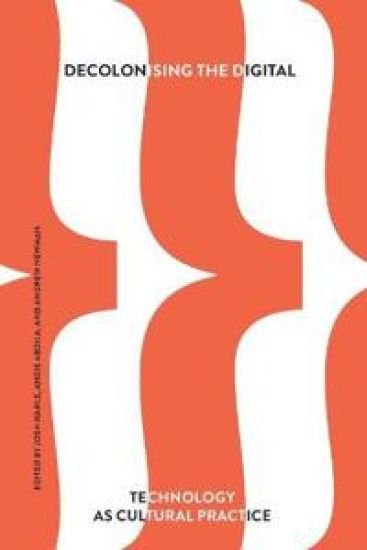
Decolonising the Digital

Decolonising the Digital

Josh Harle; Angie Abdilla

Tactical Space Lab
2019
pokkari
Decolonising the Digital: Technology as Cultural Practice is a collection of critical essays, showcases, and interviews by Australian experimental artists, and diverse digital media theorists.The book benefits from being composed in the context of the world's oldest living peoples, Australian Aboriginal peoples, with the longest continuum of cultural practice and technologies. It offers a set of exemplary media practices from Australian artist-researchers actively creating new aesthetics and storytelling methods through innovative use of emerging digital technologies. With relevance to artists, researchers, and the wider public, it provokes critical thinking around 'technology as cultural practice', and offers tangible case-studies of experimental media practices from a range of art practitioners in diverse cultural contexts. Equal parts provocation, inspiration, and user guide to thinking about and working with emerging digital technologies in a critical way.