Kirjojen hintavertailu. Mukana 12 315 499 kirjaa ja 12 kauppaa.

Kirjailija

Angus Fletcher

Kirjat ja teokset yhdessä paikassa: 24 kirjaa, julkaisuja vuosilta 1991-2026, suosituimpien joukossa Primal Intelligence. Vertaile teosten hintoja ja tarkista saatavuus suomalaisista kirjakaupoista.

24 kirjaa

Kirjojen julkaisuhaarukka 1991-2026.

Primal Intelligence

Primal Intelligence

Angus Fletcher

HEADLINE PUBLISHING GROUP
2026
pokkari
'A fascinating exploration of human potential that will change how you think about thinking . . . Essential reading for anyone who wants to thrive in an uncertain world' DANIEL H PINK Tap into your hidden intelligence and transform your life How are some people so much smarter than the rest of us? In 2021, researchers at Ohio State's Project Narrative, renowned for collaborations with NASA, Hollywood and Silicon Valley, announced they had the answer. They named it Primal Intelligence. Intrigued, U.S. Army Special Operations developed Primal training for its most classified units. The training succeeded. The Operators saw the future faster. They healed quicker from trauma. In life-and-death situations, they chose wiser. The Army then authorized trials on civilian entrepreneurs, doctors, engineers, managers, salesforces, coaches, teachers, investors and NFL players. Their leadership and innovation improved significantly. They coped better with change and uncertainty. They experienced less anger and anxiety. Finally, the Army provided Primal training to college and K-12 classrooms. It produced substantial effects in students as young as eight. That revolutionary training is now available for the first time in this book. It is not an optimization hack or a cheat code. Primal Intelligence is a different way of using your brain. It offers a new neuroscientific approach to intuition, imagination, emotion and commonsense. It is your edge over AI. Your human genius. Your Primal Intelligence.
Inteligencia Primitiva: Eres Más Inteligente de Lo Que Crees / Primal Intelligence: You Are Smarter Than You Know
Aprovecha tu inteligencia oculta y transforma tu vida. Durante d cadas nos hemos centrado en la l gica como el componente clave de la inteligencia humana, pero y si esto fuera un error? C mo es que algunas personas son mucho m s inteligentes que el resto de nosotros? De d nde provienen las extraordinarias capacidades mentales de los visionarios creativos y de los astutos tomadores de decisiones como Vincent van Gogh, Steve Jobs, Abraham Lincoln, Maya Angelou, Nikola Tesla, Marie Curie, Albert Einstein, Wayne Gretzky, WarrenBuffett y William Shakespeare? En 2021, investigadores del Project Narrative de la Universidad Estatal de Ohio, anunciaron que ten an la respuesta: nuestra verdadera fuente de resiliencia, resoluci n de problemas, innovaci n y creatividad reside, de hecho, en la parte emotiva e il gica de nuestro cerebro. La llamaron inteligencia primitiva y publicaron pruebas cient ficas de que, si bien era imposible que las computadoras la replicaran, s pod a fortalecerse en los humanos. Intrigados, las Operaciones Especiales del Ej rcito de los Estados Unidos desarrollaron un entrenamiento primitivo para sus unidades m s clasificadas. Fue un xito Los operadores vieron el futuro con mayor agilidad, se recuperaron m s r pido de los traumas y, en situaciones de vida o muerte, eligieron con m s sabidur a. En Inteligencia primitiva, Fletcher comparte ejercicios para entrenar esta parte descuidada de nuestro cerebro, los cuales mejorar n tus habilidades de liderazgo, tu capacidad de innovaci n y tu resiliencia. Esta es una gu a transformadora que cambiar tu vida y que liberar todo el potencial de tu cerebro. ENGLISH DESCRIPTION Unlock your hidden intelligence and transform your life. For decades, we have focused on logic as the key component of human intelligence, but what if this was a mistake? How is it that some people are much smarter than the rest of us? Where do the extraordinary mental abilities of creative visionaries and astute decision-makers like Vincent van Gogh, Steve Jobs, Abraham Lincoln, Maya Angelou, Nikola Tesla, Marie Curie, Albert Einstein, Wayne Gretzky, Warren Buffett, and William Shakespeare come from? In 2021, researchers from the Project Narrative at Ohio State University announced that they had the answer: our true source of resilience, problem-solving, innovation, and creativity actually resides in the emotional and illogical part of our brain. They called it primitive intelligence and published scientific evidence that, while it was impossible for computers to replicate, it could be strengthened in humans. Intrigued, the United States Army Special Operations developed primitive training for their most classified units. It was a success Operators saw the future with greater agility, recovered faster from trauma, and, in life-or-death situations, chose more wisely. In Primal Intelligence, Fletcher shares exercises to train this neglected part of our brain, which will improve your leadership skills, innovation capacity, and resilience. This is a transformative guide that will change your life and unlock the full potential of your brain.
Primal Intelligence

Primal Intelligence

Angus Fletcher

Headline
2025
nidottu
'A fascinating exploration of human potential that will change how you think about thinking . . . This book is essential reading for anyone who wants to thrive in an uncertain world' DANIEL H PINKFor decades we have focused on logic as the key component of human intelligence but what if this is wrong? In this ground-breaking new book, Professor Angus Fletcher reveals that our true source of resilience, problem solving, innovation and creativity in fact lie in the emotive, non-logical side of our brain. This 'low-data' region in the brain is the driver that helps us problem solve, anticipate things faster, rebound from failure and experience less anxiety and anger.But how do we tap into this unlocked resource? In Primal Intelligence, Fletcher shares innovative exercises for training this neglected side of our brains - improving leadership skills, our powers of innovation and our overall resilience. This is a life-changing guide to unlocking the full potential of your brain.
Primal Intelligence

Primal Intelligence

Angus Fletcher

HEADLINE PUBLISHING GROUP
2025
sidottu
'A fascinating exploration of human potential that will change how you think about thinking . . . This book is essential reading for anyone who wants to thrive in an uncertain world' DANIEL H PINKFor decades we have focused on logic as the key component of human intelligence but what if this is wrong? In this ground-breaking new book, Professor Angus Fletcher reveals that our true source of resilience, problem solving, innovation and creativity in fact lie in the emotive, non-logical side of our brain. This 'low-data' region in the brain is the driver that helps us problem solve, anticipate things faster, rebound from failure and experience less anxiety and anger.But how do we tap into this unlocked resource? In Primal Intelligence, Fletcher shares innovative exercises for training this neglected side of our brains - improving leadership skills, our powers of innovation and our overall resilience. This is a life-changing guide to unlocking the full potential of your brain.
Primal Intelligence: You Are Smarter Than You Know

Primal Intelligence: You Are Smarter Than You Know

Angus Fletcher

Avery Publishing Group
2025
sidottu
Tap into your hidden intelligence and transform your life How are some people so much smarter than the rest of us? Where do visionary creatives and savvy decision-makers like Vincent van Gogh, Steve Jobs, Abraham Lincoln, Maya Angelou, Nikola Tesla, Marie Curie, Albert Einstein, Wayne Gretzky, Warren Buffett, and William Shakespeare get their extraordinary mental abilities? In 2021, researchers at Ohio State's Project Narrative, renowned for collaborations with NASA, Hollywood, and Silicon Valley, announced they had the answer. They named it Primal Intelligence. And they published scientific proof that Primal Intelligence was impossible for computers--but could be strengthened in humans. Intrigued, U.S. Army Special Operations developed Primal training for its most classified units. The training succeeded. The Operators saw the future faster. They healed quicker from trauma. In life-and-death situations, they chose wiser. The Army then authorized trials on civilian entrepreneurs, doctors, engineers, managers, salesforces, coaches, teachers, investors, and NFL players. Their leadership and innovation improved significantly. They coped better with change and uncertainty. They experienced less anger and anxiety. Finally, the Army provided Primal training to college and K-12 classrooms. It produced substantial effects in students as young as eight. That revolutionary training is now available for the first time in this book. It's not an optimization hack or a cheat code. It's a different way of using your brain. It offers a new neuroscientific approach to intuition, imagination, emotion, and commonsense, helping you think more like van Gogh and Jobs, Lincoln and Shakespeare. It's your edge over AI. Your human genius. Your Primal Intelligence.
Narrative Creativity

Narrative Creativity

Angus Fletcher; Mike Benveniste

Cambridge University Press
2025
pokkari
Narrative creativity is a new, neuroscience-based approach to innovation, problem solving, and resilience that has proved effective in business executives, scientists, engineers, doctors, and students as young as eight. This Element offers a concise introduction to narrative creativity's theory and practice. It distinguishes narrative creativity from ideation, divergent thinking, design thinking, brainstorming, and other current approaches to cultivating creativity. It traces the biological origins of narrative creativity and explains why narrative creativity will always be mechanically impossible for computer artificial intelligences. It provides practical exercises, developed and tested in hundreds of classrooms and businesses, and validated independently by the US Army, for improving narrative creativity. It explains how narrative creativity contributes to technological innovation, scientific progress, cultural growth, and psychological well-being, and it describes how narrative creativity can be assessed. This title is also available as Open Access on Cambridge Core.
Narrative Creativity

Narrative Creativity

Angus Fletcher; Mike Benveniste

Cambridge University Press
2025
sidottu
Narrative creativity is a new, neuroscience-based approach to innovation, problem solving, and resilience that has proved effective in business executives, scientists, engineers, doctors, and students as young as eight. This Element offers a concise introduction to narrative creativity's theory and practice. It distinguishes narrative creativity from ideation, divergent thinking, design thinking, brainstorming, and other current approaches to cultivating creativity. It traces the biological origins of narrative creativity and explains why narrative creativity will always be mechanically impossible for computer artificial intelligences. It provides practical exercises, developed and tested in hundreds of classrooms and businesses, and validated independently by the US Army, for improving narrative creativity. It explains how narrative creativity contributes to technological innovation, scientific progress, cultural growth, and psychological well-being, and it describes how narrative creativity can be assessed. This title is also available as Open Access on Cambridge Core.
ChangeStories

ChangeStories

Susanne Evans; Angus Fletcher

Practical Inspiration Publishing
2024
pokkari
**Business Book Awards 2025 Finalist**‘A crucial tool for all Change Leaders.’ – Ket PatelOrganization change can be messy. Much of what matters takes place under the surface, and overlooking these hidden factors - as most change programmes do - too often results in failure and frustration. What’s the answer? More thoughtful conversation, inquiry and storytelling, which enable leaders to understand more fully what is happening under the surface in their organization and have better communication and engagement with their teams.Based on her academic research and over 25 years of consultancy practice, Dr Susanne Evans’ ChangeStories approach enables leaders and change practitioners to have more meaningful conversations about change, create stories that can reduce resistance to change and increase engagement, and ultimately ensure the benefits of a change programme are realized.This is a complete guide to building storytelling, inquiry and conversation into your everyday practice, including step-by-step guides, templates and case studies.
ChangeStories

ChangeStories

Susanne Evans; Angus Fletcher

Practical Inspiration Publishing
2024
sidottu
**Business Book Awards 2025 Finalist**‘A crucial tool for all Change Leaders.’ – Ket PatelOrganization change can be messy. Much of what matters takes place under the surface, and overlooking these hidden factors - as most change programmes do - too often results in failure and frustration. What’s the answer? More thoughtful conversation, inquiry and storytelling, which enable leaders to understand more fully what is happening under the surface in their organization and have better communication and engagement with their teams.Based on her academic research and over 25 years of consultancy practice, Dr Susanne Evans’ ChangeStories approach enables leaders and change practitioners to have more meaningful conversations about change, create stories that can reduce resistance to change and increase engagement, and ultimately ensure the benefits of a change programme are realized.This is a complete guide to building storytelling, inquiry and conversation into your everyday practice, including step-by-step guides, templates and case studies.
Storythinking

Storythinking

Angus Fletcher

Columbia University Press
2023
sidottu
Every time we think ahead, we are crafting a story. Every daily plan—and every political vision, social movement, scientific hypothesis, business proposal, and technological breakthrough—starts with “what if?” Linking causes to effects, considering hypotheticals and counterfactuals, asking how other people will react: these are the essence of narrative. So why do we keep overlooking story’s importance to intelligence in favor of logic?This book explains how and why our brains think in stories. Angus Fletcher, an expert in neuroscientific approaches to narrative, identifies this capacity as “storythinking.” He demonstrates that storythinking is fundamental to what makes us human. Artificial intelligence can perform symbolic logic, rational deduction, and mathematical calculation, but it is incapable of deliberating in narrative. Drawing on new research in neuroscience and narrative theory, Fletcher explores the nature of imagination, innovation, and creativity. He provides concise answers to big questions: How does storythinking work? Why did it evolve? How can it misfire? What problems can it solve?Revealing the significance of storythinking from science to business to philosophy, this book also provides ways for readers to harness its power to script better tomorrows.
Storythinking

Storythinking

Angus Fletcher

Columbia University Press
2023
pokkari
Every time we think ahead, we are crafting a story. Every daily plan—and every political vision, social movement, scientific hypothesis, business proposal, and technological breakthrough—starts with “what if?” Linking causes to effects, considering hypotheticals and counterfactuals, asking how other people will react: these are the essence of narrative. So why do we keep overlooking story’s importance to intelligence in favor of logic?This book explains how and why our brains think in stories. Angus Fletcher, an expert in neuroscientific approaches to narrative, identifies this capacity as “storythinking.” He demonstrates that storythinking is fundamental to what makes us human. Artificial intelligence can perform symbolic logic, rational deduction, and mathematical calculation, but it is incapable of deliberating in narrative. Drawing on new research in neuroscience and narrative theory, Fletcher explores the nature of imagination, innovation, and creativity. He provides concise answers to big questions: How does storythinking work? Why did it evolve? How can it misfire? What problems can it solve?Revealing the significance of storythinking from science to business to philosophy, this book also provides ways for readers to harness its power to script better tomorrows.
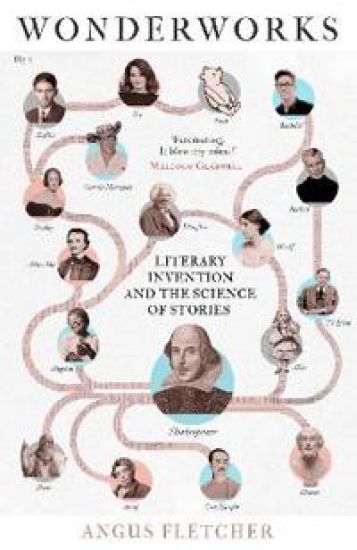
Wonderworks

Wonderworks

Angus Fletcher

Swift Press
2022
pokkari
'Fascinating. It blew my mind!' Malcolm Gladwell Wonderworks reveals that literature is among the mightiest technologies that humans have ever invented, precision-honed to give us what our brains most want and need. Literature is a technology like any other. And the writers we revere – from Homer to Shakespeare, Austen to Ferrante – each made a unique technical breakthrough that can be viewed as both a narrative and neuroscientific advancement. But literature’s great invention was to address problems we could not solve: not how to start a fire or build a boat, but how to live and love; how to maintain courage in the face of death; how to account for the fact that we exist at all. Based on Angus Fletcher’s own research, Wonderworks tells the story of the greatest literary inventions through the ages, from ancient Mesopotamia to modern-day America. It draws on cutting-edge neuroscience to demonstrate that the inventions really work: they enrich our lives with joy, hope, courage and energy, and they help our brains heal from grief, loneliness and even trauma. From ancient Chinese lyrics to nursery rhymes and fairy tales, from slave narratives to contemporary TV shows, Wonderworks walks us through the evolution of literature’s crucial blueprints, and offers us a new understanding of its power.
Wonderworks: Literary Invention and the Science of Stories
This "fascinating" (Malcolm Gladwell, New York Times bestselling author of Outliers) examination of literary inventions through the ages, from ancient Mesopotamia to Elena Ferrante, shows how writers have created technical breakthroughs--rivaling scientific inventions--and engineering enhancements to the human heart and mind. Literature is a technology like any other. And the writers we revere--from Homer, Shakespeare, Austen, and others--each made a unique technical breakthrough that can be viewed as both a narrative and neuroscientific advancement. Literature's great invention was to address problems we could not solve: not how to start a fire or build a boat, but how to live and love; how to maintain courage in the face of death; how to account for the fact that we exist at all. Wonderworks reviews the blueprints for twenty-five of the most significant developments in the history of literature. These inventions can be scientifically shown to alleviate grief, trauma, loneliness, anxiety, numbness, depression, pessimism, and ennui, while sparking creativity, courage, love, empathy, hope, joy, and positive change. They can be found throughout literature--from ancient Chinese lyrics to Shakespeare's plays, poetry to nursery rhymes and fairy tales, and crime novels to slave narratives. A "refreshing and remarkable" (Jay Parini, author of Borges and Me: An Encounter) exploration of the new literary field of story science, Wonderworks teaches you everything you wish you learned in your English class, and "contains many instances of critical insight....What's most interesting about this compendium is its understanding of imaginative representation as a technology" (The New York Times).
Wonderworks

Wonderworks

Angus Fletcher

Swift Press
2021
sidottu
'Fascinating. It blew my mind!' Malcolm Gladwell Wonderworks reveals that literature is among the mightiest technologies that humans have ever invented, precision-honed to give us what our brains most want and need. Literature is a technology like any other. And the writers we revere – from Homer to Shakespeare, Austen to Ferrante – each made a unique technical breakthrough that can be viewed as both a narrative and neuroscientific advancement. But literature’s great invention was to address problems we could not solve: not how to start a fire or build a boat, but how to live and love; how to maintain courage in the face of death; how to account for the fact that we exist at all. Based on Angus Fletcher’s own research, Wonderworks tells the story of the greatest literary inventions through the ages, from ancient Mesopotamia to modern-day America. It draws on cutting-edge neuroscience to demonstrate that the inventions really work: they enrich our lives with joy, hope, courage and energy, and they help our brains heal from grief, loneliness and even trauma. From ancient Chinese lyrics to nursery rhymes and fairy tales, from slave narratives to contemporary TV shows, Wonderworks walks us through the evolution of literature’s crucial blueprints, and offers us a new understanding of its power.
Niagara's Frontier, Without a Soldier and Without a Gun
This work has been selected by scholars as being culturally important and is part of the knowledge base of civilization as we know it.This work is in the public domain in the United States of America, and possibly other nations. Within the United States, you may freely copy and distribute this work, as no entity (individual or corporate) has a copyright on the body of the work.Scholars believe, and we concur, that this work is important enough to be preserved, reproduced, and made generally available to the public. To ensure a quality reading experience, this work has been proofread and republished using a format that seamlessly blends the original graphical elements with text in an easy-to-read typeface.We appreciate your support of the preservation process, and thank you for being an important part of keeping this knowledge alive and relevant.
Wonderworks: The 25 Most Powerful Inventions in the History of Literature
A brilliant examination of literary inventions through the ages, from ancient Mesopotamia to Elena Ferrante, that shows how writers have created technical breakthroughs--rivaling any scientific inventions--and engineering enhancements to the human heart and mind.Literature is a technology like any other. And the writers we revere--from Homer, Shakespeare, Austen, and others--each made a unique technical breakthrough that can be viewed as both a narrative and neuroscientific advancement. Literature's great invention was to address problems we could not solve: not how to start a fire or build a boat, but how to live and love; how to maintain courage in the face of death; how to account for the fact that we exist at all. Wonderworks reviews the blueprints for twenty-five of the most powerful developments in the history of literature. These inventions can be scientifically shown to alleviate grief, trauma, loneliness, anxiety, numbness, depression, pessimism, and ennui--all while sparking creativity, courage, love, empathy, hope, joy, and positive change. They can be found all throughout literature--from ancient Chinese lyrics to Shakespeare's plays, poetry to nursery rhymes and fairy tales, and crime novels to slave narratives. An easy-to-understand exploration of the new literary field of story science, Wonderworks teaches you everything you wish you learned in your English class. Based on author Angus Fletcher's own research, it is an eye-opening and thought-provoking work that offers us a new understanding of the power of literature.
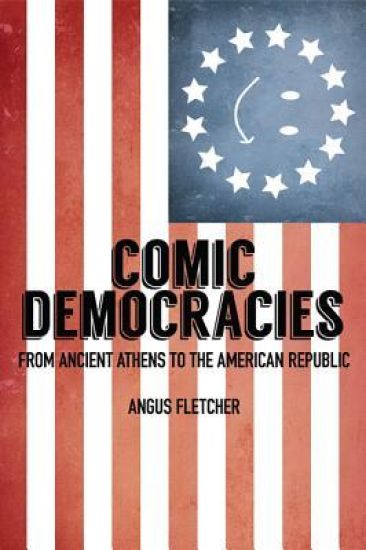
Comic Democracies

Comic Democracies

Angus Fletcher

Johns Hopkins University Press
2016
sidottu
For two thousand years, democratic authors treated comedy as a toolkit of rhetorical practices for encouraging problem-solving, pluralism, risk-taking, and other civic behaviors that increased minority participation in government. Over the past two centuries, this pragmatic approach to extending the franchise has gradually been displaced by more idealistic democratic philosophies that focus instead on promoting liberal principles and human rights. But in the wake of the recent "democracy recession" in the Middle East, the Third World, and the West itself, there has been renewed interest in finding practical sources of popular rule. Comic Democracies joins in the search by exploring the value of the old comic tools for growing democracy today. Drawing on new empirical research from the political and cognitive sciences, Angus Fletcher deftly analyzes the narrative elements of two dozen stage plays, novels, romances, histories, and operas written by such authors as Aristophanes, Menander, Plautus, Ariosto, Machiavelli, Cervantes, Shakespeare, Ben Jonson, William Congreve, John Gay, Henry Fielding, and Washington Irving. He unearths five comic techniques that were used to foster democratic behaviors in antiquity and the Renaissance, then traces the role of these techniques in Tom Paine's Common Sense, Thomas Jefferson's preamble to the Declaration of Independence, George Washington's farewell address, Mercy Otis Warren's federalist history of the Revolution, Frederick Douglass's abolitionist orations, and other key documents that played a pivotal role in the development of the early American Republic. After recovering these lost chapters of our democratic past, Comic Democracies concludes with a draft for the future, using the old methods of comedy to envision a modern democracy rooted in the diversity, ingenuity, and power of popular art.
The Topological Imagination

The Topological Imagination

Angus Fletcher

Harvard University Press
2016
sidottu
Boldly original and boundary defining, The Topological Imagination clears a space for an intellectual encounter with the shape of human imagining. Joining two commonly opposed domains, literature and mathematics, Angus Fletcher maps the imagination’s ever-ramifying contours and dimensions, and along the way compels us to re-envision our human existence on the most unusual sphere ever imagined, Earth.Words and numbers are the twin powers that create value in our world. Poetry and other forms of creative literature stretch our ability to evaluate through the use of metaphors. In this sense, the literary imagination aligns with topology, the branch of mathematics that studies shape and space. Topology grasps the quality of geometries rather than their quantifiable measurements. It envisions how shapes can be bent, twisted, or stretched without losing contact with their original forms—one of the discoveries of the eighteenth-century mathematician Leonhard Euler, whose Polyhedron Theorem demonstrated how shapes preserve “permanence in change,” like an aging though familiar face.The mysterious dimensionality of our existence, Fletcher says, is connected to our inhabiting a world that also inhabits us. Theories of cyclical history reflect circulatory biological patterns; the day-night cycle shapes our adaptive, emergent patterns of thought; the topology of islands shapes the evolution of evolutionary theory. Connecting literature, philosophy, mathematics, and science, The Topological Imagination is an urgent and transformative work, and a profound invitation to thought.