
Kirjailija
Angus Konstam
Kirjat ja teokset yhdessä paikassa: 123 kirjaa, julkaisuja vuosilta 1993-2027, suosituimpien joukossa Warships in the Battle of Britain 1940. Vertaile teosten hintoja ja tarkista saatavuus suomalaisista kirjakaupoista.
123 kirjaa
Kirjojen julkaisuhaarukka 1993-2027.
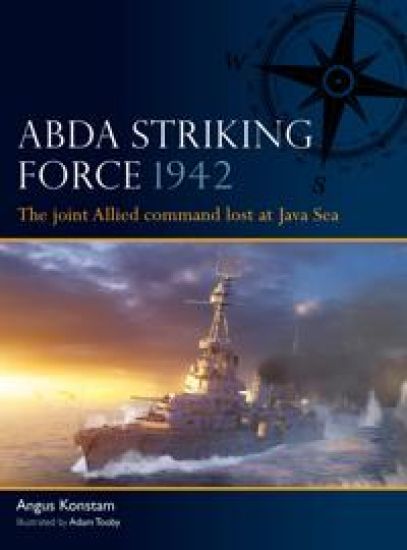
As Japan attacked in 1942, the reeling Allies formed a joint command, the first of the war, which fought until defeat at Java Sea. Fully illustrated, this explores this pioneering fleet. The Japanese strike on Pearl Harbor and the near-simultaneous invasions of the Philippines and Malaya were soon followed by the invasion of the oil-rich Dutch East Indies. In mid-January, the American-British-Dutch-Australian (ABDA) Command was created to unify the available forces, of which its naval component would be its most integrated. It was the first joint Allied fleet of World War II. In this book, naval historian Angus Konstam studies this almost-forgotten formation, which was charged with defending the Malay Barrier, and preventing Japanese access to the Indian Ocean and Australian waters. Following its fleetingly successful debut at the Battle of Belikpapan in January 1942, a remorseless, grinding erosion of ABDACOM’s forces followed, during a string of naval clashes fought amid the straits and islands in the southern Java Sea. Outnumbered and without adequate air cover, it was a hopeless task, and ended in the fleet’s destruction at the battles of Java Sea and the Sunda Strait. Packed with illustrations and photos, this traces the rise and fall of ABDACOM’s naval squadron – a unique mixture of cruisers and destroyers from four Allied navies – and how it performed when thrust into the path of the Imperial Japanese Navy.

An in-depth look at one of the biggest set-piece battles and one of the most decisive in European history pre-WWI. Growing friction between the centuries-old Austrian Empire, self-styled guardian of Germany, and the smaller but more dynamic Prussian Empire led to war between the two countries. In June 1866, three Prussian armies crossed into Bohemia, and brushed aside the hastily assembled Austrian forces that stood in their path. The battered Austrians fell back to the town of Könnigrätz (now the Czech city of Hradec Králové) on the River Elbe, where their reserves were waiting. The battle began on 3 July and resulted in a Prussian victory. Expert historian Angus Konstam explores this critical battle of the Austro-Prussian War, examining what the Prussian victory meant for the political landscape and how it led to the modern German state. Featuring stunning artwork, detailed maps and period images, this book also highlights how advanced Industrial Age technology played an important role, and how more modern tactics fought against the old style.
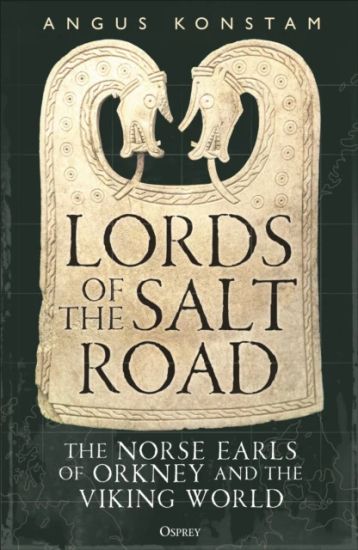
The story of the Norse Earls of Orkney, whose lands once covered much of Scotland, and whose reach extended as far as Scandinavia, continental Europe and even the Mediterranean. Lords of the Salt Road reveals the dramatic history of the Norse earls of Orkney, who owed their allegiance to the Kings of Norway and ruled their own semi-autonomous empire with lands in mainland Scotland and the Western Isles. At their military height in the 11th century, they held a 400-mile swathe of territory, stretching from Shetland down to the Clyde Estuary. Drawing on contemporary sagas as historical sources, and capturing some of their spellbinding narrative drive, renowned historian and Orkney native Angus Konstam describes how these Norse earls and their followers led Viking raids around the British Isles and even further afield. For over four centuries their warriors and longships battled alongside Scandinavian kings and Norse rebels, and as Norse kingmakers these warlike earls sometimes paid the ultimate price for dabbling in international affairs. They were the key players in Viking Britain. Using a wide range of historical sources such as Celtic-Scottish, Irish, Scandinavian and Anglo-Saxon chronicles, this is a spellbinding tale of love, war, triumph, tragedy, treachery, murder, rebellion and greed.
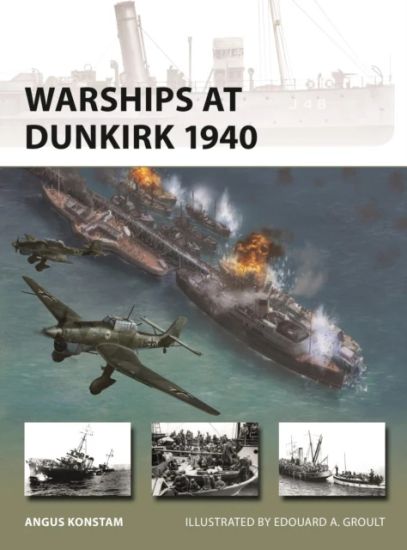
Illustrated throughout, this uncovers the hundreds of British and French warships in the Dunkirk evacuation, whose actions have been overshadowed by the fame of the ‘Little Ships’. In this book, naval historian Angus Konstam examines the backbone of the Dunkirk evacuation fleet: the warships of the Royal Navy and French Navy that were ordered into action to rescue the British Expeditionary Force. Nearly 50 destroyers, an anti-aircraft cruiser, and more than 200 MTBs, minesweepers, trawlers, and other small warships were involved, as many as could be spared without recklessly endangering naval strength. He highlights the lack of decent anti-aircraft defences available to the Allies in 1940, and shows how improvised weaponry were used to help fend off the Stukas. Dunkirk was the first naval operation of World War II to be carried out under sustained air attack, and nearly a fifth of the destroyers and a quarter of the smaller vessels were sunk, with more badly damaged. Illustrated with archive photos, profiles illustrating the range of both British and French warships involved, and dramatic original artwork, this studies the naval side of the greatest evacuation of World War II.
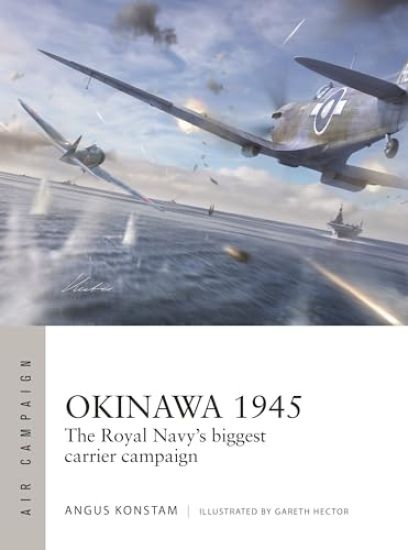
This fully illustrated study explains the British Pacific Fleet’s campaign against the Japanese in the Sakishima Islands, its overlooked role in the battle for Okinawa.The invasion of Okinawa was, famously, the culmination of the United States’ island-hopping campaign. Less well known is the fact that it was also the greatest campaign of the British Pacific Fleet’s war against Japan, fought by five fleet carriers over two months, with a distinct task. The Fleet Air Arm’s job at Okinawa was to suppress and destroy the Japanese airfields on the Sakashima Islands, which were used as bases for kamikazes as well as to route aircraft from Japan to Okinawa. In this book, naval expert Angus Konstam offers a newly researched account of the Fleet Air Arm’s air campaign in the Sakashimas. By 1945, the carriers and their aircrews were well worked up, and ready to tackle challenging and important targets. He explains the capabilities of the late-war Fleet Air Arm at Okinawa, and analyses their effectiveness against Japan’s still-dangerous airpower. Famously, at Okinawa the Royal Navy’s armoured carriers proved much more resilient to kamikaze strikes than the wooden-topped carriers of the Americans.Packed with spectacular original artwork, photographs, diagrams and maps, this book is a superbly illustrated history of the Royal Navy’s most extensive carrier campaign.
Militærhistorisk bokpakke andre verdenskrig
Peter Antall; Robert Forczyk; Angus Konstam
Ares forlag
2026
nidottu
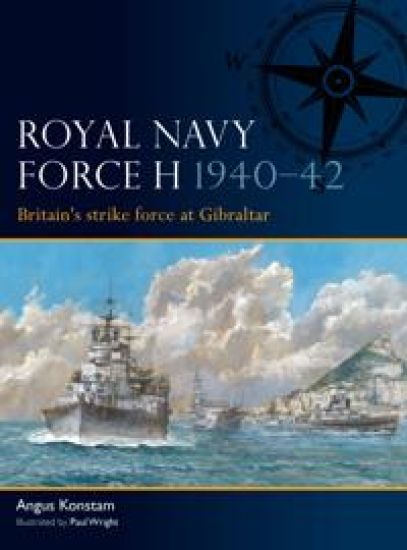
Formed to project British naval power from Gibraltar, Force H was the Royal Navy's unique strategic task force. This fully illustrated study explains its roles, organization and history.In June 1940, the fall of France and its powerful fleet completely changed the naval balance in both the Atlantic and the Mediterranean. To counter this, the Admiralty formed Force H, a unique task force based at Gibraltar, which was assigned some of Britain’s most powerful capital ships. Command was given to James Somerville, one of Britain’s finest admirals, who reported directly to the Admiralty. Force H would be the Royal Navy’s ‘fire brigade’ in the theatre.In this book, naval historian Angus Konstam presents a detailed study of Force H’s purpose, capabilities, organization, and how it fought to dominate the seas around the crucial Straits of Gibraltar. Until the Italian surrender in 1943, Force H would be tasked with crucial actions from the destruction of the French fleet at Mers-el-Kebir to hunting the Bismarck in the Atlantic, and from Malta convoy escort to supporting Allied amphibious landings from Madagascar to Sicily.Packed with spectacular original artwork, maps and diagrams, it demonstrates how Force H, more than any other British naval force, had the strategic flexibility and firepower to turn the tide of war in not just one, but two vital theatres.
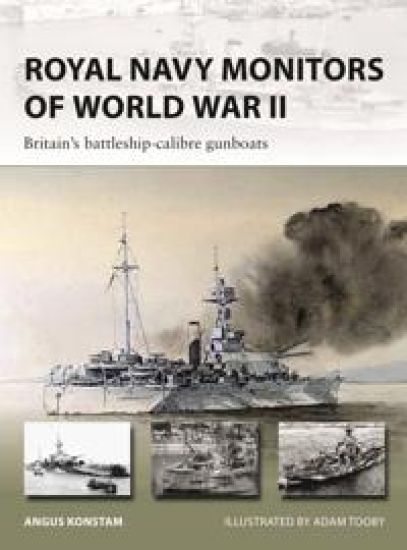
A superbly illustrated history of the Royal Navy’s World War II monitors – gunboats armed with a single, large-calibre gun turret – and their roles and battles around the world. When World War II broke out, the Royal Navy possessed a sizeable fleet of battleships and battlecruisers. However, these formed the core of the battle fleets, and were rarely free to perform an equally vital mission – the naval bombardment of targets ashore. In the first book to focus on the subject, naval expert Angus Konstam explains how the monitor, an unusual warship extensively used in World War I, found a new purpose. Although neither fast nor very well-protected, the monitors had a fearsome armament – two 15in guns, the same calibre as many of Britain’s battleships. Designed to outrange shore batteries, the monitors could supply flexible, deadly gunfire support to Allied forces ashore. The World War I-era Erebus and Terror were refitted and sent to war, while a new class, the Roberts class, joined them in 1941 and 1943. These warships saw action with the Eastern Fleet and were particularly useful in the Mediterranean, from supporting the campaign in North Africa to providing anti-aircraft defence in besieged Malta and Crete. They then joined the Allied landings from Sicily to Normandy. Illustrated with profiles, battlescenes and a cutaway of Roberts, this book also explains how naval gunfire support was conducted during the war.
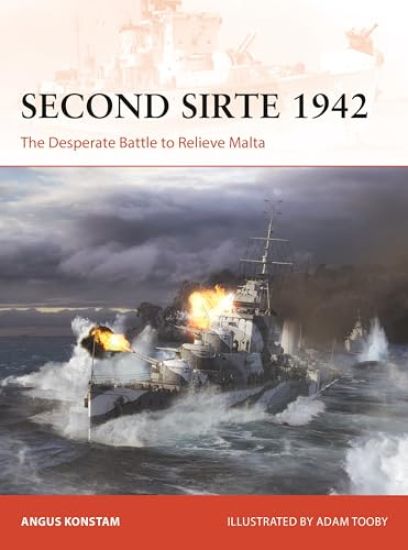
The Second Battle of Sirte was a key naval clash in the Mediterranean, and a vital moment in the struggle for Malta's survival.Malta was the key to the hard-fought naval campaign being waged in the Mediterranean, a link in the vital Axis supply lines between Italy and North Africa. Struggling under a sustained Axis bombing campaign, Malta depended on convoys of supplies to survive. Axis air formations dominated the skies, making any attempt to relieve the island extremely hazardous. In December 1941, a convoy from the east led to an inconclusive clash with the Italians at the First Battle of Sirte. In late March 1942, the situation escalated. The decisive clash came on the afternoon of 22 March, when British destroyers launched a series of torpedo attacks against Italian ships. At dawn, Axis aircraft appeared and a series of intense air attacks followed. Although three of the convoy’s four ships reached Malta, they were sunk days later. Still, it was enough to buy Malta the time it needed to remain in the fight.This highly illustrated title by renowned naval historian Angus Konstam demonstrates the importance of radar, intelligence and airpower, and above all determination and grit in the face of a superior enemy.
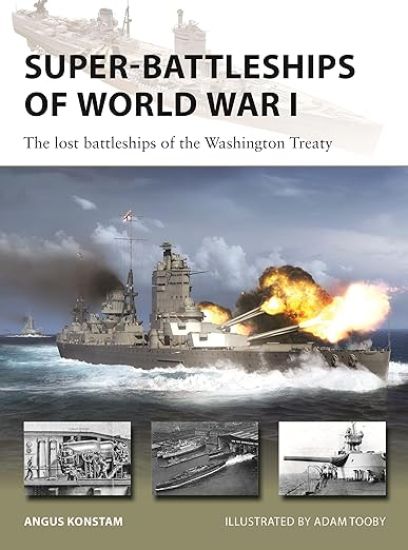
As World War I ended, the victors were developing a powerful new generation of 'hyper-dreadnoughts' and battlecruisers. Fully illustrated, this studies the big-gun warships that never were.1918 was a moment of great naval change. Britain still had the largest fleet in the world, but its ships were ageing, and many of them were markedly inferior to the latest American and Japanese battleships. An arms race loomed between the war’s victors. In this book naval expert Angus Konstam studies and compares the battleships being designed between 1918 and 1922, which drew on the lessons of World War I. Britain was designing four G3-class 15in-gun battlecruisers, plus four N3 ‘hyper-dreadnoughts’ mounting colossal 18in guns. The US Navy was planning six new South Dakota battleships, carrying an incredible 12 16in guns, plus six Lexington-class battlecruisers. Japan was working on a similar project, and in 1920 the first of four Amagi-class battlecruisers were laid down.However, in 1922 this costly arms race was averted by the Washington Naval Treaty, which halted new battleship construction, and limited the major fleets. These battleships and battlecruisers were mostly cancelled and scrapped, with a few, such as Lexington and Akagi, converted into aircraft carriers. With new colour reconstructions of the G3, H3, South Dakota, Lexington and Amagi classes, this is the first book to study these never-built monster warships.
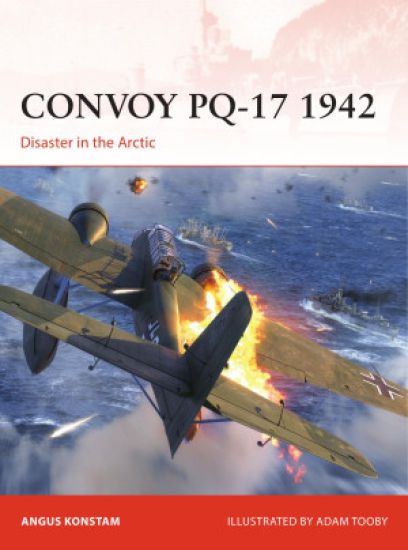
A gripping account of the most famous convoy operation of the war, which marked a high-water mark for the German naval campaign in the Arctic.The Arctic was a vital conduit for transporting supplies directly from Great Britain to Russia. The British Home Fleet was tasked with protecting these convoys, which passed within range of the German bases in Norway. By 1942, the Germans had reinforced their air and naval forces, stationing a powerful naval surface group there centred around the battleship Tirpitz. Convoy PQ-17 was set to be the last convoy to sail until the autumn of 1942, and was a particularly large one, involving 35 merchant ships, over half of which were American. When it departed Reykjavik on 27 June, bound for Archangel, the Germans were ready and waiting. The convoy was the first large joint Anglo-American naval operation under British command. Here, expert naval historian Angus Konstam documents the withdrawal of the Allied close escort to intercept the German raiders, and the devastating attacks on the scattered merchant ships by German aircraft and U-boats. Maps and diagrams plot the passage and fate of the convoy elements, and stunning artworks bring to life key moments of their efforts to escape. In the end, 24 Allied ships were sunk, and only ten merchant ships and four auxiliaries reached the port of Archangel. PQ-17 would prove to be the worst convoy loss of World War II, and the most controversial.
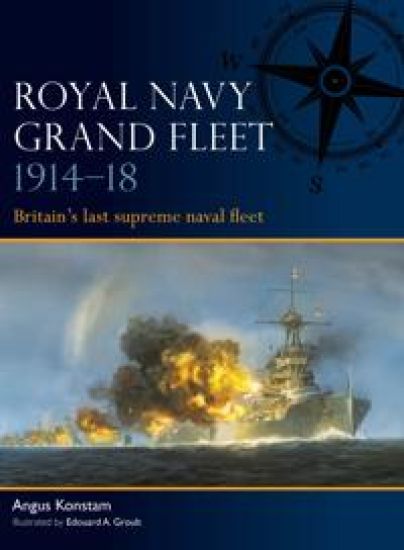
World War I was Britain’s last moment as the world’s naval superpower, and its Grand Fleet was then the most powerful ever seen. Fully illustrated, this explores its fighting power. At the start of World War I, the Royal Navy’s forces were amalgamated into a single entity, the Grand Fleet, and stationed in Scapa Flow, Orkney. The Grand Fleet was the largest amalgamation of modern naval power the world had seen, with over 30 dreadnought battleships or battlecruisers, and a plethora of cruisers and destroyers. In 1917 it was reinforced further by a powerful American squadron. In this book, based on extensive primary source research, naval expert Angus Konstam assesses the Grand Fleet’s ships, technology, organization, command and intelligence, and how it fought. While ship-for-ship its German counterparts were better designed, as a combined fleet Admiral Jellicoe’s armada was unstoppable. It took part in several clashes with its German foe during the war, but it was only at the Battle of Jutland, in 1916, that Jellicoe finally had the chance to destroy the enemy. Although the High Seas Fleet deftly avoided the trap laid for it, the Grand Fleet's economic blockade then really began to bite, which led to Germany’s surrender in November 1918. Packed with battle diagrams, spectacular artwork, and archive photos, this book is an essential guide to the last time the Royal Navy would be indisputably the world’s most powerful.
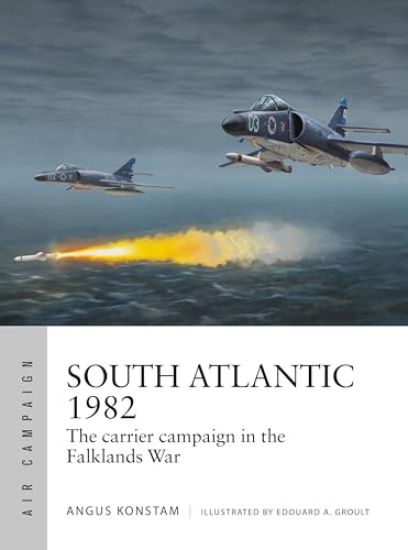
A detailed account of the war-winning role that a handful of Harrier squadrons played in the Falklands War.On 5 April 1982, the British aircraft carriers Hermes and Invincible sailed for the South Atlantic at the heart of the task force that would retake the Falkland Islands, known to Argentina as the Islas Malvinas. Air power was essential to the operation, and some analysts considered the contest unwinnable. The British had just 42 fighter jets available (28 Sea Harriers and 14 RAF Harrier GR.3s), and were outnumbered three-to-one by the Argentinian Air Force. Naval expert Angus Konstam offers a focused history of naval aviation in the Falklands War. The superbly manoeuvrable Harriers provided air cover during the ferociously contested landings, and later a Harrier Forward Operating Base on the islands was also made available. He explains how the British forces achieved their impressive Falklands air-to-air record, shooting down 21 Argentinian jets for no losses, while suffering more to anti-aircraft fire. He also looks into the Harriers’ ground-attack campaign, and explains the roles played by weapons technology, radar, electronic warfare, aerial reconnaissance, and support helicopters.Illustrated throughout with spectacular new artwork, 3D diagrams and maps, this book explains how the brutal test of the Falklands War showed the way forward for naval aviation and fleet air defence for decades to come.
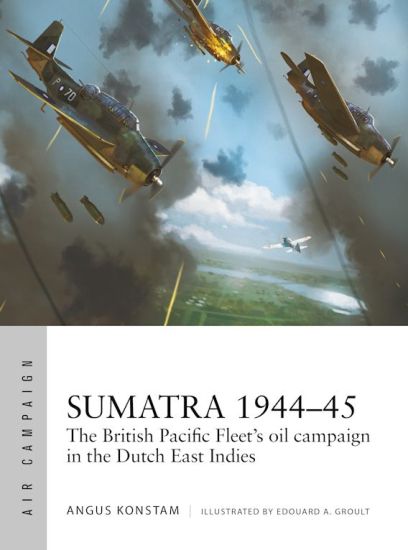
The first history of how the aircraft of the British Pacific Fleet shattered Japanese oilfields in Sumatra, starving Japan of oil and proving how Anglo-American navies could fight together.With the war in Europe in its final stages, by 1944 the Royal Navy was able to put together a major force to join the campaign against Japan. The British Pacific Fleet was arguably the most powerful fleet the Royal Navy has ever sent into action. In this book, renowned naval historian Angus Konstam explores how the first target of British naval power in the Pacific would be the strategically vital oil fields in Japanese-occupied Sumatra, part of the Dutch East Indies. Between April 1944 and January 1945, the task force struck oil fields and production centres, Japanese airfields, naval facilities and troop concentrations. Initially working alongside US Navy carriers, and learning their ruthlessly effective fast carrier doctrine, the British would end the Sumatra campaign with a powerful fleet of ten carriers of their own.Packed with dramatic artwork, maps, 3D diagrams and archive photos, this is the first history of the Sumatra raids, a prime example of how naval air power could achieve key strategic ends. They also proved that the Allied navies could fight successfully alongside one another - paving the way for the BPF’s participation in the capture of Okinawa.
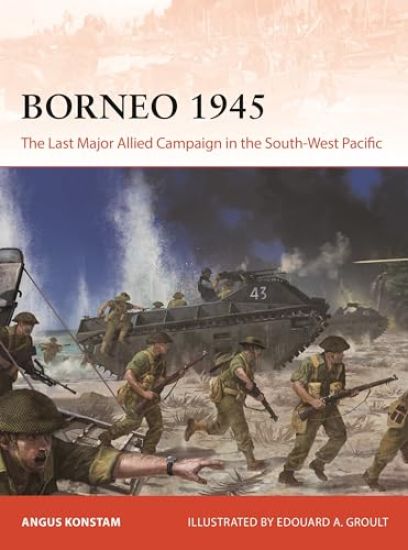
A fascinating account of the last major Allied operation in the South-West Pacific, and the largest Australian military operation of World War II.A week after Pearl Harbor in December 1941, Japanese troops landed near Brunei on the South-East Asian island of Borneo. Within eight weeks, the entire island had been overrun, and its Dutch and British Indian defenders had been ejected. By early April 1942, the entire Dutch East Indies were in Japanese hands, and remained under Japanese occupation for a further three years.The late-1944 US landings in the Philippines effectively cut oil- and resource-rich Borneo off from Japan. Now that it was considered a worthy strategic prize for the Allies, General Douglas MacArthur, commanding the South-West Pacific Theater, began planning for the recapture of the key island.This compelling work explores the planning and execution of Operation Oboe, which was spearheaded by Australian troops but involved naval and special forces from the United States, Britain and the Netherlands. Detailed maps explore the six separate stages, each of which involved amphibious landings. Battlescene artworks and photographs bring to life notable events such as the capture of Tarakan, Labuan, Brunei and Sarawak. Also covered are the Allied special forces guerrilla campaigns and Australian 7th Infantry Division's landing at Balikapan – which proved to be the turning point of this hard-fought campaign.
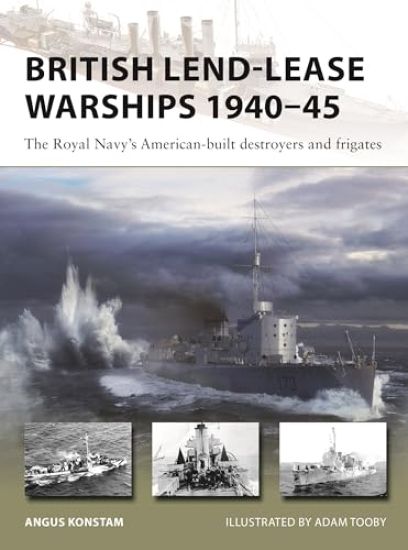
An illustrated history of the American-built destroyers and frigates supplied to the Royal Navy under Lend-Lease, which played a crucial role in Britain's war in the Atlantic.As U-boat attacks on Britain’s vital sea lanes increased in ferocity, and Royal Navy warship losses mounted, the United States passed the Lend-Lease Act, the cornerstone of America’s wartime role as armourer to the Allies.Naval historian Angus Konstam here offers an account of the Royal Navy’s Lend-Lease destroyers and escorts. The first batch were 50 World War I-era 'four-stacker' destroyers, in a deal sealed by the transfer of several global British bases to the USA. These warships were immediately recrewed, refitted and pressed into service in the Battle of the Atlantic. These ageing destroyers were followed by over a hundred more Lend-Lease warships, many of which were built especially for British service in American shipyards. Their arrival helped tip the balance in the hard-fought war against the U-boats, while others were used to fulfil other crucial wartime missions. With detailed ship profiles of the major classes, a cutaway of HMS Campbeltown (of Saint-Nazaire raid fame) as it appeared in 1941, and superb battlescene artwork, this is a comprehensive look at a crucial aspect of the Battle of the Atlantic.

Superbly illustrated with original artwork throughout, this book explores the ironclad warships that fought the little-known battles of South America's War of the Pacific. In the late 19th century, a war erupted between Chile and Peru, the catalyst for which was control of guano-rich Chincha islands. Given the geography of the two countries, with a narrow, arid land border and long exposed coastlines, it was inevitable that the War of the Pacific would predominantly be a naval war. It was a unique episode of military history, fought by two newly emergent South American states, using the latest technology – ironclad, steam-powered warships – and involving more naval battles than in the American Civil War, including a blockade, the capture of key warships, and bombardments of ports. Chile's navy was larger and more modern, while Peru's trump card was the small but powerful ironclad Huáscar. In this book, naval expert Angus Konstam offers readers an essential guide to this little-known naval war, illustrated with detailed profiles of the key ironclads, spectacular original artwork of the battles and a cutaway of Huáscar. He briefly covers the strategies of the warring powers as well as exploring all the key points of the naval campaign and the details of the warships involved, as a handful of ironclads fought for naval supremacy in South America.
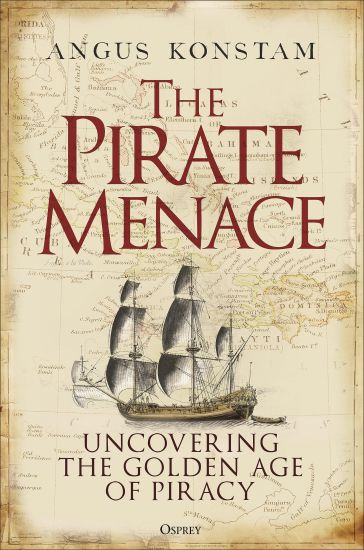
This new account explores the most notorious pirates in history and how their rise and fall can be traced back to a single pirate haven, Nassau. Angus Konstam, one of the world's leading pirate experts, has brought his 30 years of research to create the definitive book on the Golden Age of Piracy. Many of the privateers the British had used to prey on French and Spanish shipping during the War of the Spanish Succession turned to piracy. The pirates took over Nassau on the Bahamian island of New Providence and turned it into their own pirate haven, where shady merchants were happy to buy their plunder. It became the hub of a pirate network that included some of the most notorious pirates in history: Blackbeard, 'Calico Jack' Rackam, Charles Vane and Bartholomew Roberts.The growth of piracy led to a major surge in attacks in the Caribbean and along North America’s Atlantic seaboard. With the fragile maritime economy of the Americas threatened with collapse, major ports were threatened and trade brought to a standstill, the British government finally declared war on the pirates. The Pirate Menace draws on extensive research, as well as a wide range of first-hand accounts, to produce a new history of the heyday of historical piracy.
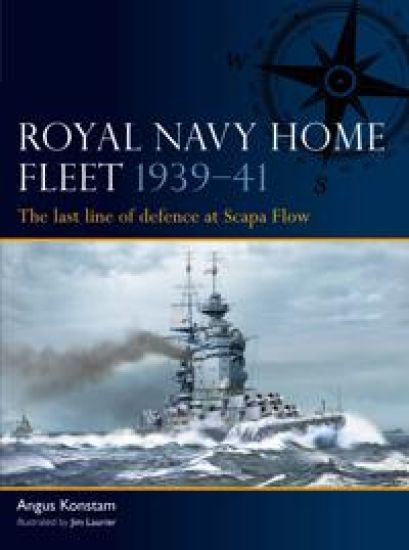
Packed with illustrations, this is a new history and analysis of how the Royal Navy's most important fleet operated and fought the German Navy in the crucial first years of World War II.Throughout its history, the Royal Navy's most powerful fleet has been the one guarding home waters. In this book, naval historian Angus Konstam explores the fighting power, the roles, and the battles of the Home Fleet, in the crucial first years of World War II when it was Britain's most powerful fighting force, anchored in the northern bastion of Scapa Flow. He explains the complex responsibilities of the fleet, charged simultaneously with preventing the powerful German Navy from breaking out into the Atlantic; preparing to challenge any cross-Channel invasion force; and attacking German naval operations in the North Sea. Home Fleet actions included the loss of HMS Hood, the sinking of the Bismarck and countering the invasion of Norway, Germany's biggest amphibious operation of the war.Packed with striking new artwork and 3D diagrams and maps, this book offers a detailed portrait of the Home Fleet during these most crucial years of the war, from the capabilities of the warships to logistics and intelligence-gathering, to how the fleet was organized and commanded, and how and why it fought as it did.