Kirjailija
Angus MacDonald
Kirjat ja teokset yhdessä paikassa: 16 kirjaa, julkaisuja vuosilta 1997-2022, suosituimpien joukossa The Clan Donald. Vertaile teosten hintoja ja tarkista saatavuus suomalaisista kirjakaupoista.
16 kirjaa
Kirjojen julkaisuhaarukka 1997-2022.
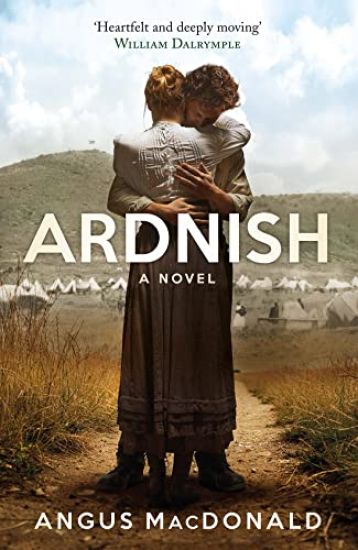
A small inheritance and a letter from his grandfather mark the beginnings of a journey that leads Peter Angus Gillies from his mundane job in Canada to Ardnish, the land of his forebears, on the rugged and remote west coast of Scotland. As Peter Angus explores the long-abandoned places where his ancestors eked out a living and listens to stories about them, he learns of treasure lost centuries before from a ship transporting French gold to help the Jacobite cause. Completely bewitched by the spell of Ardnish and the ghosts of its past, he sets out to find the hidden gold. With the help of a local girl, Sarah, he embarks on a search that will test him emotionally and physically as he learns independence and resilience – and experiences a love like he has never known before.
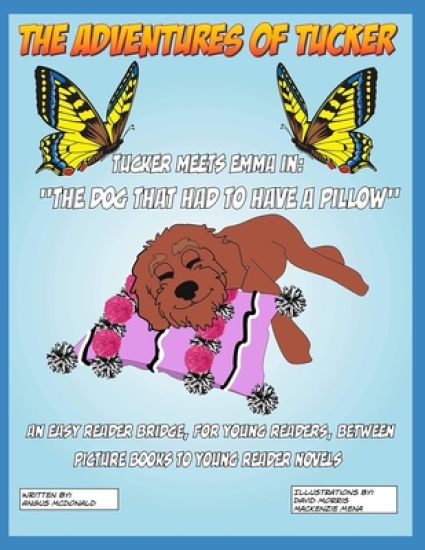
Children's picture book and early novel.Animal bookDog book THE ADVENTURES OF TUCKER is designed as a first children's bridge book series between picture books and easy reader novels. It allows early readers to step up to the next reading level with ease while quickly helping to build their confidence in their abilities to read on their own. A cute pet animal book, "THE DOG THAT HAD TO HAVE A PILLOW" Is the first book in the adventure series, THE ADVENTURES OF TUCKER and follows Tucker and Emma through their first meeting and many situations that teach us who they are and who they are together. The book is designed for children to get involved by periodically asking them, "What do you think". This allows children to state the obvious answer that is portrayed in the illustrations. This gives children the opportunity to interact with the story and provides some good laughs for parents while reading with their children.THE ADVENTURES OF TUCKER are stories based on the true-life events of 'TUCKER TIBERIUS "FLY BOY" THE FIRST'. Tucker is currently living in the Pacific Northwest with his family, loves children, enjoys camping, hiking, walking, winter sports, chipmunks, cats, other dogs and trips to the dog park.At the release of this first edition the 2nd edition, "TUCKER GOES CAMPING" is already in the works and will be released shortly after this publication. The 3rd book in the series will be, "TUCKER MEETS A FRIEND" and more adventures are certainly on the way.The adventures of Tucker are designed as a "bridge book" series to assist young readers an opportunity to advance from simple picture books to easy reader novels by, still incorporating some pictures, while at the same time introducing more opportunity to simply read. This change should assist young readers to move more easily into more complex novels while allowing them to begin the process of visualizing scenes without the need of Illustrations thus enhancing their ability to read, their reading enjoyment and encouraging their imagination to grow. The Tucker stories are adventurous and naturally fun. They are based on the actual true-life events in the life of Tucker. The hope of the author is that reading this series will help inspire a deep love of reading that will last a lifetime. Reading has always been and will always be, a wonderful way visit other places or simply to help get beyond the cares and worries of life if only for a short time and, take the reader to new places in the imagination.
Ardnish, the Highlands of Scotland, 1944. On his deathbed, Donald John Gillies sends for a priest to hear his last confession. During his 85 years he has witnessed much – world wars, the loss of family through death and emigration, and the daily struggles which face the small remote community. Waiting anxiously for the priest, his mind travels back to the dusty plains of South Africa in 1901, where he fought as a Lovat Scout during the Boer War, and where he met the woman who was the love of his life. Forced to abandon her and her young daughter in a British concentration camp, DJ returns to Scotland and his old life after his camp is ambushed by Boers and many of his fellow soldiers are massacred. As he lies dying, an unexpected visitor arrives at Ardnish. making it more imperative then ever for DJ to come to terms with the past and to make peace with himself – and his family – while there is still time.
High Tech - sometimes known as Structural Expressionism - is a style of Modern architecture that produced some of the most prominent and visually exciting buildings of the twentieth century: the Hongkong and Shanghai Banking Corporation headquarters in Hong Kong, the Lloyd's of London headquarters in London, UK, and the Centre Pompidou in Paris, France. Extensively illustrated with photographs and diagrams, and accessibly written, High Tech Architecture - A style reconsidered discusses the intended meanings of the visual vocabulary involved in High Tech, and places the style in the broad context of other Modern architecture of the twentieth century. The book offers a balanced re-appraisal of the extravagant claims that have been made for High Tech, by its progenitors and by architectural critics, as an architecture appropriate for the built environment of the future.
Genetic population structure
Lourenço Zacarias; Angus Macdonald; Johan Groeneveld
Lap Lambert Academic Publishing
2019
nidottu
After joining the the Lovat Scouts at the outbreak of the Second World War Donald Angus Gillies is sent on a mission to the Alps, where he meets Francoise, a young French Canadian SOE agent. The pair immediately form a close bond, but when Francoise is injured and captured, DA realizes his feelings for her are much, much stronger. After desperate attempts to find her, he has given up all hope. But a posting to Canada leads to some remarkable news, not just about Francoise but also about his own family. Reunited once more, Donald Angus and Francoise plan to live together in his beloved Ardnish, but have one further mission to complete first – a mission more dangerous than anything they have ever faced before . . .
The Clan Donald - Vol. 1 is an unchanged, high-quality reprint of the original edition of 1896. Hansebooks is editor of the literature on different topic areas such as research and science, travel and expeditions, cooking and nutrition, medicine, and other genres. As a publisher we focus on the preservation of historical literature. Many works of historical writers and scientists are available today as antiques only. Hansebooks newly publishes these books and contributes to the preservation of literature which has become rare and historical knowledge for the future.
Young Donald Peter Gillies, a Lovat scout soldier lies in hospital in Gallipoli in 1916, blinded by the Turks. There he falls in love with his Queen Alexandra Corps nurse, Louise, and she with him. The story moves back and forth from their time at the field hospital to the west highlands of Scotland where Donald grew up. As they talk in the quiet hours he tells her the stories of the coast and glens, how his family lived and the fascinating life of a century ago: bagpiping, sheep shearing, celidhs, illegal distilling, his mother saving the life of the people of St Kilda, the navvies building the west highland railway and the relationship between the lairds and the people. Louise in turn tells her own story of growing up in the Welsh valley: coal mining, a harsh and unforgiving upbringing. They get cut off from the allied troops and with another nurse are forced to make their escape through Turkey to Greece, getting rescued by a Coptic priest and ending up in Malta. By this time their love is out in the open, but there is still another tragic twist to their story waiting on the way back to Donald’s beloved highland home . . .
A Family Memoir of the Macdonalds of Keppoch
Angus MacDonald; Clements Robert Markham; Charles Edward (CON) Stuart
Kessinger Pub
2009
pokkari
A Family Memoir of the Macdonalds of Keppoch
Angus MacDonald; Clements Robert Markham; Charles Edward Stuart
Kessinger Pub
2009
sidottu
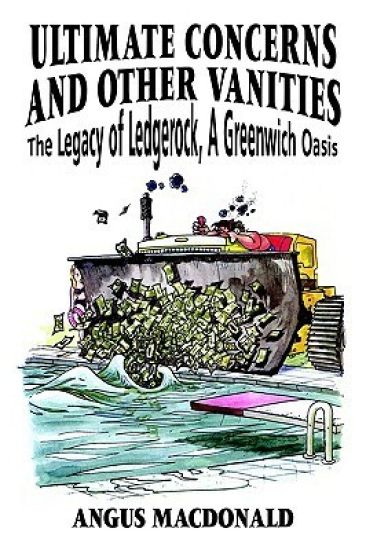
Ultimate Concerns and Other Vanities: the Legacy of Ledgerock, A Greenwich Oasis
Angus MacDonald
AuthorHouse
2003
sidottu
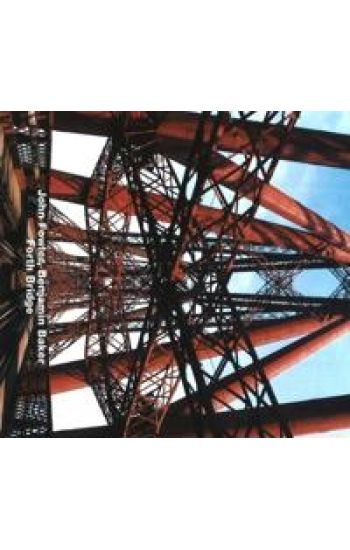
John Fowler, Benjamin Baker, Forth Bridge
Iain Boyd Whyte; Angus Macdonald
Edition Axel Menges
1997
sidottu
When the Forth Bridge opened on 4 March 1890, it was the longest railway bridge in the world and the first large structure made of steel. Crossing the wide Firth of Forth west of Edinburgh in Scotland, it represents one of the greatest engineering triumphs of Victorian Britain, man's victory over the intractable topography of land and water. Not surprisingly, such a vigorous rebuff of the natural order was condemned at the time by those late Victorians who resisted the march of technology, and William Morris described the Bridge as the "supremest specimen of all ugliness". In response, Benjamin Baker insisted that its beauty lay in its functional elegance. Contrasting the bridge with the only comparable structure of the period, the Eiffel Tower, he concluded: "The Eiffel Tower is a foolish piece of work, ugly, ill-proportioned and of no real use to anyone." But the beauty and fascination of the Forth Bridge lies not simply in its functional performance, but in its scale and power. Over a mile long and higher than the dome of St. Peter's in Rome, it rivals the natural phenomena that the philosophers of the 18th century identified as sources of sublime beauty. Immanuel Kant pointed to hurricanes, boundless oceans and high waterfalls as objects of sublime contemplation, "because they raise the forces of the soul above the heights of the vulgar commonplace, and discover within us a power of resistance of quite another kind, which gives us courage to be able to measure ourselves against the seeming omnipotence of nature". In the 19th century the awe-inspiring feats of nature were rivalled by the inventions of the engineers, and the thrill of the waterfall or the lightning flash was eclipsed by the sight of the roaring locomotive dashing across the majestic span of the Forth Bridge.