Kirjojen hintavertailu. Mukana 12 657 676 kirjaa ja 12 kauppaa.

Kirjailija

Anit Mukherjee

Kirjat ja teokset yhdessä paikassa: 3 kirjaa, julkaisuja vuosilta 2011-2019, suosituimpien joukossa Who Cares?. Vertaile teosten hintoja ja tarkista saatavuus suomalaisista kirjakaupoista.

3 kirjaa

Kirjojen julkaisuhaarukka 2011-2019.

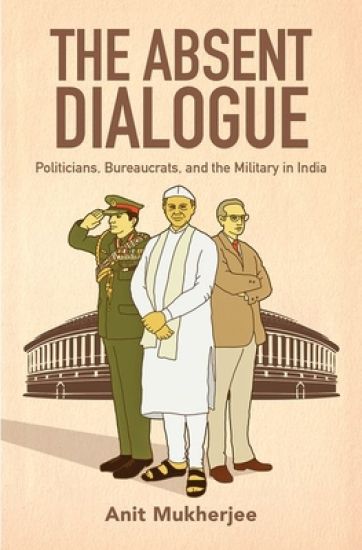
The Absent Dialogue

The Absent Dialogue

Anit Mukherjee

Oxford University Press Inc
2019
sidottu
Civilian control over the military is widely hailed as one of the major successes of India's democracy. Because it is so rare, especially among post-colonial states, this control is rightfully celebrated. But has this come at a cost? In The Absent Dialogue, Anit Mukherjee argues that the pattern of civil-military relations in India has hampered its military effectiveness. Diving deep into understanding the organization and internal processes within the Indian military, he explains how Indian politicians and bureaucrats have long been content with the formal and ritualistic exercise of civilian control, while the military continues to operate in institutional silos. Yet, there has been little substantive engagement between the two. To support this claim, Mukherjee closely examines the variables most closely associated with military effectiveness-weapons procurement, jointness (the ability of separate military services to operate together), officer education, promotion policies, and defense planning. Further, Mukherjee shows how India's pattern of civil-military relations-best characterized as an absent dialogue-adversely affects each of these processes. While the book focuses on India, it also highlights the importance of civilian expertise and institutional design in enhancing civilian control and military effectiveness in other democracies. Informed by more than a hundred and fifty interviews and recently available archival material, The Absent Dialogue sheds new light on India's military and will reshape our understanding of both the history and contemporary dynamics of civil-military relations and recurring problems therein.
Social Sector in a Decentralized Economy

Social Sector in a Decentralized Economy

Pinaki Chakraborty; Lekha Chakraborty; Anit Mukherjee

Cambridge University Press
2016
sidottu
This book is an analytical examination of financing and public service delivery challenges in a decentralized framework. It also provides critical insights into the effectiveness of public expenditure, through benefit incidence analysis of education and healthcare services in India. The benefits of decentralization always come with conflicts and trade-offs. By unpacking the process of decentralization, the authors identify that 'unfunded mandates', arising from the asymmetry between finances and functions at local levels, are a major challenge. The analysis is carried out by distilling the existing studies in this area, and through an empirical investigation of public finance data at different public sector levels in India, as well as in some selected developing countries. Using the household survey statistics of consumption expenditure, an analysis of utilization or benefit incidence of public spending on social sectors in India is achieved, covering education and health sectors. This title is available as Open Access on Cambridge Core.
Who Cares?

Who Cares?

Marilyn Waring; Robert Carr; Anit Mukherjee; Meena Shivdas

Commonwealth Secretariat
2011
nidottu
At the centre of the HIV/AIDS response are the 12 million people who need care and treatment. Those who are ill require support from carers who provide physical, social and psychological support. Yet these carers – essential actors in the response – are often invisible to the system that relies on them. The writers argue that focusing on the carer, at the household level, directs assistance where it is most effective and most needed, will respect human rights, and will help achieve the millennium development goals in health.