Kirjojen hintavertailu. Mukana 12 390 323 kirjaa ja 12 kauppaa.

Kirjailija

Ann Casement

Kirjat ja teokset yhdessä paikassa: 4 kirjaa, julkaisuja vuosilta 2001-2025, suosituimpien joukossa Integrating Shadow. Vertaile teosten hintoja ja tarkista saatavuus suomalaisista kirjakaupoista.

4 kirjaa

Kirjojen julkaisuhaarukka 2001-2025.

Integrating Shadow

Integrating Shadow

Ann Casement

KARNAC BOOKS
2025
nidottu
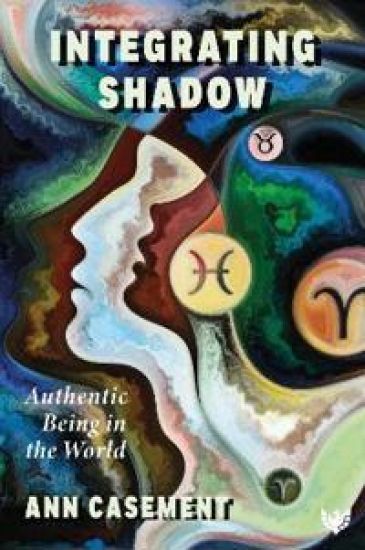
Since its inception, the notion of shadow is recognised as one of Jung’s major contributions to the world of psychology. Shadow traits are often unconsciously felt to be threats to our self-image, so we use defence mechanisms, such as repression and denial, to dismiss its existence and place it on to others, either in the personal or collective sphere. Although there exists considerable overlap between the strands, dividing the shadow into three constituent parts, personal, collective, and archetypal, helps to fully explore its impact on the world. The personal shadow is usually viewed as the base, inferior part of personality, although it can also include positive aspects, but it needs to be acknowledged and incorporated to make an individual whole. The collective shadow is found in many dark periods of history: witch hunt trials, religious wars, the Holocaust, and Rwandan genocide to name but a few; in today’s world, it is spread at the speed of light by mass media. The archetypal shadow emanates from the realm of the collective unconscious and may be equated with evil. Alongside shadow is the inextricably linked concept of persona, the outer face that is presented to the world, which is also explored in detail, as well as the role of the shadow in the act of scapegoating and within the professional sphere, and Jung’s links to the social sciences, in particular anthropology and sociology. Shadow is a theme that Ann Casement returned to many times in her decades-long career, always finding new ways to explore and explain it. Integrating Shadow: Authentic Being in the World brings together these many years of presentations and research to present a multi-layered and rich discourse on the meaning, importance, and consequences of the shadow in all our lives.
Jung

Jung

Ann Casement

Phoenix Publishing House
2021
pokkari
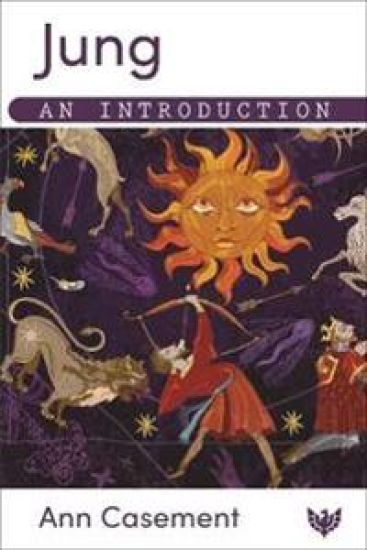
This book is an introduction to the ideas of the Swiss psychologist and psychoanalyst, C. G. Jung. The first chapter describes his early home life whilst subsequent chapters are devoted to his work in various sectors. This started in psychiatry at Burghölzli Hospital in Zürich, where Eugen Bleuler was the Director, a significant figure in Jung’s life for many years. The book goes on to describe at some length the professional relationship between Freud and Jung, and the disastrous impact of their subsequent acrimonious split in 1913 on themselves but, more importantly, on the profession of psychoanalysis itself, both at that time and subsequently. Several chapters elaborate Jung’s main concepts, including an extensive investigation of his all-important work on psychological alchemy, which includes 10 black and white illustrations from the alchemical text The Rosarium Philosophorum and 10 black and white ox-herding pictures of Kuo-an from the twelfth-century Buddhist tradition. The rest of the book depicts some of the significant women and men who contributed to analytical psychology, which is the term Jung chose to designate his psychoanalytic discipline. This is used interchangeably with the term psychoanalysis as many Jungians designate themselves psychoanalysts, including the author, as a New York State licensed psychoanalyst. This is also an account of some of the scientific, philosophical, and psychological influences on Jung’s thinking. The book concludes with an entry on China, where the author has spent the last few years analysing, lecturing, supervising, and teaching analytical psychology to Chinese psychotherapists, counsellors, and students in Beijing and Shanghai. This comprehensive work is essential reading for all those with an interest in C. G. Jung and his work.
Carl Gustav Jung

Carl Gustav Jung

Ann Casement

SAGE Publications Inc
2001
sidottu
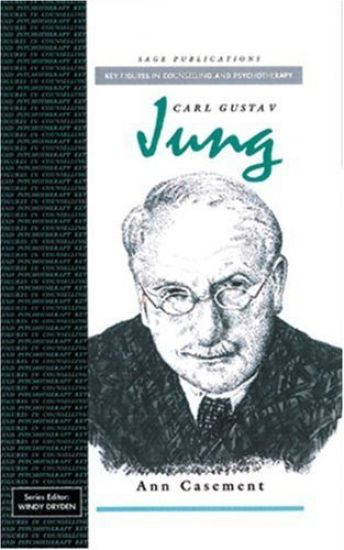
`This book offers a fresh and full introduction to Jung's psychology - it will be appreciated by many, from novice counsellors to the well-read analyst who will find... that there is much to learn about C G Jung' - Journal of Analytical Psychology `Ann Casement achieves an almost impossible task in her contribution to this useful series from SAGE, namely to create a lively overview of a complex man and his equally complex contributuions to analytic psychotherapy.... Casement achieves in this short book what Jung may have hoped to do when he reported a dream following a meeting with a publisher who was encouraging him to write a popular text of his ideas for the non-specialist. He had rejected the idea out of hand, but later he had a dream that changed his mind. "Jung found himself `standing in a public place addressing a great multitude of people who were listening to him with rapt attention and understanding what he said'" ' - Self & Society `Clearly written and well-informed, this impressive book is likely to become the single volume of choice for those psychotherapists and counsellors engaging with Jung and Jungian psychology as part of their training (whether wholly Jungian or more pluralistic). Ann Casement writes as an informed and enthusiastic insider who has also managed to retain her critical distance - hence what she has to say will also be relevant to more experienced readers' - Andrew Samuels, University of Essex Carl Gustav Jung is an enlightening and insightful guide to the life and work of one of the founding fathers of psychotherapy and most influential thinkers in modern times. Combining insights from his early life and his wide-ranging intellectual interests in philosophy, mysticism and parapsychology, Ann Casement traces the development of Jung's ideas on the functioning of the human mind, including the origins of core Jungian concepts such as archetypes, teleology, alchemy and the collective unconscious. Examining the relationship between Freud and Jung through their prolific correspondence, the author charts the growing divergence of opinion, which culminated in the birth of analytical psychology, the branch of psychotherapy established by Jung. Notwithstanding his unquestionable contribution to modern intellectual thought, Jung has been subject to severe criticism, including allegations of anti-Semitism and sympathy with the Nazi party. The book sets out clearly both the arguments levelled against Jung and responses to his critics. Particularly for the reader new to Jungian thinking, this book places the central concepts fully into context and provides the ideal starting point for further study of Jung and his work. Ann Casement is a Jungian Analyst in Private Practice, London and Chair of the United Kingdom Council for Psychotherapy. Her previous publications include Post-Jungians Today.
Carl Gustav Jung

Carl Gustav Jung

Ann Casement

SAGE Publications Inc
2001
nidottu
`This book offers a fresh and full introduction to Jung's psychology - it will be appreciated by many, from novice counsellors to the well-read analyst who will find... that there is much to learn about C G Jung' - Journal of Analytical Psychology `Ann Casement achieves an almost impossible task in her contribution to this useful series from SAGE, namely to create a lively overview of a complex man and his equally complex contributuions to analytic psychotherapy.... Casement achieves in this short book what Jung may have hoped to do when he reported a dream following a meeting with a publisher who was encouraging him to write a popular text of his ideas for the non-specialist. He had rejected the idea out of hand, but later he had a dream that changed his mind. "Jung found himself `standing in a public place addressing a great multitude of people who were listening to him with rapt attention and understanding what he said'" ' - Self & Society `Clearly written and well-informed, this impressive book is likely to become the single volume of choice for those psychotherapists and counsellors engaging with Jung and Jungian psychology as part of their training (whether wholly Jungian or more pluralistic). Ann Casement writes as an informed and enthusiastic insider who has also managed to retain her critical distance - hence what she has to say will also be relevant to more experienced readers' - Andrew Samuels, University of Essex Carl Gustav Jung is an enlightening and insightful guide to the life and work of one of the founding fathers of psychotherapy and most influential thinkers in modern times. Combining insights from his early life and his wide-ranging intellectual interests in philosophy, mysticism and parapsychology, Ann Casement traces the development of Jung's ideas on the functioning of the human mind, including the origins of core Jungian concepts such as archetypes, teleology, alchemy and the collective unconscious. Examining the relationship between Freud and Jung through their prolific correspondence, the author charts the growing divergence of opinion, which culminated in the birth of analytical psychology, the branch of psychotherapy established by Jung. Notwithstanding his unquestionable contribution to modern intellectual thought, Jung has been subject to severe criticism, including allegations of anti-Semitism and sympathy with the Nazi party. The book sets out clearly both the arguments levelled against Jung and responses to his critics. Particularly for the reader new to Jungian thinking, this book places the central concepts fully into context and provides the ideal starting point for further study of Jung and his work. Ann Casement is a Jungian Analyst in Private Practice, London and Chair of the United Kingdom Council for Psychotherapy. Her previous publications include Post-Jungians Today.