Kirjojen hintavertailu. Mukana 12 595 353 kirjaa ja 12 kauppaa.
Kirjailija
Ann Thomas
Kirjat ja teokset yhdessä paikassa: 19 kirjaa, julkaisuja vuosilta 2010-2025, suosituimpien joukossa Fiziko-himicheskie swojstwa slüny u VICh-inficirowannyh detej. Vertaile teosten hintoja ja tarkista saatavuus suomalaisista kirjakaupoista.
Pr chnica wczesnego dzieciństwa (ECC) to powszechny rodzaj pr chnicy zęb w u dzieci poniżej 71 miesiąca życia; przewlekla choroba wieku dziecięcego, kt rej poważne następstwa mają wplyw na dziecko i rodzinę. Jest to choroba wieloczynnikowa, w kt rej gl wnymi mikroorganizmami odpowiedzialnymi za jej etiopatogenezę są S. mutans i Lactobacilli. Najnowsze badania sugerują prawdopodobną rolę Candida, gatunku grzyba będącego normalnym komensalem jamy ustnej, w jej etiopatogenezie. W szczeg lnych warunkach fizjologicznych lub patologicznych Candida może wywolywac patologie poprzez endogenny mechanizm infekcyjny. We wczesnym dzieciństwie, ze względu na niedojrzaly uklad odpornościowy i nie w pelni uksztaltowaną mikroflorę jamy ustnej, dzieci są bardziej podatne na kolonizację przez mikroorganizmy oportunistyczne. Książka ta obejmuje przekrojowe badanie przedszkolne mające na celu określenie liczby Candida albicans, form występowania i potencjalu kwasotw rczego oraz skorelowanie jego roli z poziomem Streptococcus mutans, Streptococcus sanguinis i Lactobacilli u dzieci z ECC, S-ECC i bez pr chnicy.
Can we move beyond borders that divide us without losing our identity? Over the past decade, the yearning for rootedness, for being part of a story bigger than oneself, has flared up as a cultural force to be reckoned with. There’s much to affirm in this desire to belong to a people. That means pride in all that is admirable in the nation to which we belong – and repentance for its historic sins. A focus on national identity, of course, can lead to darker places. The new nationalists, who in Western countries often appeal to the memory of a Christian past, applaud when governments fortify borders to keep out people who are fleeing for their lives. (Needless to say, such actions are contrary to the Christian faith.) Is our yearning for roots doomed to lead to a heartless politics of exclusion? Does maintaining group or national identity require borders guarded with lethal violence? The answer isn’t artificial schemes for universal brotherhood, such as a universal language. Our differences are what make a community human. Might the true ground for community lie deeper even than shared nationality or language? After all, the biblical vision of humankind’s ultimate future has “every tribe and language and people and nation” coming together – beyond all borders but still as themselves. In this issue: - Santiago Ramos describes a double homelessness immigrant children experience as outsiders in both countries. - Ashley Lucas profiles a Black Panther imprisoned for life and looks at the impact on his family. - Simeon Wiehler helps a museum repatriate a thousand human skulls collected by a colonialist. - Yaniv Sagee calls Zionism back to its founding vision of a shared society with Palestinians. - Stephanie Saldaña finds the lost legendary chocolates of Damascus being crafted in Texas. - Edwidge Danticat says storytelling builds a home that no physical separation can take away. - Phographer River Claure reimagines Saint-Exupéry’s Le Petit Prince as an Aymara fairy tale. - Ann Thomas tells of liminal experiences while helping families choose a cemetery plot. - Russell Moore challenges the church to reclaim its integrity and staunch an exodus. You’ll also find: - Prize-winning poems by Mhairi Owens, Susan de Sola, and Forester McClatchey - A profile of Japanese peacemaker Toyohiko Kagawa - Reviews of Fredrik deBoer’s The Cult of Smart, Anna Neima’s The Utopians, and Amor Towles’s The Lincoln Highway - Insights on following Jesus from E. Stanley Jones, Barbara Brown Taylor, Teresa of Ávila, Oscar Romero, Martin Luther King Jr., Eberhard Arnold, Leonardo Boff, Meister Eckhart, C. S. Lewis, Hermas, and Dietrich Bonhoeffer Plough Quarterly features stories, ideas, and culture for people eager to put their faith into action. Each issue brings you in-depth articles, interviews, poetry, book reviews, and art to help you put Jesus’ message into practice and find common cause with others.
The 18th century was a wealth of knowledge, exploration and rapidly growing technology and expanding record-keeping made possible by advances in the printing press. In its determination to preserve the century of revolution, Gale initiated a revolution of its own: digitization of epic proportions to preserve these invaluable works in the largest archive of its kind. Now for the first time these high-quality digital copies of original 18th century manuscripts are available in print, making them highly accessible to libraries, undergraduate students, and independent scholars.Western literary study flows out of eighteenth-century works by Alexander Pope, Daniel Defoe, Henry Fielding, Frances Burney, Denis Diderot, Johann Gottfried Herder, Johann Wolfgang von Goethe, and others. Experience the birth of the modern novel, or compare the development of language using dictionaries and grammar discourses. ++++The below data was compiled from various identification fields in the bibliographic record of this title. This data is provided as an additional tool in helping to insure edition identification: ++++British LibraryT180545With a half-title, a list of subscribers and a final errata leaf.Plymouth: printed and sold by M. Haydon and Son; sold also by B. Law, London; R. Goadby, Sherborne; R. Trewman, Exeter; and by the author, at Millbrook, 1784. 8],44, 10]p.; 4
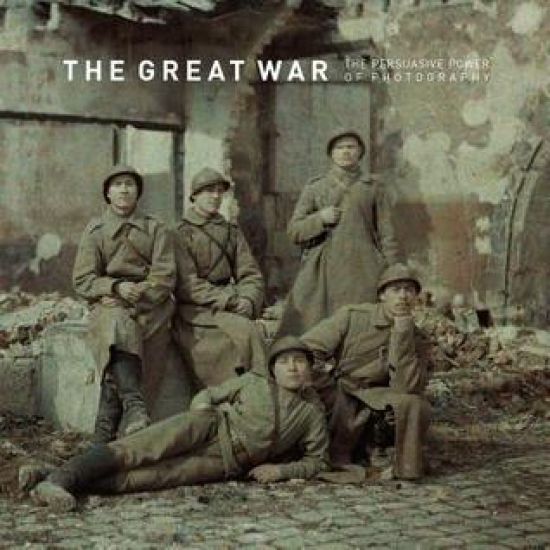
World War I was called the "war of the camera." While many earlier wars fought after photography's invention were documented by the medium, WWI represented a turning point. One of the most important changes was the way in which both the Allied forces and the Central Powers used photography as a tool: to spy, to provoke and to persuade. The official photographs made during the war were telling in terms of strategies, censorship and the constant need to whip up public support for the cause. In sharp contrast to the political and military uses, the importance of photography for personal use was undeniable. Studio portraits of soldiers and their families and sweethearts were widely popular; personal photo albums created permanent records of lives that were suddenly placed at risk. This volume and the exhibition it accompanies, bring together a diverse and remarkable selection of photographs drawn from international collections to illustrate the many important roles that photography played during the war.
Make customer feedback work for your business. Customers are speaking loud and clear through a miriad of mediums. Evidence shows that customers will no longer stand for the hurried and complacent service that has become the norm. They are looking for a positive, memorable experience. Organizations that provide that level of service will earn their loyalty. Customers base their decisions on nothing more than a positive or negative review of your product and/or service. Pay Attention! paves the way. Your company wins when you: Understand Customer ExpectationsEmbrace and implement The RATER FactorsDefine who you are and what you offerBecome E.T.D.B.W. (Easy To Do Business With)Connect with your audience in all mediumsReact appropriately and respond immediately to customer feedbackRecover sincerely when things go wrong All you need is to Pay Attention!