

Kirjailija
Ann Wagner
Kirjat ja teokset yhdessä paikassa: 7 kirjaa, julkaisuja vuosilta 1997-2019, suosituimpien joukossa Eva Rothschild. Vertaile teosten hintoja ja tarkista saatavuus suomalaisista kirjakaupoista.
7 kirjaa
Kirjojen julkaisuhaarukka 1997-2019.

A tale of research comes to life in the form of a story that began more than a century ago. As the storyteller, the author has cast her Aunt Dot as a quiet rebel and a very strong woman. In the depths of the Depression, she worked to save money and follow her older brothers to Carthage College. After two years she succumbed to the cultural ideal of the era and gave up college for marriage. She became a wife with several titles -- wife-in-waiting, minister's wife, housewife, and war wife.

Islam in der Schule. Herausforderungen und Chancen (Französich Oberstufe Gymnasium)
Ann Wagner
GRIN Verlag
2017
pokkari

"Everything I do, I intend to make on a large scale . . . Size itself has its own impact, and physically we can relate ourselves more strongly to a big sculpture than to a small one." —Henry Moore It was Moore’s intention that these large-scale forms be interacted with, viewed close-up, and even touched. In order that their heft and mass be perceived in a myriad of settings, they were most commonly placed outdoors, subject to the effects of changing light, seasons, and terrain. Within the controlled white environment of the gallery space, the sheer volume and mammoth proportions of the sculptures are more keenly felt. Brimming with latent energy, their richly textured surfaces and sensual, rippling arcs and concavities can be seen to new effect.


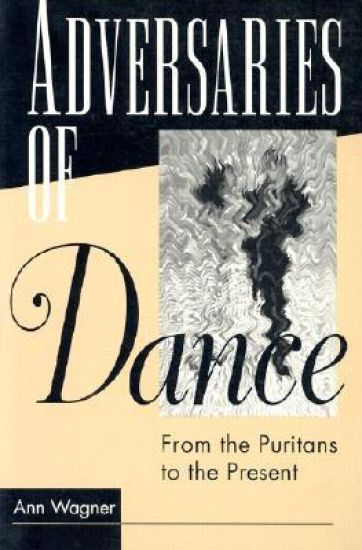
Whether in the private parlor, public hall, commercial "dance palace," or sleazy dive, dance has long been opposed by those who viewed it as immoral--more precisely as being a danger to the purity of those who practiced it, particularly women. In Adversaries of Dance, Ann Wagner presents a major study of opposition to dance over a period of four centuries in what is now the United States. Wagner bases her work on the thesis that the tradition of opposition to dance "derived from white, male, Protestant clergy and evangelists who argued from a narrow and selective interpretation of biblical passages," and that the opposition thrived when denominational dogma held greater power over people's lives and when women's social roles were strictly limited. Central to Wagner's work, which will be welcomed by scholars of both religion and dance, are issues of gender, race, and socioeconomic status.