Kirjailija
Ann Ward
Kirjat ja teokset yhdessä paikassa: 25 kirjaa, julkaisuja vuosilta 1996-2022, suosituimpien joukossa Password 4 PB Cameroon. Vertaile teosten hintoja ja tarkista saatavuus suomalaisista kirjakaupoista.
25 kirjaa
Kirjojen julkaisuhaarukka 1996-2022.
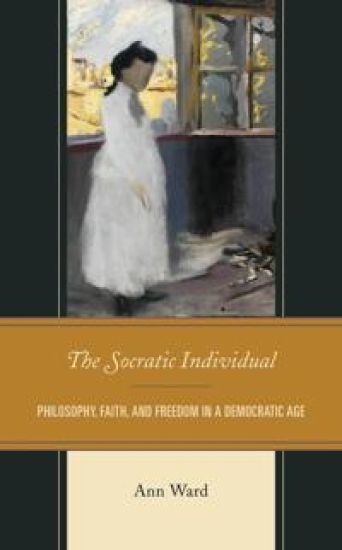
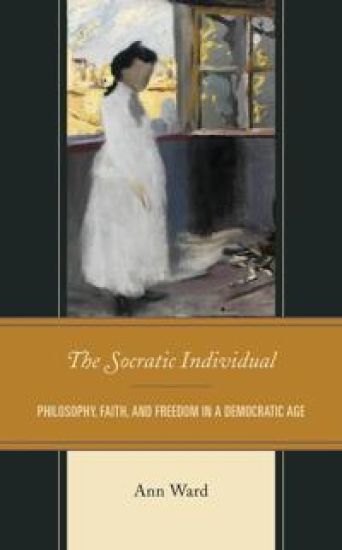
The author explores the recovery of Socratic philosophy in the political thought of G.W.F. Hegel, Soren Kierkegaard, John Stuart Mill, and Friedrich Nietzsche. Ward identifies the cause of the renewed interest in Socrates in Hegel’s call for the absorption of the individual within the modern, liberal state and the concomitant claim that Socratic skepticism should cease because history has reached its end and perfection. Recoiling from Hegel’s attempt to chain the individual within the “cave,” nineteenth century thinkers push back against his deification of the state. Yet, underlying Kierkegaard, Mill and Nietzsche’s turn to Socrates is their acceptance of Hegel’s critique of the liberal conception of the rights-bearing individual. Like Hegel, they agree that such an individual is an unworthy competitor to the state. In search of a noble individual to hold up against the state and counter the belief in the “end” of history, Kierkegaard, Mill and Nietzsche bring back and transform Socrates in significant ways. For Kierkegaard the Socratic philosopher in modern times is the person of faith, for Mill the public intellectual whose idiosyncratic identity arises from the freedom of speech, and for Nietzsche the Dionysian artist. Each model the beauty of individuality in our democratic age.
Stepmoms...The Good, The Bad, and The Ugly
Ann Ward
Createspace Independent Publishing Platform
2017
nidottu
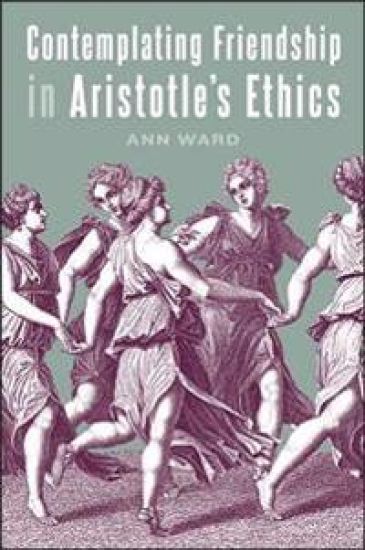
Contemplating Friendship in Aristotle's Ethics
Ann Ward
State University of New York Press
2016
sidottu
Examines how Aristotle posits political philosophy and the experience of friendship as a means to bind strictly intellectural virtue with morality.In this book, Ann Ward explores Aristotle's Nicomachean Ethics, focusing on the progressive structure of the argument. Aristotle begins by giving an account of moral virtue from the perspective of the moral agent, only to find that the account itself highlights fundamental tensions within the virtues that push the moral agent into the realm of intellectual virtue. However, the existence of an intellectual realm separate from the moral realm can lead to lack of self-restraint. Aristotle, Ward argues, locates political philosophy and the experience of friendship as possible solutions to the problem of lack of self-restraint, since political philosophy thinks about the human things in a universal way, and friendship grounds the pursuit of the good which is happiness understood as contemplation. Ward concludes that Aristotle's philosophy of friendship points to the embodied intellect of timocratic friends and mothers in their activity of mothering as engaging in the highest form of contemplation and thus living the happiest life.
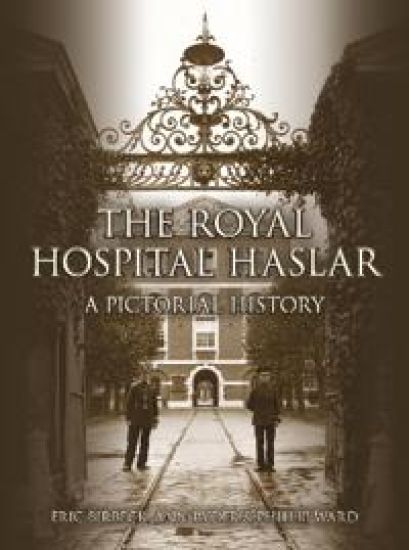
The Royal Hospital Haslar was the first of three hospitals built in the 18th century for sick and wounded sailors and marines and was the last to remain in service. Following submissions to King George II by the Earl of Sandwich, First Lord of the Admiralty, sites were identified at Portsmouth, Plymouth, and Chatham, and building commenced at Haslar farm in 1745. Designed by Theodore Jacobsen FRS in the manner of his Foundling Hospital in London, the hospital, reputed at one time to be the largest red brick building in Europe, was completed in 1762. Haslar was grand in concept, elegant in design and robust of build, and provided medical attention and nursing care to the sick and wounded of both Fleet and Army. This may not have been of the highest order in the early years, but the standards achieved during the Peninsular and Crimean Wars earned the hospital a reputation among military authorities that was unequalled. Sir John Richardson, eminent Arctic explorer and physician at Haslar, even corresponded with Florence Nightingale when the nursing reformer was campaigning for changes in the way casualties of war were treated. Described as the noblest of institutions by Queen Victoria, the Royal Hospital Haslar has provided medical care to the Royal Navy for over 250 years and Sick Berth staff for service in all areas of global conflict. In more recent times it treated patients from all three services and since the 1950s has made the professional and technological expertise contained within its walls accessible to civilian patients. The photographs in this fascinating illustrated history will stir the memory of all those who have entered Haslar, as either staff or patients, and provide a unique record of a singular and celebrated institution.
Effective Communication on the Job: A Guide for Supervisors and Executives
Elizabeth Marting; Robert E. Finley; Ann Ward
Literary Licensing, LLC
2012
sidottu
Effective Communication On The Job: A Guide For Supervisors And Executives by Elizabeth Marting is a comprehensive guidebook that provides valuable insights and techniques for improving communication skills in the workplace. The book is designed specifically for supervisors and executives who want to enhance their communication abilities and build stronger relationships with their colleagues, clients, and employees.The book covers a range of topics related to effective communication, including the importance of active listening, the use of nonverbal cues, and the art of persuasion. It also delves into the challenges of communicating in diverse and multicultural work environments and provides practical strategies for overcoming these obstacles.One of the key strengths of this book is its emphasis on practical solutions and real-world examples. The author draws on her extensive experience working with executives and managers to provide concrete strategies and techniques that can be applied immediately in the workplace.Overall, Effective Communication On The Job is an essential resource for anyone looking to improve their communication skills and build stronger relationships in the workplace. With its clear and accessible writing style, practical advice, and real-world examples, this book is a must-read for supervisors, executives, and anyone looking to enhance their communication abilities in a professional setting.Foreword By Lawrence A. Appley. Additional Contributors Include Frank E. Fischer, Lydia Strong, Paul Pigors, And Many Others.This scarce antiquarian book is a facsimile reprint of the old original and may contain some imperfections such as library marks and notations. Because we believe this work is culturally important, we have made it available as part of our commitment for protecting, preserving, and promoting the world's literature in affordable, high quality, modern editions, that are true to their original work.
Effective Communication on the Job: A Guide for Supervisors and Executives
Elizabeth Marting; Robert E. Finley; Ann Ward
Literary Licensing, LLC
2012
nidottu
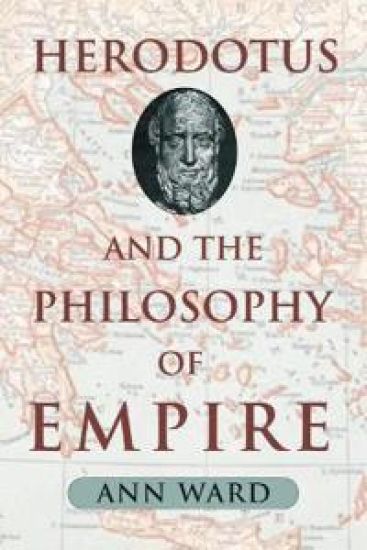
In Herodotus and the Philosophy of Empire, Ann Ward treats the classical writer not as a historian but as a political philosopher. Ward uses close textual analysis to demonstrate that Herodotus investigates recurring themes in the most important forms of government in the ancient world. This analysis of The Histories concludes with reflections on the problems of empire, not only for the Persians and the striving Athenians, but for our own government as well. To this end, Ward contrasts Herodotus on empire with the assumptions underlying speeches and writings of Paul Wolfowitz, Colin L. Powell, Joseph S. Nye, Jr. and Robert W. Merry.
Pri English 4 PB Sierra Leone
Ann Ward; Momoh Ansu; Morie Manyeh; Munda Senesie
Macmillan Education
2003
nidottu
"Top Score! English" is an English course specially written for primary school pupils in Kenya. The structures and functions of English are taught through imaginative and stimulating reading passages and activities, which are carefully graded and reflect the rich cultural variety in Kenya. At the lower levels, the focus is on communication through listening and speaking, and acquisition of early reading and writing skills. At the upper levels, these skills are developed and practised within topic-based, cross-curricular contexts. "Top Score! English" prepares pupils for final primary school examinations, and for the more demanding work they will meet if they pursue their studies to a higher level. The teacher's books provide the aims of the course, advice on teaching methods, and detailed suggestions for using the coursebooks in the classroom. There are ideas for extension and remedial activities, as well as the answers to all the exercises in the Pupil's Book. There are also readers for Standards 1 to 3 which provide lively stories and activities at the appropriate language level.
Password 6 PB Cameroon
Ann Ward; Richard Akoulouze; Mispa Itoe; Michael Nama
Macmillan Education
1999
nidottu
"Password" - the Macmillan Primary English Course for Cameroon - has been designed to make learning English as easy and enjoyable as possible for both pupils and teachers. It is a seven-level course, with a pupil's book and a teacher's book for each level. The teacher's book provides detailed notes for teaching each lesson and should be a resource for both experienced and new teachers. A revision unit is included in the teacher's text for each level of the course, and a word list of new vocabulary is also included. The authors of the series are a group of Cameroonian teachers.
Password 4 PB Cameroon
Ann Ward; Richard Akoulouze; Mispa Itoe; Michael Nama
Macmillan Education
1997
nidottu
The "Password" series is an seven-level course for primary schools in Cameroon. It introduces the structures/functions of English through a variety of activities. The early levels focus on building vocabulary, listening, speaking, reading and writing. This pupil's book is on level 4. The authors are a group of Cameroonian teachers.
Password 5 PB Cameroon
Ann Ward; Richard Akoulouze; Mispa Itoe; Michael Nama
Macmillan Education
1997
nidottu
The "Password" series is an seven-level course for primary schools in Cameroon. It introduces the structures/functions of English through a variety of activities. The early levels focus on building vocabulary, listening, speaking, reading and writing. This pupil's book is on level 5. The authors are a group of Cameroonian teachers.
This series has been designed to make learning English as easy and enjoyable as possible for both pupils and teachers. It is a seven year course, with a pupil's book and a teacher's book for each level, and optional workbooks for levels 1 and 2. The teacher's text provides detailed notes for teaching each lesson and should be a useful resource for both new and experienced teachers. A revision unit is included for each term, for each level of the course, and in addition to the word list of new vocabulary found at the end of the teacher's text, there is also a sample assessment record and a key with answers to the exercises set in the pupil's book.