Kirjojen hintavertailu. Mukana 12 390 323 kirjaa ja 12 kauppaa.

Kirjailija

Anna Bryson

Kirjat ja teokset yhdessä paikassa: 5 kirjaa, julkaisuja vuosilta 1998-2023, suosituimpien joukossa Lawyers in Conflict and Transition. Vertaile teosten hintoja ja tarkista saatavuus suomalaisista kirjakaupoista.

5 kirjaa

Kirjojen julkaisuhaarukka 1998-2023.

Lawyers in Conflict and Transition

Lawyers in Conflict and Transition

Kieran McEvoy; Louise Mallinder; Anna Bryson

Cambridge University Press
2023
pokkari
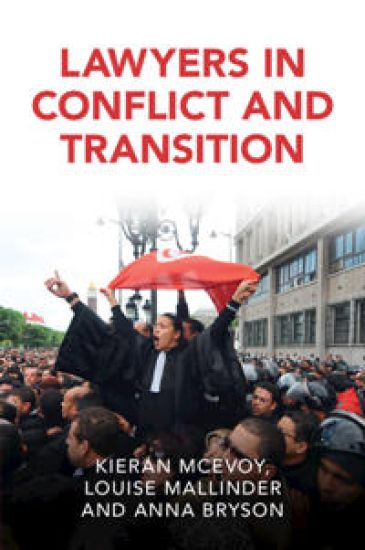
Countries undergoing or recovering from conflict and authoritarianism often face profound rule of law challenges. The law on the statute books may be repressive, judicial independence may be compromised, and criminal justice agencies may be captured by powerful interests. How do lawyers working within such settings imagine the law? How do they understand their ethical obligations towards their clients and the rule of law? What factors motivate them to use their legal practice and social capital to challenge repressive power? What challenges and risks can they face if they do so? And when do lawyers facilitate or acquiesce to illegality and injustice? Drawing on over 130 interviews from Cambodia, Chile, Israel, Palestine, South Africa, and Tunisia, this book explores the extent to which theoretical understandings within law and society research on the motivations, strategies, tactics, and experiences of lawyers within democratic states apply to these more challenging environments.
Lawyers in Conflict and Transition

Lawyers in Conflict and Transition

Kieran McEvoy; Louise Mallinder; Anna Bryson

Cambridge University Press
2022
sidottu
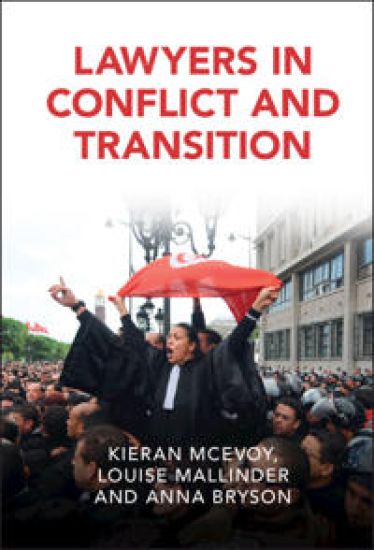
Countries undergoing or recovering from conflict and authoritarianism often face profound rule of law challenges. The law on the statute books may be repressive, judicial independence may be compromised, and criminal justice agencies may be captured by powerful interests. How do lawyers working within such settings imagine the law? How do they understand their ethical obligations towards their clients and the rule of law? What factors motivate them to use their legal practice and social capital to challenge repressive power? What challenges and risks can they face if they do so? And when do lawyers facilitate or acquiesce to illegality and injustice? Drawing on over 130 interviews from Cambodia, Chile, Israel, Palestine, South Africa, and Tunisia, this book explores the extent to which theoretical understandings within law and society research on the motivations, strategies, tactics, and experiences of lawyers within democratic states apply to these more challenging environments.
The Routledge Guide to Interviewing

The Routledge Guide to Interviewing

Sean McConville; Anna Bryson

Routledge
2013
sidottu
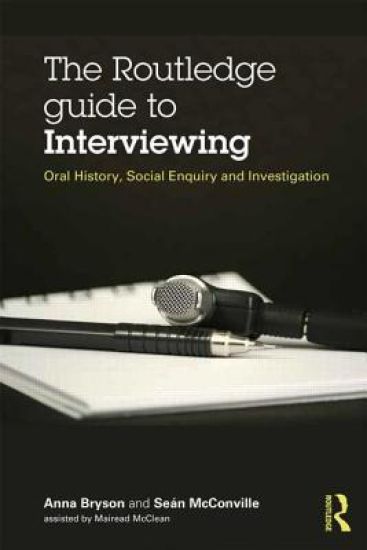
The Routledge Guide to Interviewing sets out a well-tested and practical approach and methodology: what works, difficulties and dangers to avoid and key questions which must be answered before you set out. Background methodological issues and arguments are considered and drawn upon but the focus is on what is ethical, legally acceptable and productive: Rationale (why, what for, where, how) Ethics and Legalities (informed consent, data protection, risks, embargoes) Resources (organisational, technical, intellectual) Preparation (selecting and approaching interviewees, background and biographical research, establishing credentials, identifying topics) Technique (developing expertise and confidence) Audio-visual interviews Analysis (modes, methods, difficulties) Storage (archiving and long-term preservation) Sharing Resources (dissemination and development)From death row to the mansion of a head of state, small kitchens and front parlours, to legislatures and presbyteries, Anna Bryson and Seán McConville’s wide interviewing experience has been condensed into this book. The material set out here has been acquired by trial, error and reflection over a period of more than four decades. The interviewees have ranged from the delightfully straightforward to the painfully difficult to the near impossible – with a sprinkling of those that were impossible.Successful interviewing draws on the survival skills of everyday life. This guide will help you to adapt, develop and apply these innate skills. Including a range of useful information such as sample waivers, internet resources, useful hints and checklists, it provides sound and plain-speaking support for the oral historian, social scientist and investigator.
The Routledge Guide to Interviewing

The Routledge Guide to Interviewing

Sean McConville; Anna Bryson

Routledge
2013
nidottu
The Routledge Guide to Interviewing sets out a well-tested and practical approach and methodology: what works, difficulties and dangers to avoid and key questions which must be answered before you set out. Background methodological issues and arguments are considered and drawn upon but the focus is on what is ethical, legally acceptable and productive: Rationale (why, what for, where, how) Ethics and Legalities (informed consent, data protection, risks, embargoes) Resources (organisational, technical, intellectual) Preparation (selecting and approaching interviewees, background and biographical research, establishing credentials, identifying topics) Technique (developing expertise and confidence) Audio-visual interviews Analysis (modes, methods, difficulties) Storage (archiving and long-term preservation) Sharing Resources (dissemination and development)From death row to the mansion of a head of state, small kitchens and front parlours, to legislatures and presbyteries, Anna Bryson and Seán McConville’s wide interviewing experience has been condensed into this book. The material set out here has been acquired by trial, error and reflection over a period of more than four decades. The interviewees have ranged from the delightfully straightforward to the painfully difficult to the near impossible – with a sprinkling of those that were impossible.Successful interviewing draws on the survival skills of everyday life. This guide will help you to adapt, develop and apply these innate skills. Including a range of useful information such as sample waivers, internet resources, useful hints and checklists, it provides sound and plain-speaking support for the oral historian, social scientist and investigator.
From Courtesy to Civility

From Courtesy to Civility

Anna Bryson

Oxford University Press
1998
sidottu
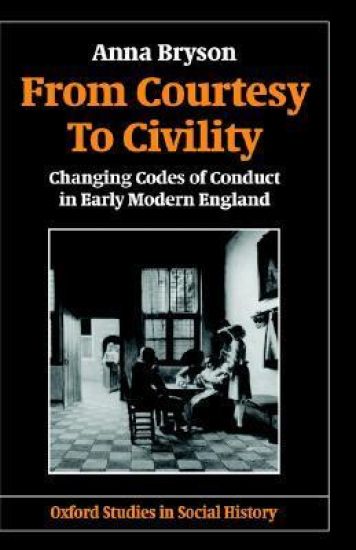
In any society, a foreigner learning the language must also learn what passes for good manners. The same is true for the historian trying to understand the social rules of a period and why these change. This book explores the nature and development of early modern conceptions of good manners, and examines some of the particular forms of everyday behaviour which these conceptions implied. `Courtesy' and `Civility' were among the values central to Tudor and Stuart assumptions and fears about the social and political order.