Kirjojen hintavertailu. Mukana 12 595 353 kirjaa ja 12 kauppaa.
Kirjailija
Anna-Carola Krausse
Kirjat ja teokset yhdessä paikassa: 5 kirjaa, julkaisuja vuosilta 2021-2024, suosituimpien joukossa Lotte Laserstein. Vertaile teosten hintoja ja tarkista saatavuus suomalaisista kirjakaupoista.
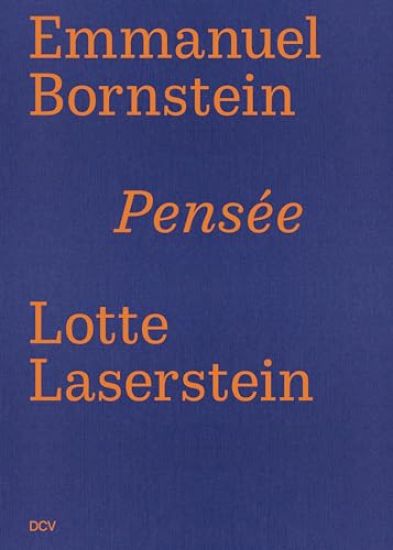
When one speaks of the “lost generation,” it also includes Lotte Laserstein (1898–1993). After the National Socialists seized power, she was forced to leave Germany, and her exile resulted in her being forgotten. Laserstein’s artistic career, however, began auspiciously: in 1927, she was the first woman to complete studies at the Berlin Academy of the Arts withdistinction, and quickly made a name for herself in the art metropolis. While her works are close to Neue Sachlichkeit, they lack its cool, dissecting smoothness. Laserstein’s selfassured view of the new woman, technical mastery, play with traditional and modern visual formulas, as well as her synthesis of objectivity and sensitivity give her pictures a captivating contemporaneity and time-transcending topicality. Look inside
The portrait offers the possibility of observation and introspection, and is at the same time one of the most private and representative artistic genres. But what distinguishes the specifically female gaze? On the occasion of the major fall exhibition 2021 at Fondation Beyeler, this catalog brings together nine women artists from Europe and America from the beginning of modernism to the present day, whose works represent an outstanding contribution to the history of the portrait. The individual view of the artists on themselves and on their surroundings in the course of time is expressed. In the catalog, renowned authors explore the individual artists and their fascinating ways of reflecting on themselves and on others. The featured artists are Mary Cassatt, Marlene Dumas, Frida Kahlo, Lotte Laserstein, Paula Modersohn-Becker, Berthe Morisot, Alice Neel, Elizabeth Peyton, and Cindy Sherman.
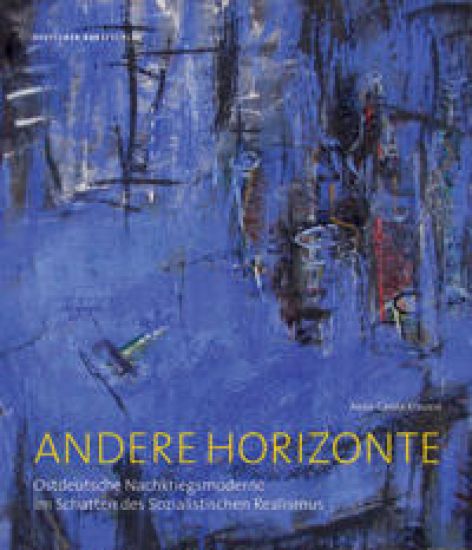
The richly illustrated publication presents artists who were repeatedly accused of "formalism" in the German Democratic Republic (GDR) of the 1950s and 1960s. The presentation of this early artistic opposition impressively shows how purposefully and self-confidently painters and graphic artists clung to the autonomy of art even in phases of rigid cultural policies, and successively contributed to expanding the artistic corset by persistently testing out and boldly overstepping narrow boundaries. The presentation of representative pictures by some thirty artists and the examination of the genesis of exemplary works facilitate a differentiated view of the art of the early GDR, in which it is not so much art policy, but instead the artwork itself that is the subject of interrogation and assessment. Multifacetted presentation of artists of the early GDR, whose work defies the common cliché of uniform state art Unique visual material, with some works published for the first time Including a look at East German women artists of the early years: Charlotte E. Pauly, Kate Diehn-Bitt, Hedwig Holtz-Sommer