

Kirjailija
Anna Eriksson
Kirjat ja teokset yhdessä paikassa: 9 kirjaa, julkaisuja vuosilta 2009-2026, suosituimpien joukossa Bumpism. Vertaile teosten hintoja ja tarkista saatavuus suomalaisista kirjakaupoista.
9 kirjaa
Kirjojen julkaisuhaarukka 2009-2026.

This book aims to more fully understand the interaction between the prison environment, staff, and prisoners in different penal settings, and secondly, to explore how the nature and quality of such interactions mediate social distance and processes of Othering in the two national contexts. This comparative lens illuminates the variables and processes that underpin prison culture, environment and practice in both places, through interviews with 240 prisoners and staff across 14 prisons in Australia and Norway. By examining the larger conceptual framework of Nordic Exceptionalism and Anglophone Excess through narratives emerging from staff and prisoners in Australia and Norway, Anna Eriksson offers significant insight into prison practice in each of those countries. Exploring themes including staff training, communication between prisoners and prison staff, and how prison work is viewed in both countries, Eriksson also looks at the rapid increase in the use of technology in prisons and how it might impact the management of security, the possibilities of an erosion of proximity and the ramifications of that within the different penal cultures.

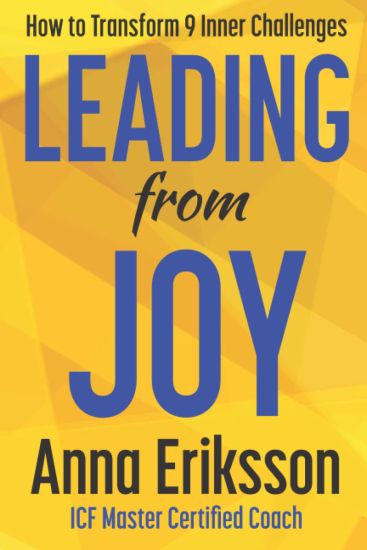
Are you a CEO or leader? Do you feel that your performance or leadership has hit a ceiling? With over 20 years' experience of coaching CEOs who felt just like you do, Anna Eriksson has now written the book that will take you through that barrier and beyond. Leading from Joy will guide you on a path to joy in your work, as a leader and in your personal life. Crammed full of case studies, 60 step-by-step practices, and insights, this book will untangle the 9 most common inner challenges that CEOs face and show you how to understand and overcome them. Start on the path to joy and become a more effective leader and happier person today. You will get: - How to transform yourself through 9 inner challenges - 11 real case studies from coaching CEOs - An easy step-by-step guide with 60 coaching practices - A sequence with where to start in your unique case - An understanding of what lies beyond courage - the levels of consciousness - A mindset that welcomes change and challenges as opportunities - Inner strength and awareness to cope with new challenges - The keys to becoming a team and creating a harmonious system - References both to academic science, the new sciences and spirit Anna Eriksson is a top ICF Master Certified Coach from Stockholm, Sweden, with over thirty years of coaching and personal development, trained by many of the best leaders and coaches in the world. Anna has been part of the growing coaching industry in Sweden - first as a chapter host for ICF, International Coach Federation, and later in the ICF Ethics Council. Anna is the owner of Avalona - Executive & Teamcoaching, in which she coaches CEOs and senior leaders to become more conscious and transform their inner challenges. Clients come from companies of all sizes in many sectors: technology, IT, financial, manufacturing industry, real estate, medicine, health care, insurance, architecture, consultant, logistic, higher education, the army, and more. In this book, you will meet many of them and see the results they achieved from coaching. She has a Bachelor of Social Sciences in Behavioural Research and a background as a researcher at the University of Stockholm, published in four reports. Anna writes for Medium, GROW Magazine and is also published in Bonnier's Leadership Handbook. Anna loves transformation and is in constant training herself. In 2019, she and her husband took on a new challenge - they sold everything and left Stockholm to live on a yacht and sail around the world. Her coaching continues, now digitally, from different places around the world.

Perfekt läsning för en tant mitt i livet.Uppföljaren till succéboken Äntligen tant! är här. Tant i balans är Anna Erikssons nya peppiga självhjälpsbok för skeptiska tanter. Med värme och skarpsynthet lyfter hon tanten och låter henne vara precis som hon är. Tantlivet är nämligen så genialiskt konstruerat att det går att kombinera med att vara till exempel partiledare, mamma, gotlänning, cyklist, körsångare eller landskapsarkitekt.Läs om tanten som rensar ut gifter ur skafferiet, försöker sova och kämpar mot det förbannade sockersuget. Eller om smala fönsterbrädor, konsten att promenera och naturlig mindfulness. Kolla sen om du är citytant eller lanttant i det fiffiga snabbtestet. Släpp loss och gör tant-i-balans-övningarna. Och få svar på var tanten möter kärleken nuförtiden.Låt din inre tant komma ut ur garderoben. Att bli tant är nämligen en bonus – som ett skönt sviktande fotinlägg som får din promenad att bli så mycket härligare. Filosofisk och inkännande fungerar Tant i balans på samma sätt som en stor ask självhjälpschoklad."I Tant i balans uppmanas tanten till att göra det som tanten mår bra av som till exempel att tillverka egen bodyscrub av kaffesump, att se på saker ur ett annat perspektiv (dammråttaperspektivet) och att äta rätt och få en god nattsömn. Att anordna tantretreat med trasmatteyoga står också på listan till att nå mindfulness. Perfekt läsning för en tant mitt i livet." BTJ

Why do some modern societies punish their offenders differently to others? Why are some more punitive and others more tolerant in their approach to offending and how can these differences be explained? Based on extensive historical analysis and fieldwork in the penal systems of England, Australia and New Zealand on the one hand and Finland, Norway and Sweden on the other, this book seeks to answer these questions. The book argues that the penal differences that currently exist between these two clusters of societies emanate from their early nineteenth-century social arrangements, when the Anglophone societies were dominated by exclusionary value systems that contrasted with the more inclusionary values of the Nordic countries. The development of their penal programmes over this two hundred year period, including the much earlier demise of the death penalty in the Nordic countries and significant differences between the respective prison rates and prison conditions of the two clusters, reflects the continuing influence of these values. Indeed, in the early 21st century these differences have become even more pronounced. John Pratt and Anna Eriksson offer a unique contribution to this topic of growing importance: comparative research in the history and sociology of punishment. This book will be of interest to those studying criminology, sociology, punishment, prison and penal policy, as well as professionals working in prisons or in the area of penal policy across the six societies that feature in the book.

Why do some modern societies punish their offenders differently to others? Why are some more punitive and others more tolerant in their approach to offending and how can these differences be explained? Based on extensive historical analysis and fieldwork in the penal systems of England, Australia and New Zealand on the one hand and Finland, Norway and Sweden on the other, this book seeks to answer these questions. The book argues that the penal differences that currently exist between these two clusters of societies emanate from their early nineteenth-century social arrangements, when the Anglophone societies were dominated by exclusionary value systems that contrasted with the more inclusionary values of the Nordic countries. The development of their penal programmes over this two hundred year period, including the much earlier demise of the death penalty in the Nordic countries and significant differences between the respective prison rates and prison conditions of the two clusters, reflects the continuing influence of these values. Indeed, in the early 21st century these differences have become even more pronounced. John Pratt and Anna Eriksson offer a unique contribution to this topic of growing importance: comparative research in the history and sociology of punishment. This book will be of interest to those studying criminology, sociology, punishment, prison and penal policy, as well as professionals working in prisons or in the area of penal policy across the six societies that feature in the book.

This book provides a unique account of the high-profile community-based restorative justice projects in the Republican and Loyalist communities that have emerged with the ending of the conflict in Northern Ireland. Unprecedented new partnerships between Republican communities and the Police Service of Northern Ireland have developed, and former IRA and UVF combatants and political ex prisoners have been amongst those involved. Community restorative justice projects have been central to these groundbreaking changes, acting as both facilitator and transformer. Based on an extensive range of interviews with key players in this process, many of them former combatants, and unique access to the different community projects this books tells a fascinating story. At the same time this book explores the wider implications for restorative justice internationally, highlighting the important lessons for partnerships between police and community in other jurisdictions, particularly in the high-crime alienated neighbourhoods which exist in most western societies, as well as transitional ones. It also offers a critical analysis of the roles of both community and state and the tensions around the ownership of justice, and a critical, unromanticized assessment of the role of restorative justice in the community.

This book provides a unique account of the high-profile community-based restorative justice projects in the Republican and Loyalist communities that have emerged with the ending of the conflict in Northern Ireland. Unprecedented new partnerships between Republican communities and the Police Service of Northern Ireland have developed, and former IRA and UVF combatants and political ex prisoners have been amongst those involved. Community restorative justice projects have been central to these groundbreaking changes, acting as both facilitator and transformer. Based on an extensive range of interviews with key players in this process, many of them former combatants, and unique access to the different community projects this books tells a fascinating story. At the same time this book explores the wider implications for restorative justice internationally, highlighting the important lessons for partnerships between police and community in other jurisdictions, particularly in the high-crime alienated neighbourhoods which exist in most western societies, as well as transitional ones. It also offers a critical analysis of the roles of both community and state and the tensions around the ownership of justice, and a critical, unromanticized assessment of the role of restorative justice in the community.