Kirjojen hintavertailu. Mukana 12 595 353 kirjaa ja 12 kauppaa.

Kirjailija

Anna Harwell Celenza

Kirjat ja teokset yhdessä paikassa: 9 kirjaa, julkaisuja vuosilta 2004-2026, suosituimpien joukossa Jazz Italian Style. Vertaile teosten hintoja ja tarkista saatavuus suomalaisista kirjakaupoista.

9 kirjaa

Kirjojen julkaisuhaarukka 2004-2026.

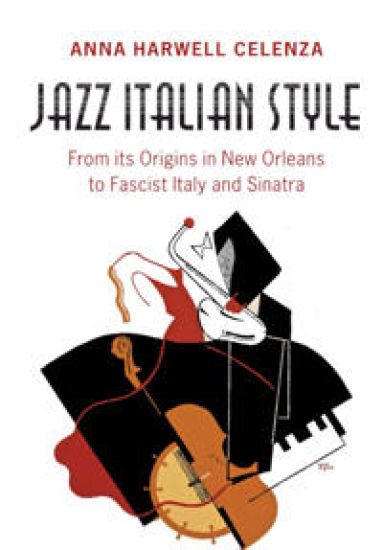
Jazz Italian Style

Jazz Italian Style

Anna Harwell Celenza

Cambridge University Press
2018
pokkari
Jazz Italian Style explores a complex era in music history, when politics and popular culture collided with national identity and technology. When jazz arrived in Italy at the conclusion of World War I, it quickly became part of the local music culture. In Italy, thanks to the gramophone and radio, many Italian listeners paid little attention to a performer's national and ethnic identity. Nick LaRocca (Italian-American), Gorni Kramer (Italian), the Trio Lescano (Jewish-Dutch), and Louis Armstrong (African-American), to name a few, all found equal footing in the Italian soundscape. The book reveals how Italians made jazz their own, and how, by the mid-1930s, a genre of jazz distinguishable from American varieties and supported by Mussolini began to flourish in Northern Italy and in its turn influenced Italian-American musicians. Most importantly, the book recovers a lost repertoire and an array of musicians whose stories and performances are compelling and well worth remembering.
Jazz Italian Style

Jazz Italian Style

Anna Harwell Celenza

Cambridge University Press
2017
sidottu
Jazz Italian Style explores a complex era in music history, when politics and popular culture collided with national identity and technology. When jazz arrived in Italy at the conclusion of World War I, it quickly became part of the local music culture. In Italy, thanks to the gramophone and radio, many Italian listeners paid little attention to a performer's national and ethnic identity. Nick LaRocca (Italian-American), Gorni Kramer (Italian), the Trio Lescano (Jewish-Dutch), and Louis Armstrong (African-American), to name a few, all found equal footing in the Italian soundscape. The book reveals how Italians made jazz their own, and how, by the mid-1930s, a genre of jazz distinguishable from American varieties and supported by Mussolini began to flourish in Northern Italy and in its turn influenced Italian-American musicians. Most importantly, the book recovers a lost repertoire and an array of musicians whose stories and performances are compelling and well worth remembering.

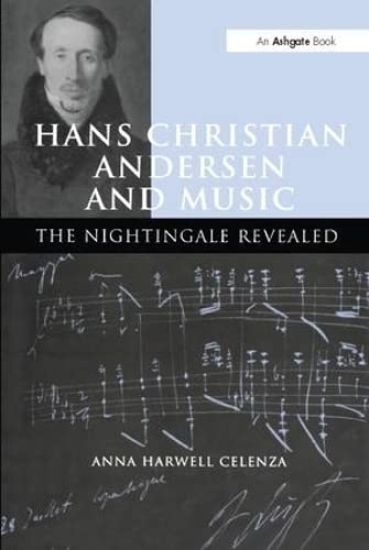
Hans Christian Andersen and Music

Hans Christian Andersen and Music

Anna Harwell Celenza

Routledge
2017
nidottu
Hans Christian Andersen was the most prominent Danish author of the nineteenth century. Now known primarily for his fairy tales, during his lifetime he was equally famous for his novels, travelogues, poetry, and stage works, and it was through these genres that he most often reflected on the world around him. With the bicentennial of Andersen's birth in 2005, there is still much about the writer that is not yet common knowledge. This book explores a single aspect of that void - his interest in and relationship to the musical culture of nineteenth-century Europe. Why look to Andersen for information about music? To begin, Andersen had a musical background. He enjoyed a brief career as an opera singer and dancer at the Royal Theater in Copenhagen, and in later years he went on to produce opera libretti for the Danish and German stage. Andersen was also an avid music devotee. He made thirty major European tours during his seventy years, and on each of these trips he regularly attended opera and concert performances, recording his impressions in a series of travel diaries. In short, Andersen was a well-informed listener, and as this book reveals, his reflections on the music of his age serve as valuable sources for the study of music reception in the nineteenth century. Over the course of his life, Andersen embraced and then later rejected performers such as Maria Malibran, Franz Liszt, and Ole Bull, and his interest in opera and instrumental music underwent a series of dramatic transformations. In his final years, Andersen promoted figures as disparate as Wagner and Mendelssohn, while strongly objecting to Brahms. Although such changes in taste might be interpreted as indiscriminate by modern-day readers, this study shows that such shifts in opinion were not contradictory, but rather quite logical given the social and cultural climate of the age.
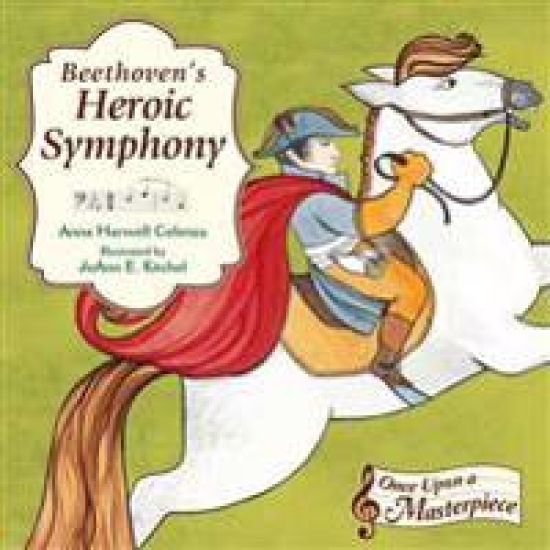
Beethoven's Heroic Symphony

Beethoven's Heroic Symphony

ANNA HARWELL CELENZA

Charlesbridge Publishing,U.S.
2016
sidottu
Beethoven s Third Symphony was written as Beethoven was struggling with his advancing deafness. Meant as a celebration of Napoleon s victories, the four movements reflected Bonaparte s courage and heroism. Soon after Beethoven completed the work, he discovered Napolean s treachery in declaring himself Emperor of France, and the composer considered destroying the composition. Instead, "The Bonaparte Symphony" was later renamed the "Eroica," or "Heroic Symphony.""
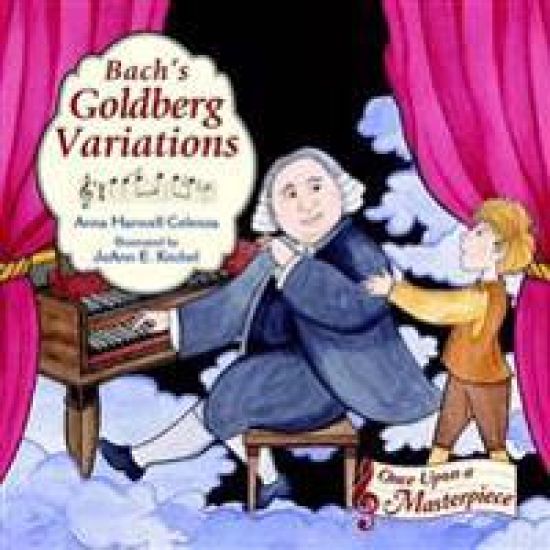
Bach's Goldberg Variations

Bach's Goldberg Variations

ANNA HARWELL CELENZA

Charlesbridge Publishing,U.S.
2016
sidottu
Johann Sebastian Bach created some of the most significant music in history, including A Keyboard Practice Consisting of an Aria with Thirty Variations for the Harpsichord commonly known as the Goldberg Variations. Goldberg is Johann Gottlieb Goldberg, a young musician in the court of Count Keyserlingk, a Russian ambassador living in Dresden. It isn t known for certain why Bach s difficult composition was named for the young man, but Anna Harwell Celenza gives us one possible story based on extensive research."
Haydn's Farewell Symphony

Haydn's Farewell Symphony

ANNA HARWELL CELENZA

Charlesbridge Publishing,U.S.
2016
sidottu
Anna Harwell Celenza's engaging fictionalized telling of the story behind Franz Joseph Haydn's famous symphony is a perfect introduction to classical music and its power. THE FAREWELL SYMPHONY brings to life a long summer spent at Esterh za, the summer palace of Prince Nicholas of Esterh zy. The blustering, bellowing prince entertained hundreds of guests at his rural retreat and demanded music for every occasion. As the months passed, Haydn was kept very busy writing and performing music for parties, balls, dinners, and even walks in the gardens. His orchestra members became homesick and missed their families. The anger, frustration, and longing of the musicians is expressed beautifully in the symphony born of the clever mind of Joseph Haydn who used it to convince Prince Nicholas that it was time to go home. Wonderfully expressive illustrations by JoAnn E. Kitchel capture all the comedy and pathos of this unique symphony. Beautifully interpretive motifs and borders convey the setting and emotion of the story mirroring the structure of the symphony with the repetitive use of sets of four. Making classical music and history come alive with color and character, THE FAREWELL SYMPHONY ensures a place for the arts in the hearts and minds of children.
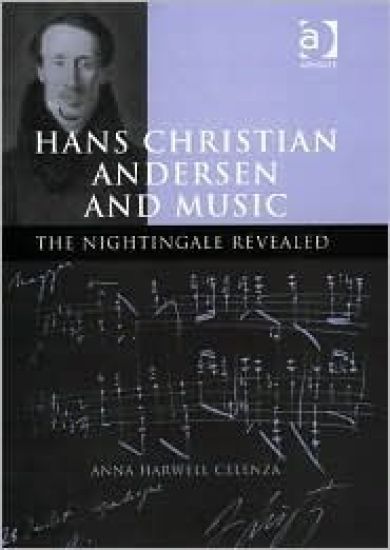
Hans Christian Andersen and Music

Hans Christian Andersen and Music

Anna Harwell Celenza

Ashgate Publishing Limited
2004
sidottu
Hans Christian Andersen was the most prominent Danish author of the nineteenth century. Now known primarily for his fairy tales, during his lifetime he was equally famous for his novels, travelogues, poetry, and stage works, and it was through these genres that he most often reflected on the world around him. With the bicentennial of Andersen's birth in 2005, there is still much about the writer that is not yet common knowledge. This book explores a single aspect of that void - his interest in and relationship to the musical culture of nineteenth-century Europe. Why look to Andersen for information about music? To begin, Andersen had a musical background. He enjoyed a brief career as an opera singer and dancer at the Royal Theater in Copenhagen, and in later years he went on to produce opera libretti for the Danish and German stage. Andersen was also an avid music devotee. He made thirty major European tours during his seventy years, and on each of these trips he regularly attended opera and concert performances, recording his impressions in a series of travel diaries. In short, Andersen was a well-informed listener, and as this book reveals, his reflections on the music of his age serve as valuable sources for the study of music reception in the nineteenth century. Over the course of his life, Andersen embraced and then later rejected performers such as Maria Malibran, Franz Liszt, and Ole Bull, and his interest in opera and instrumental music underwent a series of dramatic transformations. In his final years, Andersen promoted figures as disparate as Wagner and Mendelssohn, while strongly objecting to Brahms. Although such changes in taste might be interpreted as indiscriminate by modern-day readers, this study shows that such shifts in opinion were not contradictory, but rather quite logical given the social and cultural climate of the age.