
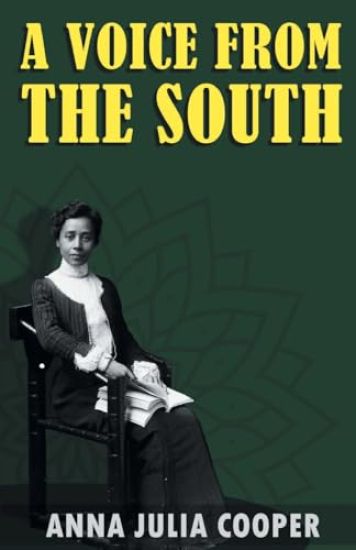
Kirjailija
Anna Julia Cooper
Kirjat ja teokset yhdessä paikassa: 8 kirjaa, julkaisuja vuosilta 1969-2025, suosituimpien joukossa A Voice from the South. Vertaile teosten hintoja ja tarkista saatavuus suomalaisista kirjakaupoista.
8 kirjaa
Kirjojen julkaisuhaarukka 1969-2025.
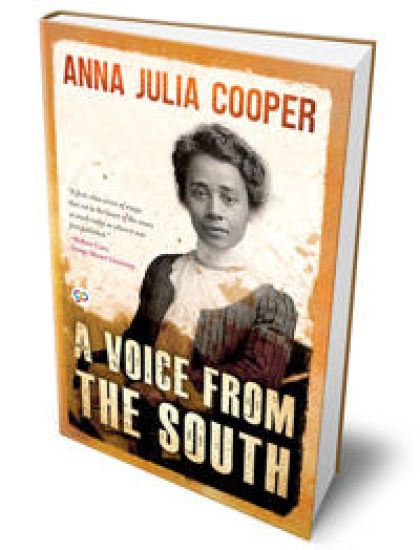
First published in 1892, 'A Voice from the South' is a collection of essays focusing on racial progress and women's rights by Anna Julia Cooper (1858-1964), an American author, educator, sociologist, speaker, Black liberation activist, and one of the most distinguished African-American scholars in United States history. A noted member of Washington, D.C.'s African-American community, Anna Julia Cooper rose to prominence as a leading scholar, educator, and activist at the end of the nineteenth century. Born into slavery, she was the fourth African-American woman to earn a doctoral degree, receiving a Ph.D. in history from the University of Paris-Sorbonne in 1924. It is regarded as the first statement of black feminism. Despite their imprint on nineteenth-century social thought, these essays possess an urgent, modern tone, characterized by a focus on debate and a scintillating wit. Topics include the importance of women's education as well as African Americans' economic roles and their literary representation.

A collection of essential writings from the iconic foremother of Black intellectual history, feminism and activismThe Portable Anna Julia Cooper will introduce a new generation of readers to an educator, public intellectual and community activist whose prescient insights and eloquent prose underlie some of the most important developments in modern American intellectual thought and African-American social and political activism.This volume brings together, for the first time, Anna Julia Cooper's major collection of essays, A Voice from the South, along with several previously unpublished poems, plays, journalism and selected correspondences, including over thirty previously unpublished letters between Anna Julia Cooper and W. E. B. Du Bois.

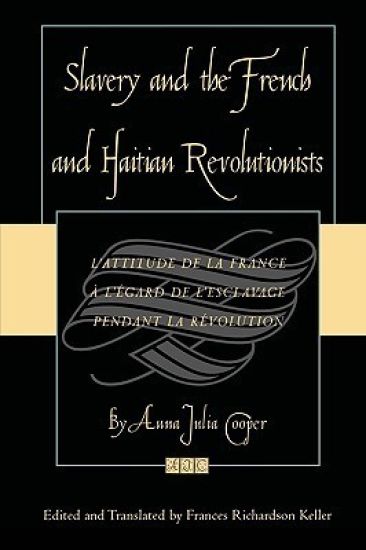
Slavery and the French and Haitian Revolutionists
Anna Julia Cooper
Rowman Littlefield Publishers
2006
nidottu
On March 23, 1925 at the age of 66, Anna Julia Cooper stood ready to defend her dissertation before a review committee at the University of Paris. Cooper’s remarkable intellectual achievement was the product of years of hard work and determination, a highly unusual journey for a child born to an enslaved mother in 1858. Her dissertation, "L'attitude de la France à L'égard de L'esclavage pendant la Révolution," offered a bold interpretation of the French Revolution. In it, Cooper examined the relations between the 18th century revolutionists in Paris and the representatives and inhabitants of the richest of French colonies, San Domingue. She argued that the legalized slave trade became a critical issue in the struggle over the rights of man during the French Revolution and that when the revolutionists of Paris deflected the question of slavery in San Domingue, the people of France lost the opportunity to escalate their liberty and their equality. Cooper insisted that to understand the French Revolution and its repercussions, it is necessary to add the dimension of race. As an African American woman, her work provides readers with a unique and powerful perspective on these turbulent events during the French and Haitian Revolutions. Historian Frances R. Keller now makes this unique work available in English for students and scholars alike. Through her interpretive essays, Keller places Cooper’s dissertation in the context of her life and scholarship. Keller also provides an essential historical look at the international events that led up to the bloody revolutions in France and Haiti.
Considered one of the original texts foretelling the black feminist movement, this collection of essays, first published in 1892, offers an unparalleled view into the thought of black women writers in nineteenth-century America. A leading black spokeswoman of her time, Anna Julia Cooper came of age during a conservative wave in the black community, a time when men completely dominated African-American intellectual and political ideas. In these essays, Cooper criticizes black men for securing higher education for themselves through the ministry, while erecting roadblocks to deny women access to those same opportunities, and denounces the elitism and provinciality of the white women's movement. Passionately committed to women's independence, Cooper espoused higher education as the essential key to ending women's physical, emotional, and economic dependence on men.
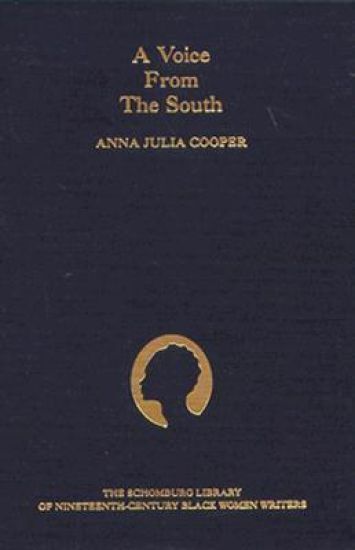
This collection of essays (1891) is an unparalleled statement of black feminist thought in the nineteenth century, and is considered to be one of the original texts of the black feminist movement. Cooper came of age in a period of conservatism in the black community, a time when Afro-American intellectual and political ideas were dominated by men. At the heart of her work is a belief that the status of black women, the most oppressed group of all, is the only true measure of collective racial progress.

At the close of the 19th century, a black woman of the South presents womanhood as a vital element in the regeneration and progress of her race.