Kirjojen hintavertailu. Mukana 12 390 323 kirjaa ja 12 kauppaa.

Kirjailija

Anna Juliane Heinrich

Kirjat ja teokset yhdessä paikassa: 3 kirjaa, julkaisuja vuosilta 2018-2024, suosituimpien joukossa The Evolution of Young People’s Spatial Knowledge. Vertaile teosten hintoja ja tarkista saatavuus suomalaisista kirjakaupoista.

3 kirjaa

Kirjojen julkaisuhaarukka 2018-2024.

The Evolution of Young People’s Spatial Knowledge

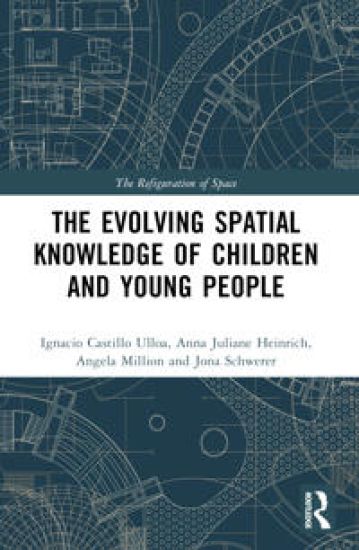
The Evolution of Young People’s Spatial Knowledge

Ignacio Castillo Ulloa; Anna Juliane Heinrich; Angela Million; Jona Schwerer

TAYLOR FRANCIS LTD
2024
nidottu
Young people imagine, perceive, experience, talk about, use, and produce space in a wide variety of ways. In doing so, they acquire and produce stocks of spatial knowledge. A quite dynamic and ever-changing process by nature, young people’s production and acquisition of spatial knowledge are susceptible to many kinds of conditions—from those that shape their everyday routines to those that constitute historical turning points. Against this backdrop and drawing on a qualitative metaanalysis, the authors set out to discover what changes the spatial knowledge of young people has undergone during the past five decades. To that end, sixty published studies were sampled, analyzed, and synthesized to offer a meta-interpretation in terms of both the evolution of young people’s spatial knowledge and the refiguration of spaces. As such, this book will appeal to scholars conducting spatial research on childhood and youth as well as scholars interested in urban studies from diverse disciplines such as sociology, anthropology, geography, architecture, urban planning, and design.The Open Access version of this book, available at http://www.taylorfrancis.com, has been made available under a Creative Commons Attribution-Non Commercial-No Derivatives 4.0 license. The Open Access fee was funded by Technische Universität Berlin
The Evolution of Young People’s Spatial Knowledge

The Evolution of Young People’s Spatial Knowledge

Ignacio Castillo Ulloa; Anna Juliane Heinrich; Angela Million; Jona Schwerer

TAYLOR FRANCIS LTD
2023
sidottu
Young people imagine, perceive, experience, talk about, use, and produce space in a wide variety of ways. In doing so, they acquire and produce stocks of spatial knowledge. A quite dynamic and ever-changing process by nature, young people’s production and acquisition of spatial knowledge are susceptible to many kinds of conditions—from those that shape their everyday routines to those that constitute historical turning points. Against this backdrop and drawing on a qualitative metaanalysis, the authors set out to discover what changes the spatial knowledge of young people has undergone during the past five decades. To that end, sixty published studies were sampled, analyzed, and synthesized to offer a meta-interpretation in terms of both the evolution of young people’s spatial knowledge and the refiguration of spaces. As such, this book will appeal to scholars conducting spatial research on childhood and youth as well as scholars interested in urban studies from diverse disciplines such as sociology, anthropology, geography, architecture, urban planning, and design.The Open Access version of this book, available at http://www.taylorfrancis.com, has been made available under a Creative Commons Attribution-Non Commercial-No Derivatives 4.0 license. The Open Access fee was funded by Technische Universität Berlin
Die sozialräumliche Bildungslandschaft Campus Rütli in Berlin-Neukölln
Anna Juliane Heinrich geht der Frage nach, warum Stadtplaner und Pädagogen an der Umsetzung sozialräumlicher Bildungslandschaften mitwirken. Für den Campus Rütli in Berlin-Neukölln untersucht sie empirisch Begründungen und Bedeutungszuschreibungen gestaltender Akteure. Im Ergebnis rekonstruiert sie strategische Ansätze von sozialräumlichen Bildungslandschaften sowie den Leitgedanken der Mitwirkenden, wodurch der Mehrwert dieses spezifischen Typus von Bildungslandschaft deutlich wird. Die Bedeutungszuschreibungen der Gestalter werden zu tragenden Motiven sozialräumlicher Bildungslandschaften verdichtet und der Campus Rütli als Vorhaben zwischen ökonomischer Verwertungslogik und sozialer Gerechtigkeit diskutiert.