Kirjojen hintavertailu. Mukana 12 657 676 kirjaa ja 12 kauppaa.

Kirjailija

Anna Mae Duane

Kirjat ja teokset yhdessä paikassa: 5 kirjaa, julkaisuja vuosilta 2010-2022, suosituimpien joukossa Educated for Freedom. Vertaile teosten hintoja ja tarkista saatavuus suomalaisista kirjakaupoista.

5 kirjaa

Kirjojen julkaisuhaarukka 2010-2022.

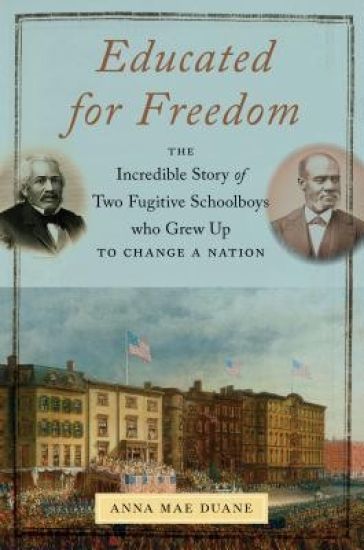
Educated for Freedom

Educated for Freedom

Anna Mae Duane

NEW YORK UNIVERSITY PRESS
2022
pokkari
The powerful story of two young men who changed the national debate about slavery In the 1820s, few Americans could imagine a viable future for black children. Even abolitionists saw just two options for African American youth: permanent subjection or exile. Educated for Freedom tells the story of James McCune Smith and Henry Highland Garnet, two black children who came of age and into freedom as their country struggled to grow from a slave nation into a free country. Smith and Garnet met as schoolboys at the Mulberry Street New York African Free School, an educational experiment created by founding fathers who believed in freedom's power to transform the country. Smith and Garnet's achievements were near-miraculous in a nation that refused to acknowledge black talent or potential. The sons of enslaved mothers, these schoolboy friends would go on to travel the world, meet Revolutionary War heroes, publish in medical journals, address Congress, and speak before cheering crowds of thousands. The lessons they took from their days at the New York African Free School #2 shed light on how antebellum Americans viewed black children as symbols of America's possible future. The story of their lives, their work, and their friendship testifies to the imagination and activism of the free black community that shaped the national journey toward freedom.

Furious Feminisms

Furious Feminisms

Alexis L. Boylan; Anna Mae Duane; Michael Gill; Barbara Gurr

University of Minnesota Press
2020
pokkari
A provocative peek into this complicated film as a space for subversion, activism, and imaginative powerWhile both fans and foes point to Mad Max: Fury Road’s feminist credentials, Furious Feminisms asks: is there really anything feminist or radical happening on the screen? The four authors-from backgrounds in art history, American literature, disability studies, and sociology-ask what is possible, desirable, or damaging in theorizing feminism in the contested landscape of the twenty-first century. Can we find beauty in the Anthropocene? Can power be wrested from a violent system without employing and perpetuating violence? This experiment in collaborative criticism weaves multiple threads of dialogue together to offer a fresh perspective on our current cultural moment. Forerunners: Ideas First Short books of thought-in-process scholarship, where intense analysis, questioning, and speculation take the lead
Educated for Freedom

Educated for Freedom

Anna Mae Duane

New York University Press
2020
sidottu
The powerful story of two young men who changed the national debate about slavery In the 1820s, few Americans could imagine a viable future for black children. Even abolitionists saw just two options for African American youth: permanent subjection or exile. Educated for Freedom tells the story of James McCune Smith and Henry Highland Garnet, two black children who came of age and into freedom as their country struggled to grow from a slave nation into a free country. Smith and Garnet met as schoolboys at the Mulberry Street New York African Free School, an educational experiment created by founding fathers who believed in freedom's power to transform the country. Smith and Garnet's achievements were near-miraculous in a nation that refused to acknowledge black talent or potential. The sons of enslaved mothers, these schoolboy friends would go on to travel the world, meet Revolutionary War heroes, publish in medical journals, address Congress, and speak before cheering crowds of thousands. The lessons they took from their days at the New York African Free School #2 shed light on how antebellum Americans viewed black children as symbols of America's possible future. The story of their lives, their work, and their friendship testifies to the imagination and activism of the free black community that shaped the national journey toward freedom.
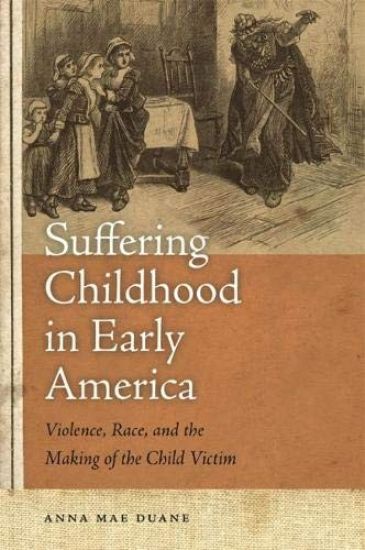
Suffering Childhood in Early America

Suffering Childhood in Early America

Anna Mae Duane

University of Georgia Press
2011
pokkari
Nothing tugs on American heartstrings more than an image of a suffering child. Anna Mae Duane goes back to the nation’s violent beginnings to examine how the ideal of childhood in early America was fundamental to forging concepts of ethnicity, race, and gender. Duane argues that children had long been used to symbolize subservience, but in the New World those old associations took on more meaning. Drawing on a wide range of early American writing, she explores how the figure of a suffering child accrued political weight as the work of infantilization connected the child to Native Americans, slaves, and women.In the making of the young nation, the figure of the child emerged as a vital conceptual tool for coming to terms with the effects of cultural and colonial violence, and with time childhood became freighted with associations of vulnerability, suffering, and victimhood. As Duane looks at how ideas about the child and childhood were manipulated by the colonizers and the colonized alike, she reveals a powerful line of colonizing logic in which dependence and vulnerability are assigned great emotional weight. When early Americans sought to make sense of intercultural contact—and the conflict that often resulted—they used the figure of the child to help displace their own fear of lost control and shifting power.
Suffering Childhood in Early America

Suffering Childhood in Early America

Anna Mae Duane

University of Georgia Press
2010
sidottu
Nothing tugs on American heartstrings more than an image of a suffering child. Anna Mae Duane goes back to the nation’s violent beginnings to examine how the ideal of childhood in early America was fundamental to forging concepts of ethnicity, race, and gender. Duane argues that children had long been used to symbolize subservience, but in the New World those old associations took on more meaning. Drawing on a wide range of early American writing, she explores how the figure of a suffering child accrued political weight as the work of infantilization connected the child to Native Americans, slaves, and women.In the making of the young nation, the figure of the child emerged as a vital conceptual tool for coming to terms with the effects of cultural and colonial violence, and with time childhood became freighted with associations of vulnerability, suffering, and victimhood. As Duane looks at how ideas about the child and childhood were manipulated by the colonizers and the colonized alike, she reveals a powerful line of colonizing logic in which dependence and vulnerability are assigned great emotional weight. When early Americans sought to make sense of intercultural contact—and the conflict that often resulted—they used the figure of the child to help displace their own fear of lost control and shifting power.