Kirjojen hintavertailu. Mukana 12 390 323 kirjaa ja 12 kauppaa.

Kirjailija

Anna Skoubourdis

Kirjat ja teokset yhdessä paikassa: 140 kirjaa, julkaisuja vuosilta 2018-2024, suosituimpien joukossa The Life of St Daniel the Stylite. Vertaile teosten hintoja ja tarkista saatavuus suomalaisista kirjakaupoista.

140 kirjaa

Kirjojen julkaisuhaarukka 2018-2024.

The Life of St Daniel the Stylite

The Life of St Daniel the Stylite

St George Monastery; Anna Skoubourdis; Monaxi Agapi

Lulu.com
2020
pokkari
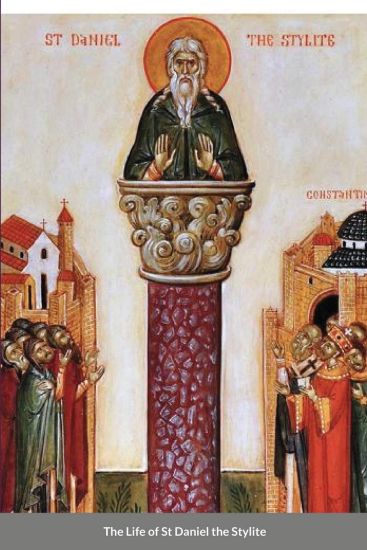
St. Daniel, the Stylite, Priest. Feast day is December 11. Daniel was born in Maratha, Syria in 409 and became a monk in nearby Samosata on the Upper Euphrates. He learned of St. Simeon Stylites the Elder, living on a pillar at Antioch and got to see him twice. At the age of forty-two, Daniel decided that he too wanted to become a stylite (from the Greek word "stylos", meaning pillar) and live on a pillar at a spot near Constantinople. Therefore, Emperor Leo I, built a series of pillars with a platform on top for him, and Daniel was ordained there by St. Gennadius. The saint quickly became an attraction for the people. He celebrated the Eucharist on his pillar, preached sermons, dispensed spiritual advice, and cured the sick who were brought up to him. He also gave prudent counsel to Emperors Leo and Zeno and the patriarch of Constantinople. All the while, Daniel lived his particular type of pillar spirituality. He came down from his perch only once in thirty-three years - to turn Emperor Baliscus away from backing the heresy of Monophysitism. Daniel died in 493 and became the best known Stylite after St. Simeon Stylites the Elder. The life of St. Daniel the Stylite is an apt reminder that there are many ways to live the spiritual life. All of us have our own way to be close to God every day.
The Explanation of Philippians

The Explanation of Philippians

Blessed Theophylact Of Ochrid; Nun Christina; Anna Skoubourdis

Lulu.com
2024
pokkari
Written 900 years ago by Blessed Theophylact of Ochrid, these commentaries distill the essence of St. John Chrysostom's preaching-and that of other great fathers of the patristic era-many centuries before his own time. Blessed Theophylact has given us a " Bible study" of ancient and divine origin, untouched by contemporary opinions and discussions. It is in fact, timeless and has proven its value to every generation of Orthodox Christians during the past nine centuries.
Supplicatory Canon to Saint Eleftherios Greek and English

Supplicatory Canon to Saint Eleftherios Greek and English

Nun Christina; Anna Skoubourdis

Lulu Press Inc
2023
pokkari
Greek and English on opposite pages. Saint Eleutherius, the son of an illustrious Roman citizen, was raised in Christian piety by his mother. His virtue was such that at the age twenty, he had been elevated to bishop of Illyria. In the reign of the emperor Hadrian, Saint Eleutherius was tortured for his bold preaching about Christ, then was beheaded at Rome with his mother Evanthia. The Eparch Caribus, who had tortured Saint Eleutherius, also came to believe in Christ and was executed.
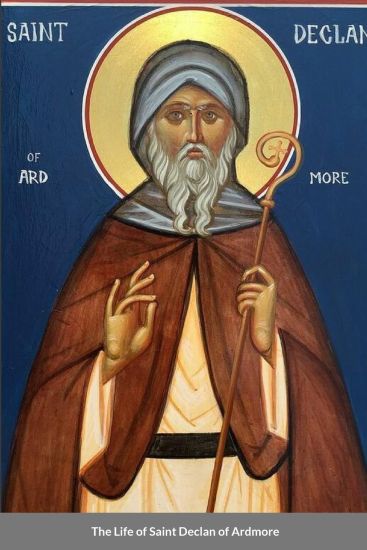
The Life of Saint Declan of Ardmore

The Life of Saint Declan of Ardmore

Nun Christina; Anna Skoubourdis

Lulu.com
2023
pokkari
Decl n of Ardmore (died 5th century), was an early Irish saint of the D isi Muman, who was remembered for having converted the D isi in the late 5th century and for having founded the monastery of Ardmore. Like Ailbe of Emly, Ciar n of Saigir and Abb n of Moyarney, Decl n is presented as a Munster saint who preceded Saint Patrick in bringing Christianity to Ireland. He was regarded as a patron saint of the D isi of East Munster.
Supplicatory Canon to Saint Sabba the Enlightened

Supplicatory Canon to Saint Sabba the Enlightened

Nun Christina; Anna Skoubourdis

Lulu.com
2023
pokkari
Saint Savva the Sanctified was born in the fifth century at Cappadocia of pious Christian parents, John and Sophia, and his father was a military commander. Journeying to Alexandria on military matters, John and Sophia left their five-year-old son Savva in the care of an uncle. When the boy was eight years old, he entered the nearby Monastery of Saint Flavian. The gifted child quickly learned to read and became an expert on the Holy Scriptures. His parents urged Saint Savva to return to the world and enter into marriage, but all in vain. When he was seventeen years old he was tonsured as a monk, and attained such perfection in fasting and prayer that God found him worthy of the gift of working miracles. After spending ten years at the Monastery of Saint Flavian, he went to Jerusalem, and from there to the Monastery of Saint Euthymios the Great (January 20). Saint Euthymios, however, sent the young man to Abba Theoktistos, the head of a nearby monastery with a strict cenobitic Rule. Saint Savva lived in obedience at this monastery until the age of thirty.
Supplicatory Canon to Saint Gerasimos of Kefalonia

Supplicatory Canon to Saint Gerasimos of Kefalonia

Nun Christina; Anna Skoubourdis

Lulu.com
2023
pokkari
St. Gerasimos is a wonder-working saint whose relics have remained incorrupt for nearly 500 years after his falling asleep His relics are on the island of Kefalonia, on the western shore of Greece, where he founded a women's monastery. The holy hierarch, Saint Dionysius, who was born and reared on Zakynthos, was the son of pious and wealthy parents, Mocius and Paulina by name. In his youth he entered the ancient monastery of the Strophada Islands, which lie south of Zakynthos, and there he donned the monastic habit. Later, he was appointed Archbishop of Aegina, and adorned its throne for a considerable time. Thereafter he returned to his homeland. One incident in his life especially reveals to what virtue he attained. A man came to him in desperation, witnessing that he had committed a murder, and was being pursued by the slain man's family. He asked Saint Dionysius to give him refuge. The Saint agreed to this, upon learning that it was his own brother whom the man had slain, he said nothing, but concealing the agony of his grief, hid him. When the Saint's kinsmen arrived at the monastery, he told them that the Murderer had gone by such and such a way. When they had departed, he admonished the man concerning the gravity of his sin, instructed him in repentance, and sent him off in peace having forgiven him his brother's murder. According to local tradition, this man later returned and became a monk at this same monastery. Saint Dionysius reposed in peace in 1621, leaving behind his sacred and incorrupt relics as a treasure for his fellow citizens.
Supplicatory Canon and Akathist to Saint Athanasius the Great
Athanasius was a Christian theologian, a Church Father, the chief defender of Trinitarianism against Arianism, and a noted Egyptian Christian leader of the fourth century. Conflict with Arius and Arianism, as well as with successive Roman emperors, shaped Athanasius' career. In 325, at age 27, Athanasius began his leading role against the Arians as a deacon and assistant to Bishop Alexander of Alexandria during the First Council of Nicaea. Roman Emperor Constantine the Great had convened the council in May-August 325 to address the Arian position that the Son of God, Jesus of Nazareth, is of a distinct substance from the Father.
Supplicatory Canon and Akathist to Saint Paraskevi of Rome

Supplicatory Canon and Akathist to Saint Paraskevi of Rome

Nun Christina; Anna Skoubourdis

Lulu.com
2023
pokkari
The holy and glorious Virgin-Martyr Saint Paraskevi (also Paraskeva) was arrested during the reign of the Roman Emperor Antoninus Pius (r. A.D. 138-161) under the penalty of refusing to worship idols and adhering to the state pagan religion. After enduring many tortures, she was eventually released by the emperor, continuing to profess Christ. She was eventually tortured and beheaded by the Roman governor Tarasius in the year 180. The Church commemorates her on July 26.
Supplicatory Canon and Akathist to Saint Xenia Fool for Christ of St Petersburg
Little is known of her early life. Neither the dates of her birth nor of her death are known. Her birth is believed to have been about 1731 and her death about 1803. The wife of Colonel Andrei Feodorovich Petrov, who served as a court chorister, Xenia fell into great grief upon the death of her husband when she was 26 years old. Appearing to have lost her mind from her grief, Xenia distributed her possessions to the poor, and keeping and dressing only in the clothes of her husband she wandered the streets of St Petersburg among the paupers. She called herself by her husband's name: Andrei Feodorovich. Her life was centered on God, seeking protection and comfort only in Him. During the nights, she refused refuge and went into the fields where she prayed through the nights. When relatives of Xenia tried to help her with necessities she replied, "I do not need anything." The people of St. Petersburg came to love her as she placed the Kingdom of Heaven before earthly possessions. The people considered her presence in their homes as good signs. Her acceptance of services and bread from merchants, however small, brought them great sales as their customers, who loved the saintly Xenia, frequented those who helped her. Xenia possessed the gift of clairvoyance. She foretold the deaths of the Empress Elizabeth, in 1761, and of the imprisoned John IV Antonovich, the great-great-grandson of Tsar Alexis, in 1764. After her death her grave became a place of pilgrimage. Portions of the dirt from her grave brought healing for many of the pilgrims.