Kirjojen hintavertailu. Mukana 12 207 144 kirjaa ja 12 kauppaa.

Kirjailija

Anna Sun

Kirjat ja teokset yhdessä paikassa: 4 kirjaa, julkaisuja vuosilta 2013-2023, suosituimpien joukossa Against Happiness. Vertaile teosten hintoja ja tarkista saatavuus suomalaisista kirjakaupoista.

4 kirjaa

Kirjojen julkaisuhaarukka 2013-2023.

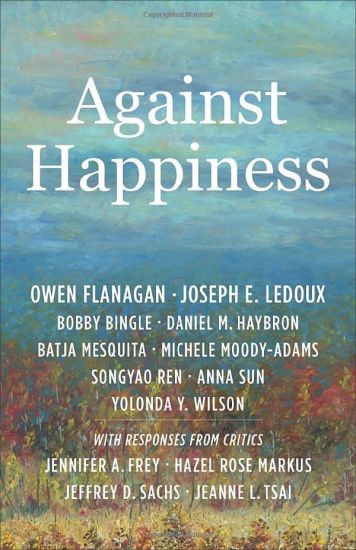
Against Happiness

Against Happiness

Owen Flanagan; Joseph E. LeDoux; Bobby Bingle; Daniel M. Haybron; Batja Mesquita; Michele Moody-Adams; Songyao Ren; Anna Sun; Yolonda Y. Wilson

Columbia University Press
2023
sidottu
The “happiness agenda” is a worldwide movement that claims that happiness is the highest good, happiness can be measured, and public policy should promote happiness. Against Happiness is a thorough and powerful critique of this program, revealing the flaws of its concept of happiness and advocating a renewed focus on equality and justice.Written by an interdisciplinary team of authors, this book provides both theoretical and empirical analysis of the limitations of the happiness agenda. The authors emphasize that this movement draws on a parochial, Western-centric philosophical basis and demographic sample. They show that happiness defined as subjective satisfaction or a surplus of positive emotions bears little resemblance to the richer and more nuanced concepts of the good life found in many world traditions. Cross-cultural philosophy, comparative theology, and social and cultural psychology all teach that cultures and subcultures vary in how much value they place on life satisfaction or feeling happy. Furthermore, the ideas promoted by the happiness agenda can compete with rights, justice, sustainability, and equality—and even conceal racial and gender injustice.Against Happiness argues that a better way forward requires integration of cross-cultural philosophical, ethical, and political thought with critical social science. Ultimately, the authors contend, happiness should be a secondary goal—worth pursuing only if it is contingent on the demands of justice.
Against Happiness

Against Happiness

Owen Flanagan; Joseph E. LeDoux; Bobby Bingle; Daniel M. Haybron; Batja Mesquita; Michele Moody-Adams; Songyao Ren; Anna Sun; Yolonda Y. Wilson

Columbia University Press
2023
pokkari
The “happiness agenda” is a worldwide movement that claims that happiness is the highest good, happiness can be measured, and public policy should promote happiness. Against Happiness is a thorough and powerful critique of this program, revealing the flaws of its concept of happiness and advocating a renewed focus on equality and justice.Written by an interdisciplinary team of authors, this book provides both theoretical and empirical analysis of the limitations of the happiness agenda. The authors emphasize that this movement draws on a parochial, Western-centric philosophical basis and demographic sample. They show that happiness defined as subjective satisfaction or a surplus of positive emotions bears little resemblance to the richer and more nuanced concepts of the good life found in many world traditions. Cross-cultural philosophy, comparative theology, and social and cultural psychology all teach that cultures and subcultures vary in how much value they place on life satisfaction or feeling happy. Furthermore, the ideas promoted by the happiness agenda can compete with rights, justice, sustainability, and equality—and even conceal racial and gender injustice.Against Happiness argues that a better way forward requires integration of cross-cultural philosophical, ethical, and political thought with critical social science. Ultimately, the authors contend, happiness should be a secondary goal—worth pursuing only if it is contingent on the demands of justice.
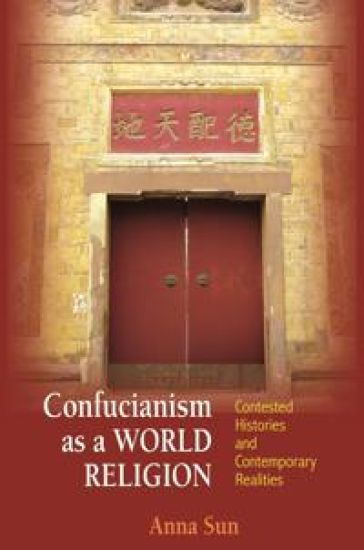
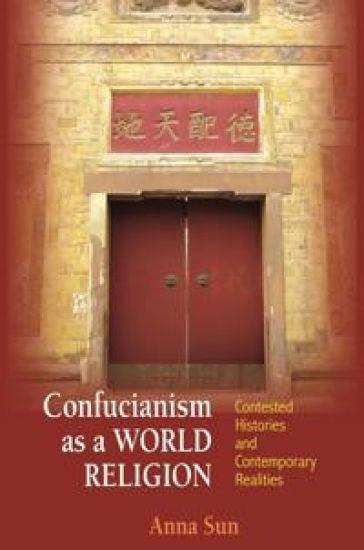
Confucianism as a World Religion

Confucianism as a World Religion

Anna Sun

Princeton University Press
2015
pokkari
Is Confucianism a religion? If so, why do most Chinese think it isn't? From ancient Confucian temples, to nineteenth-century archives, to the testimony of people interviewed by the author throughout China over a period of more than a decade, this book traces the birth and growth of the idea of Confucianism as a world religion. The book begins at Oxford, in the late nineteenth century, when Friedrich Max Muller and James Legge classified Confucianism as a world religion in the new discourse of "world religions" and the emerging discipline of comparative religion. Anna Sun shows how that decisive moment continues to influence the understanding of Confucianism in the contemporary world, not only in the West but also in China, where the politics of Confucianism has become important to the present regime in a time of transition. Contested histories of Confucianism are vital signs of social and political change. Sun also examines the revival of Confucianism in contemporary China and the social significance of the ritual practice of Confucian temples. While the Chinese government turns to Confucianism to justify its political agenda, Confucian activists have started a movement to turn Confucianism into a religion. Confucianism as a world religion might have begun as a scholarly construction, but are we witnessing its transformation into a social and political reality? With historical analysis, extensive research, and thoughtful reflection, Confucianism as a World Religion will engage all those interested in religion and global politics at the beginning of the Chinese century.
Confucianism as a World Religion

Confucianism as a World Religion

Anna Sun

Princeton University Press
2013
sidottu
Is Confucianism a religion? If so, why do most Chinese think it isn't? From ancient Confucian temples, to nineteenth-century archives, to the testimony of people interviewed by the author throughout China over a period of more than a decade, this book traces the birth and growth of the idea of Confucianism as a world religion. The book begins at Oxford, in the late nineteenth century, when Friedrich Max Muller and James Legge classified Confucianism as a world religion in the new discourse of "world religions" and the emerging discipline of comparative religion. Anna Sun shows how that decisive moment continues to influence the understanding of Confucianism in the contemporary world, not only in the West but also in China, where the politics of Confucianism has become important to the present regime in a time of transition. Contested histories of Confucianism are vital signs of social and political change. Sun also examines the revival of Confucianism in contemporary China and the social significance of the ritual practice of Confucian temples. While the Chinese government turns to Confucianism to justify its political agenda, Confucian activists have started a movement to turn Confucianism into a religion. Confucianism as a world religion might have begun as a scholarly construction, but are we witnessing its transformation into a social and political reality? With historical analysis, extensive research, and thoughtful reflection, Confucianism as a World Religion will engage all those interested in religion and global politics at the beginning of the Chinese century.