Kirjojen hintavertailu. Mukana 12 595 353 kirjaa ja 12 kauppaa.

Kirjailija

Anne E. Lester

Kirjat ja teokset yhdessä paikassa: 11 kirjaa, julkaisuja vuosilta 2011-2026, suosituimpien joukossa Microliteratures. Vertaile teosten hintoja ja tarkista saatavuus suomalaisista kirjakaupoista.

11 kirjaa

Kirjojen julkaisuhaarukka 2011-2026.

Shrines, Relics, and Saints

Shrines, Relics, and Saints

André Vauchez; M. Cecilia Gaposchkin; Anne E. Lester

CORNELL UNIVERSITY PRESS
2026
sidottu
In Shrines, Relics, and Saints,the eminent medievalist André Vauchez explores the evolution of spaces in Christianity—chapels, monasteries, holy wells, grottos, and other holy places—that are considered sacred because they house the relics of a saint or because they preserve the memory of an appearance by a saint, angel, or the Virgin Mary. From famous sanctuaries that still attract multitudes of pilgrims—in Jerusalem, Rome, Tours, Assisi, and Compostela—to local shrines in villages, towns and wild places across the continent, these sanctuaries were frequented by pilgrims in search of miraculous healings of body and soul. Together, they formed a network comprising new forms of sacredness and spiritual practice. A masterwork in the history of Christianity, Shrines, Relics, and Saints traces pilgrimage routes to major sanctuaries, follows saints' relics as they were transferred from East to West, and examines the Church's ambiguous and sometimes antagonistic relationship to sites of popular worship.

Shrines, Relics, and Saints

Shrines, Relics, and Saints

André Vauchez; M. Cecilia Gaposchkin; Anne E. Lester

CORNELL UNIVERSITY PRESS
2026
pokkari
In Shrines, Relics, and Saints,the eminent medievalist André Vauchez explores the evolution of spaces in Christianity—chapels, monasteries, holy wells, grottos, and other holy places—that are considered sacred because they house the relics of a saint or because they preserve the memory of an appearance by a saint, angel, or the Virgin Mary. From famous sanctuaries that still attract multitudes of pilgrims—in Jerusalem, Rome, Tours, Assisi, and Compostela—to local shrines in villages, towns and wild places across the continent, these sanctuaries were frequented by pilgrims in search of miraculous healings of body and soul. Together, they formed a network comprising new forms of sacredness and spiritual practice. A masterwork in the history of Christianity, Shrines, Relics, and Saints traces pilgrimage routes to major sanctuaries, follows saints' relics as they were transferred from East to West, and examines the Church's ambiguous and sometimes antagonistic relationship to sites of popular worship.
Microliteratures

Microliteratures

Jesús R. Velasco; M. Cecilia Gaposchkin; Anne E. Lester

CORNELL UNIVERSITY PRESS
2025
pokkari
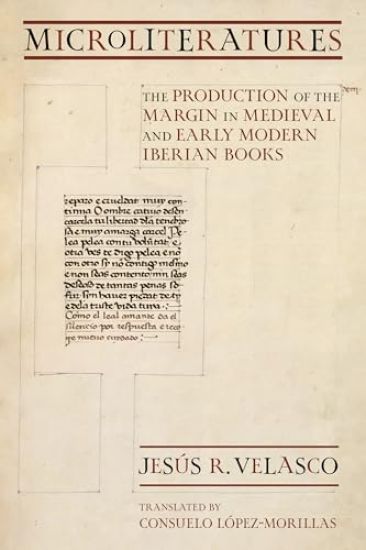
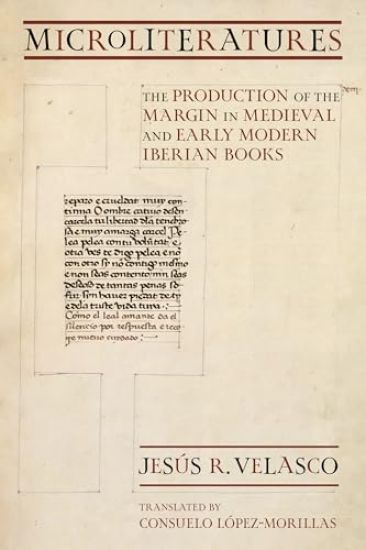
Microliteratures is an innovative examination of writings done in the margins of medieval manuscripts and early modern books. Not always as formal as glosses, sometimes feverish and abbreviated, these marginal writings or, "microliteratures," are the product of readers thinking with the text at the center of the page. Jesús R. Velasco argues that microliteratures are not private annotations but, rather, a humanistic activity performed in the public sphere. These marginal engagements with texts are made public to future readers of the same book. Surveying the microliteratures of a wide range of medieval and early modern Iberian genres—legal, religious, chivalric, and political texts—Velasco finds that in the shared space and time of reading, microliterary actions and artifacts are also models of public humanities work that connects texts to contemporary issues. Microliteratures emerge from this ambitious book as a way of understanding the self as a reflective and politically engaged reader in conversation with past, present, and future readers as contemporaries.
Microliteratures

Microliteratures

Jesús R. Velasco; M. Cecilia Gaposchkin; Anne E. Lester

CORNELL UNIVERSITY PRESS
2025
sidottu
Microliteratures is an innovative examination of writings done in the margins of medieval manuscripts and early modern books. Not always as formal as glosses, sometimes feverish and abbreviated, these marginal writings or, "microliteratures," are the product of readers thinking with the text at the center of the page. Jesús R. Velasco argues that microliteratures are not private annotations but, rather, a humanistic activity performed in the public sphere. These marginal engagements with texts are made public to future readers of the same book. Surveying the microliteratures of a wide range of medieval and early modern Iberian genres—legal, religious, chivalric, and political texts—Velasco finds that in the shared space and time of reading, microliterary actions and artifacts are also models of public humanities work that connects texts to contemporary issues. Microliteratures emerge from this ambitious book as a way of understanding the self as a reflective and politically engaged reader in conversation with past, present, and future readers as contemporaries.
Radiances

Radiances

Ernst Kantorowicz; M. Cecilia Gaposchkin; Anne E. Lester

CORNELL UNIVERSITY PRESS
2025
pokkari
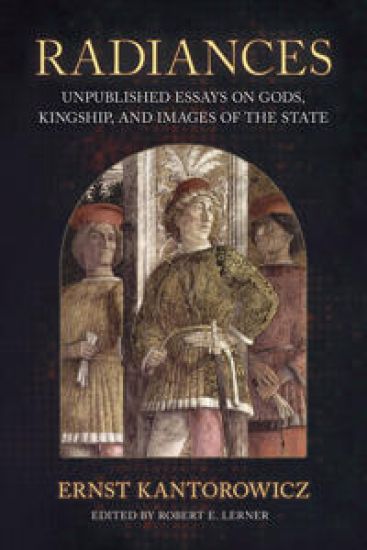
Radiances gathers previously unpublished essays by one of the greatest historians of the twentieth century. Although best known for The King's Two Bodies (1957), Ernst Kantorowicz's scholarly expertise ranged from classical antiquity to early modernity and from political pageantry to numismatics. These essays traverse the breadth of his expertise, exploring "radiations" of the themes that were central to his published work: sovereignty, theology, law, and iconography. The radiations in these engaging essays include the imagery of throne-sharing from the Hellenistic era and Pharaonic Egypt to early Christianity, coronation ceremonies in Byzantium and the West, the Carolingian and Burgundian Renaissances, the relationship between Rome and Christianity, the importance of history as a humanistic pursuit, and the significance of postage stamps in political myth-building. Robert E. Lerner discusses each essay's composition, themes, and place in Kantorowicz's oeuvre. Combining vast knowledge with intellectual delight, Radiances teems with the profound historical insights that distinguished Kantorowicz's scholarship.
Radiances

Radiances

Ernst Kantorowicz; M. Cecilia Gaposchkin; Anne E. Lester

CORNELL UNIVERSITY PRESS
2025
sidottu
Radiances gathers previously unpublished essays by one of the greatest historians of the twentieth century. Although best known for The King's Two Bodies (1957), Ernst Kantorowicz's scholarly expertise ranged from classical antiquity to early modernity and from political pageantry to numismatics. These essays traverse the breadth of his expertise, exploring "radiations" of the themes that were central to his published work: sovereignty, theology, law, and iconography. The radiations in these engaging essays include the imagery of throne-sharing from the Hellenistic era and Pharaonic Egypt to early Christianity, coronation ceremonies in Byzantium and the West, the Carolingian and Burgundian Renaissances, the relationship between Rome and Christianity, the importance of history as a humanistic pursuit, and the significance of postage stamps in political myth-building. Robert E. Lerner discusses each essay's composition, themes, and place in Kantorowicz's oeuvre. Combining vast knowledge with intellectual delight, Radiances teems with the profound historical insights that distinguished Kantorowicz's scholarship.
A Crusader's Death and Life in Acre

A Crusader's Death and Life in Acre

Anne E. Lester; Laura K. Morreale

CORNELL UNIVERSITY PRESS
2025
pokkari
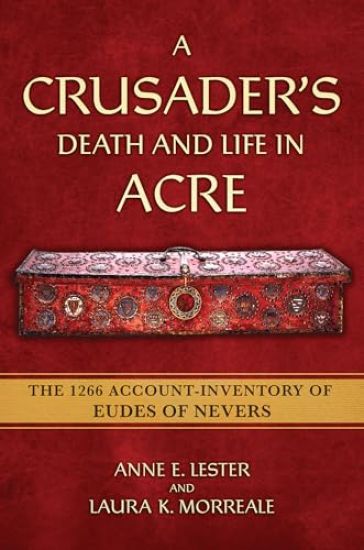
A Crusader's Death and Life in Acre uses five parchment rolls that inventoried the possessions of Eudes of Nevers, son of the duke of Burgundy, at his death in Acre in 1266 to open out a panorama of Christian crusader life. The contents of the rolls, or rouleaux, span from the pay rendered to knights and servants to the numerous possessions of a crusading nobleman. The inventory provides insight into the medieval Outremer even as it provokes questions about trade, diplomacy, remembrance, and the methodological challenges of evoking material objects in texts. Anne E. Lester and Laura K. Morreale present the first complete modern French edition and English translation of the rouleaux along with seven crusade poems by Rutebeuf. In addition, A Crusader's Death and Life in Acre contains a wealth of scholarly commentary that addresses the composition of the rouleaux, the life and relationships of Eudes, and the culture of crusading in its material, written, devotional, and poetic forms. Contributors: Sharon Farmer, Andrew Jotischky, Anne Latowsky, Richard A. Leson, Maureen C. Miller, Jonathan Rubin, Uri Zvi Shachar, and Caroline Smith
To Govern Is to Serve

To Govern Is to Serve

Jacques Dalarun; M. Cecilia Gaposchkin; Anne E. Lester

CORNELL UNIVERSITY PRESS
2023
sidottu
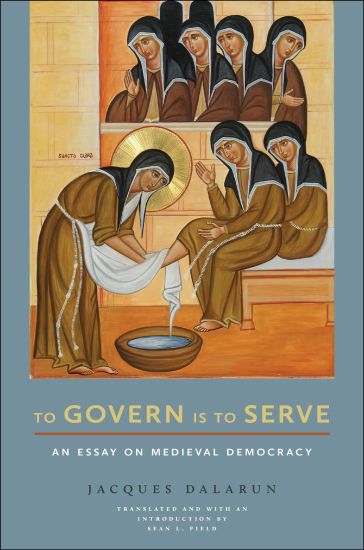
To Govern Is to Serve explores the practices of collective governance in medieval religious orders that turned the precepts of the Gospels—most notably that "the first will be last, the last will be first"—into practices of communal deliberation and the election of superiors. Jacques Dalarun argues that these democratic forms have profoundly influenced modern experiences of democracy, in particular the idea of government not as domination but as service. Dalarun undertakes meticulous textual analysis and historical research into twelfth and thirteenth-century religious movements—from Fontevraud and the Paraclete of Abelard and Heloise through St. Dominic and St. Francis—that sought their superiors from among the less exalted members of their communities to chart how these experiments prefigured certain aspects of modern democracies, those allowing individuals to find their way forward as part of a collective. Wide ranging and deeply original,To Govern Is to Serve highlights the history of the reciprocal bonds of service and humility that underpin increasingly fragile democracies in the twenty-first century.
To Govern Is to Serve

To Govern Is to Serve

Jacques Dalarun; M. Cecilia Gaposchkin; Anne E. Lester

CORNELL UNIVERSITY PRESS
2023
pokkari
To Govern Is to Serve explores the practices of collective governance in medieval religious orders that turned the precepts of the Gospels—most notably that "the first will be last, the last will be first"—into practices of communal deliberation and the election of superiors. Jacques Dalarun argues that these democratic forms have profoundly influenced modern experiences of democracy, in particular the idea of government not as domination but as service. Dalarun undertakes meticulous textual analysis and historical research into twelfth and thirteenth-century religious movements—from Fontevraud and the Paraclete of Abelard and Heloise through St. Dominic and St. Francis—that sought their superiors from among the less exalted members of their communities to chart how these experiments prefigured certain aspects of modern democracies, those allowing individuals to find their way forward as part of a collective. Wide ranging and deeply original,To Govern Is to Serve highlights the history of the reciprocal bonds of service and humility that underpin increasingly fragile democracies in the twenty-first century.
Creating Cistercian Nuns

Creating Cistercian Nuns

Anne E. Lester

Cornell University Press
2017
pokkari
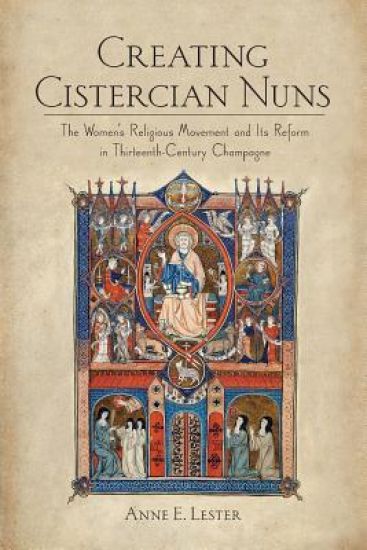
In Creating Cistercian Nuns, Anne E. Lester addresses a central issue in the history of the medieval church: the role of women in the rise of the religious reform movement of the thirteenth century. Focusing on the county of Champagne in France, Lester reconstructs the history of the women's religious movement and its institutionalization within the Cistercian order. The common picture of the early Cistercian order is that it was unreceptive to religious women. Male Cistercian leaders often avoided institutional oversight of communities of nuns, preferring instead to cultivate informal relationships of spiritual advice and guidance with religious women. As a result, scholars believed that women who wished to live a life of service and poverty were more likely to join one of the other reforming orders rather than the Cistercians. As Lester shows, however, this picture is deeply flawed. Between 1220 and 1240 the Cistercian order incorporated small independent communities of religious women in unprecedented numbers. Moreover, the order not only accommodated women but also responded to their interpretations of apostolic piety, even as it defined and determined what constituted Cistercian nuns in terms of dress, privileges, and liturgical practice. Lester reconstructs the lived experiences of these women, integrating their ideals and practices into the broader religious and social developments of the thirteenth century—including the crusade movement, penitential piety, the care of lepers, and the reform agenda of the Fourth Lateran Council. The book closes by addressing the reasons for the subsequent decline of Cistercian convents in the fourteenth century. Based on extensive analysis of unpublished archives, Creating Cistercian Nuns will force scholars to revise their understanding of the women's religious movement as it unfolded during the thirteenth century.
Creating Cistercian Nuns

Creating Cistercian Nuns

Anne E. Lester

Cornell University Press
2011
sidottu
In Creating Cistercian Nuns, Anne E. Lester addresses a central issue in the history of the medieval church: the role of women in the rise of the religious reform movement of the thirteenth century. Focusing on the county of Champagne in France, Lester reconstructs the history of the women's religious movement and its institutionalization within the Cistercian order. The common picture of the early Cistercian order is that it was unreceptive to religious women. Male Cistercian leaders often avoided institutional oversight of communities of nuns, preferring instead to cultivate informal relationships of spiritual advice and guidance with religious women. As a result, scholars believed that women who wished to live a life of service and poverty were more likely to join one of the other reforming orders rather than the Cistercians. As Lester shows, however, this picture is deeply flawed. Between 1220 and 1240 the Cistercian order incorporated small independent communities of religious women in unprecedented numbers. Moreover, the order not only accommodated women but also responded to their interpretations of apostolic piety, even as it defined and determined what constituted Cistercian nuns in terms of dress, privileges, and liturgical practice. Lester reconstructs the lived experiences of these women, integrating their ideals and practices into the broader religious and social developments of the thirteenth century—including the crusade movement, penitential piety, the care of lepers, and the reform agenda of the Fourth Lateran Council. The book closes by addressing the reasons for the subsequent decline of Cistercian convents in the fourteenth century. Based on extensive analysis of unpublished archives, Creating Cistercian Nuns will force scholars to revise their understanding of the women's religious movement as it unfolded during the thirteenth century.