Kirjojen hintavertailu. Mukana 12 595 353 kirjaa ja 12 kauppaa.

Kirjailija

Anne Ellegood

Kirjat ja teokset yhdessä paikassa: 4 kirjaa, julkaisuja vuosilta 2008-2024, suosituimpien joukossa Rebecca Morris: 2001–2022. Vertaile teosten hintoja ja tarkista saatavuus suomalaisista kirjakaupoista.

4 kirjaa

Kirjojen julkaisuhaarukka 2008-2024.

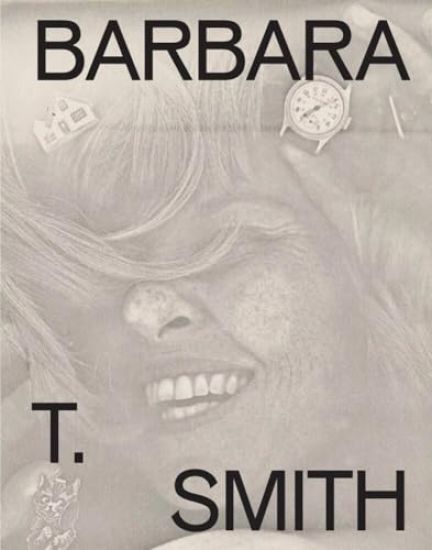
Barbara T. Smith: Proof

Barbara T. Smith: Proof

Anne Ellegood

Gregory R Miller Company
2024
nidottu
A debut monograph that showcases Smith's bold experimentation, from her cutting-edge performance art to her earliest paintings, Xerox prints, drawings and sculpture A pioneer of the performance art movement of the late 1960s, Southern California–based Barbara T. Smith (born 1931) has long produced work that explores the self, sexuality, gender roles and spiritual sustenance. While her performances have received critical attention, the objects Smith has made over nearly 60 years—many for, or as a result of, performances—are less known. These include her radical Xerox works, assemblages, sculptures, artist’s books, drawings, paintings, photographs and videos. Smith’s first ever comprehensive catalog is designed by Content Object (C/O). Featuring an illustrated chronology of Smith’s life and artwork compiled by curator Jenelle Porter, the catalog also includes essays by scholars Gloria Sutton, Catherine Taft and Pietro Rigolo, who elaborate upon Smith’s work as it relates to new technologies, ecofeminism and the archive, respectively.
Summer Wheat

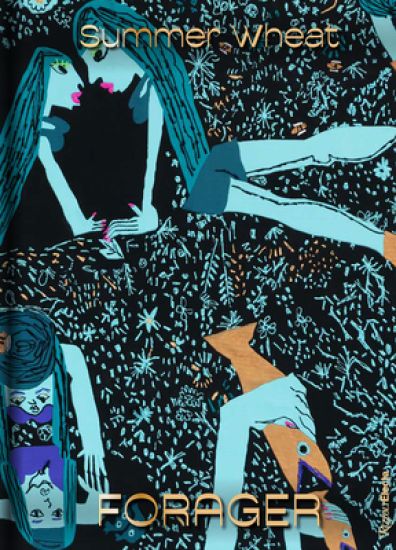
Summer Wheat

Jennifer Sudul Edwards; Anne Ellegood; Jennifer Krasinski; Diedrick Brackens

RIZZOLI INTERNATIONAL PUBLICATIONS
2024
sidottu
The Future (and the past) is Female: Summer Wheat’s whimsical, often tongue-in-cheek tableaux in rich jewel tones punctuated with bright neons, teem with fantastical figures that imagine tribes of women hunting, collaborating, celebrating, and ultimately replacing millennia of images of male rulers and warriors.Summer Wheat’s unique formative experiences with art growing up in Oklahoma were shaped by the aesthetic and conceptual drive of the images that surrounded her from the rich textures Native American weavings to the brilliant hues of Lisa Frank Trapper Keepers. Bridging those early influences with the canon of Western art (from ancient sculpture to medieval tapestries) and popular references such as astrology and music videos, the artist’s work centers female archetypes 0in her expansive practice of painting, sculpture, and large-scale installation.For the artist’s first monograph, curator Jen Sudul Edwards discusses the wide range of subjects that inform Wheat’s work and positions her use of materials in the context of alchemy. Curator Anne Ellegood in conversation with the artist traces Wheat’s transition from painting to sculptural work, large-scale installations ,and first foray into building a freestanding architectural space. Jennifer Krasinski explores Wheat’s unique approach to painting, with her large panels seemingly a cross between intricate beadwork and the pixel-like structure of a digital image. Artist Diedrick Brackens speaks with Wheat about lines—from one that is drawn by hand to the ones that define spaces between art and craft, and the ones defined by a single thread.
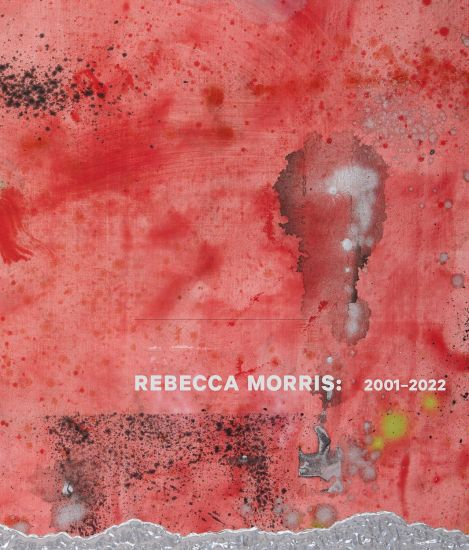
Rebecca Morris: 2001–2022

Rebecca Morris: 2001–2022

Anne Ellegood

DISTRIBUTED ART PUBLISHERS
2024
sidottu
A survey for a long-term champion of abstraction Acclaimed American painter Rebecca Morris (born 1969) has long been celebrated for her juxtapositions of thin, matte washes of color with shimmering, metallic impasto. Her first major monograph coincides with a new survey exhibition traveling from the Institute of Contemporary Art, Los Angeles to the Museum of Contemporary Art, Chicago. Teeming with opulently illustrated plates, the volume provides insight into Morris’ practice through various vantage points, including texts from longtime collaborators of the artist and new voices alike. Topics include the historiography of color in Morris’ paintings as well as art historical contexts for her work. An additional section of the book traces Morris' own photo documentation of her studios over the 21-year period. Today, Morris remains steadfast to an ethos of constant evolution and a rigorous commitment to experimentation in painting. As she wrote in a widely circulated manifesto from 2005: “Abstraction never left, motherfuckers.”
Cinema Effect, The: Illusion, Reality, and the Moving Image

Cinema Effect, The: Illusion, Reality, and the Moving Image

Kerry Brougher; Kelly Gordon; Anne Ellegood; Kristen Hileman; Tony Oursler

D Giles Ltd
2008
sidottu
This volume offers an in-depth exploration of contemporary moving-image art, examining the ways in which "the cinematic" has blurred cultural distinctions between reality and illusion. Cinema was the unrivaled art form of the twentieth century; in the art world, the use of film and video and the appropriation of cinematic language and devices for works in a range of media have been growing since the early 1960s. In the realm of popular culture, the influence of this technology and its vocabulary have grown to the point where the boundaries between "real life" and make-believe are at the least blurred and at most indecipherable. Opening with Kerry Brougher's overview of the cultural, social and psychological issues raised by The Cinema Effect, the book divides into two parts which reflect the opposing poles of cinema, and the roles they play in art and contemporary culture. The first section, Dreams, opens with a discussion by Kelly Gordon of how and why moving-image work has shifted from the margins to the center of art production. This essay considers the analogous relationship between cinema technology and the psychology of dreams, as well as the ways in which artists compel or challenge suspension of disbelief. The second section, Realisms, shifts the focus to the larger societal impact of the pervasiveness of cinema, looking at the work of emerging artists. In this section Anne Ellegood examines issues of subjectivity and identity in the featured artists' work and Kristen Hileman explores the complex issue of authenticity.