Kirjojen hintavertailu. Mukana 12 390 323 kirjaa ja 12 kauppaa.

Kirjailija

Anne Phillips

Kirjat ja teokset yhdessä paikassa: 23 kirjaa, julkaisuja vuosilta 1989-2026, suosituimpien joukossa The World of Little Women. Vertaile teosten hintoja ja tarkista saatavuus suomalaisista kirjakaupoista.

23 kirjaa

Kirjojen julkaisuhaarukka 1989-2026.

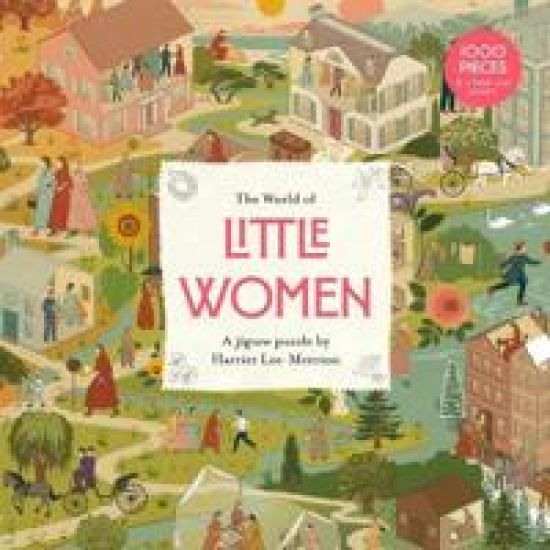
The World of Little Women

The World of Little Women

Anne Phillips; Gregory Eiselein

ORION PUBLISHING CO
2026
muu
Piece together Louisa May Alcott's beloved novelFollow in the footsteps of the March sisters with this detailed jigsaw puzzle. Spot Meg, Jo, Beth and Amy staging a melodrama, Marmee reading a cherished letter from Father, Laurie and Jo dancing a polka and Amy painting in Paris, as well as plenty more memorable moments. With an accompanying poster written by experts on the novel, this puzzle beautifully captures the warmth, spirit and poignancy that have made Little Women such an enduring classic.PART OF THE WORLD OF JIGSAW PUZZLE SERIES which immerse puzzlers in the worlds of their favourite writers and works.FEATURING AN ORIGINAL ILLUSTRATION packed with detail and a large poster with an introduction to the novel by Little Women experts, Anne Phillips and Gregory Eiselein.1000-PIECE PUZZLE that measures 48.5 x 68 cm (19 x 27 in.) when completed.LAURENCE KING has been capturing imaginations and inspiring creativity in new and unexpected ways for over 30 years, with playful and eye-catching games, gifts and books.

Charlie Meets a Stag beetle

Charlie Meets a Stag beetle

Anne Phillips; Mira Miller

GROSVENOR HOUSE PUBLISHING LTD
2025
sidottu
Charlie lives with her Mum, Dad and dog Jess. She has a Superpower. She can talk to and understand living creatures. Through talking with her animal friends she is able to highlight problems that they encounter. With her friends at school, she is able to find ways of making a difference locally and educate adults through their actions to make the world a friendlier place for animals, birds, insects and other creatures.
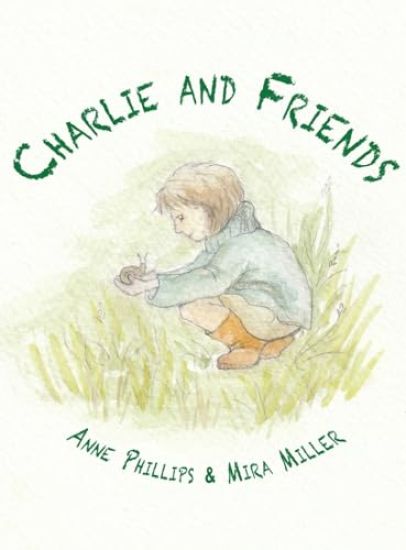
Charlie and Friends

Charlie and Friends

Anne Phillips; Mira Miller

GROSVENOR HOUSE PUBLISHING LTD
2024
sidottu
Charlie lives with her Mum, Dad and dog Jess. She has a Superpower. She can talk to and understand living creatures. Through talking with her animal friends she is able to highlight problems that they encounter. With her friends at school, she is able to find ways of making a difference locally and educate adults through their actions to make the world a friendlier place for animals, birds, insects and other creatures.
Unconditional Equals

Unconditional Equals

Anne Phillips

PRINCETON UNIVERSITY PRESS
2023
pokkari
Why equality cannot be conditional on a shared human “nature” but has to be for allFor centuries, ringing declarations about all men being created equal appealed to a shared human nature as the reason to consider ourselves equals. But appeals to natural equality invited gradations of natural difference, and the ambiguity at the heart of “nature” enabled generations to write of people as equal by nature while barely noticing the exclusion of those marked as inferior by their gender, race, or class. Despite what we commonly tell ourselves, these exclusions and gradations continue today. In Unconditional Equals, political philosopher Anne Phillips challenges attempts to justify equality by reference to a shared human nature, arguing that justification turns into conditions and ends up as exclusion. Rejecting the logic of justification, she calls instead for a genuinely unconditional equality.Drawing on political, feminist, and postcolonial theory, Unconditional Equals argues that we should understand equality not as something grounded in shared characteristics but as something people enact when they refuse to be considered inferiors. At a time when the supposedly shared belief in human equality is so patently not shared, the book makes a powerful case for seeing equality as a commitment we make to ourselves and others, and a claim we make on others when they deny us our status as equals.
Unconditional Equals

Unconditional Equals

Anne Phillips

PRINCETON UNIVERSITY PRESS
2021
sidottu
Why equality cannot be conditional on a shared human “nature” but has to be for allFor centuries, ringing declarations about all men being created equal appealed to a shared human nature as the reason to consider ourselves equals. But appeals to natural equality invited gradations of natural difference, and the ambiguity at the heart of “nature” enabled generations to write of people as equal by nature while barely noticing the exclusion of those marked as inferior by their gender, race, or class. Despite what we commonly tell ourselves, these exclusions and gradations continue today. In Unconditional Equals, political philosopher Anne Phillips challenges attempts to justify equality by reference to a shared human nature, arguing that justification turns into conditions and ends up as exclusion. Rejecting the logic of justification, she calls instead for a genuinely unconditional equality.Drawing on political, feminist, and postcolonial theory, Unconditional Equals argues that we should understand equality not as something grounded in shared characteristics but as something people enact when they refuse to be considered inferiors. At a time when the supposedly shared belief in human equality is so patently not shared, the book makes a powerful case for seeing equality as a commitment we make to ourselves and others, and a claim we make on others when they deny us our status as equals.
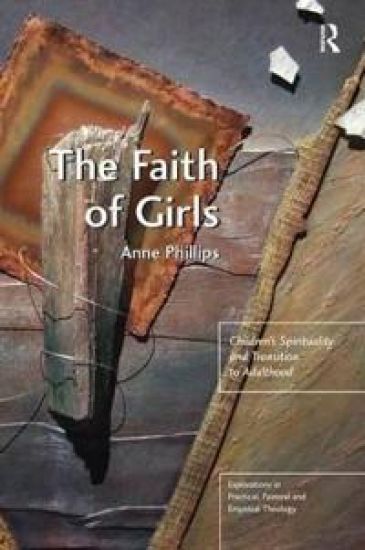
The Faith of Girls

The Faith of Girls

Anne Phillips

Routledge
2016
nidottu
Exploring the spirituality and faith of girls on the verge of adolescence, this book presents fresh insights into children's spirituality and their transition to adulthood. Phillips has listened to girls' voices speaking in depth on the themes of self, God, church, and world, and reflected on their experiences and understandings in the light of current psychological, philosophical and sociological thinking, all placed into dialogue with a feminist approach to contemporary theology and bible. Phillips offers 'wombing' as a metaphor for their transition to young adulthood, and suggests strategies faith communities might adopt to companion girls more effectively through the fragility of puberty. This book will appeal to all those exploring areas of youth ministry, pastoral care, Christian education, nurture and childhood studies, psychology and theology.
The Politics of the Human

The Politics of the Human

Anne Phillips

Cambridge University Press
2015
sidottu
The human is a central reference point for human rights. But who or what is that human? And given its long history of exclusiveness, when so many of those now recognised as human were denied the name, how much confidence can we attach to the term? This book works towards a sense of the human that does without substantive accounts of 'humanity' while also avoiding their opposite – the contentless versions that deny important differences such as race, gender and sexuality. Drawing inspiration from Hannah Arendt's anti-foundationalism, Phillips rejects the idea of 'humanness' as grounded in essential characteristics we can be shown to share. She stresses instead the human as claim and commitment, as enactment and politics of equality. In doing so, she engages with a range of contemporary debates on human dignity, humanism, and post-humanism, and argues that none of these is necessary to a strong politics of the human.
The Politics of the Human

The Politics of the Human

Anne Phillips

Cambridge University Press
2015
pokkari
The human is a central reference point for human rights. But who or what is that human? And given its long history of exclusiveness, when so many of those now recognised as human were denied the name, how much confidence can we attach to the term? This book works towards a sense of the human that does without substantive accounts of 'humanity' while also avoiding their opposite – the contentless versions that deny important differences such as race, gender and sexuality. Drawing inspiration from Hannah Arendt's anti-foundationalism, Phillips rejects the idea of 'humanness' as grounded in essential characteristics we can be shown to share. She stresses instead the human as claim and commitment, as enactment and politics of equality. In doing so, she engages with a range of contemporary debates on human dignity, humanism, and post-humanism, and argues that none of these is necessary to a strong politics of the human.
Our Bodies, Whose Property?

Our Bodies, Whose Property?

Anne Phillips

Princeton University Press
2013
sidottu
No one wants to be treated like an object, regarded as an item of property, or put up for sale. Yet many people frame personal autonomy in terms of self-ownership, representing themselves as property owners with the right to do as they wish with their bodies. Others do not use the language of property, but are similarly insistent on the rights of free individuals to decide for themselves whether to engage in commercial transactions for sex, reproduction, or organ sales. Drawing on analyses of rape, surrogacy, and markets in human organs, Our Bodies, Whose Property? challenges notions of freedom based on ownership of our bodies and argues against the normalization of markets in bodily services and parts. Anne Phillips explores the risks associated with metaphors of property and the reasons why the commodification of the body remains problematic. What, she asks, is wrong with thinking of oneself as the owner of one's body? What is wrong with making our bodies available for rent or sale? What, if anything, is the difference between markets in sex, reproduction, or human body parts, and the other markets we commonly applaud? Phillips contends that body markets occupy the outer edges of a continuum that is, in some way, a feature of all labor markets. But she also emphasizes that we all have bodies, and considers the implications of this otherwise banal fact for equality. Bodies remind us of shared vulnerability, alerting us to the common experience of living as embodied beings in the same world. Examining the complex issue of body exceptionalism, Our Bodies, Whose Property? demonstrates that treating the body as property makes human equality harder to comprehend.
The Faith of Girls

The Faith of Girls

Anne Phillips

Ashgate Publishing Limited
2011
sidottu
Exploring the spirituality and faith of girls on the verge of adolescence, this book presents fresh insights into children's spirituality and their transition to adulthood. Phillips has listened to girls' voices speaking in depth on the themes of self, God, church, and world, and reflected on their experiences and understandings in the light of current psychological, philosophical and sociological thinking, all placed into dialogue with a feminist approach to contemporary theology and bible. Phillips offers 'wombing' as a metaphor for their transition to young adulthood, and suggests strategies faith communities might adopt to companion girls more effectively through the fragility of puberty. This book will appeal to all those exploring areas of youth ministry, pastoral care, Christian education, nurture and childhood studies, psychology and theology.
Gender and Culture

Gender and Culture

Anne Phillips

Polity Press
2010
nidottu
The idea that respect for cultural diversity conflicts with gender equality is now a staple of both public and academic debate. Yet discussion of these tensions is marred by exaggerated talk of cultural difference, leading to ethnic reductionism, cultural stereotyping, and a hierarchy of traditional and modern. In this volume, Anne Phillips firmly rejects the notion that ‘culture’ might justify the oppression of women, but also queries the stereotypical binaries that have represented people from ethnocultural minorities as peculiarly resistant to gender equality. The questions addressed include the relationship between universalism and cultural relativism, how to distinguish valid generalisation from either gender or cultural essentialism, and how to recognise women as agents rather than captives of culture. The discussions are illuminated by reference to legal cases and policy interventions, with a particular focus on forced marriage and cultural defence.
Gender and Culture

Gender and Culture

Anne Phillips

Polity Press
2010
sidottu
The idea that respect for cultural diversity conflicts with gender equality is now a staple of both public and academic debate. Yet discussion of these tensions is marred by exaggerated talk of cultural difference, leading to ethnic reductionism, cultural stereotyping, and a hierarchy of traditional and modern. In this volume, Anne Phillips firmly rejects the notion that ‘culture’ might justify the oppression of women, but also queries the stereotypical binaries that have represented people from ethnocultural minorities as peculiarly resistant to gender equality. The questions addressed include the relationship between universalism and cultural relativism, how to distinguish valid generalisation from either gender or cultural essentialism, and how to recognise women as agents rather than captives of culture. The discussions are illuminated by reference to legal cases and policy interventions, with a particular focus on forced marriage and cultural defence.
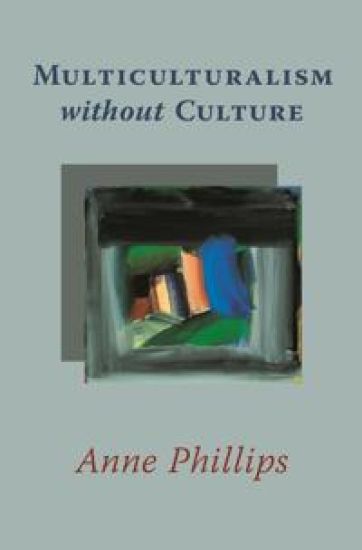
Multiculturalism without Culture

Multiculturalism without Culture

Anne Phillips

Princeton University Press
2009
pokkari
Public opinion in recent years has soured on multiculturalism, due in large part to fears of radical Islam. In Multiculturalism without Culture, Anne Phillips contends that critics misrepresent culture as the explanation of everything individuals from minority and non-Western groups do. She puts forward a defense of multiculturalism that dispenses with notions of culture, instead placing individuals themselves at its core. Multiculturalism has been blamed for encouraging the oppression of women--forced marriages, female genital cutting, school girls wearing the hijab. Many critics opportunistically deploy gender equality to justify the retreat from multiculturalism, hijacking the equality agenda to perpetuate cultural stereotypes. Phillips informs her argument with the feminist insistence on recognizing women as agents, and defends her position using an unusually broad range of literature, including political theory, philosophy, feminist theory, law, and anthropology. She argues that critics and proponents alike exaggerate the unity, distinctness, and intractability of cultures, thereby encouraging a perception of men and women as dupes constrained by cultural dictates. Opponents of multiculturalism may think the argument against accommodating cultural difference is over and won, but they are wrong. Phillips believes multiculturalism still has an important role to play in achieving greater social equality. In this book, she offers a new way of addressing dilemmas of justice and equality in multiethnic, multicultural societies, intervening at this critical moment when so many Western countries are poised to abandon multiculturalism.
The Oxford Handbook of Political Theory

The Oxford Handbook of Political Theory

John S Dryzek; Bonnie Honig; Anne Phillips

Oxford University Press
2008
nidottu
Long recognized as one of the main branches of political science, political theory has in recent years burgeoned in many different directions. Close textual analysis of historical texts sits alongside more analytical work on the nature and normative grounds of political values. Continental and post-modern influences jostle with ones from economics, history, sociology, and the law. Feminist concerns with embodiment make us look at old problems in new ways, and challenges of new technologies open whole new vistas for political theory. This Handbook provides comprehensive and critical coverage of the lively and contested field of political theory, and will help set the agenda for the field for years to come. Forty-five chapters by distinguished political theorists look at the state of the field, where it has been in the recent past, and where it is likely to go in future. They examine political theory's edges as well as its core, the globalizing context of the field, and the challenges presented by social, economic, and technological changes.
Which Equalities Matter?

Which Equalities Matter?

Anne Phillips

Polity Press
1999
nidottu
This work explores the broadening out of debates on democracy to address questions of gender, race, ethnicity, the status of minority cultures, and the greater emphasis on what can be achieved through political and cultural interventions.
The Politics of Presence

The Politics of Presence

Anne Phillips

Oxford University Press
1998
nidottu
One of the most hotly-contested debates in contemporary democracy revolves around issues of political presence, and whether the fair representation of disadvantaged groups requires their presence in elected assemblies. Representation as currently understood derives its legitimacy from a politics of ideas, which considers accountability in relation to declared policies and programmes, and makes it a matter of relative indifference who articulates political preferences or beliefs. But what happens to the meaning of representation and accountability when we make the gender or ethnic composition of elected assemblies an additional area of concern? In this innovative contribution to the theory of representation - which draws on debates about gender quotas in Europe, minority voting rights in the USA, and the multi-layered politics of inclusion in Canada - Anne Phillips argues that the politics of ideas is an inadequate vehicle for dealing with political exclusion. But rejecting any essentialist grounding to group identity or group interest, she also argues against any either/or choice between ideas and political presence. The politics of presence then combines with contemporary explorations of deliberative democracy to establish a different balance between accountability and autonomy. Series description Oxford Political Theory presents the best new work in contemporary political theory. It is intended to be broad in scope, including original contributions to political philosophy, and also work in applied political theory. The series contains work of outstanding quality with no restriction as to approach or subject matter. The series editors are David Miller and Alan Ryan. `the latest, thoughtful contribution in Anne Phillip's ongoing enquiry into issues of equality, gender and democracy...an excellent contribution to democratic theory'. Political Studies
Democracy and Difference

Democracy and Difference

Anne Phillips

Polity Press
1993
nidottu
A new emphasis on diversity and difference is displacing older myths of nation or community. A new attention to gender, race, language or religion is disrupting earlier preoccupations with class. But the welcome extended to heterogeneity can bring with it a disturbing fragmentation and closure. Can we develop a vision of democracy through difference: a politics that neither denies group identities nor capitulates to them? In this volume, Anne Phillips develops the feminist challenge to exclusionary versions of democracy, citizenship and equality. Relating this to the crisis in socialist theory, the growing unease with the pretensions of Enlightenment rationality, and the recent recuperation of liberal democracy as the only viable politics, she builds on debates within feminism to address general questions of difference. When democracies try to wish away group difference and inequality, they fail to meet their egalitarian promise. When yearnings towards an undifferentiated unity become the basis for radical politics and change, too many groups drop out of the picture. Through her critical discussions of recent feminist and socialist theory Anne Phillips rejects this democracy of denial. She also warns, however, of the dangers on the other side. The simpler celebrations of diversity risk freezing group differences as they are, encouraging a patchwork of local identities from which people can speak only to themselves. Her arguments then combine in a powerful restatement of the case for a more active and participatory democracy. It is only through enhanced communication and discussion that people can respect and learn from their differences.