
Kirjailija
Anne Stewart
Kirjat ja teokset yhdessä paikassa: 8 kirjaa, julkaisuja vuosilta 2005-2026, suosituimpien joukossa Diana. Vertaile teosten hintoja ja tarkista saatavuus suomalaisista kirjakaupoista.
8 kirjaa
Kirjojen julkaisuhaarukka 2005-2026.

Postpartum Depression Therapist Guide: A Cognitive-Behavioral Approach to Recovery
Anne Stewart; Charlotte Granger; Peter J. Lawrence
Oxford University Press
2026
nidottu
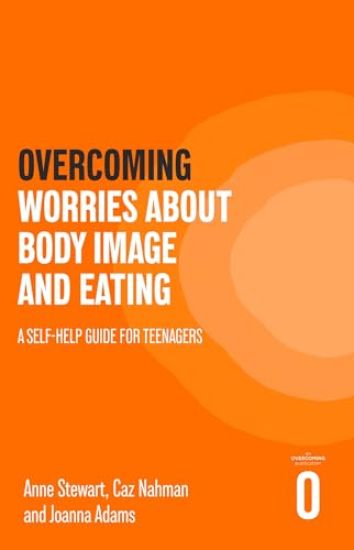
Overcoming Worries About Body Image and Eating
Anne Stewart; Caz Nahman; Joanna Adams
Little, Brown Book Group
2024
nidottu
Most teenagers worry about their body and appearance at some point, and some may try to alter their eating in order to change their weight or shape. If you are spending a lot of time worrying about how you look or what you are eating, it can become overwhelming and have a big impact on your life. The aim of this book is to help you to understand a bit more about these worries, what you can do about them and, most importantly, how you can develop a healthy relationship with your body and with food. If these worries take hold, there is a risk of developing an eating disorder or becoming depressed. Eating disorders can have a huge and negative impact on your physical health, your emotional wellbeing, your relationships and social life. They can take control of your mind and body, which makes it difficult to feel motivated to recover, and it can be a long and difficult journey to get back on track, so it's better to tackle these worries early on. Written by clinicians with many years of experience working in specialist eating disorder services for children and adolescents, this book follows an approach called cognitive behavioural therapy (CBT), which is a really useful way of helping us to make sense of our experiences and overcome the difficulties that we face. CBT is an evidence-based approach, which means that lots of research has been done to evaluate it and show that it can be helpful. The book includes help and support on: · Adolescent development, how we make sense of our experiences, healthy eating and how to look after yourself during the teenage years. · How you can stop body image and eating difficulties taking hold including ideas for feeling good about yourself, dealing with stress and managing social media. There is a chapter which focuses on issues for boys/young men. · How to get help from family, friends or professionals if you are struggling. There is also a chapter for parents/carers and families with suggestions on how they can help. Overcoming for Teenagers is a series to support young people through common mental health issues during adolescence, using scientific techniques that have been proven to work.Series editors: Associate Professor Polly Waite and Emeritus Professor Peter Cooper

Before the idea of the Anthropocene, there was the angry planet How might we understand an earthquake as a complaint, or erosion as a form of protest-in short, the Earth as an angry planet? Many novels from the end of the millennium did just that, centering around an Earth that acts, moves, shapes human affairs, and creates dramatic, nonanthropogenic change.In Angry Planet, Anne Stewart uses this literature to develop a theoretical framework for reading with and through planetary motion. Typified by authors like Colson Whitehead, Octavia Butler, and Leslie Marmon Silko, whose work anticipates contemporary critical concepts of entanglement, withdrawal, delinking, and resurgence, angry planet fiction coalesced in the 1990s and delineated the contours of a decolonial ontology. Stewart shows how this fiction brought Black and Indigenous thought into conversation, offering a fresh account of globalization in the 1990s from the perspective of the American Third World, construing it as the era that first made connections among environmental crises and antiracist and decolonial struggles.By synthesizing these major intersections of thought production in the final decades of the twentieth century, Stewart offers a recent history of dissent to the young movements of the twenty-first century. As she reveals, this knowledge is crucial to incipient struggles of our contemporary era, as our political imaginaries grapple with the major challenges of white nationalism and climate change denial.

Before the idea of the Anthropocene, there was the angry planet How might we understand an earthquake as a complaint, or erosion as a form of protest-in short, the Earth as an angry planet? Many novels from the end of the millennium did just that, centering around an Earth that acts, moves, shapes human affairs, and creates dramatic, nonanthropogenic change.In Angry Planet, Anne Stewart uses this literature to develop a theoretical framework for reading with and through planetary motion. Typified by authors like Colson Whitehead, Octavia Butler, and Leslie Marmon Silko, whose work anticipates contemporary critical concepts of entanglement, withdrawal, delinking, and resurgence, angry planet fiction coalesced in the 1990s and delineated the contours of a decolonial ontology. Stewart shows how this fiction brought Black and Indigenous thought into conversation, offering a fresh account of globalization in the 1990s from the perspective of the American Third World, construing it as the era that first made connections among environmental crises and antiracist and decolonial struggles.By synthesizing these major intersections of thought production in the final decades of the twentieth century, Stewart offers a recent history of dissent to the young movements of the twenty-first century. As she reveals, this knowledge is crucial to incipient struggles of our contemporary era, as our political imaginaries grapple with the major challenges of white nationalism and climate change denial.