Kirjojen hintavertailu. Mukana 12 390 323 kirjaa ja 12 kauppaa.

Kirjailija

Annette Bohr

Kirjat ja teokset yhdessä paikassa: 2 kirjaa, julkaisuja vuodelta 1998, suosituimpien joukossa Nation-building in the Post-Soviet Borderlands. Vertaile teosten hintoja ja tarkista saatavuus suomalaisista kirjakaupoista.

2 kirjaa

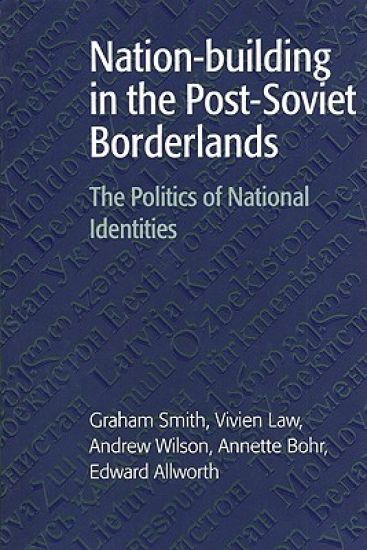
Nation-building in the Post-Soviet Borderlands

Nation-building in the Post-Soviet Borderlands

Graham Smith; Vivien Law; Andrew Wilson; Annette Bohr; Edward Allworth

Cambridge University Press
1998
pokkari
This book examines how national and ethnic identities are being reforged in the post-Soviet borderland states. The first chapter provides a conceptual and theoretical context for examining national identities, drawing in particular upon post-colonial theory. The rest of the book is divided into three parts. In Part I, the authors examine how national histories of the borderland states are being rewritten especially in relation to new nationalising historiographies, around myths of origin, homeland, and descent. Part II explores the ethnopolitics of group boundary construction and how such a politics has led to nationalising policies of both exclusion and inclusion. Part III examines the relationship between nation-building and language, especially with regard to how competing conceptions of national identity have informed the thinking of both political decision-takers and nationalising intellectuals, and the consequences for ethnic minorities. Such perspectives on nation-building are illustrated with substantive studies drawn from the Baltic states, Ukraine, and Belarus, Transcaucasia, and Central Asia.
Nation-building in the Post-Soviet Borderlands

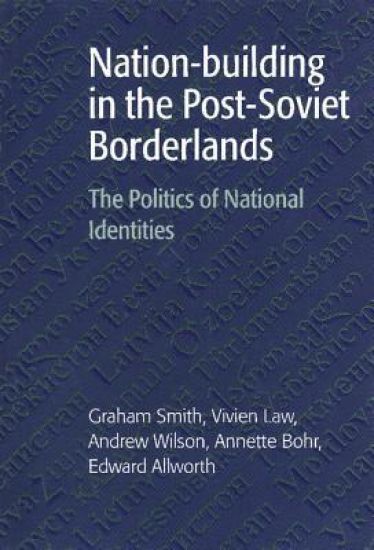
Nation-building in the Post-Soviet Borderlands

Graham Smith; Vivien Law; Andrew Wilson; Annette Bohr; Edward Allworth

Cambridge University Press
1998
sidottu
This book examines how national and ethnic identities are being reforged in the post-Soviet borderland states. The first chapter provides a conceptual and theoretical context for examining national identities, drawing in particular upon post-colonial theory. The rest of the book is divided into three parts. In Part I, the authors examine how national histories of the borderland states are being rewritten especially in relation to new nationalising historiographies, around myths of origin, homeland, and descent. Part II explores the ethnopolitics of group boundary construction and how such a politics has led to nationalising policies of both exclusion and inclusion. Part III examines the relationship between nation-building and language, especially with regard to how competing conceptions of national identity have informed the thinking of both political decision-takers and nationalising intellectuals, and the consequences for ethnic minorities. Such perspectives on nation-building are illustrated with substantive studies drawn from the Baltic states, Ukraine, and Belarus, Transcaucasia, and Central Asia.