Kirjojen hintavertailu. Mukana 12 595 353 kirjaa ja 12 kauppaa.

Kirjailija

Annmarie Adams

Kirjat ja teokset yhdessä paikassa: 7 kirjaa, julkaisuja vuosilta 1996-2008, suosituimpien joukossa Exploring Everyday Landscapes. Vertaile teosten hintoja ja tarkista saatavuus suomalaisista kirjakaupoista.

7 kirjaa

Kirjojen julkaisuhaarukka 1996-2008.

Medicine by Design

Medicine by Design

Annmarie Adams

University of Minnesota Press
2008
sidottu
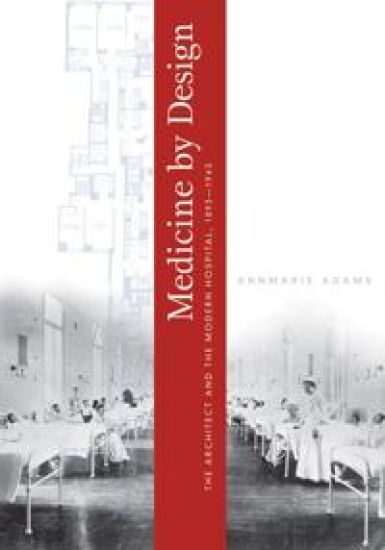
In the history of medicine, hospitals are usually seen as passive reflections of advances in medical knowledge and technology. In Medicine by Design, Annmarie Adams challenges these assumptions, examining how hospital design influenced the development of twentieth-century medicine and demonstrating the importance of these specialized buildings in the history of architecture. At the center of this work is Montreal’s landmark Royal Victoria Hospital, built in 1893. Drawing on a wide range of visual and textual sources, Adams uses the “Royal Vic”—along with other hospitals built or modified over the next fifty years—to explore critical issues in architecture and medicine: the role of gender and class in both fields, the transformation of patients into consumers, the introduction of new medical concepts and technologies, and the use of domestic architecture and regionally inspired imagery to soften the jarring impact of high-tech medicine. Identifying the roles played by architects in medical history and those played by patients, doctors, nurses, and other medical professionals in the design of hospitals, Adams also links architectural spaces to everyday hospital activities, from meal preparation to the ways in which patients entered the hospital and awaited treatment. Methodologically and conceptually innovative, Medicine by Design makes a significant contribution to the histories of both architectural and medical practices in the twentieth century. Annmarie Adams is William C. Macdonald Professor of Architecture at McGill University and the author of Architecture in the Family Way: Doctors, Houses, and Women, 1870–1900 and coauthor of Designing Women: Gender and the Architectural Profession.
Medicine by Design

Medicine by Design

Annmarie Adams

University of Minnesota Press
2008
nidottu
In the history of medicine, hospitals are usually seen as passive reflections of advances in medical knowledge and technology. In Medicine by Design, Annmarie Adams challenges these assumptions, examining how hospital design influenced the development of twentieth-century medicine and demonstrating the importance of these specialized buildings in the history of architecture. At the center of this work is Montreal’s landmark Royal Victoria Hospital, built in 1893. Drawing on a wide range of visual and textual sources, Adams uses the “Royal Vic”-along with other hospitals built or modified over the next fifty years-to explore critical issues in architecture and medicine: the role of gender and class in both fields, the transformation of patients into consumers, the introduction of new medical concepts and technologies, and the use of domestic architecture and regionally inspired imagery to soften the jarring impact of high-tech medicine. Identifying the roles played by architects in medical history and those played by patients, doctors, nurses, and other medical professionals in the design of hospitals, Adams also links architectural spaces to everyday hospital activities, from meal preparation to the ways in which patients entered the hospital and awaited treatment. Methodologically and conceptually innovative, Medicine by Design makes a significant contribution to the histories of both architectural and medical practices in the twentieth century. Annmarie Adams is William C. Macdonald Professor of Architecture at McGill University and the author of Architecture in the Family Way: Doctors, Houses, and Women, 1870–1900 and coauthor of Designing Women: Gender and the Architectural Profession.
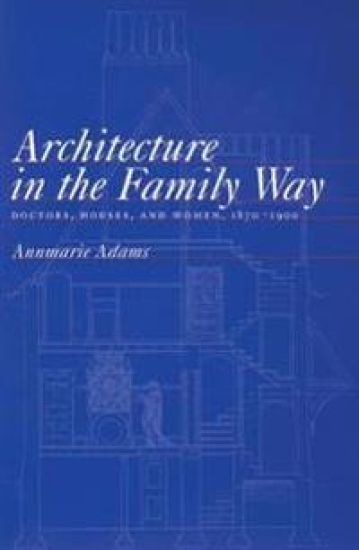
Architecture in the Family Way

Architecture in the Family Way

Annmarie Adams

McGill-Queen's University Press
2001
nidottu
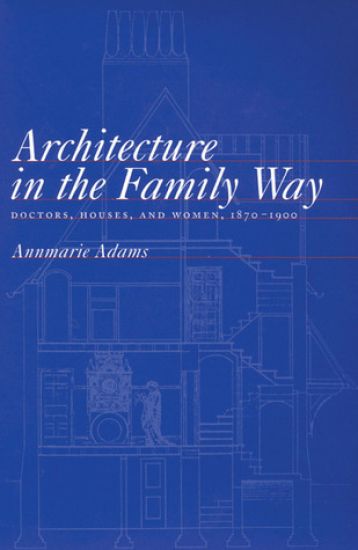
Adams argues that the many significant changes seen in this period were due not to architects' efforts but to the work of feminists and health reformers. Contrary to the widely held belief that the home symbolized a refuge and safe haven to Victorians, Adams reveals that middle-class houses were actually considered poisonous and dangerous and explores the involvement of physicians in exposing "unhealthy" architecture and designing improved domestic environments. She examines the contradictory roles of middle-class women as both regulators of healthy houses and sources of disease and danger within their own homes, particularly during childbirth. Architecture in the Family Way sheds light on an ambiguous period in the histories of architecture, medicine, and women, revealing it to be a time of turmoil, not of progress and reform as is often assumed.
'Designing Women'

'Designing Women'

Annmarie Adams; Peta Tancred

University of Toronto Press
2000
pokkari
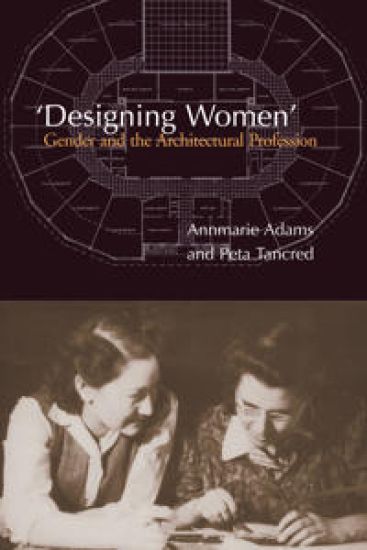
Historically, the contributions of women architects to their profession have been minimized or overlooked. 'Designing Women' explores the tension that has existed between the architectural profession and its women members. It demonstrates the influence that these women have had on architecture in Canada, and links their so-called marginalization to the profession's restrictive and sometimes discriminatory practices. Co-written by an architectural historian and a sociologist, this book provides a welcome blend of disciplinary approaches. The product of much original research, it looks at issues that are specific to architecture in Canada and at the same time characteristic of many male-dominated workplaces. Annmarie Adams and Peta Tancred examine the issue of gender and its relation to the larger dynamics of status and power. They argue that many women architects have reacted with ingenuity to the difficulties they have faced, making major innovations in practice and design. Branching out into a wide range of alternative fields, these women have extended and developed what are considered to be the core specializations within architecture. As the authors point out, while the profession designs women's place within it, women design buildings and careers that transcend that narrow professional definition.
'Designing Women'

'Designing Women'

Annmarie Adams; Peta Tancred

University of Toronto Press
2000
sidottu
Historically, the contributions of women architects to their profession have been minimized or overlooked. 'Designing Women' explores the tension that has existed between the architectural profession and its women members. It demonstrates the influence that these women have had on architecture in Canada, and links their so-called marginalization to the profession's restrictive and sometimes discriminatory practices. Co-written by an architectural historian and a sociologist, this book provides a welcome blend of disciplinary approaches. The product of much original research, it looks at issues that are specific to architecture in Canada and at the same time characteristic of many male-dominated workplaces. Annmarie Adams and Peta Tancred examine the issue of gender and its relation to the larger dynamics of status and power. They argue that many women architects have reacted with ingenuity to the difficulties they have faced, making major innovations in practice and design. Branching out into a wide range of alternative fields, these women have extended and developed what are considered to be the core specializations within architecture. As the authors point out, while the profession designs women's place within it, women design buildings and careers that transcend that narrow professional definition.
Exploring Everyday Landscapes

Exploring Everyday Landscapes

Annmarie Adams

University of Tennessee Press
1997
nidottu
Bringing together scholarship in diverse fields - including architecture, geography, folklore, anthropology, and urban studies - the seventeen essays in this volume confirm the transformations now occurring in the study of vernacular architecture. Moving away from a single vision of vernacular architecture that consisted only of "old, rural, handmade structures built in traditional forms and materials for everyday use, " scholars are exploring a wider variety of forms and landscapes - from company towns to grand expositions. Drawn from two conferences of the Vernacular Architecture Forum - one held in Charleston in 1994, the other in Ottawa in 1995 - these essays address a broad range of topics.
Architecture in the Family Way

Architecture in the Family Way

Annmarie Adams

McGill-Queen's University Press
1996
sidottu
Adams argues that the many significant changes seen in this period were due not to architects' efforts but to the work of feminists and health reformers. Contrary to the widely held belief that the home symbolized a refuge and safe haven to Victorians, Adams reveals that middle-class houses were actually considered poisonous and dangerous and explores the involvement of physicians in exposing "unhealthy" architecture and designing improved domestic environments. She examines the contradictory roles of middle-class women as both regulators of healthy houses and sources of disease and danger within their own homes, particularly during childbirth. Architecture in the Family Way sheds light on an ambiguous period in the histories of architecture, medicine, and women, revealing it to be a time of turmoil, not of progress and reform as is often assumed.