Kirjojen hintavertailu. Mukana 12 595 353 kirjaa ja 12 kauppaa.

Kirjailija

Anoosh Kulkarni

Kirjat ja teokset yhdessä paikassa: 4 kirjaa, julkaisuja vuosilta 2021-2023, suosituimpien joukossa Applied Generative AI for Beginners. Vertaile teosten hintoja ja tarkista saatavuus suomalaisista kirjakaupoista.

4 kirjaa

Kirjojen julkaisuhaarukka 2021-2023.

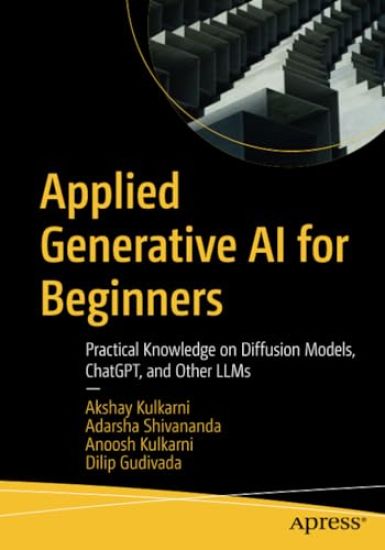
Applied Generative AI for Beginners

Applied Generative AI for Beginners

Akshay Kulkarni; Adarsha Shivananda; Anoosh Kulkarni; Dilip Gudivada

APRESS
2023
nidottu
This book provides a deep dive into the world of generative AI, covering everything from the basics of neural networks to the intricacies of large language models like ChatGPT and Google Bard. It serves as a one-stop resource for anyone interested in understanding and applying this transformative technology and is particularly aimed at those just getting started with generative AI. Applied Generative AI for Beginners is structured around detailed chapters that will guide you from foundational knowledge to practical implementation. It starts with an introduction to generative AI and its current landscape, followed by an exploration of how the evolution of neural networks led to the development of large language models. The book then delves into specific architectures like ChatGPT and Google Bard, offering hands-on demonstrations for implementation using tools like Sklearn. You’ll also gain insight into the strategic aspects of implementing generative AI in an enterprise setting, with the authors covering crucial topics such as LLMOps, technology stack selection, and in-context learning. The latter part of the book explores generative AI for images and provides industry-specific use cases, making it a comprehensive guide for practical application in various domains. Whether you're a data scientist looking to implement advanced models, a business leader aiming to leverage AI for enterprise growth, or an academic interested in cutting-edge advancements, this book offers a concise yet thorough guide to mastering generative AI, balancing theoretical knowledge with practical insights. What You Will Learn Gain a solid understanding of generative AI, starting from the basics of neural networks and progressing to complex architectures like ChatGPT and Google BardImplement large language models using Sklearn, complete with code examples and best practices for real-world applicationLearn how to integrate LLM’s in enterprises, including aspects like LLMOps and technology stack selectionUnderstand how generative AI can be applied across various industries, from healthcare and marketing to legal compliance through detailed use cases and actionable insights Who This Book Is For Data scientists, AI practitioners, Researchers and software engineers interested in generative AI and LLMs.
Time Series Algorithms Recipes

Time Series Algorithms Recipes

Akshay R Kulkarni; Adarsha Shivananda; Anoosh Kulkarni; V Adithya Krishnan

APRESS
2022
nidottu
This book teaches the practical implementation of various concepts for time series analysis and modeling with Python through problem-solution-style recipes, starting with data reading and preprocessing. It begins with the fundamentals of time series forecasting using statistical modeling methods like AR (autoregressive), MA (moving-average), ARMA (autoregressive moving-average), and ARIMA (autoregressive integrated moving-average). Next, you'll learn univariate and multivariate modeling using different open-sourced packages like Fbprohet, stats model, and sklearn. You'll also gain insight into classic machine learning-based regression models like randomForest, Xgboost, and LightGBM for forecasting problems. The book concludes by demonstrating the implementation of deep learning models (LSTMs and ANN) for time series forecasting. Each chapter includes several code examples and illustrations. After finishing this book,you will have a foundational understanding of various concepts relating to time series and its implementation in Python. What You Will LearnImplement various techniques in time series analysis using Python.Utilize statistical modeling methods such as AR (autoregressive), MA (moving-average), ARMA (autoregressive moving-average) and ARIMA (autoregressive integrated moving-average) for time series forecasting Understand univariate and multivariate modeling for time series forecastingForecast using machine learning and deep learning techniques such as GBM and LSTM (long short-term memory) Who This Book Is ForData Scientists, Machine Learning Engineers, and software developers interested in time series analysis.
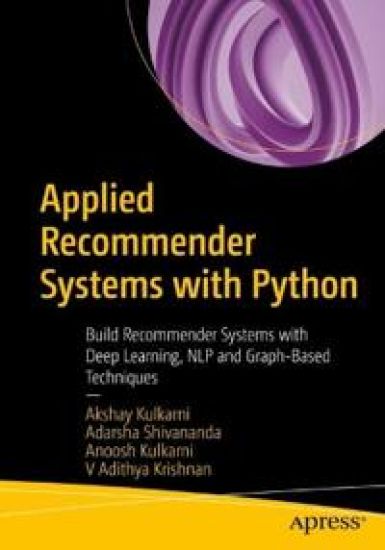
Applied Recommender Systems with Python

Applied Recommender Systems with Python

Akshay Kulkarni; Adarsha Shivananda; Anoosh Kulkarni; V Adithya Krishnan

APRESS
2022
nidottu
This book will teach you how to build recommender systems with machine learning algorithms using Python. Recommender systems have become an essential part of every internet-based business today. You'll start by learning basic concepts of recommender systems, with an overview of different types of recommender engines and how they function. Next, you will see how to build recommender systems with traditional algorithms such as market basket analysis and content- and knowledge-based recommender systems with NLP. The authors then demonstrate techniques such as collaborative filtering using matrix factorization and hybrid recommender systems that incorporate both content-based and collaborative filtering techniques. This is followed by a tutorial on building machine learning-based recommender systems using clustering and classification algorithms like K-means and random forest. The last chapters cover NLP, deep learning, and graph-based techniques to build a recommender engine. Each chapter includes data preparation, multiple ways to evaluate and optimize the recommender systems, supporting examples, and illustrations. By the end of this book, you will understand and be able to build recommender systems with various tools and techniques with machine learning, deep learning, and graph-based algorithms.What You Will LearnUnderstand and implement different recommender systems techniques with PythonEmploy popular methods like content- and knowledge-based, collaborative filtering, market basket analysis, and matrix factorization Build hybrid recommender systems that incorporate both content-based and collaborative filteringLeverage machine learning, NLP, and deep learning for building recommender systems Who This Book Is ForData scientists, machine learning engineers, and Python programmers interested in building and implementing recommender systems to solve problems.
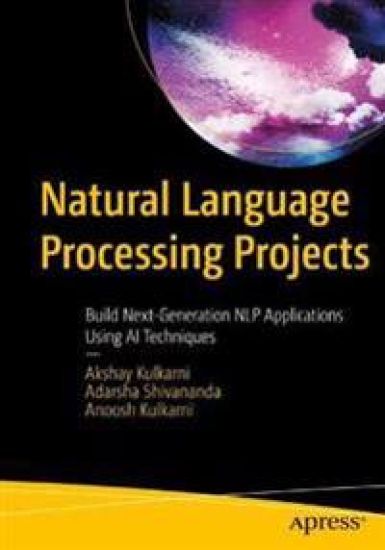
Natural Language Processing Projects

Natural Language Processing Projects

Akshay Kulkarni; Adarsha Shivananda; Anoosh Kulkarni

APRESS
2021
nidottu
Leverage machine learning and deep learning techniques to build fully-fledged natural language processing (NLP) projects. Projects throughout this book grow in complexity and showcase methodologies, optimizing tips, and tricks to solve various business problems. You will use modern Python libraries and algorithms to build end-to-end NLP projects. The book starts with an overview of natural language processing (NLP) and artificial intelligence to provide a quick refresher on algorithms. Next, it covers end-to-end NLP projects beginning with traditional algorithms and projects such as customer review sentiment and emotion detection, topic modeling, and document clustering. From there, it delves into e-commerce related projects such as product categorization using the description of the product, a search engine to retrieve the relevant content, and a content-based recommendation system to enhance user experience. Moving forward, it explains how to build systems to find similar sentences using contextual embedding, summarizing huge documents using recurrent neural networks (RNN), automatic word suggestion using long short-term memory networks (LSTM), and how to build a chatbot using transfer learning. It concludes with an exploration of next-generation AI and algorithms in the research space. By the end of this book, you will have the knowledge needed to solve various business problems using NLP techniques.What You Will LearnImplement full-fledged intelligent NLP applications with PythonTranslate real-world business problem on text data with NLP techniquesLeverage machine learning and deep learning techniques to perform smart language processingGain hands-on experience implementing end-to-end search engine information retrieval, text summarization, chatbots, text generation, document clustering and product classification,and more Who This Book Is ForData scientists, machine learning engineers, and deep learning professionals looking to build natural language applications using Python