Kirjojen hintavertailu. Mukana 12 657 676 kirjaa ja 12 kauppaa.
Kirjailija
Anthony Baldry
Kirjat ja teokset yhdessä paikassa: 4 kirjaa, julkaisuja vuosilta 2006-2018, suosituimpien joukossa Web-Based Concordancing and Annotation. Vertaile teosten hintoja ja tarkista saatavuus suomalaisista kirjakaupoista.
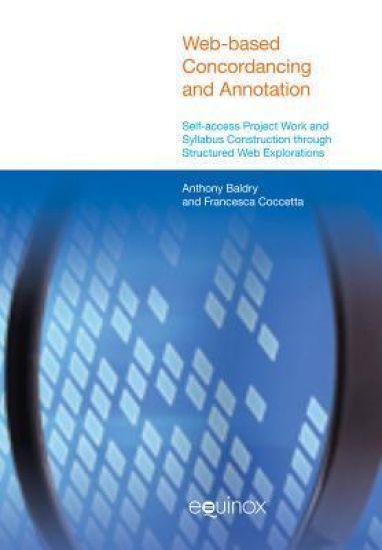
Lying at the heart of this volume is the web's enticing appeal, but as yet essentially unrealized potential, as the ultimate corpus around which text-based studies of English can be shaped. Key words in this volume are thus web-based text analysis, structured web explorations, ready-made syllabus, focus on e-learning, step-by-step self study, teacher training, development of realistic web-based syllabuses, multimodal concordancing and annotation. As the subtitle indicates, the volume addresses the needs of teachers and students who want to frame text studies in English around the web but need a ready-made guide as to how this can be done. Rather than attempting to adapt traditional language-only concordancing and annotation tools and techniques to web-based studies of English, the volume presents software tools and text analysis techniques which sideline the traditional focus on lemma-based characteristics of corpora; it refocuses attention on an integrated and multimodal model of annotation, concordancing, and web analysis techniques - all of which is particularly useful when analysing web genres. The volume's starting point is an awareness of the need to adapt research on web analysis, concordancing and annotation into a self-access and/or classroom-learning syllabus, whence the volume's incremental articulation as a series of steps which, as explained in the Introduction, correspond to 2-hour lesson units that build up into a 30-to-40 hour ready-made course responding to the requirements of English language learning and teaching in a wide range of degree courses (e.g. Foreign Languages, Communication Studies, Law, Psychology and Political Sciences). The volume contains descriptions of web concordancing and annotation techniques, illustrations of their application and guided exercises as well as insets providing suggestions for teachers and students on how the resources presented in the book might best be used. The volume is also supported by a website with links to the software tools described, plus additional exercises and materials, many using the McaWeb web annotation and concordancing system (mcaweb.unipv.it).
Lying at the heart of this volume is the web's enticing appeal, but as yet essentially unrealized potential, as the ultimate corpus around which text-based studies of English can be shaped. Key words in this volume are thus web-based text analysis, structured web explorations, ready-made syllabus, focus on e-learning, step-by-step self study, teacher training, development of realistic web-based syllabuses, multimodal concordancing and annotation. As the subtitle indicates, the volume addresses the needs of teachers and students who want to frame text studies in English around the web but need a ready-made guide as to how this can be done. Rather than attempting to adapt traditional language-only concordancing and annotation tools and techniques to web-based studies of English, the volume presents software tools and text analysis techniques which sideline the traditional focus on lemma-based characteristics of corpora; it refocuses attention on an integrated and multimodal model of annotation, concordancing, and web analysis techniques - all of which is particularly useful when analysing web genres. The volume's starting point is an awareness of the need to adapt research on web analysis, concordancing and annotation into a self-access and/or classroom-learning syllabus, whence the volume's incremental articulation as a series of steps which, as explained in the Introduction, correspond to 2-hour lesson units that build up into a 30-to-40 hour ready-made course responding to the requirements of English language learning and teaching in a wide range of degree courses (e.g. Foreign Languages, Communication Studies, Law, Psychology and Political Sciences). The volume contains descriptions of web concordancing and annotation techniques, illustrations of their application and guided exercises as well as insets providing suggestions for teachers and students on how the resources presented in the book might best be used. The volume is also supported by a website with links to the software tools described, plus additional exercises and materials, many using the McaWeb web annotation and concordancing system (mcaweb.unipv.it).
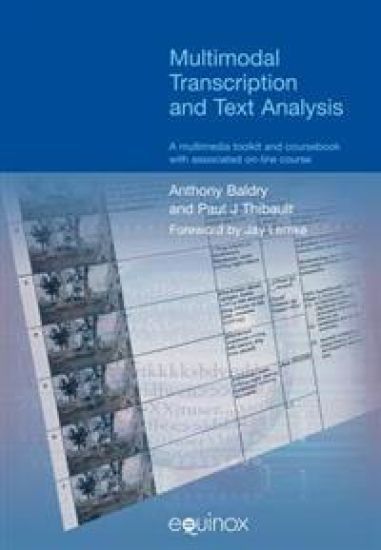
What are multimodal texts? How can we transcribe and analyse them? How can multimedia and internet help us in multimodal discourse analysis? What postproduction and authoring skills are needed to analyse a multimodal text or to develop a corpus of multimodal texts? How does integrating multimedia meaning-making resources into hypertext multiply our meaning-making potential? How does the study of language relate to multimodality and multimedia, in particular in the e-learning age? How, and to what extent, will multimodal discourse analysis re-shape linguistics? In its attempt to provide answers to the questions raised above, and many others, this book proposes concrete solutions to the problems of multimodal text analysis and transcription of printed texts, websites and film. As such, it constitutes a much needed course in multimodal text transcription and analysis. It also suggests ways in which multimodal discourse analysis can help both educators and students understand how meaning is made in the e-learning environments that now play such an important role in our lives. In both these respects, readers are encouraged to use the book in conjunction with an associated and freely accessible website which provides many illustrations and exercises that further contextualise and exemplify the insights and descriptions provided by the book. As befits a coursebook, the individual chapters of the book are carefully organised in such a way as to provide a step-by-step progression in theoretical and descriptive complexity.