Kirjojen hintavertailu. Mukana 12 595 353 kirjaa ja 12 kauppaa.

Kirjailija

Anthony Burton

Kirjat ja teokset yhdessä paikassa: 47 kirjaa, julkaisuja vuosilta 1976-2026, suosituimpien joukossa Mines and Miners of Cornwall and Devon. Vertaile teosten hintoja ja tarkista saatavuus suomalaisista kirjakaupoista.

47 kirjaa

Kirjojen julkaisuhaarukka 1976-2026.

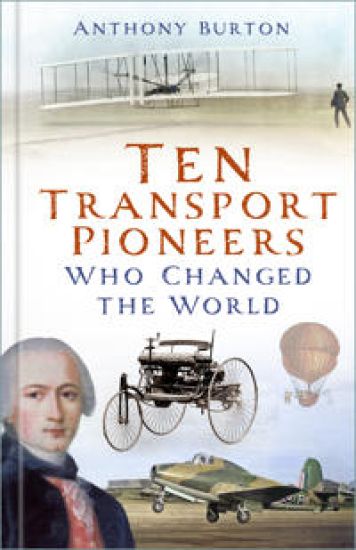
Ten Transport Pioneers Who Changed the World

Ten Transport Pioneers Who Changed the World

Anthony Burton

THE HISTORY PRESS LTD
2026
sidottu
This new book from Anthony Burton looks at ten pivotal moments in transport world history, ranging over five centuries, from the age of sailing ships to the modern jet liner. The diverse individuals range from Cornish mining engineer Richard Trevithick to French nobleman the Marquis Jouffroy d’Abbans. The varied inventions cover developments on land, at sea and in the air, charting leaps in development that caused permanent change, including aqueducts and flights of locks for inland waterways, to paddle steamers and iron-hulled vessels, the hot air balloon and jet engine, the internal combustion engine for road transport, or the first electric locomotive. This is a book that tells of exciting discoveries and the lives of those who made them.
The Independent Locomotive Builders

The Independent Locomotive Builders

Anthony Burton

PEN SWORD BOOKS LTD
2025
sidottu
The big railway companies had famous locomotive works such as Crewe and Swindon, but this is the story of the very many other companies, who not only built locomotives for the British railways but supplied them to railways all round the world. Many of these companies were highly innovative, developing engines of many different types from narrow gauge to articulated locomotives and specialist engines for tramways. The list is inclusive, covering the famous names such as Robert Stephensons & Co and Beyer Peacock as well as companies that produced just a few locomotives. The time spam covers over two centuries from Fenton, Murray & Wood who built the locomotives for the world’s first successful commercial railway, the Middleton Colliery of 1812 to the present day and the world of electric and diesel taction. In telling this story, the reader will come to appreciate how important these companies were in the whole story of locomotion development. In countries across the globe, from America to Australia, they were often the very first to supply engines to start up their new rail networks. With over a hundred illustrations in both black and white in colour, this is a book that will appeal to all who have an interest in the wide world of railways.
The Wool Industry a Global History

The Wool Industry a Global History

Anthony Burton

PEN SWORD BOOKS LTD
2024
sidottu
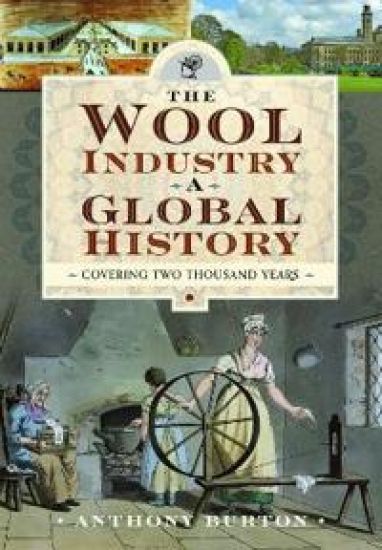
The story of wool covers 4,000 years of human history – the first written record of dying wool for cloth was found on a Mesopotamian papyrus c. 2000 BCE. In this book, the whole story is told, from the rearing of the different animals that provide the raw material to its transformation into woven cloth and knitted material. Much of the emphasis is on Britain, where, in the Middle Ages, wool was the basis for much of the country’s prosperity, as can still be seen in the magnificent opulence of the churches endowed by the wool merchants. It deals with the different techniques used for spinning, weaving and finishing cloth. The eighteenth century saw great changes, as production moved from cottage to mill and the mill towns grew. But this is also an international story, looking at a variety of different topics, from the work of Incan and Mayan people in South America to the development of the flocks of Australia. But, this is not just about technology – it is also about how that technology has an impact on the lives of people, from th life of the shepherd to the industrial disputes that broke into the violence of the Luddite rebellions.
Taking the Train

Taking the Train

Anthony Burton

PEN SWORD BOOKS LTD
2024
sidottu
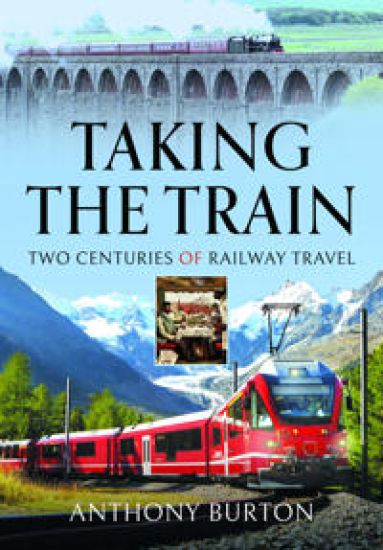
The book looks at rail travel from the passenger’s point of view, beginning when a coach drawn by horses, rumbled down the newly laid tracks linking Swansea to Mumbles in 1807 and takes the reader right up to the present day. It was not long after that first service opened in Wales that the first steam passenger trains began to operate. The story broadens out from the first inter-city line connecting Liverpool to Manchester to spread first around Britain and eventually spread across the world. The book paints vivid pictures of how travel seemed to passengers in different countries, drawing on many first-hand accounts. The early days offered little in comfort – third class passengers had to make do with carriages that were simply open trucks. Gradually conditions improved and eventually there was an age of luxury travel epitomised by the famous Orient Express. Every aspect of rail travel is looked at, from tragic tales of fatal accidents to the role of railway travel in films and books. This lively account of the pioneering days and what many regard as the golden age of rail travel will be welcomed by anyone who enjoys taking the train.
Victorian and Edwardian Locomotive Portraits, Northern England, Wales, Scotland and Ireland
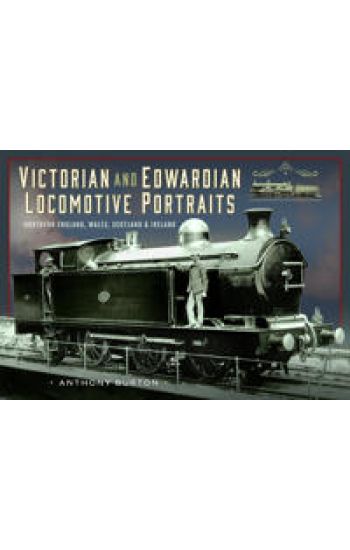
The Victorian and Edwardian periods saw the development of the steam locomotive in Britain from a comparatively simple machine to a powerful main line express capable of speeds of a hundred miles an hour. The book starts with an introduction dealing with the main lines of development in the north of Britain and that is followed by a picture section with over a hundred photographs. Each illustration has an extended caption giving details of the engine and its history. The material is arranged geographically, with sections dealing with the north of England, Wales, Scotland, Ireland and a separate section on light railways. The photographs are all of the locomotives in their working days, many showing them in action on both passenger and goods trains. This splendid collection shows the rich diversity of Britain’s railways and how different companies and their engineers produced engines of great individuality. This is a book that will be enjoyed by all lovers of the golden age of steam railways.
Victorian and Edwardian Locomotive Portraits - The South of England
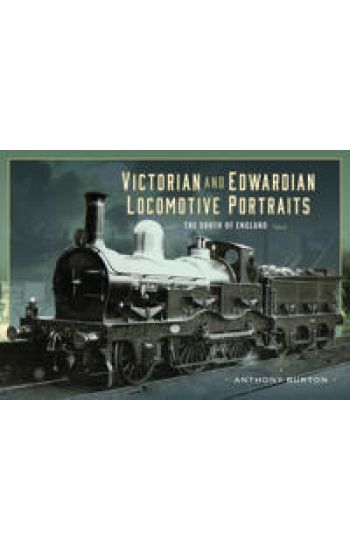
The Victorian and Edwardian periods saw the development of the steam locomotive in Britain from a comparatively simple machine to a powerful main line express capable of speeds of a hundred miles an hour. The book starts with an introduction dealing with the main line of development and that is followed by a picture section with over 190 photographs. Each illustration has an extended caption giving details of the engine and its history. The material is arranged geographically, starting with the railways of southern England and ending with Irish railways. The Channel Islands, the Isle of Wight and the Isle of Man are also included, and there is a section on English light railway. The photographs are all of the locomotives in their working days, many showing them in action on both passenger and goods trains. This splendid collection shows the rich diversity of Britain’s railways and how different companies and their engineers produced engines of great individuality. This is a book that will be enjoyed by all lovers of the golden age of steam railways.
Ocean Liners

Ocean Liners

Anthony Burton

PEN SWORD BOOKS LTD
2024
sidottu
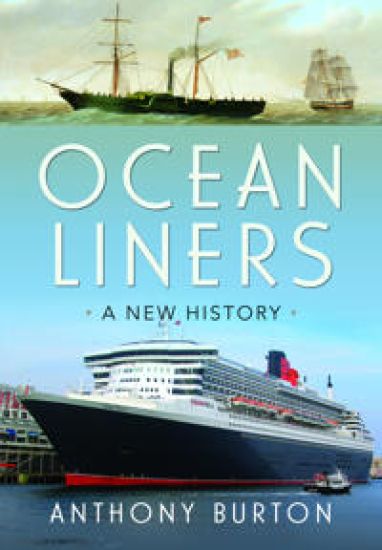
There has always been a romance around ocean liners, but this book looks behind the romance to show the reality of travelling the oceans of the world. The book starts with the first scheduled transatlantic crossings in the age of sail, then moves on through the development of the steamers and ends in the present day, when ocean liners have given way to airliners. All aspects of the subject are discussed. The experience of travelling by sea varied enormously from the luxury of first-class travel to the often brutal conditions endured by immigrants. Ship design developed in the race between competing companies to provide the most powerful ships. But while technology came into the fundamental design, when it came to décor, for many of the great liners the interiors looked back with a romanticised view of the past. It is not always realised that a great liner might have almost as many crew as passengers, and this looks at all those who kept the ships running, from the black gang in the engine room to the captain on the bridge. The result is a rounded view of what it meant to travel on some of the greatest ships ever built.
A History of the Cotton Industry

A History of the Cotton Industry

Anthony Burton

PEN SWORD BOOKS LTD
2023
sidottu
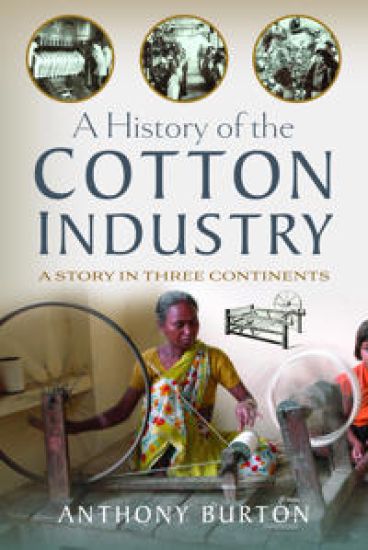
This book is about technology and how it has changed the lives of people on three continents over the last three hundred years. The development of the cotton industry was the starting point for one of the great turning points in history – the industrial revolution. It began with the importation of cloth into Britain from India and that created a new fashion. As the demand for cotton cloth grew, British inventors began to find ways of making the same cloth using powered machinery and built the first cotton mills. The old way of life of the textile workers was transformed, as work moved from home to factory and thousands of small children were brought in to tend the new machines. If conditions in the cotton towns were bad, they were far worse in America where, thanks to the work of slaves, the country took over the supply of raw material from India. During the American Civil War, Britain turned again to India for its supplies. Today, positions have changed dramatically. India again has a thriving industry, while in Britain only a fraction of the old mills are still at work. The author looks in detail at the technology that produced the changes, but the emphasis is very much on the human stories of the industrialists and their workers, the planters and their slaves in Britain, India and America.
Craft of the Inland Waterways

Craft of the Inland Waterways

Anthony Burton

PEN SWORD BOOKS LTD
2023
sidottu
The book traces the history of the various craft that have been used for transport on Britain's rivers and canals from the earliest times to the present day. The first section deals with the long history of the development of river craft, from prehistoric log boats to the whole range of sailing barges, such as the Humber keel and the Thames barge. By the middle of the 18th century, canal construction brought in a new generation of craft, not just the familiar narrow boats, but the wide boats such as the Leeds & Liverpool short boats, maintenance craft and even passenger boats. Steam power was introduced in the 19th century for a variety of crafts from tugs to pleasure steamers, while the 20th century brought in the diesel motors for boats and barges of all kinds. Today, there is still some commercial traffic, but an ever-increasing demand for boats for pleasure. Much of this story is told in terms of preserved craft and is also based on the author's own experience aboard many of these craft, whether crewing a Thames barge or working in the engine room of a Clyde puffer.
Thomas Telford

Thomas Telford

Anthony Burton

PEN SWORD BOOKS LTD
2023
nidottu
Thomas Telford's life was extraordinary: born in the Lowlands of Scotland, where his father worked as a shepherd, he ended his days as the most revered engineer in the world, known punningly as The Colossus of Roads. He was responsible for some of the great works of the age, such as the suspension bridge across the Menai Straits and the mighty Pontcysyllte aqueduct. He built some of the best roads seen in Britain since the days of the Romans and constructed the great Caledonian Canal, designed to take ships across Scotland from coast to coast. He did as much as anyone to turn engineering into a profession and was the first President of the newly formed Institution of Civil Engineers. All this was achieved by a man who started work as a boy apprentice to a stonemason. He was always intensely proud of his homeland and was to be in charge of an immense programme of reconstruction for the Highlands that included building everything from roads to harbours and even designing churches. He was unquestionably one of Britains finest engineers, able to take his place alongside giants such as Brunel. He was also a man of culture, even though he had only a rudimentary education. As a mason in his early days he had worked alongside some of the greatest architects of the day, such as William Chambers and Robert Adams, and when he was appointed County Surveyor for Shropshire early in his career, he had the opportunity to practice those skills himself, designing two imposing churches in the county and overseeing the renovation of Shrewsbury Castle. Even as a boy, he had developed a love of literature and throughout his life wrote poetry and became a close friend of the Poet Laureate, Robert Southey. He was a man of many talents, who rose to the very top of his profession but never forgot his roots: he kept his old masons tools with him to the end of his days. There are few official monuments to this great man, but he has no need of them: the true monuments are the structures that he left behind that speak of a man who brought about a revolution in transport and civil engineering.
Ten Engineers Who Made Britain Great

Ten Engineers Who Made Britain Great

Anthony Burton

THE HISTORY PRESS LTD
2023
nidottu
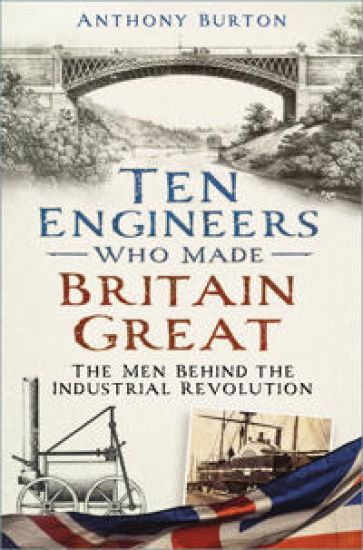
Samuel Smiles published Lives of the Engineers in 1862. The noted biographer presented his engineers as heroic progress makers who conquered nature and overcame impossible obstacles to drive the Industrial Revolution forward, but included twisted and often fabricated accounts in his work.In Ten Engineers Who Made Britain Great, Anthony Burton seeks to correct this narrative by offering nuanced portraits of some of the best-known engineers of the eighteenth and nineteenth centuries. Burton investigates the common themes that run between the stories of John Metcalf, James Brindley, John Smeaton, William Jessop, Thomas Telford, James Watt, Richard Trevithick, George and Robert Stephenson, and Isambard Kingdom Brunel, and also explores how each of these men learned from one another.
Steam Traction on the Road

Steam Traction on the Road

Anthony Burton

PEN SWORD BOOKS LTD
2023
nidottu
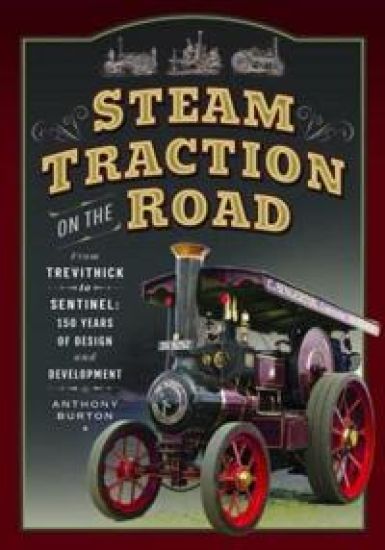
This is the story of how for more than a hundred years steam power played a vital role in the development of road transport. It all began with tentative attempts to build steam carriages by pioneers such as Cugnot in France and Trevithick in Britain, and in the early part of the nineteenth century there were significant attempts to develop steam carriages and omnibuses. That these attempts ultimately failed was largely due to opposition by road authorities and draconian legislation. Steam power did, however, find a real purpose in agriculture, where the traction engine was used for a variety of tasks from towing and working threshing machines, to ploughing. Once the value of the traction engine had been established, it soon found a use in many parts of the world for heavy haulage work and appeared in an exotic guise as the showman's engine. The latter was not only used to haul rides to fairgrounds but also powered a dynamo that could light up the fair at night. By the end of the nineteenth century, steam on the road took on a new life with the development of steam cars and trucks. For a time they vied the new internal combustion engine for supremacy on the road. The American Doble Company even developed a 100mph steam sports car. Ultimately steam lost the war, but steam vehicles survive and delight us still thanks to enthusiastic owners and restorers.
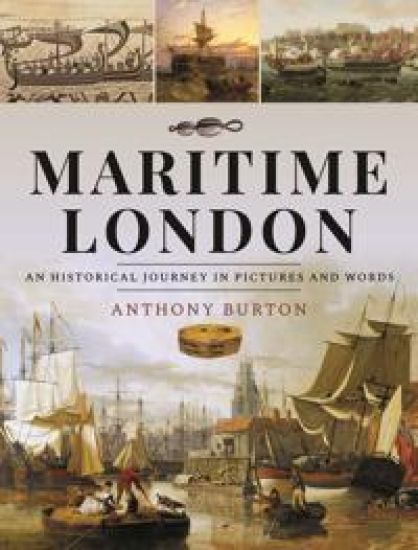
Maritime London

Maritime London

Anthony Burton

PEN SWORD BOOKS LTD
2022
sidottu
The book looks at London's maritime history from the establishment of Roman Londinium to the present day. It discusses many different aspects of life on the Thames and its connecting waterways and canals. There was a time when the River Thames was the main highway for the city, when watermen plied their trade carrying passengers and goods in a wide variety of craft, ranging from rowing boats to sailing barges. The Thames was also, for many centuries, a major ship building centre, and the story includes the construction of some iconic vessels from Henry VIII's flagship Henri Grace a Dieu to Isambard Brunel's great steamship the SS Great Eastern. London was also until recently the country's most important port. In the days of sail, the Port of London was crowded with vessels and it was not until the nineteenth century that major enclosed docks were built, a process that continued into the early years of the twentieth century. The early nineteenth century also saw London connected to the rest of England through a network of canals. Other topics covered include the lifeboat service, river fire fighting forces and the river police. The result is a colourful pageant that highlights the vital role that London's waterways played in the life of the capital.
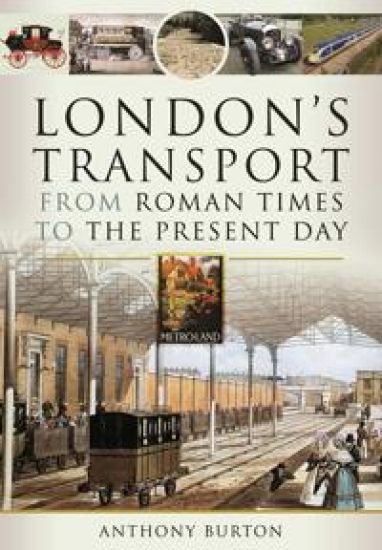
London's Transport From Roman Times to the Present Day
Transport systems are the lifeblood of all great cities and this is certainly true of London. As far back as Roman times, their city Londinium was the hub of a network of roads leading out to all the major centres of the time. It was the Romans who gave the city its first bridge across the Thames and its first paved roadways. This book tells the story of London's roads and bridges and the vehicles that used them. For centuries, transport meant horse drawn vehicles, from lumbering waggons to elegant carriages and the city had a flourishing industry, building carriages. The Industrial Revolution brought major changes, not least in the construction of more and more bridges over the Thames. In the 19th century a new system appeared with the arrival of the railways, and the many stations that are such prominent features of the cityscape. The story continues into the 20th century, when, for a time, the city was also home to some pioneering motor car manufacturers, such as Vauxhall. It comes nearer our time with the construction of the underground railway and the driverless trains of the Dockland Light Railway. Londoners will have a chance to find out just how travel around the city has changed in the last two thousand years.
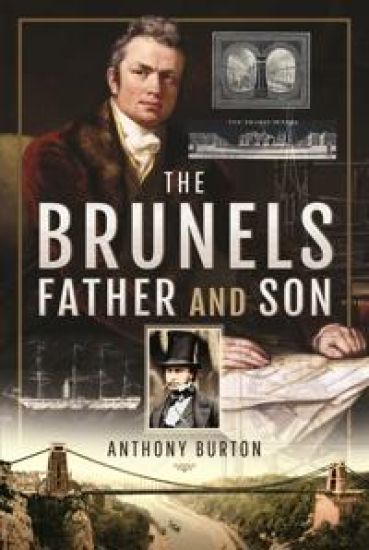
The Brunels: Father and Son

The Brunels: Father and Son

Anthony Burton

PEN SWORD BOOKS LTD
2022
sidottu
Isambard Kingdom Brunel has always been regarded as one of Britain's great heroes and an engineering genius. His father Marc Brunel has not received the same degree of adulation, but this book will show just how important a part Marc played in his son's works and will also look at his own great achievements. Marc Brunel arrived in Britain as a refugee from revolutionary France, after a short time working in America. He was a pioneer of mass production technology, when he invented machines for making blocks for sailing ships. He had other inventions to his name, but his greatest achievement was in constructing the very first tunnel under the Thames. Isambard spent his early years working for and with is father, who not only encouraged him but throughout his career he was also able to offer practical help. The famous viaduct that carried the Great Western Railway over the Thames at Maidenhead, for example was based on an earlier design of Marc's. Isambard's greatest achievements were in revolutionising the shipping industry, where hew as able to draw on his father's experience when he served n the navy. The book not only looks at the successes of two great engineers, but also their failures. Primarily, however, it is a celebration of two extraordinary mean and their amazing achievements.
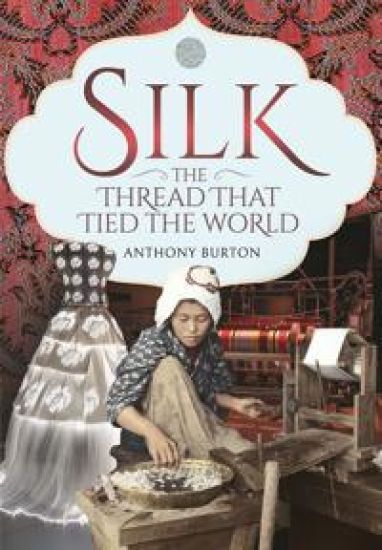
Silk, the Thread that Tied the World

Silk, the Thread that Tied the World

Anthony Burton

PEN SWORD BOOKS LTD
2021
sidottu
Over a thousand years ago the Chinese discovered that the slender filaments that formed the cocoon of the silk moth, could be woven into beautiful shimmering fabrics. For centuries they were able to keep the process a secret, but eventually started to trade the valuable cloth with the west, along the silk road. Silk was a luxury item that bestowed prestige, so it was inevitable that the wealthy wanted their silks to be as elaborate as possible, beautiful designs were produced in the Islamic world and gradually a European industry developed. In the 19th century mechanisation of the time consuming hand weaving process, had resulted in products being produced using the Jacquard loom, which used punched cards to create a pattern. Silk remains the most beautiful woven material in the world, moving from its origins in ancient China to help transform the whole world.
The Canal Builders

The Canal Builders

Anthony Burton

Pen Sword Transport
2021
nidottu
Canal Builders is a classic history book for anyone interested in the development of Britains canal system. The book, which was first published in the 1970s, is now republished here in a new fifth edition. It takes the reader from the middle of the eighteenth century, to the start of the railway age in the early nineteenth century. Anthony Burton has revised and improved the original text, using new material that he has found in archives since it was first published, and has added many extra illustrations. This is the remarkable story of the many groups of people who were responsible for building Britains canal system. There were industrialists, such as Josiah Wedgwood, who promoted canals to help his own industry, and speculators, who financed the projects in the hope of a good return. The work was planned by engineers, some of whom, such as James Brindley and Thomas Telford, have become famous, while others have remained virtually unknown but still did magnificent work. This is also the story of the great, anonymous army of men who actually did the work the navvies. This was the first book ever to study the lives of these labourers in detail. Altogether it is an epic story of how the transport route that made the industrial revolution possible was built. 'Well planned and well written There is no better introduction to the early canal age.' The Economist
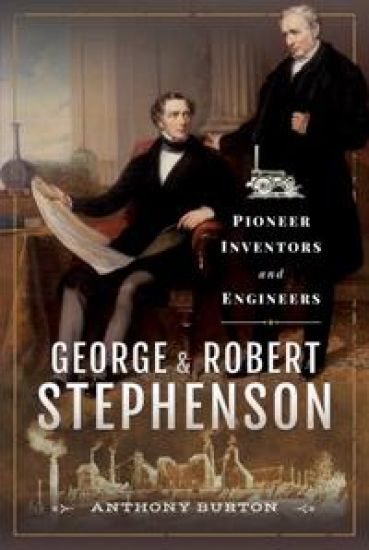
George and Robert Stephenson

George and Robert Stephenson

Anthony Burton

Pen Sword Transport
2020
sidottu
This is a new biography of two great British engineering pioneers, who did much to develop the world we now live in. George and Robert Stephenson, were at the forefront of early railways and were at the cutting edge of modern engineering history. Industrial historian Anthony Burton looks into these two giants of the late Georgian and early Victorian age, who were responsible for the development of much of the early railway map in both Britain and other parts of the world. The work examines the lives of the two men and their ability to overcome some of the most pressing engineering problems of their time. This is a new work, with newly researched material published here for the first time, which take a fresh look at both pioneering engineers and their achievements.
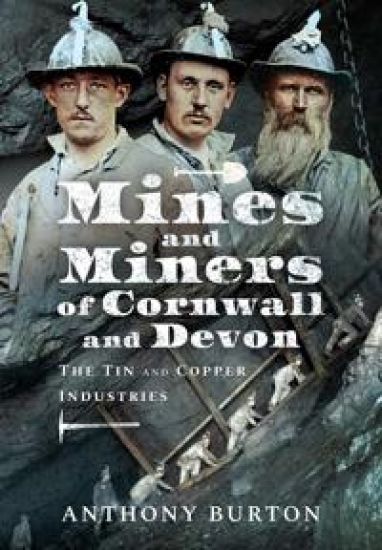
Mines and Miners of Cornwall and Devon

Mines and Miners of Cornwall and Devon

Anthony Burton

Pen Sword History
2020
nidottu
Tin mining has existed in Cornwall and parts of Devon from before the Romans arrived in Britain, this volume which is Anthony Burtons one hundredth book, marks a milestone in the authors writing career. The book takes the story of Tin Mining from its earliest period through to the present day, looking at how the industry developed from basic primitive pick and shovel operation, to the later use of explosives and steam to extract the valuable ore. The book also looks at the politics, economics and technology available at different periods of the history of the tin mining industry. The volume has many new illustrations and has been thoroughly researched, to produce a new insight into this interesting old industry.
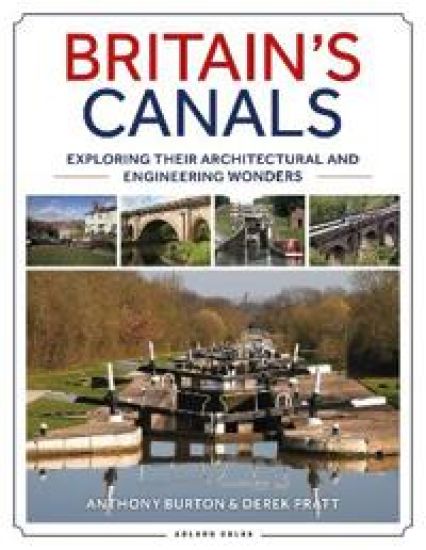
Britain's Canals

Britain's Canals

Anthony Burton; Derek Pratt

Adlard Coles Nautical
2020
nidottu
Britain's Canals is a charming and insightful exploration into the amazing architecture and engineering wonders that surround Britain’s inland waterways – from the awe-inspiring 30-lock flight on the Worcester and Birmingham Canal, to the delightful chocolate-box lock-keepers’ cottages that line the cut of every canal, to masterpieces such as the 18-arch Pontcysyllte aqueduct, the highest aqueduct in the world, to beautiful bridges, grand company buildings, the social hubs that were, and still are, canal-side pubs, plus so much more. In contrast to many inland waterways books which are organised geographically by canal, Britain's Canals is structured thematically, with chapters covering the line (the shape of the canal), locks and lock cottages, bridges, aqueducts, lifts and planes, company buildings, wharves, basins and quays and finally the canal-side pub. Each chapter explores how these features were created and have changed through history, right through to the present, with plenty of ideas for places to visit – plus full information on how to get to them. An abundance of full-colour photography throughout, both historical and modern-day, will delight readers and inspire them to explore Britain’s wondrous inland waterways, whether on boat, by foot or by bike. In Britain's Canals, two inland waterways experts and admired authors come together to produce the definitive word on the man-made wonders that make Britain’s canals so special, so loved and enjoyed by so many.