Kirjojen hintavertailu. Mukana 12 657 676 kirjaa ja 12 kauppaa.

Kirjailija

Anthony Elliott

Kirjat ja teokset yhdessä paikassa: 34 kirjaa, julkaisuja vuosilta 2004-2024, suosituimpien joukossa Routledge Revivals: Anthony Elliott: Early Works in Social Theory. Vertaile teosten hintoja ja tarkista saatavuus suomalaisista kirjakaupoista.

34 kirjaa

Kirjojen julkaisuhaarukka 2004-2024.

Algorithms of Anxiety

Algorithms of Anxiety

Anthony Elliott

JOHN WILEY AND SONS LTD
2024
nidottu
Machine learning algorithms are widely presumed to herald a world in which the crippling burdens of anxiety can be left behind. The digital revolution promises a brave new world where individuals, communities and organizations can at last take control of the future – anticipating, designing and commanding the future, possibly even with mathematical exactitude. Yet, paradoxically, algorithms have unleashed widespread fears and forebodings about the impact of digital technologies. Whether it’s worries about unemployment, distress about social media’s harmful effects on teenagers, or the fear of intrusive digital surveillance, we live in an age of turbo-charged anxiety where the prophecies of algorithms are increasingly enmeshed with fundamental disruption and anxieties about the future. In this book, Anthony Elliott examines how machine learning algorithms are not only transforming global institutions but also rewriting our personal lives. He tells this story through a wide-ranging analysis which takes in ChatGPT, Amazon, the Metaverse, Martin Ford, Netflix, Uber, Bernard Stiegler, Squid Game, Kate Crawford, LaMDA, Byung-Chul Han, autonomous drones, Jean Baudrillard and the automation of warfare. Questioning why people often assume that they need to adopt new technologies in order to lead fulfilling lives, Elliott argues that people may be as much entranced as inspired by their outsourcing of personal decision-making to smart machines.
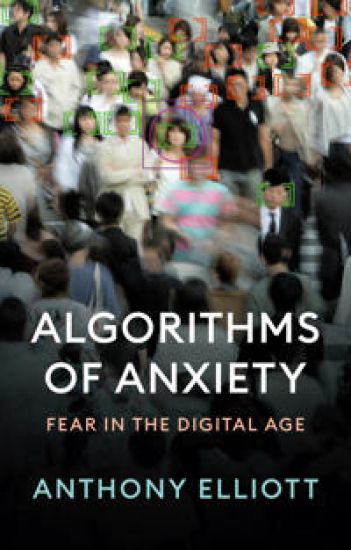
Algorithms of Anxiety

Algorithms of Anxiety

Anthony Elliott

JOHN WILEY AND SONS LTD
2024
sidottu
Machine learning algorithms are widely presumed to herald a world in which the crippling burdens of anxiety can be left behind. The digital revolution promises a brave new world where individuals, communities and organizations can at last take control of the future – anticipating, designing and commanding the future, possibly even with mathematical exactitude. Yet, paradoxically, algorithms have unleashed widespread fears and forebodings about the impact of digital technologies. Whether it’s worries about unemployment, distress about social media’s harmful effects on teenagers, or the fear of intrusive digital surveillance, we live in an age of turbo-charged anxiety where the prophecies of algorithms are increasingly enmeshed with fundamental disruption and anxieties about the future. In this book, Anthony Elliott examines how machine learning algorithms are not only transforming global institutions but also rewriting our personal lives. He tells this story through a wide-ranging analysis which takes in ChatGPT, Amazon, the Metaverse, Martin Ford, Netflix, Uber, Bernard Stiegler, Squid Game, Kate Crawford, LaMDA, Byung-Chul Han, autonomous drones, Jean Baudrillard and the automation of warfare. Questioning why people often assume that they need to adopt new technologies in order to lead fulfilling lives, Elliott argues that people may be as much entranced as inspired by their outsourcing of personal decision-making to smart machines.
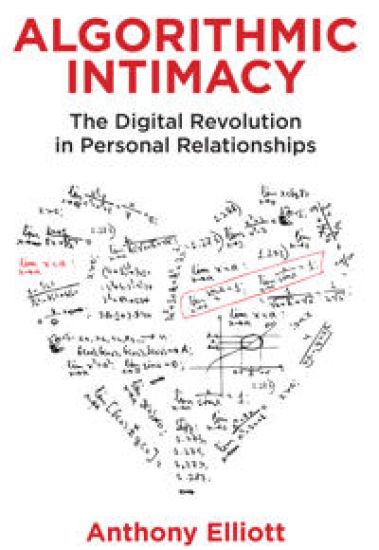
Algorithmic Intimacy

Algorithmic Intimacy

Anthony Elliott

JOHN WILEY AND SONS LTD
2022
sidottu
Artificial intelligence not only powers our cars, hospitals and courtrooms: predictive algorithms are becoming deeply lodged inside us too. Machine intelligence is learning our private preferences and discreetly shaping our personal behaviour, telling us how to live, who to befriend and who to date. In Algorithmic Intimacy, Anthony Elliott examines the power of predictive algorithms in reshaping personal relationships today. From Facebook friends and therapy chatbots to dating apps and quantified sex lives, Elliott explores how machine intelligence is working within us, amplifying our desires and steering our personal preferences. He argues that intimate relationships today are threatened not by the digital revolution as such, but by the orientation of various life strategies unthinkingly aligned with automated machine intelligence. Our reliance on algorithmic recommendations, he suggests, reflects a growing emergency in personal agency and human bonds. We need alternatives, innovation and experimentation for the interpersonal, intimate effort of ongoing translation back and forth between the discourses of human and machine intelligence. Accessible and compelling, this book sheds fresh light on the impact of artificial intelligence on the most intimate aspects of our lives. It will appeal to students in the social sciences and humanities and to a wide range of general readers.
Algorithmic Intimacy

Algorithmic Intimacy

Anthony Elliott

JOHN WILEY AND SONS LTD
2022
nidottu
Artificial intelligence not only powers our cars, hospitals and courtrooms: predictive algorithms are becoming deeply lodged inside us too. Machine intelligence is learning our private preferences and discreetly shaping our personal behaviour, telling us how to live, who to befriend and who to date. In Algorithmic Intimacy, Anthony Elliott examines the power of predictive algorithms in reshaping personal relationships today. From Facebook friends and therapy chatbots to dating apps and quantified sex lives, Elliott explores how machine intelligence is working within us, amplifying our desires and steering our personal preferences. He argues that intimate relationships today are threatened not by the digital revolution as such, but by the orientation of various life strategies unthinkingly aligned with automated machine intelligence. Our reliance on algorithmic recommendations, he suggests, reflects a growing emergency in personal agency and human bonds. We need alternatives, innovation and experimentation for the interpersonal, intimate effort of ongoing translation back and forth between the discourses of human and machine intelligence. Accessible and compelling, this book sheds fresh light on the impact of artificial intelligence on the most intimate aspects of our lives. It will appeal to students in the social sciences and humanities and to a wide range of general readers.
Introduction to Contemporary Social Theory

Introduction to Contemporary Social Theory

Anthony Elliott; Charles Lemert

TAYLOR FRANCIS LTD
2022
nidottu
In this comprehensive and clear introduction to contemporary social theory, Anthony Elliott and Charles Lemert explore the major theoretical traditions from the Frankfurt School to the digital revolution and beyond. Fully revised and updated, this second edition has been expanded to consider the most recent developments in social theory, including a new chapter on the digital revolution and the increasingly significant impact of technological developments (such as artificial intelligence, machine learning and robotics) on society, culture and politics.Introduction to Contemporary Social Theory provides the reader with a superb overview of key developments in social theory, including the Frankfurt School, American pragmatism, structuralism, post-structuralism, feminism, globalization and world-systems theory. In doing so, the textbook explores the ideas of a wide range of social theorists, including Theodor Adorno, Herbert Marcuse, Talcott Parsons, Erving Goffman, Harold Garfinkel, Michel Foucault, Jacques Lacan, Jacques Derrida, C. Wright Mills, Anthony Giddens, Pierre Bourdieu, Julia Kristeva, Jürgen Habermas, Judith Butler, Slavoj Žižek, Manuel Castells, Cornel West, Immanuel Wallerstein and Zygmunt Bauman. This textbook provides stylish exposition with powerful social critique and original insights. It will be indispensable to students and academics alike.
Introduction to Contemporary Social Theory

Introduction to Contemporary Social Theory

Anthony Elliott; Charles Lemert

TAYLOR FRANCIS LTD
2022
sidottu
In this comprehensive and clear introduction to contemporary social theory, Anthony Elliott and Charles Lemert explore the major theoretical traditions from the Frankfurt School to the digital revolution and beyond. Fully revised and updated, this second edition has been expanded to consider the most recent developments in social theory, including a new chapter on the digital revolution and the increasingly significant impact of technological developments (such as artificial intelligence, machine learning and robotics) on society, culture and politics.Introduction to Contemporary Social Theory provides the reader with a superb overview of key developments in social theory, including the Frankfurt School, American pragmatism, structuralism, post-structuralism, feminism, globalization and world-systems theory. In doing so, the textbook explores the ideas of a wide range of social theorists, including Theodor Adorno, Herbert Marcuse, Talcott Parsons, Erving Goffman, Harold Garfinkel, Michel Foucault, Jacques Lacan, Jacques Derrida, C. Wright Mills, Anthony Giddens, Pierre Bourdieu, Julia Kristeva, Jürgen Habermas, Judith Butler, Slavoj Žižek, Manuel Castells, Cornel West, Immanuel Wallerstein and Zygmunt Bauman. This textbook provides stylish exposition with powerful social critique and original insights. It will be indispensable to students and academics alike.
Contemporary Social Theory

Contemporary Social Theory

Anthony Elliott

Taylor Francis Ltd
2021
sidottu
Now in its third edition, Anthony Elliott’s comprehensive, stylish and accessible introduction continues to be the indispensable guide to social theory. Fully revised and updated, the book examines the major theoretical traditions from the Frankfurt School to posthumanism, and from feminism and post-structuralism to globalization theory and beyond.Classical debates in social theory are given careful appraisal, as are the major contemporary theorists – including Jurgen Habermas, Judith Butler, Anthony Giddens, Pierre Bourdieu, Julia Kristeva, Slavoj Žižek, Manuel Castells, Ulrich Beck, Zygmunt Bauman, Shoshana Zuboff and Bernard Stiegler. This edition includes a new chapter on the digital revolution, with consideration of how digital technologies in general and artificial intelligence in particular are reshaping societies.Like its predecessors, the third edition of Contemporary Social Theory combines stylish exposition with reflective social critique and original insights. This volume will prove a superb textbook with which to navigate the twists and turns of contemporary social theory as taught in the disciplines of sociology, politics, cultural and media studies and many more.
Contemporary Social Theory

Contemporary Social Theory

Anthony Elliott

Taylor Francis Ltd
2021
nidottu
Now in its third edition, Anthony Elliott’s comprehensive, stylish and accessible introduction continues to be the indispensable guide to social theory. Fully revised and updated, the book examines the major theoretical traditions from the Frankfurt School to posthumanism, and from feminism and post-structuralism to globalization theory and beyond.Classical debates in social theory are given careful appraisal, as are the major contemporary theorists – including Jurgen Habermas, Judith Butler, Anthony Giddens, Pierre Bourdieu, Julia Kristeva, Slavoj Žižek, Manuel Castells, Ulrich Beck, Zygmunt Bauman, Shoshana Zuboff and Bernard Stiegler. This edition includes a new chapter on the digital revolution, with consideration of how digital technologies in general and artificial intelligence in particular are reshaping societies.Like its predecessors, the third edition of Contemporary Social Theory combines stylish exposition with reflective social critique and original insights. This volume will prove a superb textbook with which to navigate the twists and turns of contemporary social theory as taught in the disciplines of sociology, politics, cultural and media studies and many more.
Making Sense of AI

Making Sense of AI

Anthony Elliott

Polity Press
2021
nidottu
Industrial robots, self-driving cars, customer-service chatbots and Google’s algorithmic predictions have brought the topic of artificial intelligence into public debate. Why is AI the source of such intense controversy and what are its economic, political, social and cultural consequences? Tracing the changing fortunes of artificial intelligence, Elliott develops a systematic account of how automated intelligent machines impact different spheres and aspects of public and private life. Among the issues discussed are the automation of workforces, surveillance capitalism, warfare and lethal autonomous weapons, the spread of racist robots and the automation of social inequalities. Elliott also considers the decisive role of AI in confronting global risks and social futures, including global pandemics such as COVID-19, and how smart algorithms are impacting the search for energy security and combating climate change. Making Sense of AI provides a judiciously comprehensive account of artificial intelligence for those with little or no previous knowledge of the topic. It will be an invaluable book both for students in the social sciences and humanities and for general readers.
Making Sense of AI

Making Sense of AI

Anthony Elliott

Polity Press
2021
sidottu
Industrial robots, self-driving cars, customer-service chatbots and Google’s algorithmic predictions have brought the topic of artificial intelligence into public debate. Why is AI the source of such intense controversy and what are its economic, political, social and cultural consequences? Tracing the changing fortunes of artificial intelligence, Elliott develops a systematic account of how automated intelligent machines impact different spheres and aspects of public and private life. Among the issues discussed are the automation of workforces, surveillance capitalism, warfare and lethal autonomous weapons, the spread of racist robots and the automation of social inequalities. Elliott also considers the decisive role of AI in confronting global risks and social futures, including global pandemics such as COVID-19, and how smart algorithms are impacting the search for energy security and combating climate change. Making Sense of AI provides a judiciously comprehensive account of artificial intelligence for those with little or no previous knowledge of the topic. It will be an invaluable book both for students in the social sciences and humanities and for general readers.
Reinvention

Reinvention

Anthony Elliott

Routledge
2020
nidottu
Ours is the era of "reinvention". From psychotherapy to life coaching, from self-help manuals to cosmetic surgery and from corporate rebranding to urban redesign: the art of reinvention is inextricably interwoven with the lure of the next frontier, the breakthrough to the next boundary – especially boundaries of the self. In this new, updated edition of this remarkable book, Anthony Elliott examines "reinvention" as a key buzzword of our times. Through a wide-ranging and impassioned assessment, Elliott unmasks the ever-increasing globalization of reinvention – from reinvention gurus to business reinvention, from personal makeovers to corporate rebrandings. In doing so, he undertakes a serious if often amusing consideration of contemporary reinvention practices, including super-fast weight-loss diets, celebrity makeovers, body augmentations, speed dating, online relationship therapies, organizational restructurings, business downsizings and many more.The second edition of Reinvention includes a new chapter on the digital revolution and artificial intelligence, which situates reinvention within the context of technological automation. There is also a discussion of how the Covid-19 global pandemic has impacted today’s cultures of reinvention. In addition, there is a new concluding chapter in which the author develops further his theoretical account of the nature of reinvention societies.This absorbing book will continue to be the ideal introduction to reinvention for students and general readers alike. Reinvention offers a provocative and radical reflection on an issue (sometimes treated as trivial in the public sphere) that is increasingly politically urgent in terms of its personal, social and environmental consequences.
Reinvention

Reinvention

Anthony Elliott

Routledge
2020
sidottu
Ours is the era of "reinvention". From psychotherapy to life coaching, from self-help manuals to cosmetic surgery and from corporate rebranding to urban redesign: the art of reinvention is inextricably interwoven with the lure of the next frontier, the breakthrough to the next boundary – especially boundaries of the self. In this new, updated edition of this remarkable book, Anthony Elliott examines "reinvention" as a key buzzword of our times. Through a wide-ranging and impassioned assessment, Elliott unmasks the ever-increasing globalization of reinvention – from reinvention gurus to business reinvention, from personal makeovers to corporate rebrandings. In doing so, he undertakes a serious if often amusing consideration of contemporary reinvention practices, including super-fast weight-loss diets, celebrity makeovers, body augmentations, speed dating, online relationship therapies, organizational restructurings, business downsizings and many more.The second edition of Reinvention includes a new chapter on the digital revolution and artificial intelligence, which situates reinvention within the context of technological automation. There is also a discussion of how the Covid-19 global pandemic has impacted today’s cultures of reinvention. In addition, there is a new concluding chapter in which the author develops further his theoretical account of the nature of reinvention societies.This absorbing book will continue to be the ideal introduction to reinvention for students and general readers alike. Reinvention offers a provocative and radical reflection on an issue (sometimes treated as trivial in the public sphere) that is increasingly politically urgent in terms of its personal, social and environmental consequences.
Social Theory and Psychoanalysis in Transition
Originally published in 1999 Social Theory and Psychoanalysis in Transition is a benchmark critique of Freudian theory in which a dialogue between the Frankfurt School, the Lacanian tradition and post-Lacanian developments in critical and feminist theory is developed. Considering afresh the relations between self and society, Elliot argues for the importance of imagination and the unconscious in understanding issues about the self and self-identity, ideology and power, sexual difference and gender.
Critical Visions

Critical Visions

Anthony Elliott

Routledge
2020
nidottu
Originally published in 2003, Critical Visions develops a wide-ranging analysis of key issues and debates in contemporary social theory. Drawing social theory, cultural studies, and psychoanalysis together in a bold configuration, the book challenges the widespread view that social theory seems to have lost its way as a result of the diversification of conceptual approaches. The book includes critical readings of the terrain of contemporary social theory and theorists. Questions relating to the globalization of risk, citizenship, morality and ethics, politics and norms, and sexuality and desire are all explored.
Concepts of the Self

Concepts of the Self

Anthony Elliott

Polity Press
2020
sidottu
This new, updated edition provides a lively, lucid and compelling introduction to contemporary controversies over the self and self-identity in the social sciences and humanities. In an accessible and concise format, the book ranges from classical intellectual traditions of symbolic interactionism, psychoanalysis and Foucauldian theory, through feminism and postfeminism, to postmodernism and the mobilities paradigm.With characteristic verve and clarity, Anthony Elliott explores the relationship between power, identity and personhood, connecting varied theoretical debates directly to matters of contemporary relevance and urgency, such as identity politics, the sociology of personal relationships and intimacy, and the politics of sexuality. This edition also includes a new chapter on the digital revolution, which situates the self and work/life transformations within the context of AI, Industry 4.0, advanced robotics and accelerating automation. Offering thoughtful entry points to a rich and complex literature, along with robust critical responses to each theory, Concepts of the Self will continue to be an invaluable text for students of social and political theory, sociology, social psychology, cultural studies, and gender studies.
Concepts of the Self

Concepts of the Self

Anthony Elliott

Polity Press
2020
nidottu
This new, updated edition provides a lively, lucid and compelling introduction to contemporary controversies over the self and self-identity in the social sciences and humanities. In an accessible and concise format, the book ranges from classical intellectual traditions of symbolic interactionism, psychoanalysis and Foucauldian theory, through feminism and postfeminism, to postmodernism and the mobilities paradigm.With characteristic verve and clarity, Anthony Elliott explores the relationship between power, identity and personhood, connecting varied theoretical debates directly to matters of contemporary relevance and urgency, such as identity politics, the sociology of personal relationships and intimacy, and the politics of sexuality. This edition also includes a new chapter on the digital revolution, which situates the self and work/life transformations within the context of AI, Industry 4.0, advanced robotics and accelerating automation. Offering thoughtful entry points to a rich and complex literature, along with robust critical responses to each theory, Concepts of the Self will continue to be an invaluable text for students of social and political theory, sociology, social psychology, cultural studies, and gender studies.
Social Theory and Psychoanalysis in Transition
Originally published in 1999 Social Theory and Psychoanalysis in Transition is a benchmark critique of Freudian theory in which a dialogue between the Frankfurt School, the Lacanian tradition and post-Lacanian developments in critical and feminist theory is developed. Considering afresh the relations between self and society, Elliot argues for the importance of imagination and the unconscious in understanding issues about the self and self-identity, ideology and power, sexual difference and gender.
Critical Visions

Critical Visions

Anthony Elliott

Routledge
2019
sidottu
Originally published in 2003, Critical Visions develops a wide-ranging analysis of key issues and debates in contemporary social theory. Drawing social theory, cultural studies, and psychoanalysis together in a bold configuration, the book challenges the widespread view that social theory seems to have lost its way as a result of the diversification of conceptual approaches. The book includes critical readings of the terrain of contemporary social theory and theorists. Questions relating to the globalization of risk, citizenship, morality and ethics, politics and norms, and sexuality and desire are all explored.
The Culture of AI

The Culture of AI

Anthony Elliott

Routledge
2018
nidottu
In this ground-breaking book, Cambridge-trained sociologist Anthony Elliott argues that much of what passes for conventional wisdom about artificial intelligence is either ill-considered or plain wrong. The reason? The AI revolution is not so much about cyborgs and super-robots in the future, but rather massive changes in the here-and-now of everyday life.In The Culture of AI, Elliott explores how intelligent machines, advanced robotics, accelerating automation, big data and the Internet of Everything impact upon day-to-day life and contemporary societies. With remarkable clarity and insight, Elliott’s examination of the reordering of everyday life highlights the centrality of AI to everything we do – from receiving Amazon recommendations to requesting Uber, and from getting information from virtual personal assistants to talking with chatbots.The rise of intelligent machines transforms the global economy and threatens jobs, but equally there are other major challenges to contemporary societies – although these challenges are unfolding in complex and uneven ways across the globe. The Culture of AI explores technological innovations from industrial robots to softbots, and from self-driving cars to military drones – and along the way provides detailed treatments of: The history of AI and the advent of the digital universe;automated technology, jobs and employment;the self and private life in times of accelerating machine intelligence; AI and new forms of social interaction; automated vehicles and new warfare; and, the future of AI.Written by one of the world’s foremost social theorists, The Culture of AI is a major contribution to the field and a provocative reflection on one of the most urgent issues of our time. It will be essential reading to those working in a wide variety of disciplines including sociology, science and technology studies, politics, and cultural studies.
The Culture of AI

The Culture of AI

Anthony Elliott

Routledge
2018
sidottu
In this ground-breaking book, Cambridge-trained sociologist Anthony Elliott argues that much of what passes for conventional wisdom about artificial intelligence is either ill-considered or plain wrong. The reason? The AI revolution is not so much about cyborgs and super-robots in the future, but rather massive changes in the here-and-now of everyday life.In The Culture of AI, Elliott explores how intelligent machines, advanced robotics, accelerating automation, big data and the Internet of Everything impact upon day-to-day life and contemporary societies. With remarkable clarity and insight, Elliott’s examination of the reordering of everyday life highlights the centrality of AI to everything we do – from receiving Amazon recommendations to requesting Uber, and from getting information from virtual personal assistants to talking with chatbots.The rise of intelligent machines transforms the global economy and threatens jobs, but equally there are other major challenges to contemporary societies – although these challenges are unfolding in complex and uneven ways across the globe. The Culture of AI explores technological innovations from industrial robots to softbots, and from self-driving cars to military drones – and along the way provides detailed treatments of: The history of AI and the advent of the digital universe;automated technology, jobs and employment;the self and private life in times of accelerating machine intelligence; AI and new forms of social interaction; automated vehicles and new warfare; and, the future of AI.Written by one of the world’s foremost social theorists, The Culture of AI is a major contribution to the field and a provocative reflection on one of the most urgent issues of our time. It will be essential reading to those working in a wide variety of disciplines including sociology, science and technology studies, politics, and cultural studies.