Kirjojen hintavertailu. Mukana 12 595 353 kirjaa ja 12 kauppaa.

Kirjailija

Anthony Esolen

Kirjat ja teokset yhdessä paikassa: 15 kirjaa, julkaisuja vuosilta 2008-2025, suosituimpien joukossa Angels, Barbarians, and Nincompoops. Vertaile teosten hintoja ja tarkista saatavuus suomalaisista kirjakaupoista.

15 kirjaa

Kirjojen julkaisuhaarukka 2008-2025.

No Apologies: Why Civilization Depends on the Strength of Men
No more apologies for being a man Best-selling social commentator Anthony Esolen draws on timeless wisdom to defend the masculine virtues of strength, drive, ambition, and determination in building and upholding civilization itself. This is a book that should not have to be written. Its purpose is to return to men a sense of their worth as men and to give to boys the noble aim of manliness, an aim which is their due by right. One of the most courageous and penetrating writers of our time, Anthony Esolen shows that men and women would both be happier if men came to a just appraisal of their worth. The manhood he praises does not boast or swagger, but it appreciates its powers. It is reluctant to hurt, but it does not cringe or cower. The whole of civilization rests on the shoulders of men who have done work that most people would not do--and that the physically weaker sex could not have done. And though the masculine mystique is about more than physical force, the differences between the sexes--manifold and profound--are all related in some way to that one, the easiest difference to see and the hardest to deny. The feminist who mindlessly asserts that "a woman needs a man like a fish needs a bicycle" takes her comfortable world--including the bicycle--for granted. And she betrays her lovelessness and ingratitude. Worse, she poisons the minds and hearts of boys with her talk of "toxic masculinity." No Apologies, with its compelling vision of a strong and effective manhood, reminds men that they have powers as men, and that those powers must be used for the common good, for everyone--men, women, and children all.
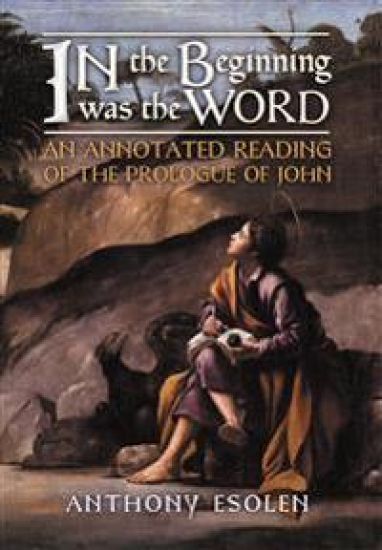
In the Beginning Was the Word

In the Beginning Was the Word

Anthony Esolen; Peter Kwasniewski

Angelico Press
2021
pokkari
In this extended meditation, Anthony Esolen looks, phrase by phrase, at the majestic Prologue to the Gospel of John, which with good reason he calls "the most influential paragraph in the history of man." He unfolds its theological richness by showing how the Apostle John has in mind, not only what he saw Jesus do and heard him say, but also the whole witness of Scripture before the time of Jesus, and the way the young Church proclaimed him. A unique feature of this remarkable work is how Esolen "hears" (and we with him) the Hebrew/Aramaic underlying John's Greek (which was not his mother tongue), echoing those languages in such a way that, all at once, what we thought could never be more profoundly expressed bursts forth in a renewed poetic splendor that brings into ever keener relief the whole panorama of the theology of the God-Man. Esolen's decades-long immersion in Christian poetry and Scripture uniquely positions him as a guide to the astonishing and life-changing "poem" of the Prologue. He says it best: "My hope is not only to illuminate what John wishes us to hear, but to show that, when it comes to this poetry, John is not the originator; he is, rather, the beloved disciple who caught the habit from the Lord Himself."
In the Beginning Was the Word

In the Beginning Was the Word

Anthony Esolen; Peter Kwasniewski

Angelico Press
2021
sidottu
In this extended meditation, Anthony Esolen looks, phrase by phrase, at the majestic Prologue to the Gospel of John, which with good reason he calls "the most influential paragraph in the history of man." He unfolds its theological richness by showing how the Apostle John has in mind, not only what he saw Jesus do and heard him say, but also the whole witness of Scripture before the time of Jesus, and the way the young Church proclaimed him. A unique feature of this remarkable work is how Esolen "hears" (and we with him) the Hebrew/Aramaic underlying John's Greek (which was not his mother tongue), echoing those languages in such a way that, all at once, what we thought could never be more profoundly expressed bursts forth in a renewed poetic splendor that brings into ever keener relief the whole panorama of the theology of the God-Man. Esolen's decades-long immersion in Christian poetry and Scripture uniquely positions him as a guide to the astonishing and life-changing "poem" of the Prologue. He says it best: "My hope is not only to illuminate what John wishes us to hear, but to show that, when it comes to this poetry, John is not the originator; he is, rather, the beloved disciple who caught the habit from the Lord Himself."
The Hundredfold

The Hundredfold

Anthony Esolen

Ignatius Press
2019
pokkari
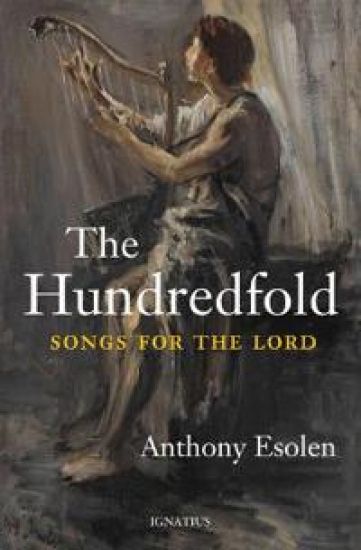
The Hundredfold is a tapestry of hymns, monologues, and short lyrics knit together as one book-length poem in praise of Christ in his startling humanity. Using all the riches of the English poetic tradition--meter, rhyme, music--the poet ponders the mysterious man from Nazareth and the world he came to set on fire with splendor.Having made a career of translating the Italian masters Dante and Tasso, Anthony Esolen puts on the dusty mantle of such English craftsmen as Donne, Milton, and Hopkins in his first book of original contemplative poetry. The Hundredfold contains dramatic monologues set in first-century Greece and Palestine; lyrical meditations on creation, longing, failure, modern emptiness, and unshakeable hope; and twenty-one brand-new hymns, set to such traditional melodies as "Picardy" and "Old One-Hundred-Twenty-Fourth".The book includes an introduction with diamond-sharp insights about English poetic forms at a time when form is so often misunderstood, if not dismissed. It provides an invaluable resource for students, teachers, and poets themselves, as well as those who read poetry for pleasure.
Nostalgia

Nostalgia

Anthony Esolen

Regnery Publishing Inc
2018
sidottu
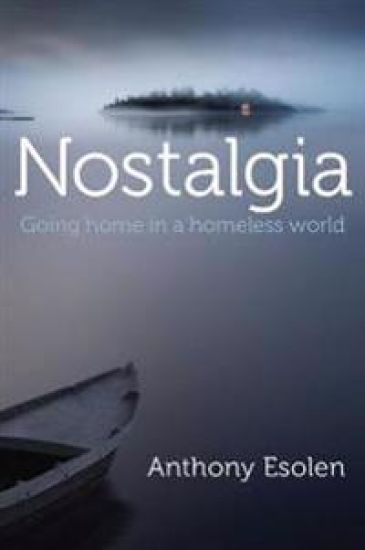
Alone among the creatures of the world, man suffers a pang both bitter and sweet. It is an ache for the homecoming. The Greeks called it nostalgia. Post-modern man, homeless almost by definition, cannot understand nostalgia. If he is a progressive, dreaming of a utopia to come, he dismisses it contemptuously, eager to bury a past he despises. If he is a reactionary, he sentimentalizes it, dreaming of a lost golden age. In this profound reflection, Anthony Esolen explores the true meaning of nostalgia and its place in the human heart. Drawing on the great works of Western literature from the Odyssey to Flannery O'Connor, he traces the development of this fundamental longing from the pagan's desire for his earthly home, which most famously inspired Odysseys' heroic return to Ithaca, to its transformation under Christianity. The doctrine of the fall of man forestalls sentimental traditionalism by insisting that there has been no Eden since Eden. And the revelation of heaven as our true and final home, directing man's longing to the next world, paradoxically strengthens and ennobles the pilgrim's devotion to his home in this world. In our own day, Christian nostalgia stands in frank opposition to the secular usurpation of this longing. Looking for a city that does not exist, the progressive treats original sin, which afflicts everyone, as mere political error, which afflicts only his opponents. To him, history is a long tale of misery with nothing to teach us. Despising his fathers, he lives in a world without piety. Only the future, which no one can know, is real to him. It is an idol that justifies all manner of evil and folly. Nostalgia rightly understood is not an invitation to repeat the sins of the past or to repudiate what experience and reflection have taught us, but to hear the call of sanity and sweetness again. Perhaps we will shake our heads as if awaking from a bad and feverish dream and, coming to ourselves, resolve, like the Prodigal, to "arise and go to my father's house."
Angels, Barbarians, and Nincompoops

Angels, Barbarians, and Nincompoops

Anthony Esolen

Tan Books Publishers Inc.
2017
sidottu
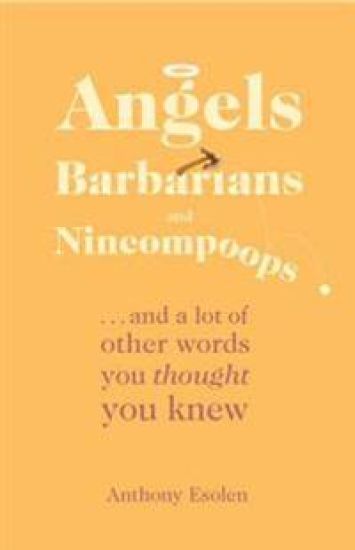
Similarly, it's hard not to love this book, which employs a diverse cast of characters ranging from C.S. Lewis and Emily Dickinson to Lily Munster and the Great Pumpkin to reveal the historical, hilarious, and even holy origins of the words we use, even though many of us have forgotten what they mean. Join Professor Esolen on this fun yet educational romp through 98 of your soon to be favorite words. -Learn how and why (to say nothing of when and where) to properly use the word-drunken.- (Hint: not to relay the fact that...-The bridegroom's mother has drunken awhole bottle of champagne, and is now drawing flowers on the floor with her lipstick.-) -Appreciate why you don't want Lily Munster to dust your furniture...at least not in theKing's English. -And seethe, along with Esolen and other lovers of beauty in language and liturgy, whenyou see how a mighty angel of God is reduced to the status of a mere messenger boythrough bad word choices. Again and again, you'll find yourself agreeing with Esolen, who, channeling his inner Boris Badunov (Bullwinkle the Moose's nemesis, for the philistines and milennials among you), reminds us that - Eees good to know grammar. Eees delight, to play with style. Eees, no?- Yes, it is And it also edifying to see just how rooted our language is in the Christian faith, as rooted as once was our culture. Esolen's delightful tour of the English language and its roots gives us a window into our shared heritage that sadly we've largely forgotten. We won't tell you what the word referenced in the first sentence above is... but don't be it. Buy this book. You'll be glad you did.
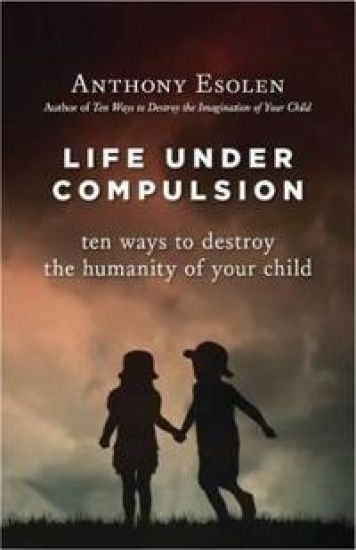
Life Under Compulsion

Life Under Compulsion

Anthony Esolen

ISI Books
2015
sidottu
How to raise children who can sit with a good book and read? Who are moved by beauty? Who delight in innocence? Who have no compulsions – who don’t have to buy the latest this or that vanity? Who are not bound to the instant urge, wherever it may be found? Thoughtful parents everywhere ask such questions but struggle to find answers. But now, in this eagerly anticipated follow-up to his acclaimed book Ten Ways to Destroy the Imagination of Your Child, Anthony Esolen shows the way. Although freedom has become a byword of our age, Esolen shows why the common understanding of freedom – as a permission slip to do as you please – is narrow, misleading…and dangerous. He draws on great thinkers of the Western tradition, from Aristotle and Cicero to Dante and Shakespeare to John Adams and C.S. Lewis, to remind us what human freedom truly means. Life Under Compulsion shows why our children are not free at all but in fact are becoming slaves to compulsions. Some compulsions come from without: government mandates that determine what children are taught, and even what they can eat in school. Others come from within: the itches that must be scratched, the passions by which children (like the rest of us) can be mastered. Common Core, smartphones, video games, sex ed, travel teams, Twitter, politicians, popular music, advertising, a world with more genders than there are flavours of ice cream – these and many other aspects of contemporary life come under Esolen’s sweeping gaze in Life Under Compulsion. This elegantly written book restores lost wisdom about education, parenting, literature, music, art, philosophy, and leisure. It also restates the importance of concepts so often dismissed today: truth, beauty, goodness, love, faith, and virtue. But above all else, it reminds us of a fundamental truth: that a child is a human being. Countercultural in the best sense of term, Life Under Compulsion is an indispensable guide for any parent who wants to help a child remove the shackles and enjoy a truly free, and full, life.
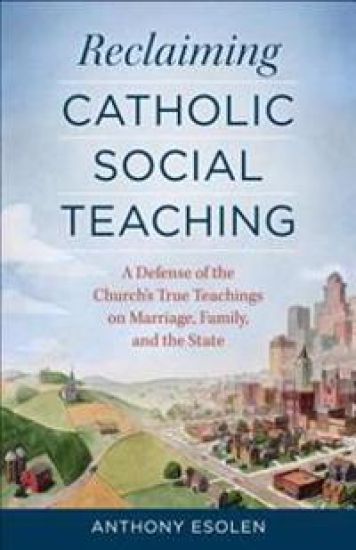
Reclaiming Catholic Social Teaching: A Defense of the Church's True Teachings on Marriage, Family, and the State
In Reclaiming Catholic Social Teaching, Anthony Esolen pulls back the curtain on the false philosophers of our day, showing how they are working to neutralize the biggest threat to their plans for secularization -- the Catholic Church.Esolen explains that Catholic Social Teaching isn't focused exclusively on serving the poor. Indeed, it offers us a rich treasure of insights about the nature of man, his eternal destiny, the sanctity of marriage, and the important role of the family in building a coherent and harmonious society.Catholic Social Teaching offers a unified worldview. What the Church says about the family is inextricable from what she says about the poor, and what she says about the Eucharist informs the essence of her teachings on education, the arts -- and even government.You will step away from these pages with a profound understanding of the root causes of the ills that afflict our society, and -- thanks to Anthony Esolen -- you will be well equipped to propose compelling remedies.Only an authentically Catholic culture provides for the stable and virtuous society that allows Christians to do the real work that can unite rich and poor.We must reclaim Catholic Social Teaching if we are to transform our society into the ideal mapped out by the Church: a land of sinners, yes, but one enriched with love of God and neighbor and sustained by the very heart of the Church's social teaching: the most holy Eucharist.
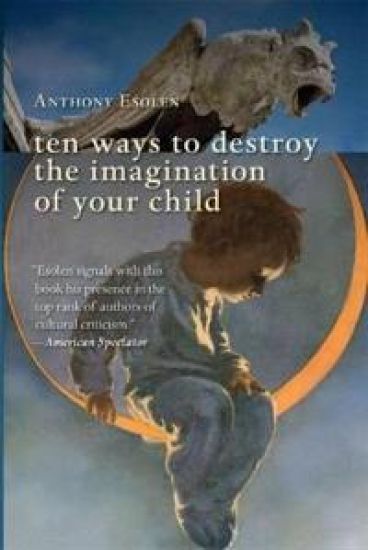
Ten Ways to Destroy the Imagination of Your Child
“Esolen signals with this book his presence in the top rank of authors of cultural criticism.” —American SpectatorPlay dates, soccer practice, day care, political correctness, drudgery without facts, television, video games, constant supervision, endless distractions: these and other insidious trends in child rearing and education are now the hallmarks of childhood. As author Anthony Esolen demonstrates in this elegantly written, often wickedly funny book, almost everything we are doing to children now constricts their imaginations, usually to serve the ulterior motives of the constrictors.Ten Ways to Destroy the Imagination of Your Child takes square aim at these accelerating trends, in a bitingly witty style reminiscent of C. S. Lewis, while offering parents—and children—hopeful alternatives. Esolen shows how imagination is snuffed out at practically every turn: in the rearing of children almost exclusively indoors; in the flattening of love to sex education, and sex education to prurience and hygiene; in the loss of traditional childhood games; in the refusal to allow children to organize themselves into teams; in the effacing of the glorious differences between the sexes; in the dismissal of the power of memory, which creates the worst of all possible worlds in school—drudgery without even the merit of imparting facts; in the strict separation of the child’s world from the adult’s; and in the denial of the transcendent, which places a low ceiling on the child’s developing spirit and mind.But Esolen doesn’t stop at pointing out the problem; he offers clear solutions as well. With charming stories from his own boyhood and an assist from the master authors and thinkers of the Western tradition, Ten Ways to Destroy the Imagination of Your Child is a welcome respite from the overwhelming banality of contemporary culture. Interwoven throughout this indispensable guide to child rearing is a rich tapestry of the literature, music, art, and thought that once enriched the lives of American children.Ten Ways to Destroy the Imagination of Your Child confronts contemporary trends in parenting and schooling by reclaiming lost traditions. This practical, insightful book is essential reading for any parent who cares about the paltry thing that childhood has become, and who wants to give a child something beyond the dull drone of today’s culture.
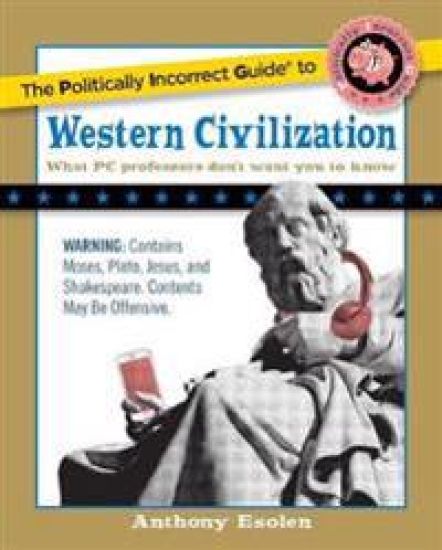
The Politically Incorrect Guide to Western Civilization

The Politically Incorrect Guide to Western Civilization

Anthony Esolen

Regnery Publishing Inc
2008
pokkari
Everything you should know--but PC professors won't teach--about our Western heritageWestern civilization is the envy of the globe. It has given to the world universally accepted understandings of human rights (rooted in Judeo-Christian principles), created standards for art, music, and literature that have never been equaled, and originated political and social systems that have spread all across the planet.Unfortunately, the fog of political correctness now obscures these and other truths about Western civilization. Leftists and Islamic jihadists find common cause in assailing Western "colonialism," "imperialism," and "racism" as its defining characteristics. Guilt-ridden Western leaders and public figures speak of their cultural patrimony in disparaging terms they would never dare to use about a non-Western culture. And in the academy, "multicultural"-minded professors flatter students into believing they have nothing really to learn from Sophocles or Shakespeare.But now, Professor Anthony Esolen--one of the team-teachers of Providence College's esteemed Development of Western Civilization Core Curriculum--has risen to the West's defense. The Politically Incorrect Guide(TM) to Western Civilization takes on the prevailing liberal assumptions that make Western civilization the universal whipping boy for today's global problems, and introduces you to the significant events, individuals, nations, ideas, and artistic achievements that make Western civilization the greatest the world has ever known.Today--with the West imperiled as never before by the global jihad and threats from China and elsewhere--defending the West has become an urgent imperative: if we don't value what we have and what we have inherited, we will surely lose it. The Politically Incorrect Guide(tm) to Western Civilization is an essential sourcebook for that defense.