Kirjojen hintavertailu. Mukana 12 326 961 kirjaa ja 12 kauppaa.

Kirjailija

Anthony Good

Kirjat ja teokset yhdessä paikassa: 10 kirjaa, julkaisuja vuosilta 2006-2025, suosituimpien joukossa Anthropology and Expertise in the Asylum Courts. Vertaile teosten hintoja ja tarkista saatavuus suomalaisista kirjakaupoista.

10 kirjaa

Kirjojen julkaisuhaarukka 2006-2025.

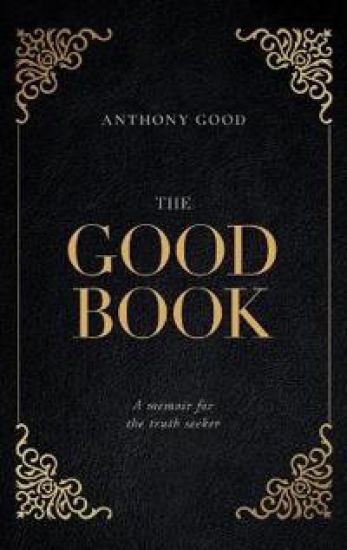
The Good Book

The Good Book

Anthony Good

A Good Press
2025
sidottu
There often comes a time when we are called to question the purpose of our lives. This goes beyond the mundane every day, to seek the foundation on which the good life is lived. After fruitless searches in the religions, self-help psychology, and philosophy, the author was confronted by a spiritual opening. Through 76 short chapters, the reader is offered an example of a spiritual way in the spirit world where growth comes more through direct experience than logical thinking and reasoned argument. This is not a one-size-fits-all, but a call to recognise the spiritual domain and find our path. The Good Book is intended to help those on their journey, those confronting the possibility of starting, and those who are open-minded and interested. The lonely traveller in this domain may find it difficult to find another who has trod the path. This book outlines the type of challenges one encounters and how they might be overcome. An indication of the direction of travel is also given, and what can be expected ahead. Starting an agnostic, the mythological, psychological path brought an ultimate connection with the Divine, and a new calling. This way, the seeker of truth to live by finds themselves with the creator in the flow of creation, and the ultimate question of how one should live their life is answered.
The Good Book

The Good Book

Anthony Good

A Good Press
2025
pokkari
There often comes a time when we are called to question the purpose of our lives. This goes beyond the mundane everyday to seek the foundation on which the good life is lived. After fruitless searches in the religions, self-help psychology, and philosophy, the author was confronted by a spiritual opening. Through 76 short chapters, the reader is offered an example of a spiritual way in the spirit world where growth comes more through direct experience than logical thinking and reasoned argument. This is not a one-size-fits-all, but a call to recognise the spiritual domain and find our path. The Good Book is intended to help those on their journey, those confronting the possibility of starting, and those who are open-minded and interested. The lonely traveller in this domain may find it difficult to find another who has trod the path. This book outlines the type of challenges one encounters and how they might be overcome. An indication of the direction of travel and what can be expected ahead is also given. Starting an agnostic, the mythological, psychological path brought an ultimate connection with the Divine, and a new calling. This way, the seeker of truth to live by finds themselves with the creator in the flow of creation, and the ultimate question of how one should live their life is answered.
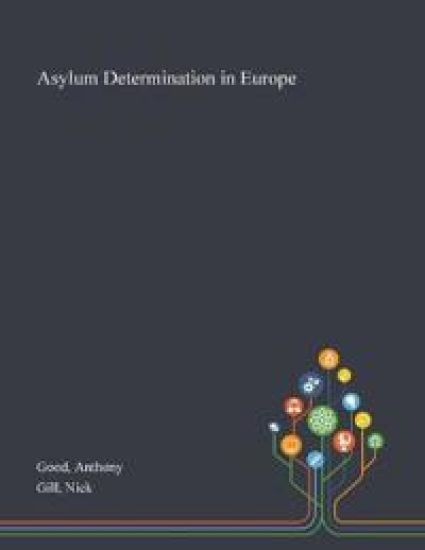
Asylum Determination in Europe

Asylum Determination in Europe

Anthony Good; Nick Gill

Saint Philip Street Press
2020
sidottu
Drawing on new research material from ten European countries, Asylum Determination in Europe: Ethnographic Perspectives brings together a range of detailed accounts of the legal and bureaucratic processes by which asylum claims are decided.The book includes a legal overview of European asylum determination procedures, followed by sections on the diverse actors involved, the means by which they communicate, and the ways in which they make life and death decisions on a daily basis. It offers a contextually rich account that moves beyond doctrinal law to uncover the gaps and variances between formal policy and legislation, and law as actually practiced. The contributors employ a variety of disciplinary perspectives - sociological, anthropological, geographical and linguistic - but are united in their use of an ethnographic methodological approach. Through this lens, the book captures the confusion, improvisation, inconsistency, complexity and emotional turmoil inherent to the process of claiming asylum in Europe. This work was published by Saint Philip Street Press pursuant to a Creative Commons license permitting commercial use. All rights not granted by the work's license are retained by the author or authors.
Asylum Determination in Europe

Asylum Determination in Europe

Anthony Good; Nick Gill

Saint Philip Street Press
2020
pokkari
Drawing on new research material from ten European countries, Asylum Determination in Europe: Ethnographic Perspectives brings together a range of detailed accounts of the legal and bureaucratic processes by which asylum claims are decided.The book includes a legal overview of European asylum determination procedures, followed by sections on the diverse actors involved, the means by which they communicate, and the ways in which they make life and death decisions on a daily basis. It offers a contextually rich account that moves beyond doctrinal law to uncover the gaps and variances between formal policy and legislation, and law as actually practiced. The contributors employ a variety of disciplinary perspectives - sociological, anthropological, geographical and linguistic - but are united in their use of an ethnographic methodological approach. Through this lens, the book captures the confusion, improvisation, inconsistency, complexity and emotional turmoil inherent to the process of claiming asylum in Europe. This work was published by Saint Philip Street Press pursuant to a Creative Commons license permitting commercial use. All rights not granted by the work's license are retained by the author or authors.
Kill [redacted]

Kill [redacted]

Anthony Good

Atlantic Books
2020
nidottu
'Provocative and compelling, it is a spectacular debut' - Daily MailMichael lost his wife in a terrorist attack on a London train. Since then, he has been seeing a therapist to help him come to terms with his grief - and his anger. He can't get over the fact that the man he holds responsible has seemingly got away scot-free. He doesn't blame the bombers, who he considers only as the logical conclusion to a long chain of events. No, to Michael's mind, the ultimate cause is the politician whose cynical policies have had such deadly impact abroad. His therapist suggests that he write his feelings down to help him forgive and move on, but as a retired headteacher, Michael believes that for every crime there should be a fitting punishment - and so in the pages of his diary he begins to set out the case for, and set about committing, murder. Waltzing through the darkling journal of a brilliant mind put to serious misuse, Kill [redacted] is a powerful and provocative exploration of the contours of grief and the limits of moral justice, and a blazing condemnation of all those who hold, and abuse, power.ONE OF THE BEST DEBUT NOVELS of 2019 (the i )
Kill [redacted]

Kill [redacted]

Anthony Good

Atlantic Books
2019
sidottu
'Provocative and compelling, it is a spectacular debut' - Daily Mail____________Is murder ever morally right?And is a murderer necessarily bad?These two questions waltz through the maddening mind of Michael, the brilliant, terrifying, fiendishly smart creation at the centre of this winking dark gem of a literary thriller.Michael lost his wife in a terrorist attack on a London train. Since then, he has been seeing a therapist to help him come to terms with his grief - and his anger. He can't get over the fact that the man he holds responsible has seemingly got away scot-free. He doesn't blame the bombers, who he considers only as the logical conclusion to a long chain of events. No, to Michael's mind, the ultimate cause is the politician whose cynical policies have had such deadly impact abroad. His therapist suggests that he write his feelings down to help him forgive and move on, but as a retired headteacher, Michael believes that for every crime there should be a fitting punishment - and so in the pages of his diary he begins to set out the case for, and set about committing, murder. Waltzing through the darkling journal of a brilliant mind put to serious misuse, Kill [redacted] is a powerful and provocative exploration of the contours of grief and the limits of moral justice, and a blazing condemnation of all those who hold, and abuse, power.ONE OF THE BEST DEBUT NOVELS of 2019 (the i )
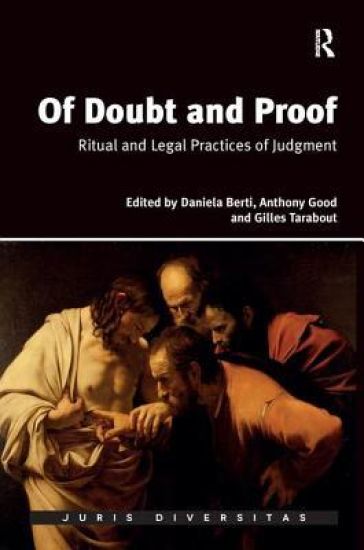
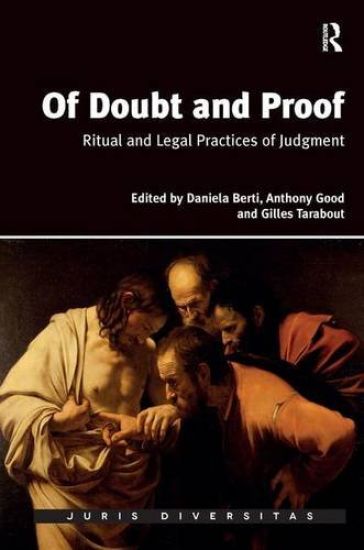
Of Doubt and Proof

Of Doubt and Proof

Daniela Berti; Anthony Good

Routledge
2016
nidottu
All institutions concerned with the process of judging - whether it be deciding between alternative courses of action, determining a judge’s professional integrity, assigning culpability for an alleged crime, or ruling on the credibility of an asylum claimant - are necessarily directly concerned with the question of doubt. By putting ritual and judicial settings into comparative perspective, in contexts as diverse as Indian and Taiwanese divination and international cricket, as well as legal processes in France, the UK, India, Denmark, and Ghana, this book offers a comprehensive and novel perspective on techniques for casting and dispelling doubt, and the roles they play in achieving verdicts or decisions that appear both valid and just. Broadening the theoretical understandings of the social role of doubt, both in social science and in law, the authors present these understandings in ways that not only contribute to academic knowledge but are also useful to professionals and other participants engaged in the process of judging. This collection will consequently be of great interest to academics researching in the fields of legal anthropology, ritual studies, legal sociology, criminology, and socio-legal studies.
Of Doubt and Proof

Of Doubt and Proof

Daniela Berti; Anthony Good

Routledge
2015
sidottu
All institutions concerned with the process of judging - whether it be deciding between alternative courses of action, determining a judge’s professional integrity, assigning culpability for an alleged crime, or ruling on the credibility of an asylum claimant - are necessarily directly concerned with the question of doubt. By putting ritual and judicial settings into comparative perspective, in contexts as diverse as Indian and Taiwanese divination and international cricket, as well as legal processes in France, the UK, India, Denmark, and Ghana, this book offers a comprehensive and novel perspective on techniques for casting and dispelling doubt, and the roles they play in achieving verdicts or decisions that appear both valid and just. Broadening the theoretical understandings of the social role of doubt, both in social science and in law, the authors present these understandings in ways that not only contribute to academic knowledge but are also useful to professionals and other participants engaged in the process of judging. This collection will consequently be of great interest to academics researching in the fields of legal anthropology, ritual studies, legal sociology, criminology, and socio-legal studies.
Anthropology and Expertise in the Asylum Courts

Anthropology and Expertise in the Asylum Courts

Anthony Good

Routledge Cavendish
2006
sidottu
Although asylum has generated unparalleled levels of public and political concern over the past decade, there has been astonishingly little field research on the topic. This is a study of the legal process of claiming asylum from an anthropological perspective, focusing on the role of expert evidence from 'country experts' such as anthropologists. It describes how such evidence is used in assessments of asylum claims by the Home Office and by adjudicators and tribunals hearing asylum appeals. It compares uses of social scientific and medical evidence in legal decision-making and analyzes, anthropologically, the legal uses of key concepts from the 1951 Refugee Convention, such as 'race', 'religion', and 'social group'. The evidence is drawn from field observation of more than 300 appeal hearings in London and Glasgow; from reported case law and from interviews with immigration adjudicators, tribunal chairs, barristers and solicitors, as well as expert witnesses.
Anthropology and Expertise in the Asylum Courts

Anthropology and Expertise in the Asylum Courts

Anthony Good

Routledge Cavendish
2006
nidottu
Although asylum has generated unparalleled levels of public and political concern over the past decade, there has been astonishingly little field research on the topic. This is a study of the legal process of claiming asylum from an anthropological perspective, focusing on the role of expert evidence from 'country experts' such as anthropologists. It describes how such evidence is used in assessments of asylum claims by the Home Office and by adjudicators and tribunals hearing asylum appeals. It compares uses of social scientific and medical evidence in legal decision-making and analyzes, anthropologically, the legal uses of key concepts from the 1951 Refugee Convention, such as 'race', 'religion', and 'social group'. The evidence is drawn from field observation of more than 300 appeal hearings in London and Glasgow; from reported case law and from interviews with immigration adjudicators, tribunal chairs, barristers and solicitors, as well as expert witnesses.